


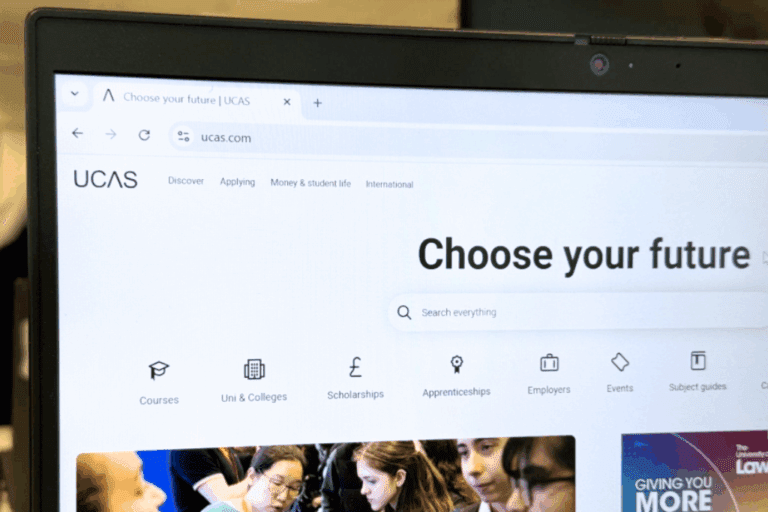


With how rapidly AI has proliferated, many students applying to UK universities may feel inclined to use tools like ChatGPT or Gemini to draft up an impactful and resonant personal statement that will secure them a spot in their dream university. That personal statement — which outlines why a student wants to pursue a certain subject at a UK uni — can be particularly daunting, as the way you go about it is entirely subjective and, well, personal.
But before reaching for AI assistance, students should understand what they’re actually submitting. The personal statement is a key part of the Universities and Colleges Admissions Service (UCAS) application. UCAS, for the uninitiated, is a centralised portal that allows students to apply to UK universities and colleges. On this portal, you’ll input your personal details, education history, and crucially, that personal statement explaining your motivations and suitability for your chosen course.
So what’s the right approach to AI in this process? The British Council, the UK’s international organisation for cultural relations and educational opportunities, works closely with institutions like UCAS to help students navigate these questions. As a trusted voice in UK education with deep connections to higher education institutions, the British Council is well-positioned to offer guidance on how students can — and should — approach their applications in the age of AI.
Should you use AI for your university applications?
From the British Council’s conversations with UCAS, it’s clear that everyone there acknowledges that AI is here, and it’s being used. And regardless of any advice, students are going to use it anyway.
“In the last briefing that we had with UCAS, they said they have rigorous processes in place to detect completely generated AI responses,” Prabha Sundram, the Head of Education in Malaysia for British Council, shares.
So, does that mean you should just use AI like everyone else?
Well, not exactly. For starters, you need to understand what a personal statement is for. As Sundram puts it, a personal statement is not just about what you’ve done, it’s for a university to know why they should have you on their campus.
In other words, it has to be deeply about you. And AI is not going to be able to do that for you, not until you’re able to do the work and identify that personal touch.
“Write it. Make it your own deeply personal statement as to why you want to study that and how that’s going to shape you,” Sundram says.
“If you want to use AI as a supporting tool to help wordsmith it, to help correct your grammar, to make it sound better, by all means do it but make sure it’s still your own and it’s your own voice that’s happening.”

The British Council’s office in Kuala Lumpur, Malaysia. Source: British Council
What you know trumps AI always
For the British Council’s work, AI has come into play as well.
While Sundram believes that AI can help to come up with a programme or concept note, you still have to be the one who holds the knowledge, who can prompt the AI accurately and ensure the information is relevant.
“That’s what we tell students as well. You have the expertise, you have to be the subject matter expert, whether that’s about yourself or about a piece of work that you’re doing. And AI becomes a supportive tool,” she says.
Not using AI is also remiss in this age. Because there’s a lot of good things it offers. But it should not be the one who leads – that duty belongs to you.
Popular stories
Are you an experienced professional considering a high-impact leadership position? Get a Global MBA first

Budget pressures in 2026: The most affordable pathway options as tuition and living costs rise

Why we’re low‑key obsessed with where the ‘Boyfriend on demand’ cast went to uni

Low GPA? Here are the global pathways that still get you into top universities