



Climbing up the corporate ladder is a daunting journey — often filled with blood, sweat, and tears. But just imagine yourself doing that, all while going back to school mid-career to pursue a Master’s degree.
Despite it being all that scary, Robert Francis, a Global MBA graduate, knew that was the only way to secure a high-impact leadership position.
“Having technical expertise alone was no longer enough,” he shares. “The challenges I’ve faced at work go beyond that.”

In his spare time, he enjoys being outdoors, such as hiking nature trails or fishing. He also enjoys reading non-fiction books in leadership, strategy, and personal development genres. Source: Robert Francis
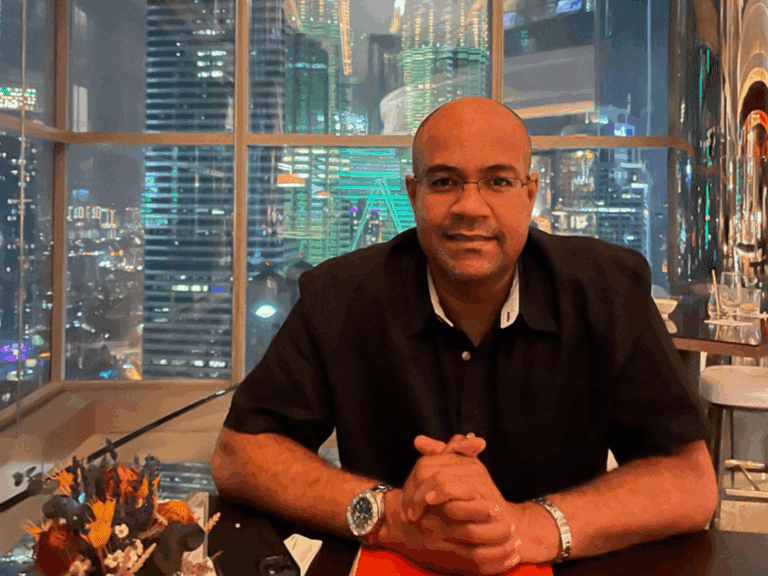
Meet Robert Francis, the former Director of DataVolt and a Global MBA graduate
Originally from the UK, Robert has travelled extensively throughout his career, working in various locations, including Singapore, the Netherlands, the Kingdom of Saudi Arabia, Taiwan, and Malaysia.
“I worked as a CAD Mechanical and Piping Designer in the O&G industry for some years and later transitioned into project management, where I gained greater insights into the operations of a business,” he shares. “I eventually pivoted into the data centre sector, allowing me to work in many countries.”
As of today, Robert has recently completed his tenure as Director of DataVolt and is currently in the process of securing his next role within the data centre sector.
There’s no doubt that Robert has built a strong career in mission-critical infrastructure. However, he noticed something, and that something was key in moving up the ladder — technical expertise alone was no longer enough.
“I started to face challenges that required me to have strategic insight, financial acumen, and the ability to influence stakeholders across functions and geographies,” Robert explains.
There was only one way to fix this: to pursue a Master’s degree mid-career.
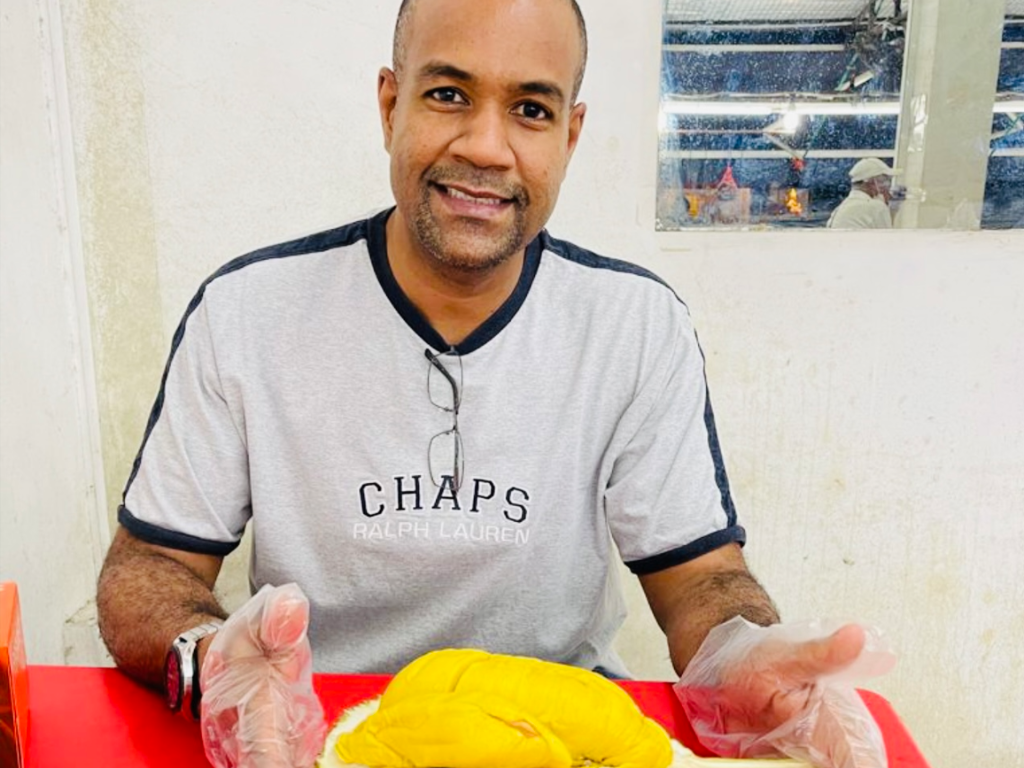
Robert was a Project Manager at Linesight in the Netherlands and later advanced to a Senior Project Manager at Currie & Brown, Singapore. Source: Robert Francis
Getting a Global MBA was the way to transition mid-career into high-impact leadership
When it came to choosing the type of Master’s programme, Robert knew that getting a technical qualification was not an option.
“I chose an MBA,” he says. “Having already built a career in high-stakes industry, my goal wasn’t to specialise in finance or pivot into banking, but to strengthen my ability to lead across functions, geographies, and entreprise risk.
Robert pursued a Global MBA at The University of Manchester’s Alliance Manchester Business School.
Fun fact, in addition to his Global MBA, Robert holds two undergraduate degrees and two Master’s degrees:
- Bachelor’s in Mechanical Engineering (Robert Gordon University)
- Bachelor’s in Business Administration and Management (Robert Gordon University)
- Master’s in Global Finance Management (University of Roehampton)
- Master’s in International Business Law, Trade, and Tax Law (Panthéon-Assas University Paris II)

Having completed his tenure as Director at DataVolt in Saudi Arabia, Robert is now actively exploring his next senior leadership role within the data centre sector. Source: Robert Francis
The million-dollar question: Do you actually need an MBA despite having a solid career?
The answer is yes — it’s most definitely worth the investment.
It’s not a biased take. Hear me out. Or, well, hear Robert out.
“The Global MBA gave me exposure to strategy, leadership, and cross-cultural management, while still sharpening my financial and analytic skills,” he explains.
“More importantly, it positioned me to translate complex technical and commercial challenges into opportunities for growth; something an MSc in Financial Management or a niche path into consulting or banking alone wouldn’t have provided.”
Robert notes that this Master’s degree is worth looking at for long-term growth, and that its value comes in three areas:
- Exposure to global perspectives and diverse peers challenges your perspective on strategy and leadership.
- The ability to strengthen one’s financial and commercial acumen can help complement one’s technical background.
- The credibility and network an MBA provides open doors to senior leadership roles that wouldn’t be accessible through technical qualifications alone.
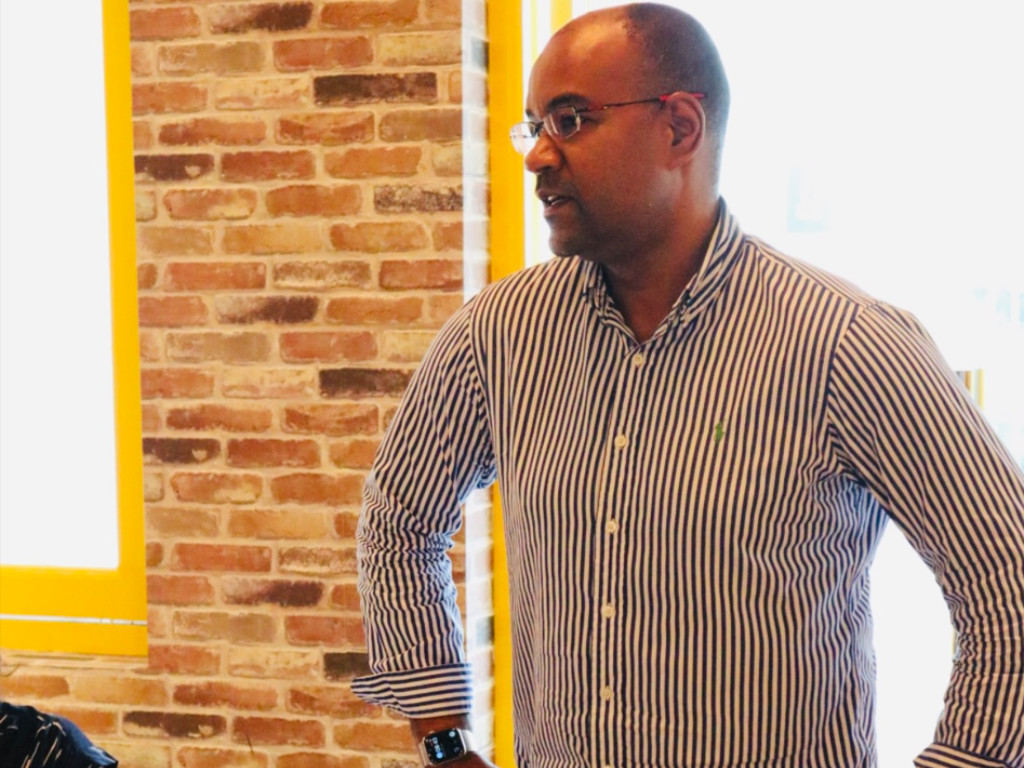
Robert has worked in Singapore, Saudi Arabia, Malaysia, Taiwan, the Netherlands, and the UK. Source: Robert Francis
Now, if you speak in terms of ROI, Robert views his ROI from the Global MBA as a single number, and more as a combination of tangible and intangible returns.
“Tangibly, it accelerated my career mobility, opening doors to senior leadership roles in the digital infrastructure sector, and it also positioned me for a greater earning potential by moving into roles with broader P&L responsibility,” he shares. “Intangibly, the ROI reflected in the global network I now draw on, the strategic confidence I bring to complex decisions, and the credibility to engage at the board level.”
The conclusion? Getting a Global MBA mid-career was more than worthwhile. It was the way Robert leapt into his director role at DataVolt.

Robert started as a mechanical & piping CAD designer and later transitioned into project management. Source: Robert Francis
“Stop thinking like a specialist and start thinking like a leader”
The thought of getting an MBA doesn’t happen overnight. It grows over time, especially for seasoned professionals.
For Robert, however, it happened during a complex project he was leading.
“There were multiple stakeholders who had conflicting priorities, and as a specialist, my instinct was to focus on solving the technical issues, balancing client expectations, orchestrating governance frameworks, and reconciling stakeholder priorities, while ensuring deadlines were met and budgets stayed within their limits,” he recalls.
He came to realise that it wasn’t just about solving engineering problems, but aligning strategy, managing relationships, and creating outcomes that built long-term trust.
“The MBA equipped me with the mindset and tools to approach those challenges strategically,” Robert says. “Rather than as a specialist focused only on execution.”
Popular stories
Are you an experienced professional considering a high-impact leadership position? Get a Global MBA first

Budget pressures in 2026: The most affordable pathway options as tuition and living costs rise

Why we’re low‑key obsessed with where the ‘Boyfriend on demand’ cast went to uni

Low GPA? Here are the global pathways that still get you into top universities