

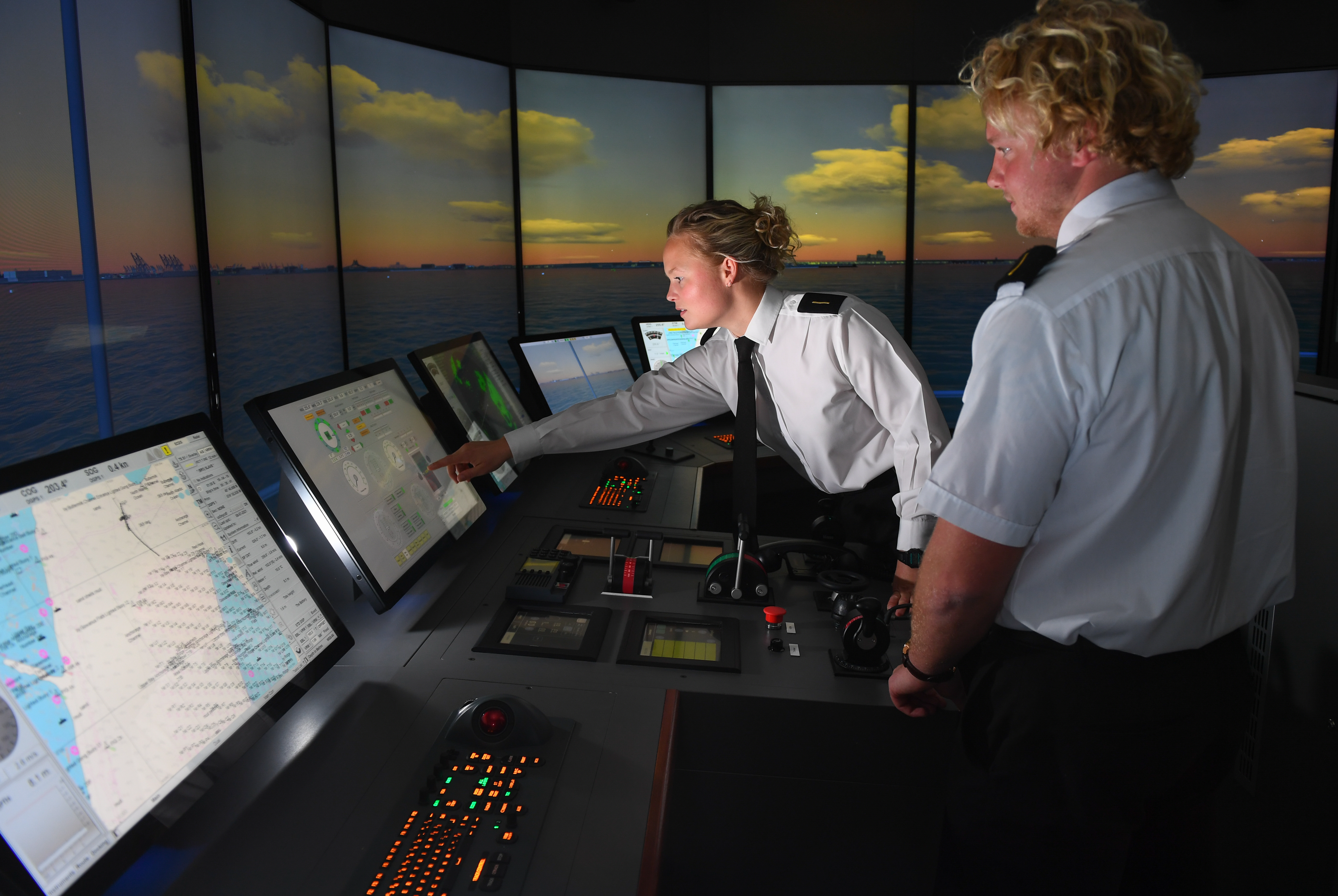


When Andie Squance first arrived at Southampton Solent University’s Warsash Maritime School, she knew it was the place for her. Something clicked. Thus, after completing her BSc in Shipping and Port Management, she stayed on for an MSc in International Shipping and Logistics. The welcoming environment and the expertise of her lecturers made the decision easy. “Everyone was very positive, and the breadth of skills displayed by the lecturers perfectly fit the MSc International Shipping and Logistics curriculum,” she says.
What made the biggest impact, though, was learning from “people who worked in the industry.” “Their examples were up to date, their presentations aligned with industry expectations, and their knowledge was exceptional because they understood topics like risk management and contract negotiation from direct experience,” she says.

Andie Squance
Ten years later, Squance still believes she made the right choice to attend Warsash Maritime School. The one-year full-time or two-years part-time MSc gave her “the optimal mix” of expertise in maritime law, shipping operations and maritime business to grow her career. Today, she is a manager for terminal and vessel operations at Wallenius Wilhelmsen, a global leader in roll-on/roll-off (RoRo) shipping and vehicle logistics.
Her story is typical of Warsash Maritime School graduates. Known for its strong industry ties and practical learning, the school has guided generations of professionals into successful maritime careers. Alumni now work with organisations such as BP Shipping, Maersk, Shell, IKEA, Kuwait Oil Tanker Co, the International Maritime Organization, and Sunseeker Yachts.
The only maritime training centre of its kind in the world
Warsash Maritime School, the only maritime training centre of its kind in the world, carries a legacy that spans 80 years. It offers more than 150 accredited courses across deck, engineering, interior, maritime, and offshore safety, meeting the standards of international awarding bodies, including the MCA, MNTB, OPITO, SIGTTO, and SQA. This dedication to global standards and excellence has made Warsash Maritime School a trusted name across the maritime industry.
That same standard anchors its postgraduate programmes. Each master’s degree blends academic knowledge with practical, industry-driven learning. Among them are MSc International Maritime Business, MSc International Shipping and Logistics, MSc Shipping Operations, MSc Maritime Education and Training, and MSc Sustainable Marine Craft and Superyacht Design. The latter two are recent additions that highlight the school’s forward-thinking approach to modern challenges in the maritime world.
For those who aspire to teach and lead in the sector, the two-years, part-time, distance learning MSc Maritime Education and Training provides the ideal path. Students gain an understanding of international maritime education systems while learning how to apply teaching theories effectively. The focus is not only on what to teach, but also on how to teach it. As current student Jamie Glasheen puts it, “This course has made me a far better lecturer, and we’re only nine months in. I’m more focused on what my students need to achieve their potential, and I know how to create a better learning environment.”
While that programme trains future educators, another focuses on naval architecture, sustainability and design innovation. The one-year full-time MSc Sustainable Marine Craft and Superyacht Design builds on over 50 years of expertise and was recently relaunched with sustainability at its core. Created in collaboration with the University’s engineering team and its Centre for Marine Sustainability, the programme gives students both technical depth and creative flexibility.
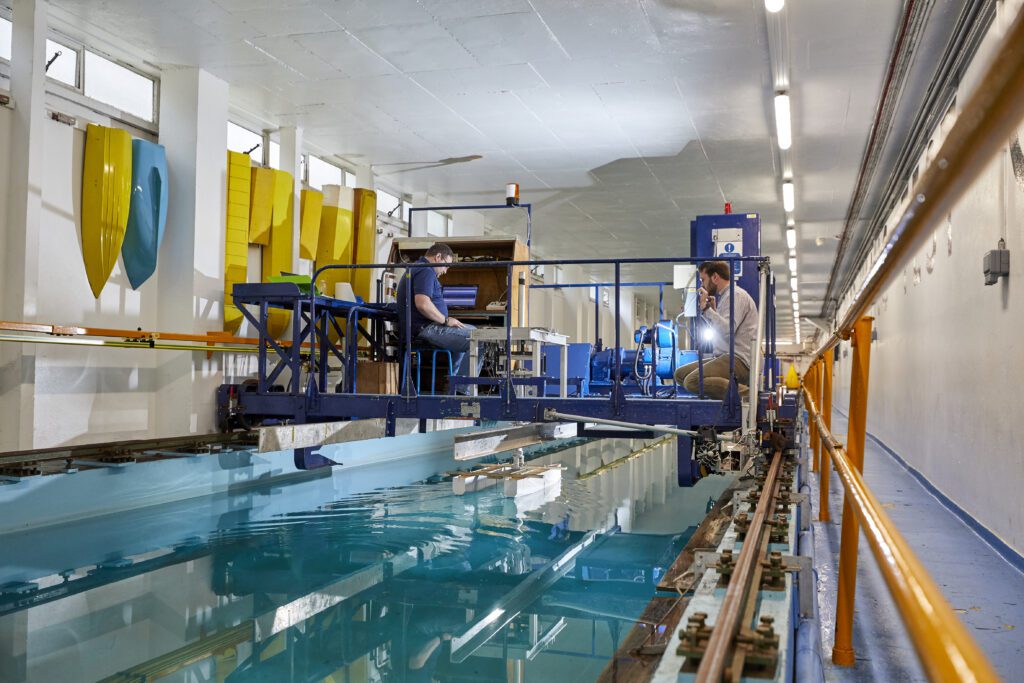
The MSc in Sustainable Marine Craft and Superyacht Design builds on 55 years of expertise to equip students with the engineering skills necessary for designing marine vessels ranging from 24 to 120 metres in length. Source: Warsash Maritime School
This approach has already produced work that’s catching attention in the industry. Recent students Edoardo Micheletti, Ludovica Pisante, Álvaro Sendrós, and Duncan Peace collaborated on a project called TRITON – a 51-metre trimaran with strong environmental credentials. Their design caught the attention of industry experts, including Michael Beattie, Superyacht UK Association Manager, and Douglas Hynd of RWD. “I could not believe the detail they managed to achieve in such a short time,” Beattie says. “Their thought processes in tackling challenges around alternative fuels, sustainability, and yacht life cycles were great to see.”
Such achievements highlight the impact of the school’s emphasis on real-world relevance. Each programme is led by professionals with substantial maritime experience, ensuring that graduates are well prepared for the industry’s demands. The curriculum is continually updated to reflect new developments in digitalisation, automation, and decarbonisation, areas that are rapidly transforming the future of shipping. For example, Dr. Laurie Wright, Associate Professor of Marine Sustainability, leads the Environment and Engineering research area. His research focuses reducing emissions, exploring alternative fuels, and enhancing port management systems – topics that often make their way to lecture halls.
Warsash Maritime School’s location adds another layer of opportunity. Situated in Southampton, one of the UK’s most historic port cities, the school benefits from its proximity to major shipping companies, ports, and maritime organisations. Students gain exposure to, and benefit from networking with professionals early in their studies. The city’s maritime heritage, combined with its current industrial presence, provides students with a front-row seat to the latest developments in global shipping.
Learn more about Southampton Solent University’s Warsash Maritime School.
Follow Southampton Solent University’s Warsash Maritime School on Facebook, X, and LinkedIn