

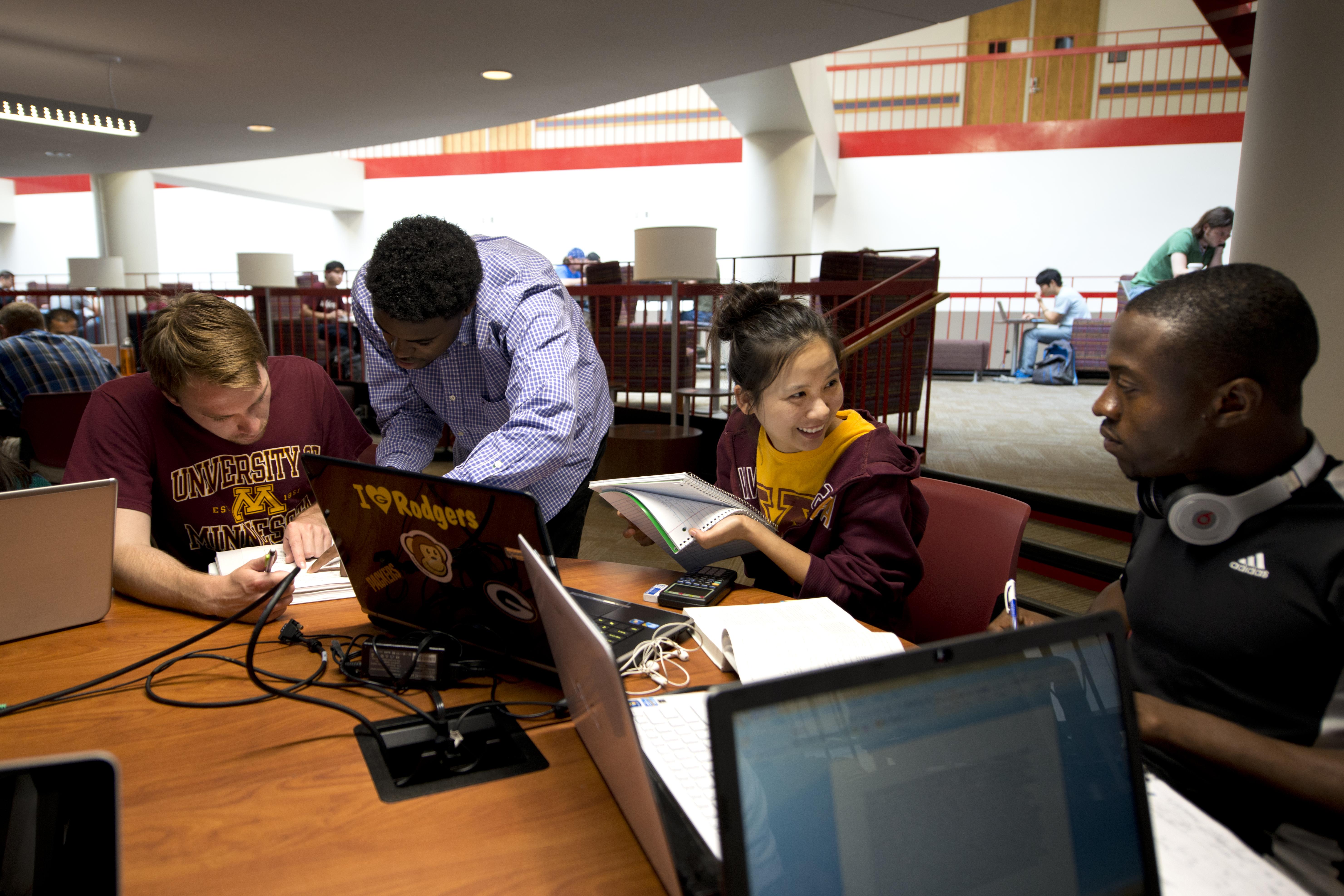


In a world where everything, from your smartphone to your generative AI app, runs on silicon, chips have become the real infrastructure of life today. And behind every breakthrough gadget or AI model is a team of Very‑Large‑Scale Integration engineers, the specialists who squeeze thousands, sometimes millions, of transistors onto a sliver of silicon no bigger than a fingernail.
When you think of such innovation, think Minnesota. Specifically, think about the University of Minnesota Twin Cities. Here, researchers are working to drive this fast-evolving field forward. Their work and expertise draw talented students from across the world to its Minneapolis campus. Abhimanyu Kumar, a student from India, was one of them. He first joined the Department of Electrical and Computer Engineering (ECE) to pursue a master’s programme.
Within two semesters, Kumar would receive an internship offer from Apple. “Many of my peers in the master’s programme also secured internships and later full-time positions at companies such as NVIDIA, Apple, AMD, Intel, Qualcomm, and Samsung,” he says.
Having immersed himself in industry, Kumar would eventually use his ECE degree to achieve another goal: contributing new knowledge to the field.
“While industry focuses on building commercially viable products for today, academic research explores emerging technologies through iterative evaluation and refinement,” he says. “I realised my interests aligned more closely with this research-driven approach, which led me to transition into the PhD.”
Today, Kumar is working on using specialised hardware to bring solutions to Combinatorial Optimisation Problems — but he’s far from the only student driving innovation at ECE.
Graduate student Tonushree Dutta, originally from Bangladesh, is finding a way to improve chronic pain treatment, a phenomenon which affects 20% of adults in the US. Pursuing an MS and PhD, she’s using advanced machine learning to develop wearable, AI-driven tools capable of predicting pain through real-time physiological signals.
With the University of Minnesota’s strong reputation, modern research facilities, and interdisciplinary nature, Dutta can immerse herself within an environment that fosters innovation, especially in fields like AI.
“What excites me most is the potential to make healthcare more personalised and proactive,” she says. “If we can use AI to predict pain levels in real time, we can help improve quality of life.”
Sai Sanjay, also from India, is working on applying machine learning to biosignals. Bridging healthcare and technology, he benefits from the Twin Cities’ ecosystem of healthcare businesses, startups, and institutions. In fact, the Twin Cities are a prime region for networking, ranking #1 per capita for concentration of Fortune 500 companies among the country’s 30 largest metro cities.
“I would like to use machine learning, deep learning, and other artificial intelligence approaches to make accurate and efficient diagnoses as they have the potential to speed up the process, increase accuracy, and improve patient outcomes,” he says.
Meanwhile, Hyeonjong Jeong, a graduate student from South Korea, is tackling a completely different health issue: neurodegenerative diseases, conditions that nearly seven million Americans live with. Early detection can dramatically slow decline, and that’s why Jeong is working to accelerate that timeline.
“My research focuses on developing diagnostic assays for neurodegenerative diseases like Parkinson’s and amyotrophic lateral sclerosis,” she says. “This research could aid in early detection of neurodegenerative diseases and eventually help alleviate the suffering of patients with these diseases.”
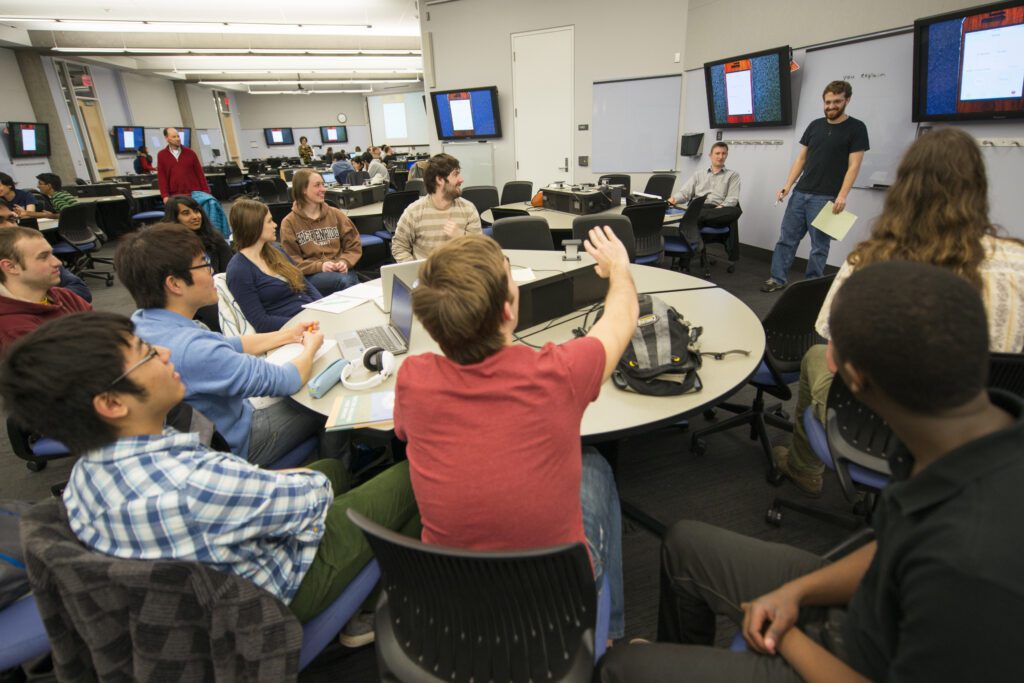
The ECE boasts approximately US$600,000 in annual fellowships. Source: University of Minnesota Twin Cities
These students are working on technologies that could go on to define the future, a venture that would not have been possible had they not been part of a major research university like the University of Minnesota Twin Cities. According to the Times Higher Education Interdisciplinary Science Rankings 2025, it’s the top public university in the US in their Interdisciplinary Science Rankings for 2025, sixth overall.
ECE’s graduate programmes make the most of this ecosystem to equip students with specialised skills to spearhead various industries, including nanotechnology, AI, renewable energy, and biomedical devices. With abundant funding opportunities, research assistantships, and entrepreneurship support, students can build careers grounded in both expertise and impact.
The output has been encouraging. Placement rates among ECE master’s graduates exceed 95%, with starting salaries over US$100,000. With a strong alumni network and many industry partners, including partnerships with world-class research centres across campus, the ECE’s graduate programmes are a proven launchpad for ambitious engineers.
Students can choose between the Master of Science in Electrical and Computer Engineering (MSECE) or the Doctor of Philosophy in Electrical and Computer Engineering (PhD). The MSECE can be completed in a year and a half to two years full-time, while the PhD takes three to four years if you already have a master’s — four to five years with a bachelor’s. Like Kumar and Dutta, you can also transition from the master’s to a PhD.
The MSECE curriculum can be coursework-only or thesis-based, with in-person and online courses built around rigorous projects that help students assemble portfolios sought after by top companies and leading graduate schools.
The breadth of courses lets you leverage your skills in electrical and computer engineering to create exciting innovations across the board, whether in healthcare, AI, consumer electronics, and more.
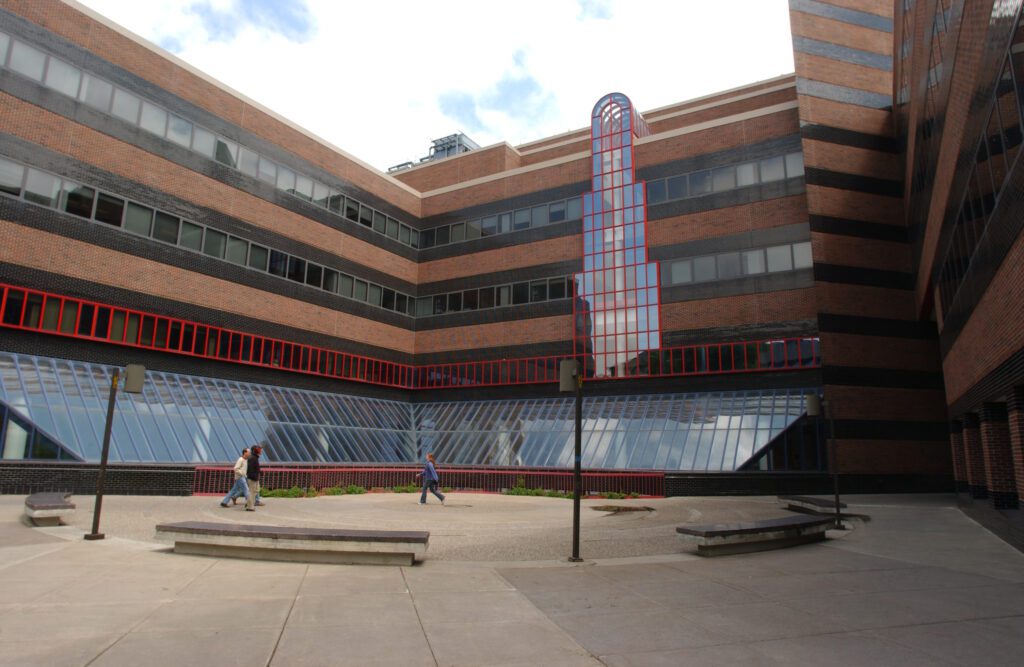
The ECE’s student body hails from 26 different countries. Source: University of Minnesota Twin Cities
The PhD programme, meanwhile, is research-intensive, backed by a university that spends more than US$1 billion on innovation and discovery within a year. Seven core focus areas shape the ECE’s research, ranging from energy systems to signal processing and biomedical and biological computational methods, to find solutions to complex challenges. “As a large institution with a wide range of departments, it fosters an atmosphere where collaboration across different research labs is highly accessible,” says Jeong.
For graduate Subhadip Ghosh, the university’s top reputation in VLSI design automation was what drew him to pursue the PhD.
“Working with Professor Sachin Sapatnekar was my top priority, as his group has significantly shaped modern electronic design automation,” he says. Today, Ghosh’s research aims to achieve human-quality circuit insight at a faster pace, a necessity as designs become increasingly complex.
The ECE’s industry connections had also led him to secure two internships at Cadence Design Systems in San Jose. “It later developed into an ongoing joint work and publications, making my experience at the university both meaningful and motivating,” says Ghosh.
To be part of the most innovative industries today, learn more about the ECE at the University of Minnesota.
Convinced with the department’s advantages and looking to apply? Check out more information on programmes and admission at the ECE here.
Follow the University of Minnesota Twin Cities’ Department of Electrical and Computer Engineering on LinkedIn.