




Founded in 1845, The Glasgow School of Art (the GSA) is one of the few remaining independent art schools in the UK. With a proven history of producing some of the world’s most influential and successful artists, designers, and architects, the GSA’s studio-based specialist, practice-led education draws talented individuals with a shared passion and concern for visual culture from all over the world.
The GSA is located in the heart of Glasgow, consistently celebrated as one of the UK’s most vibrant, culturally diverse, and affordable student cities. It offers a studio-focused environment where emerging artists transform creative ambition into sustained, lifelong practice.
At the heart of this experience is the GSA’s internationally recognised approach to studio-based teaching and research, which has helped it secure third place in the UK and eighth in the world for Art & Design in the QS World University Subject Rankings 2026. The studio is where students across all four of their specialist schools (School of Design, School of Fine Art, School of Innovation & Technology, and Mackintosh School of Architecture) focus on developing intense specialisms alongside collaborative practice.

Through exhibitions like the Fine Art Degree Show 2026 in the GSA Stow Building, students explore how their practice can engage and reach new audiences. Source: The Glasgow School of Art
Within their School of Fine Art, this ethos is particularly strong, with bachelor’s, master’s, and PhD students working alongside distinguished faculty, internationally practising artists, and a dynamic global cohort to challenge, experiment, and innovate.
“We maintain an approach to working with students, who often arrive with a wide range of skills and life experience, deeply grounded in studio presence and thinking through and with making,” comments Margaret Salmon, Programme Leader of the GSA’s Master of Fine Art programme.
“Glasgow is also a city rich in cultural and political activity,” Margaret explains. “Students are held by the city, which is deeply liveable – a place to work and think and exist without the stress of a huge metropolis and all that brings. And it’s surrounded by stunning landscape and wildlife as well as centuries of history and culture unlike any other place on earth.”
The student experience is further enriched by Glasgow’s world-renowned art scene. Students frequently participate in external exhibitions, collaborative projects, and community-led initiatives, turning the city itself into an extension of the studio.
“Students are known throughout the city for their curatorial projects! Self-organising peer-driven exhibitions at spaces outside the institution, which can lead to project spaces following graduation,” Margaret adds. “As part of their coursework, students of all levels also share their work through school-organised exhibitions during each year of study. Through these events and activities, we embed the sociality of creative practice within our school community – the notion that we are all actively building and establishing culture together, in the moment, alongside our research and long-term ambitions.”
Key highlights of the undergraduate Fine Art programmes include:
- Specialised subject pathways: Focused honours degrees in Painting & Printmaking, Fine Art Photography, and Sculpture & Environmental Art that balance traditional techniques with contemporary approaches.
- Direct industry engagement: Exhibition opportunities, an annual Degree Showcase, and access to their Creative Network.
- Dedicated studio provision: A dedicated studio space for each year of study.
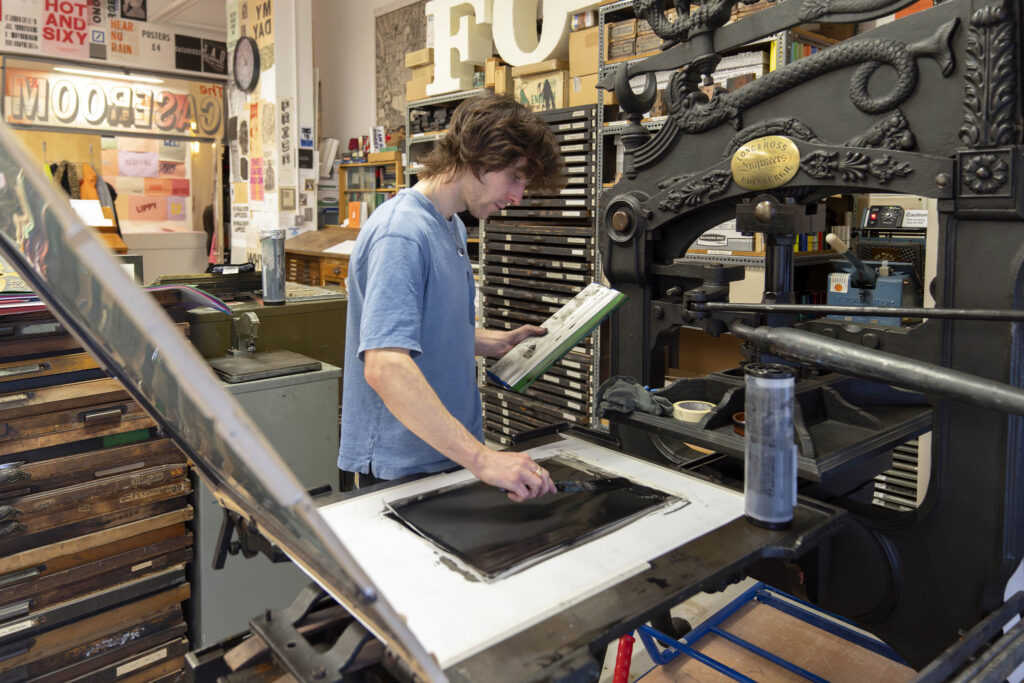
Whether based in Glasgow or in the Highlands of Scotland, postgraduate students can make use of specialised studio spaces, cutting-edge workshop equipment, and one of the best art and design library collections in the world. Source: GSA CaseRoom, The Glasgow School of Art
Meanwhile, taught Postgraduate Study at the GSA is the perfect opportunity to further your skills in the visual creative disciplines. During your time as a postgraduate student, you’ll have many chances to work collaboratively, exhibit externally, and make connections with the GSA’s partners in the creative sector, industries, and wider world.
The Master of Fine Art (MFA), established in 1988, has earned a global reputation for producing Turner Prize nominees and winners, and leading international contemporary figures. This two-year-long multidisciplinary programme offers students an opportunity to analyse their creative practice in depth, and to modify, develop, and secure it accordingly.
This is echoed by Juniper Fenner, a second-year MFA student who joined the programme from the US. Reflecting on their first year at the GSA, they mention, “the GSA’s MFA programme places a high value on independent study. What’s distinctive about this is that independence at GSA does not mean working alone, but rather working without direct instruction. This focus pushes my peers and I to lean on each other and seek out our cohort for advice and critique. This system of learning not only creates a tight network of artists within the programme but facilitates development of professional practice that continues outside of school.”
Complementing the MFA, options such as the one-year MLitt Contemporary Art Practice or the MLitt Curatorial Practice allow practitioners to focus intensely on specific technical and theoretical avenues.
Key distinctive features of postgraduate study within the School of Fine Art include:
- The two-year MFA: One of the few two-year MFA structures in the UK, providing extended time for deep critical development, ambitious studio projects, and professional exhibition preparation. Unlike other countries where a master’s degree takes two years, master’s degrees in the UK are typically completed in just one full year.
- Practice-led research environment: Intensive studio work complemented by critical seminars, peer critiques, visiting artist lectures, and theoretical research modules.
- A global creative network: Join their global Creative Network and gain access to invaluable insights into the creative sector, networking, and wider opportunities.
As a site of experimenting and creating, the GSA’s studios are a key asset for students. “The studio culture at the GSA is incredibly unique!” comments Juniper, further adding, “The MFA studios are not separated by discipline or year of study. Everyone gets to interact with different research practices and methods all the time. I have found this to be of the utmost value; not only for informing my artwork but for growing as a young adult. The diversity of practice is one of my favourite things about the GSA.”
Craft your community at The Glasgow School of Art
Whether beginning an artistic journey at the undergraduate level or advancing an established practice as a postgraduate researcher, students in the School of Fine Art join a historic legacy of creative independence. They do not merely graduate with a degree; they leave equipped with a resilient artistic practice, a global network of colleagues, and a powerful voice capable of shaping contemporary visual culture.
Explore degree programmes across GSA’s four specialist schools, or discover the work of GSA’s undergraduate and postgraduate students