

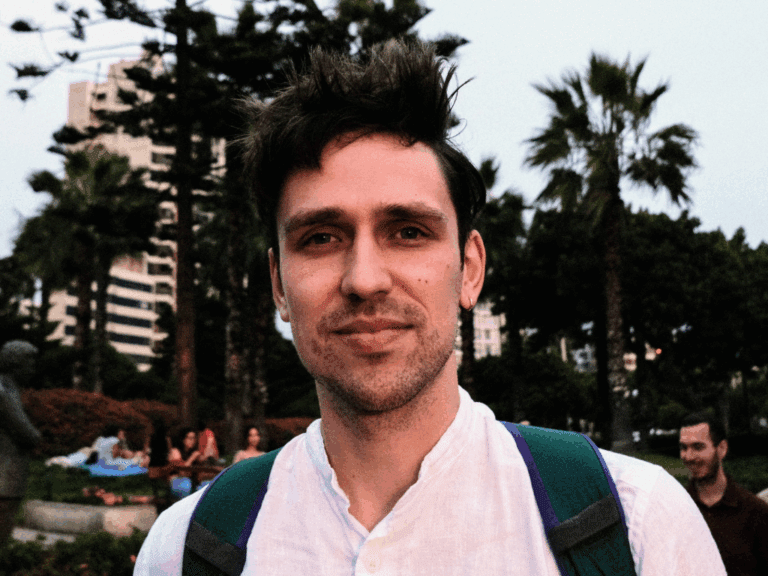


Artificial minds and psychology aren’t two things you’d think would go together. One sounds like it belongs in a robotics lab, while the other, maybe in a therapist’s office.
But for Eivinas Butkus, a Lithuanian student pursuing a PhD in Psychology at Columbia University, the two are deeply connected. In fact, computational models used for artificial intelligence (AI) may hold the key to understanding our own brains and minds
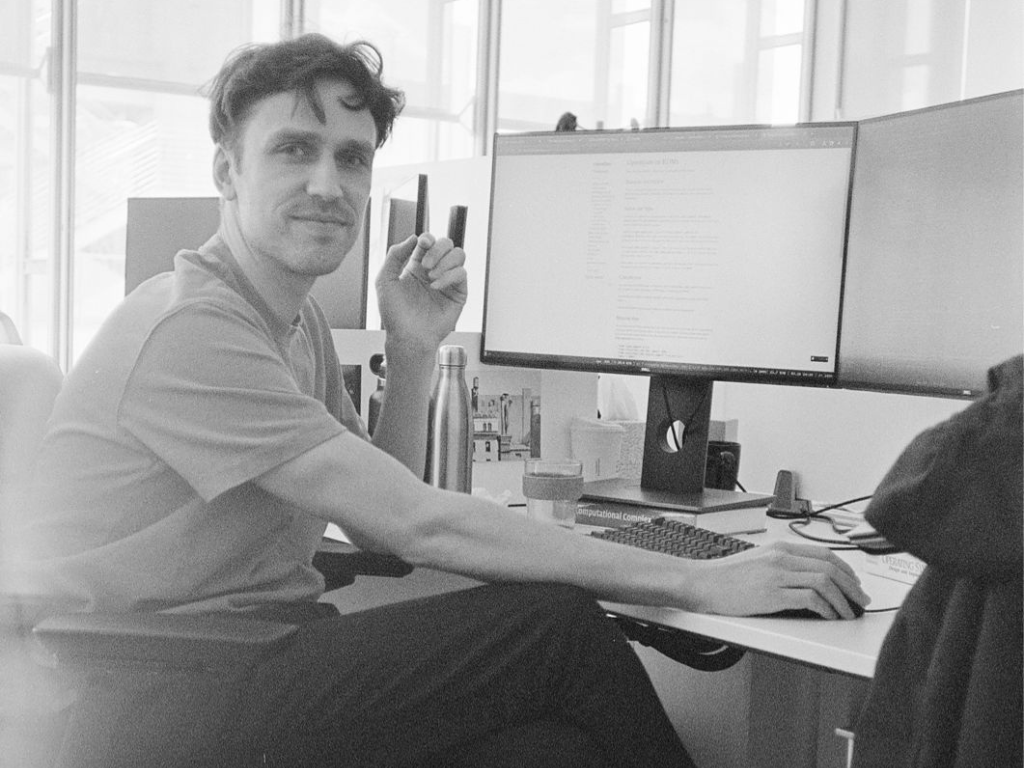
Butkus pursued a Bachelor’s degree in Philosophy from King’s College London and a Master’s degree in Computer Science from Imperial College London. Source: Eivinas Butkus
PhD in Psychology: Using computational models to understand the brain
“There are two main motivations for studying the brain,” says Butkus. “First off, it’s just advancing scientific understanding of how the brain works in general. And then there are applications — technologies and therapies enabled by neuroscientific research.”
The fact is, there are already people working on the initial iterations of these technologies — including brain-computer interfaces that help with movement or transcranial magnetic stimulation therapies for depression.
“Some people are trying to restore vision by implanting electrodes into your visual cortex, then stimulating it, and it’s already been shown that a blind person can see some dots of light, and you can create patterns that they can see,” Butkux explains.
But what he’s researching specifically is the application of those digital sensory motors.
“We need to understand the computational basis of the conditions when using these devices on people, and possibly designing interventions through the tools of our field [psychology],” Butkus shares.
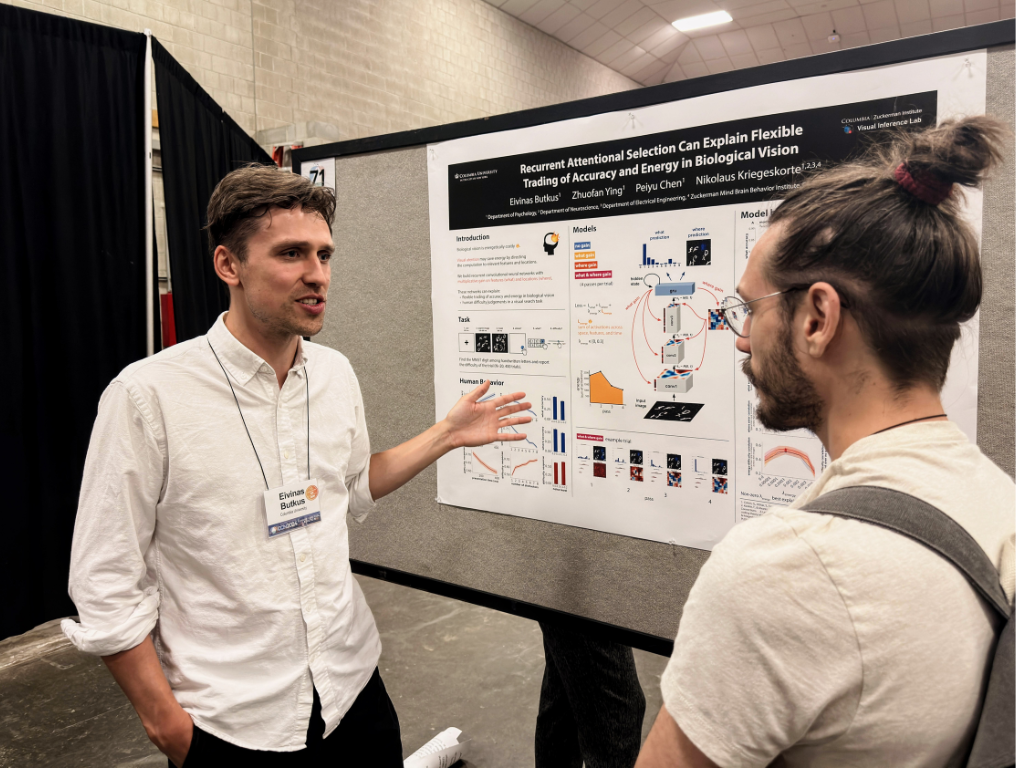
Butkus is currently a trainee at the NSF AI Institute for Artificial and Natural Intelligence (ARNI). Source: Eivinas Butkus
Who should pursue a PhD in Psychology?
Researching artificial minds wasn’t exactly part of Butkus’s life plan; it was something else entirely.
Born and raised in Vilnius, Lithuania, he dreamt of becoming a filmmaker and studying abroad.
“I was taking filmmaking classes at the time and applied for undergraduate film programmes in the UK,” he says. “But eventually I realised that I probably won’t be able to learn as much as I already had at the film school back home.”
So he decided to study philosophy before coming back to filmmaking. However, he had to wait another year before he could reapply to the philosophy programme. He chose to spend that year studying Mathematics at Vilnius University.
“I took it as a gap year,” Butkus laughs. “Usually, people would work or travel, but I decided to do something useful in an academic sense.”
After a year, he enrolled in King’s College London (KCL) to pursue a bachelor’s degree in Philosophy. That was when Butkus stumbled upon cognitive science and psychology.
“I was reading a lot about the philosophy of cognitive science and AI, I even wrote my dissertation about something AI-related. At the time, we didn’t have any AI platforms like ChatGPT. The most we had was AlphaGo,” he says.
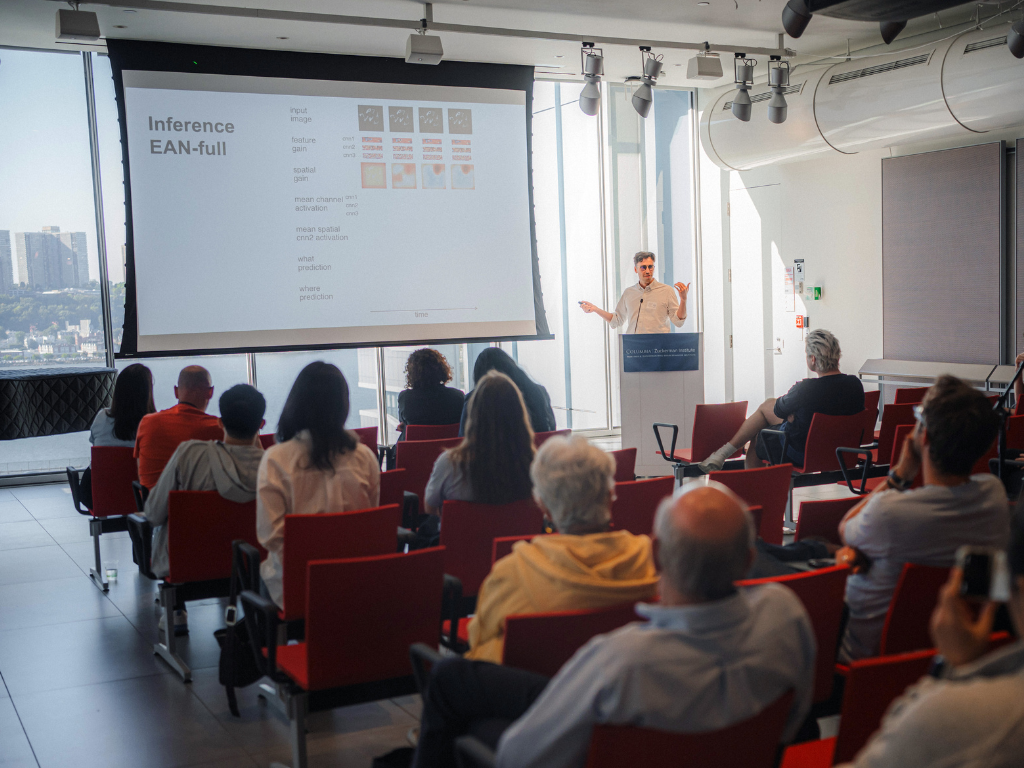
Butkus presenting at the “ZIFest”, an annual scientific festival hosted by the Zuckerman Institute at Columbia University. Source: Eivinas Butkus
Upon completing his degree, Butkus applied for an MSc in Computer Science at Imperial College London.
“I just didn’t want to just think or contemplate about AI…I wanted to build it,” he shares.
It was an intense course, but the perfect programme for him. After that, Butkus even had the opportunity to work as a research assistant at Yale University for two years, focusing on computational models of human attention.
It was then, he decided to apply for a PhD. But the only PhD that fit his needs was a PhD in Psychology.
“It’s a little misleading, my PhD is mostly focused on artificial minds,” Butkus admits. “Many will think it’s counselling or psychiatry, but it’s mostly about the computational basis of intelligence, or cognitive computational neuroscience, a term coined by my supervisor.”
It’s an intersection of three fields, which are psychology (or “cognitive science”), AI, and computational neuroscience.
Butkus has been pursuing his PhD at Columbia University for the past four years and will be defending his thesis in 2026.
Popular stories
Where were the cast of ‘Bridgerton’ educated?

What your Chinese zodiac animal says about which university you should attend

What US$100k or US$500k buys you at the no. 1 university in 10 countries

Competitive courses, elite universities: Where the cast of ‘Single’s Inferno Season 5’ studied