


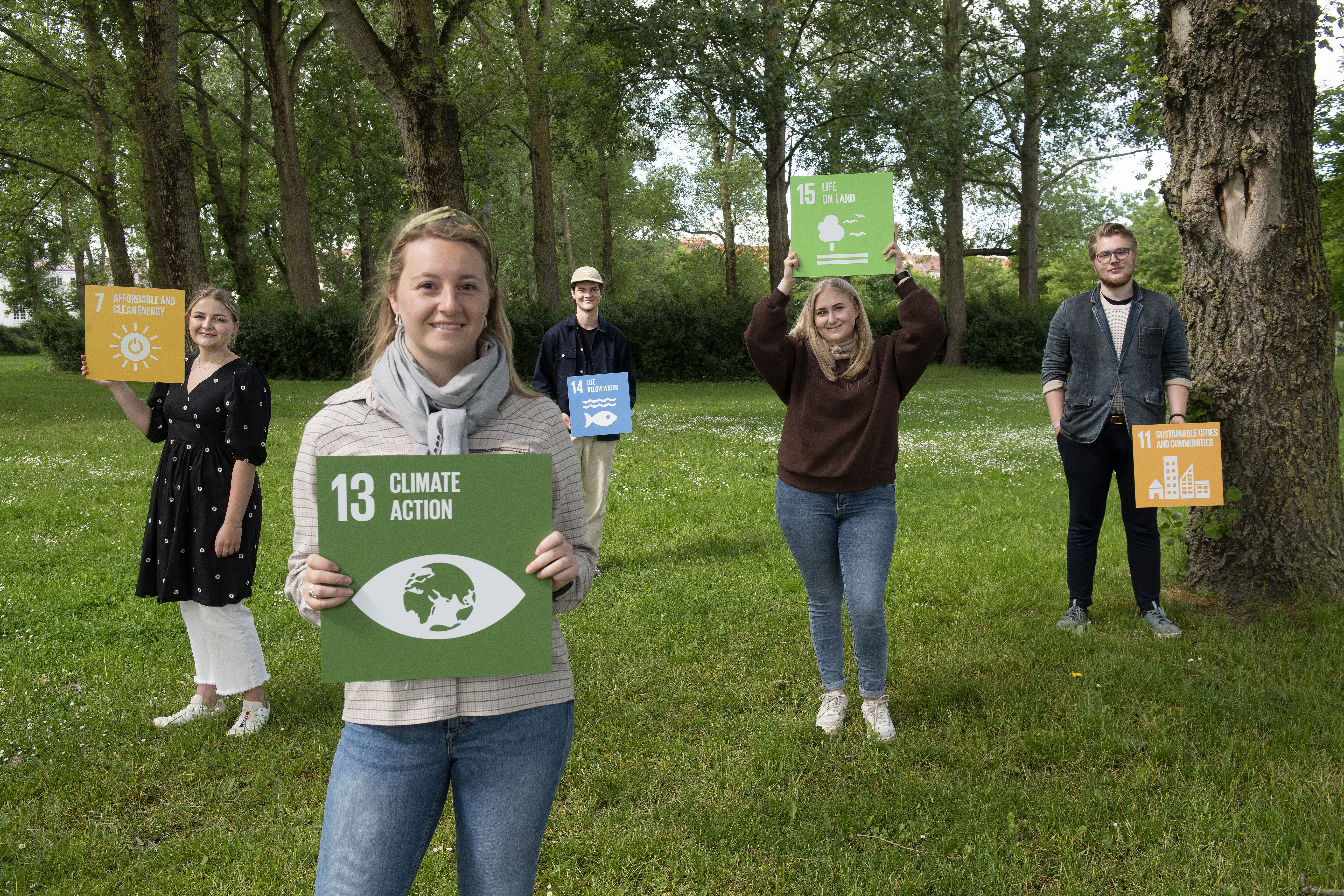


Today the word “sustainability” is being used so broadly that it’s starting to lose its meaning, according to Freja Kanstrup, a student in Sustainable Design at Aalborg University. “When we call everything from shampoo to coffee cups sustainable — often without any real documentation — we’re no longer able to distinguish between what truly makes a difference and what is simply a good story,” she writes in an opinion piece on LinkedIn, which has also been published in the Engineering media “Ingeniøren”.
Aalborg University’s Department of Sustainability and Planning belongs in the former category, the one behind research and teaching that actually make an impact to society. Ranked #9 in Times Higher Education’s University Impact Rankings (a measure of how universities are performing against the United Nations Sustainable Development Goals), the Danish university is a leader in creating a greener future.
For example, the university recently created a thermal emitter that not only survives extreme temperatures but also operates stably for over six months. This represents a major step towards solving one of the biggest challenges in the green transition, i.e. the ability to store excess electricity from solar panels and wind turbines to be used on calm, overcast days.
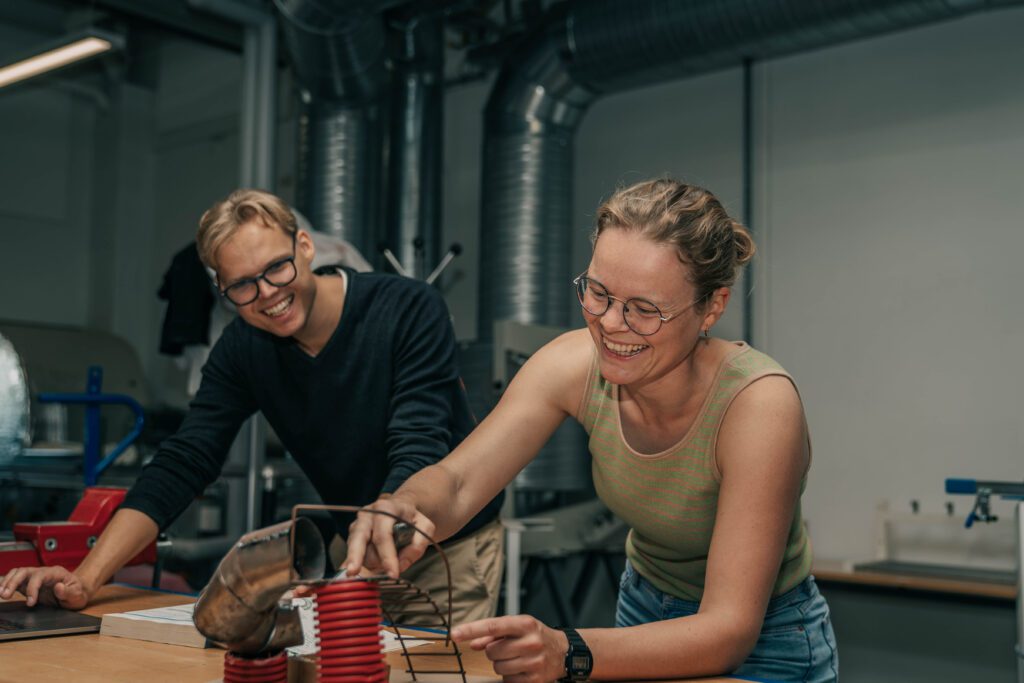
From Urban Planning and Management to Sustainable Cities and Sustainable Design, the department offers a wide range of programmes focused on the green transition. Source: Aalborg University
The same focus carries through all programmes offered by the department. There is a wide range of engineering and science master’s programmes here: Urban, Energy and Environmental Planning (with four specialisations), Cities and Sustainability, Environmental Management and Sustainability Science, Sustainable Energy Planning and Management, Urban Planning and Management, Sustainable Cities, Sustainable Design, Techno-Anthropology, among others. Whatever discipline they’re in, and whether it’s based at the Aalborg city or Copenhagen campus, all are deeply rooted in sustainability, the green transition, and the university’s Problem-Based Learning (PBL) approach.
The nationally and internationally recognised PBL approach goes like this: instead of rote memorisation, exams, and essay writing, students work in teams to solve real world problems. Advanced and efficient, it’s an approach that gets students to prepare contemporary projects of a high academic standard.
Along the way, they gain knowledge and skills independently, work analytically, cross disciplines, dissect results, collaborate with the business community, develop teamwork, become highly employable, and attempt to solve complex global issues connected to the Sustainable Development Goals (SDG).
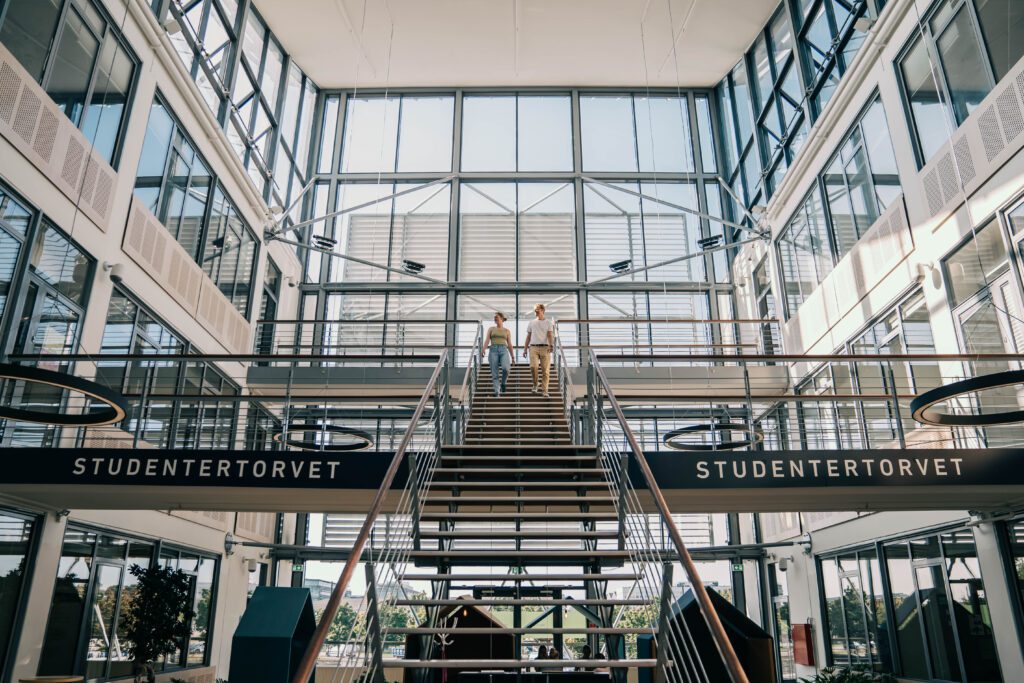
Aalborg University is among the top 10 institutions that prioritise making a sustainable impact. Source: Aalborg University
“The programme is anchored in a PBL model, where students spend the majority of their study time working in groups and on real-world projects,” says Associate Professor Iva Ridjan Skov. “Employers consistently report that our graduates are ready from day one to navigate workplace demands, thanks to their experience solving complex problems collaboratively.”
There are still traditional classes, but more dialogue-driven than dictated by a rigid monologue. And depending on their track, learning here includes various approaches from intimate seminars to hands-on lab sessions.
For Sustainable Cities student Cecilie Skov Johansen, that took her to this question: what should be done with the growing number of electric vehicle batteries once they can no longer be used in cars? Instead of wasting these batteries, her master’s thesis investigates how they can be given a second life as energy storage units in the power grid, as so-called second-life batteries.
“By 2050, Denmark could gain up to 15 GWh of additional storage capacity simply by reusing batteries that would otherwise be discarded,” she says.
That’s what Johansen’s research revealed. But what she gained was a deeper understanding of the practical and political barriers hindering the deployment of second-life batteries. With the right policy measures and infrastructure investments, she found these batteries could become a key component in Denmark’s future flexible energy system as well, one where she would be able to play a part.
Thanks to her thesis work, which left a strong impression on Green Power Denmark, she has since been offered a position at the 1,500-member-strong non-commercial business organisation.
Follow the Department of Sustainability and Planning on LinkedIn and Aalborg University on Facebook, Instagram, LinkedIn, Snapchat, and YouTube.