

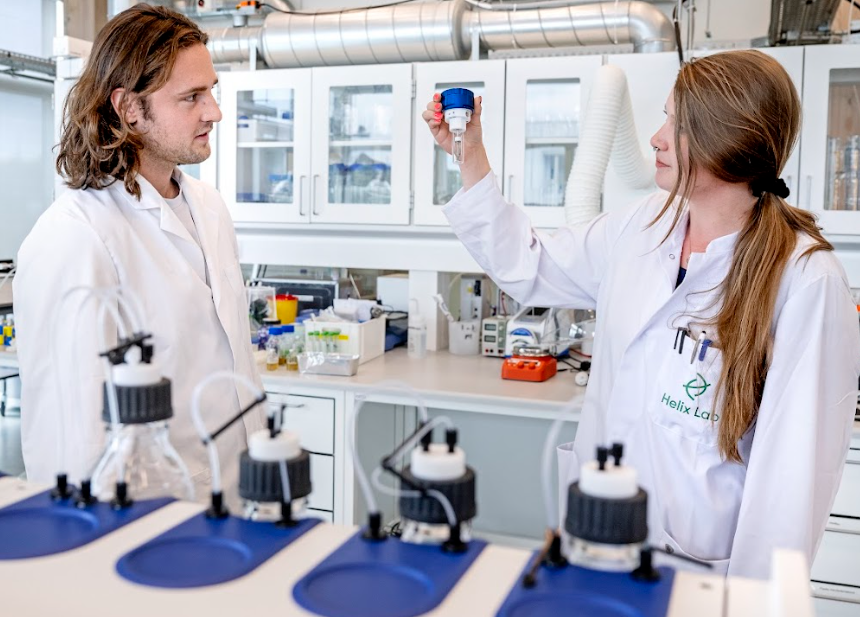


Victoria Herraiz Bertolin’s journey into biomanufacturing began in a way that will sound familiar to many students. She was, in her own words, “honestly tired of being a broke student.” Looking for something more practical and future-focused, she enrolled in the Biomanufacturing – Industry MSc in Engineering is offered by the Technical University of Denmark (DTU).
DTU is ranked #1 in Europe for Chemical Engineering by EngiRank – which also places DTU at the top overall among Europe’s technical universities.
Unlike a traditional master’s, Biomanufacturing – Industry MSc in Engineering is built around paid industry work alongside your studies – organised in blocks so work and coursework don’t overlap.
The programme is based at Campus Kalundborg, an educational and research hub hosting industry-focused master’s and bachelor’s programmes, offering clear pathways to a career in the dynamic biotech industry.
“I believe that the job opportunities when finishing the studies are greater than if finishing a normal Master” – Victoria Bertolin
What really motivated her wasn’t just the degree itself, but everything that came with it. “Having both a MSc and four years of work experience in my ‘toolbox’ sounded really good,” Victoria says. “You get the knowledge and the hands-on experience that companies often prefer over a purely theoretical education.” And since starting the programme in 2024, she has grown even more confident in her decision, she says.
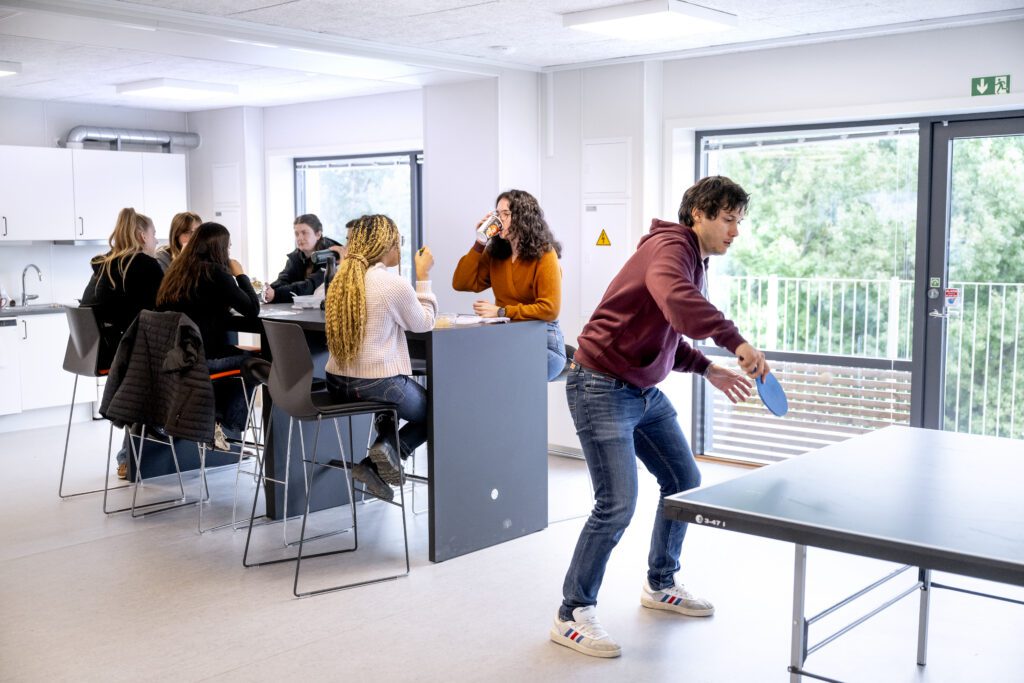
Victoria (in the orange sweater) is having coffee with her fellow students during a break. Photo: Bax Lindhart
Chemical engineering in a living laboratory
Biomanufacturing – Industry MSc in Engineering is a programme where leading experts and professors prepare you for a field that’s growing fast: chemical and biochemical production. “Some courses will teach you core chemical engineering skills, while in others you apply these skills to industrial cases, with input from biotech companies,” explains Martin Høj, Specialization Coordinator and Associate Professor at DTU’s Department of Chemical and Biochemical Engineering.
“By the time you’re done, you’re not just familiar with the theory; you’re ready to step into a factory, handle industrial processes, improve systems, and help implement new technology and digital optimisations”.
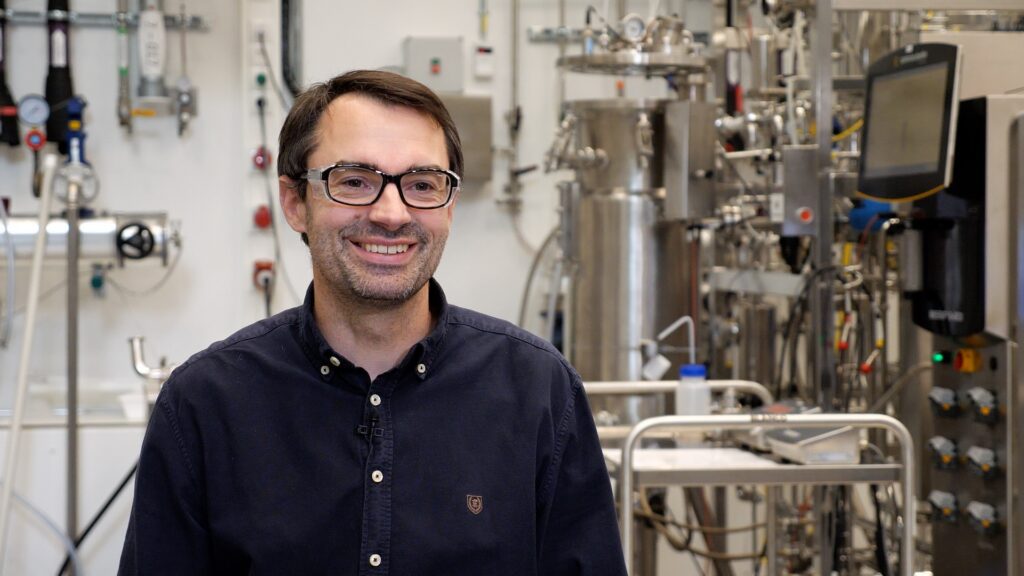
“You’re not just familiar with the theory — you’re ready to step into a factory,” says Martin Høj, Associate Professor at DTU. Photo: DTU
The programme takes place in Kalundborg, about an hour from Copenhagen, but it’s far from a small, quiet town. With initiatives like Kalundborg Symbiosis, where biotech factories, energy providers, and local industries work together to reuse waste and make better use of resources, Kalundborg has transformed into Scandinavia’s largest biotech cluster.
It’s basically a living laboratory for engineers who want to make a tangible impact. “As an Industry MSc student, you get to work part time, allowing you to quickly apply new skills to your job,” explains Associate Professor Høj. “Your master thesis project will also be defined in collaboration with your workplace, giving you the chance to engage your new competences in a larger, real-life challenge.”
Your job is part of the degree
This industry connection is one of the programme’s biggest perks. “Companies in Kalundborg offer part times jobs which match this MSc, so getting a job was quite simple for many of my classmates and I,” says Victoria. Students often land roles at companies like Novo Nordisk or Novonesis.
At Novo Nordisk, for example, you can work as a Process Engineer and get a real feel for how pharmaceutical production works and how every decision connects to the bigger business picture. Meanwhile, Novonesis’s cross-functional teams are developing enzyme products to make food and energy production more sustainable.
And no, your job doesn’t clash with your studies.” The programme is meticulously coordinated with local industries to ensure that work and study periods are distinct” says student Leonardo Di Terlizzi. “This ‘block’ approach allows me to immerse myself fully in my role as a process engineer and then pivot entirely back to university, thereby avoiding any overlap between work and study.”
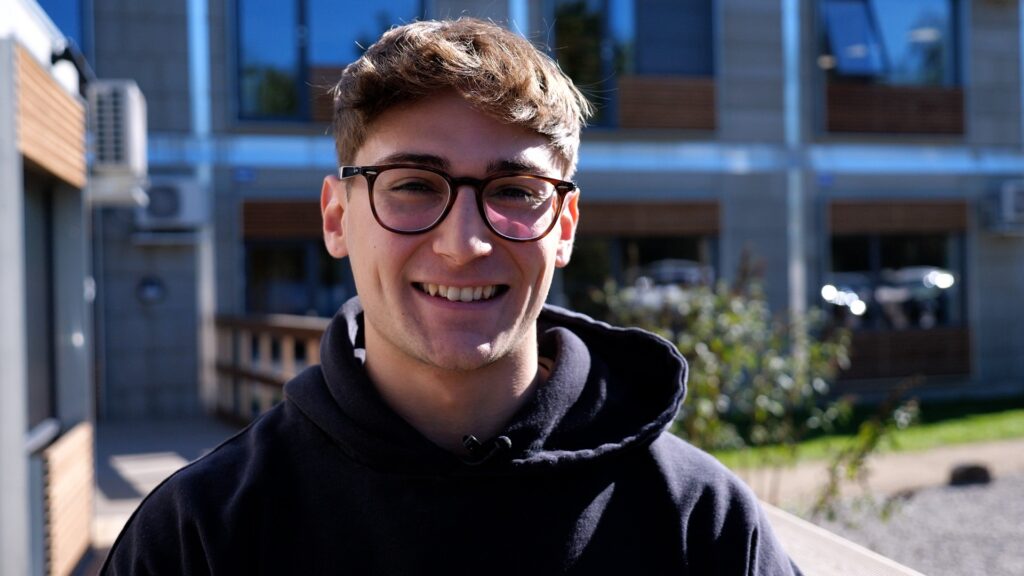
Industry MSc student Leonardo Di Terlizzi is gaining experience, building a network, and learning alongside professionals from local companies. Photo: DTU
Having work experience is great, but there’s another bonus: networking happens without you even trying. “My peers aren’t just students, but colleagues from various companies in Kalundborg,” adds Terlizzi.
That means you’re constantly hearing about how things run in different parts of the industry — almost like getting a 360-degree tour of biomanufacturing. And because everything is so close, from the classroom to the production sites, learning here feels rare and special.
“Socially, this creates a unique bond among my classmates,” says Terlizzi. “We are all navigating the same professional and academic challenges together, which creates a sense of community and support.”