

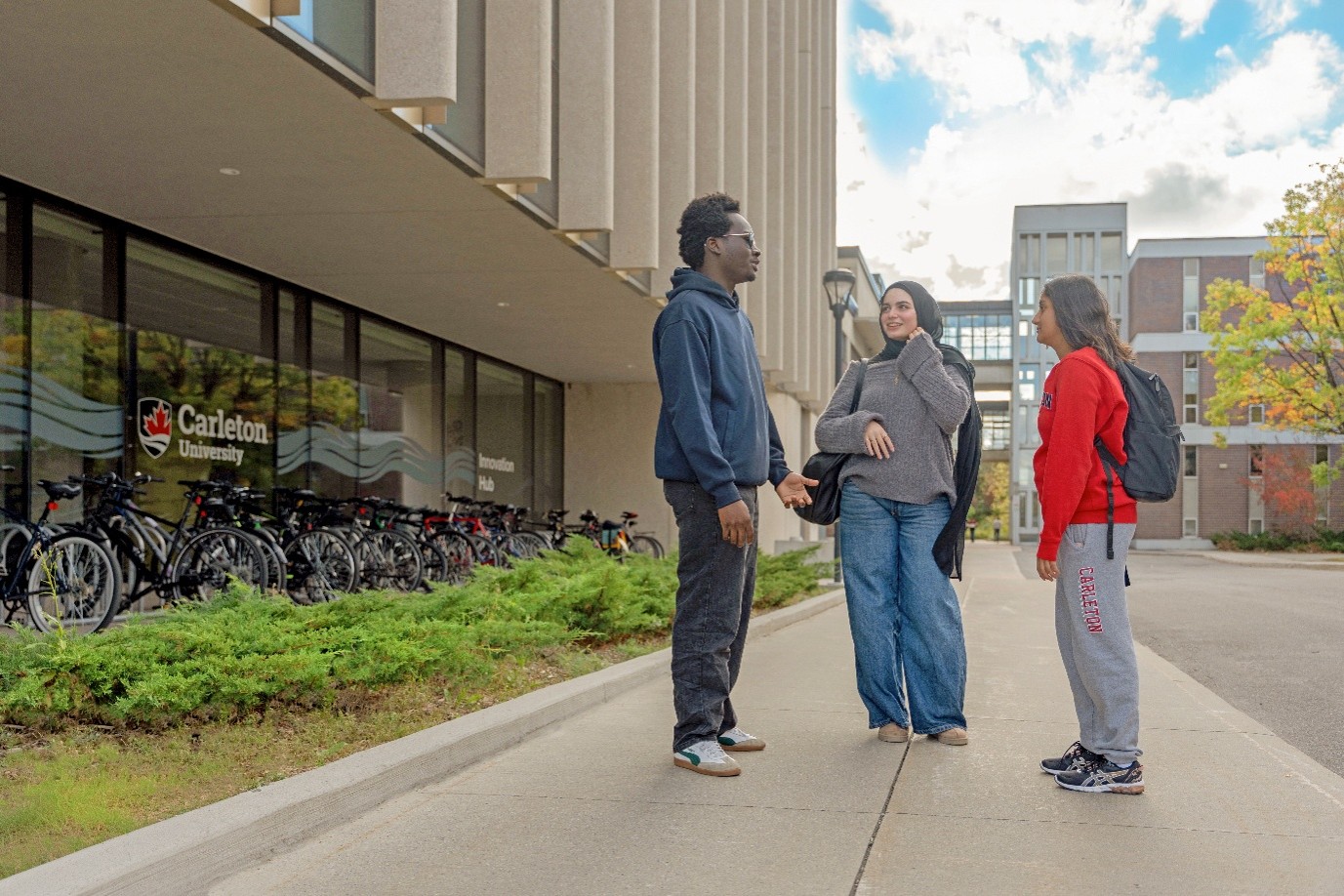


There’s something special about a city that offers the excitement of a capital with the calm of nature. Ottawa, Canada, a G7 capital and a growing technology hub, is one of those places. Beyond its busy downtown, the city opens up into scenic waterways, provincial parks, and historic neighbourhoods. Its reputation for safety, affordability, and quality of life only adds to its appeal. For students at Carleton University’s Faculty of Public and Global Affairs (FPGA), these advantages are never far away.
Home to 80 specialised programmes and 800 courses, the FPGA is where aspiring scholars and professionals turn for rigorous scholarship in public policy, international affairs, journalism and communication, economics, law, and political science. Like Zijun (Leslie) Rao, an MA in Communication student, who describes her programme as “highly interdisciplinary” and says it allowed her to explore several issues ranging from technology and media to policy and social change. “To do this in Canada’s capital city was even more important,” she says.
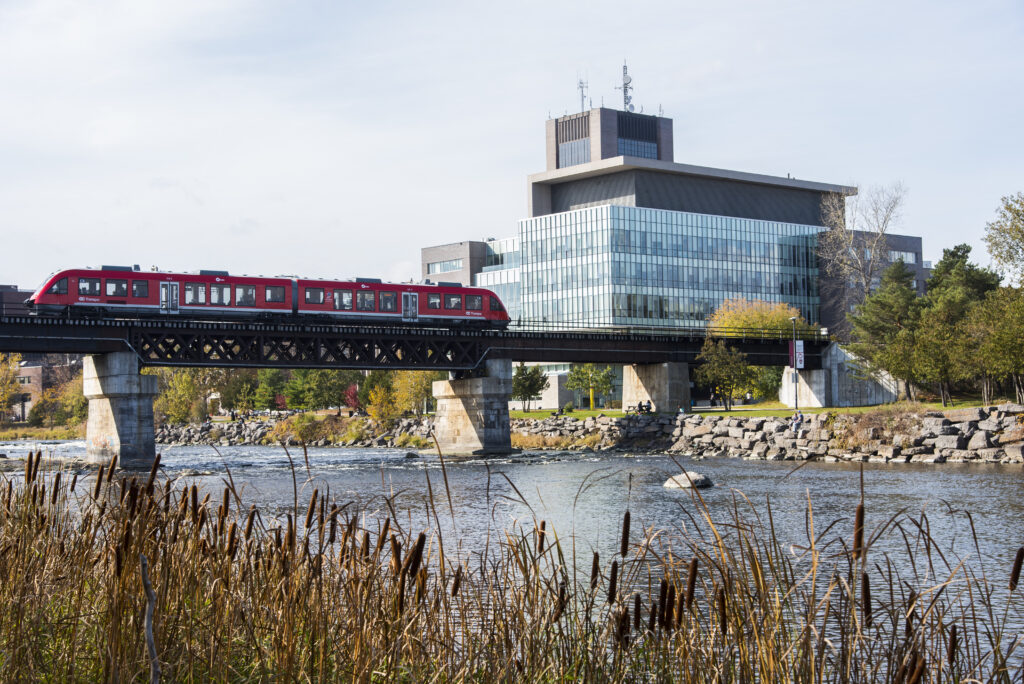
The Carleton University campus is a short train ride from downtown Ottawa, Canada’s centre for national and international affairs. Source: Carleton University
Opportunities are around every corner
Being based in Ottawa puts FPGA students close to federal government departments and agencies, international embassies, NGOs, think tanks, consulting firms, and more. Having them nearby makes it easier for you to explore opportunities outside the classroom, such as events, conferences, informal policy discussions, and internships.
The MA Co-op programme is one key way to do so, where you can work in government, not-for-profit, private, or voluntary sector organisations. Previous students have worked as policy analysts at Health Canada and trade policy analysts at Agriculture and Agri-Food Canada.
Sal Sabila, an MA in Migration and Diaspora Studies student, completed an internship at the United Nations High Commissioner for Refugees (UNHCR) in Canada. “From attending bilateral meetings to learning through cases, the experience helped me contextualise and bridge my learning across research, community engagement, and policy work,” she shares.
And when policymakers visit campus, they conduct masterclasses and host special lectures. Through these gatherings, you’ll meet with other students from across FPGA, providing opportunities to build truly interdisciplinary research and professional networks.

FPGA master’s students and postdoctoral fellows have won major awards, including Canada Graduate Scholarships, Three Minute Thesis (3MT) Awards, Vanier Graduate Scholarships, and more. Source: Carleton University
Build skills for a world of opportunities
For Guncha Annayeva, a second-year MA in European, Russian and Eurasian Studies (EURUS) student, studying at Carleton was an opportunity too good to pass up. “It was a dream to come to Canada and to Carleton to study in this unique programme,” she shares. “As a EURUS student, I’m developing a deeper expertise in Europe, Russia, and Eurasia to understand the region’s history, politics, economies, and cultures. I’m exactly where I need to be, and Carleton is empowering me to make an impact in my home country.”
Behind students like Annayeva is the FPGA’s research-intensive community. Faculty members have secured more than 100 million Canadian dollars (US$70.95 million at the time of writing) in funding from Canadian and international agencies and foundations. They support projects on defence and security, refugee support networks, global media, and climate change communication, among others. Master’s students are provided with plenty of opportunities to participate in faculty research, and to draw on the FPGA’s outstanding mentors to support their studies.
Under their guidance, you’ll develop the skills and credentials needed to lead across public, private, and nonprofit sectors. “At Carleton University, I found a community that challenged me to think critically, grow intellectually, and persevere with purpose and determination,” says Ahmad Malgarai, who completed both a master’s and PhD in Economics. “I’ve developed not only strong research and analytical skills but also resilience and the confidence to contribute meaningfully to academic and public life.”
FPGA alumni show just how many doors a Carleton education can open. Some work at the highest levels of government, including Canada’s Ambassador for Climate Change. Others build successful careers in business, politics, and the non-profit sectors.
If you’re hoping to follow in their footsteps, Annayeva recommends staying open to new experiences. “Carleton has so much to offer given its location in the nation’s capital,” she shares. “There is so much to explore here, and so many unexpected opportunities, both professional and personal.”
Applications to the FPGA’s master’s and PhD programmes are currently under review, so apply early for advanced consideration.
Follow Carleton University on Facebook, Instagram, YouTube, and LinkedIn