



The best plagiarism removers are lifesavers.
This is especially so when many students would like to use ChatGPT to help them with their homework.
Nearly nine in 10 (89%) of survey respondents reported that they had used the platform to help with a homework assignment, according to research from Study.com.
The survey also found that:
- 48% of students admitted to using ChatGPT for an at-home test or quiz
- 53% had it write an essay
- 22% had it write an outline for a paper
Even without using ChatGPT, there are still many iconic cases of plagiarism.
Take Taylor Swift, for example. The pop sensation was sued by Sean Hall and Nathan Butler, who penned “Playas Gon’ Play” in 2000.
The song, which was released by former girl group 3LW, contains similar lyrics to Swift’s 2014 “Shake It Off”, particularly in its chorus.
Hall and Butler previously sued Swift in 2018 but were dismissed by the judge. Three years later, the lawsuit was reopened.
One student was also accused of plagiarism after giving a speech at Duke University’s commencement ceremony.
The Chronicle — Duke University’s student-run news organisation — reported that Priya Parkash’s speech was similar to student Sarah Abushaar’s 2014 Harvard University commencement speech.
Abushaar’s speech went: “I saw it in the big and obvious things: We had our own version of the Statue of Liberty, the John Harvard statue; our own embassies, the Harvard Clubs of Boston and London; a tax collection agency, the Harvard Alumni Association; and an endowment larger than more than half the world’s countries’ GDPs.”
Parkash’s speech went: “We also have our own version of Christ the Redeemer — the statue of James Buchanan Duke standing atop an octagonal pedestal to grace Abele Quad. We also have an IRS with its surprisingly bubbly fleet of tax collectors — the Duke Alumni Association. We also have the equivalent of the Federal Reserve, DUMAC, which manages an endowment larger than the GDP of one-third of the countries in the world.”
It’s clear that plagiarism can occur in many different forms — and even unintentionally. Before we move on to the best plagiarism removers on the Internet to remove copied content, let’s take a look at how plagiarism occurs:
What is plagiarism and how can it occur even unintentionally?
Plagiarism is presenting work or ideas from another source as your own, with or without consent of the original author, by incorporating it into your work without full acknowledgement, according to the University of Oxford.
This covers all published and unpublished material, including material produced with the use of AI. It even includes re-using your own work without citation.
At times, you might even plagiarise without realising it. Usually, this happens when you’re unclear about the citation format, paraphrasing rules, or improper use of commonly known facts.
There are also occasions of unintentional plagiarism due to differing cultural norms.
 As they say, prevention is better than cure. Knowing the types of plagiarism can help you avoid these situations.
Types of plagiarism
Verbatim (word-for-word) quotation without clear acknowledgement
When you directly copy and paste the source without citing the author, this is known as verbatim plagiarism.
If you want to use these quotes, you must make it clear to the reader which parts of your own independent work and where you have drawn on ideas and language from another source.
Paraphrasing
As the name suggests, it involves paraphrasing another person’s work and presenting it as your own.
A passing reference to the original author in the text may not be enough — it may give the wrong impression that the paraphrased wording or sequence of ideas is entirely your own.
Patchwork plagiarism
Like a mosaic art piece, patchwork plagiarism involves sourcing quotes and phrases from different articles and putting them together as your own work.
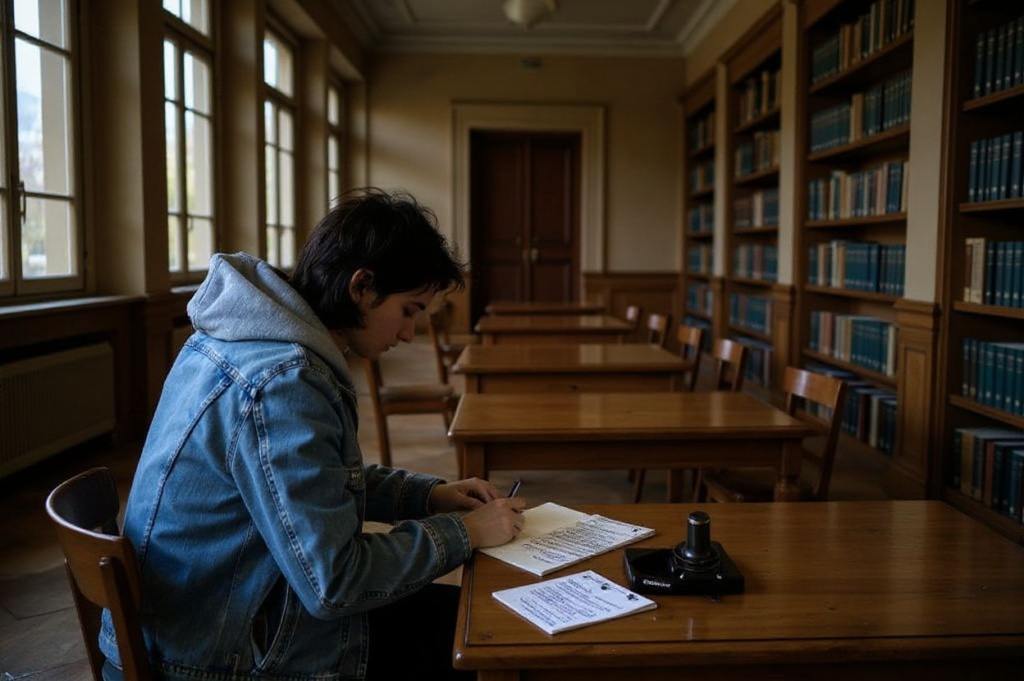 Think twice before submitting someone else's assignment as your own.
Global plagiarism
This type of plagiarism involves taking an entire piece by someone else and passing it off as your own. It could mean getting someone else to write an essay or assignment on your behalf.
Since this involves intentionally lying about the authorship of a work, this is the most serious type of plagiarism, which can bring about severe consequences.
Self-plagiarism
If you use a previously submitted or published work as new content, that is self-plagiarism, even though you might have received recognition for the previous work.
In the most serious case of self-plagiarism, you would submit a paper that has already been presented for evaluation in a different course.
This isn’t allowed unless the uni has granted you permission to do so.
Revisiting old concepts and passages, however, is not considered plagiarism, so long as proper authorisation is obtained and the correct citation is provided to acknowledge the source.
 The Internet has some of the best tools to remove copied content.
5 best plagiarism removers to remove copied content
Most of these plagiarism removers are only able to remove text-based plagiarism.
In the case of AI, a plagiarism remover might not definitively determine whether a language model was used to generate a piece of text.
Still, it can help you identify instances of copying or paraphrasing from other sources.
At the time of writing, it can be hard to detect plagiarism by an AI chatbot.
That’s because AI writing tools use natural language and grammar to craft “unique and almost individualised content,” even if the content is drawn from a database, according to Aaron Leong from Digital Trends.
Plagiarism Changer by SEOMagnifier
- Pricing: Free
Plagiarism Changer is a free tool by SEOMagnifier that will help you identify and remove plagiarism from your content.
This tool can help make your content unique, using its powerful AI-based algorithms to rewrite your content.
If you are publishing your content online, Plagiarism Changer can help rewrite the duplicate content and replace it with unique and original content that you can use on your online platform.
Article Rewriter by SmallSEO
- Pricing: Free
Also known as Text Spinner or Paraphrase Online, Article Rewriter uses automated software technology for rewriting text so that the overall message conveyed in the original text is left intact while the wording is paraphrased.
While it is typically used by content creators, website administrators, bloggers and marketing agencies — it can also be used by students to avoid plagiarism to a certain extent, although not fully.
 If you need to rewrite something on the go, consider using Rewriter Tools.
Rewriter Tools
- Pricing: Free
This online paraphrasing tool helps you generate unique content easily and efficiently.
This tool uses AI algorithm which generates synonyms of the words that you have used using its rich vocabulary.
The paraphrase generator identifies the context of the given material, before approaching the paraphrasing process.
The site also gives you tips on how to write smartly, which you can access here.
Quillbot
- Pricing: Free, Premium (Monthly, Semi-Annual, and Annual)
Quillbot helps you to write better, faster and clearer.
It is used by over 50 million users worldwide, helps you cut down the amount of time spent on a writing project by about three quarters and lets you paraphrase 125 words on a free plan.
Besides using it to help with your university assignments, projects or online blog article, you can also use it to write emails or social media posts.
Bonus: They also have a grammar checker and an instant text summary tool — The Summarizer.
 Plagiarism remover PrepostSEO's AI mode changes words, break down complex sentences, paraphrases sentence to the point where plagiarism is minimised, and more.
Paraphrasing tool by PrepostSEO
- Pricing: Free, Premium (For more features)
The online paraphrasing tool by PrepostSEO comes in three different modes — Simple Mode, Advanced Mode and AI Mode.
- Simple Mode: Replaces synonyms from the text. You are able to paraphrase unlimited words in this version.
- Advanced Mode: It works like a word changer. You can add your own words if you are not satisfied with the automatic substitution of synonyms.
- AI Mode: Not only does this mode change words, it helps to break down complex sentences. It has three sub-modes, which help to fix grammar errors (fluency), make text easily readable (standard) and paraphrase to the point where detection of plagiarism is minimised (creative).
Grammarly
- Pricing: Free, Premium, and Business Plan
Usually, Grammarly is used for English learning and writing by flaggin grammar and spelling errors on a sidebar.
It also lets you know when your punctuation is off or when you are writing in a passive voice.
But did you know that Grammarly also has a plagiarism checker?
With this, you can check your article against billions of web pages for unoriginal text — an important tool to help you create A+ essays that are free of plagiarism.
You can download Grammarly as a browser extension, which is seamless and useful for new uni students.
Popular stories
This VC’s best advice for entrepreneurs that students should hear too

5 things I wish I knew before signing my rental contract abroad

Entrepreneurs, should you get an MBA? A venture capitalist answers

He studied graphic design in Australia, now runs a venture capital & angel investor network in M’sia