




If you want to serve people, feel fulfilled, and make a decent living, head to nursing schools in Canada.
Between 2022 and 2023, 19,631 students were admitted to entry-to-practice programmes for registered nurses, showcasing a strong demand for the profession.
The best part? The ample support and funding. In 2022, the Quebec government announced that it was setting aside 65 million Canadian dollars to train 1,000 foreign nurses, to deal with the country’s shortage of nurses.
In March 2024, Canada injected another CA$388,000 into a national association’s programme to help internationally educated nurses more quickly integrate into the country’s healthcare system with a mentorship pilot programme.
This are just some of the measures taken to address the growing need for nurses and health professionals in the country. Ontario will need 33,200 more nurses and 50,853 more personal support workers by 2032, reveals a report by The Canadian Press.
A good and satisfying job in one of the best countries in the world to study abroad and earn a living — what more reason does one need to join nursing schools in Canada?

International students often flock to Canada for their nursing qualifications. Source: Bertrand Guay / AFP
Why choose nursing schools in Canada?
Quality education
Canadian universities are known for providing world-class education. Not only are programmes paired with cutting-edge research and up-to-date practices, but they are often highly ranked and thus globally recognised.
This means that a qualification from most nursing schools in Canada will enable you to work from anywhere in the world.
There are also many pathways to choose from depending on what qualifications you have.
You can consider pursuing a Bachelor in Science in Nursing (BSN), Bachelor in Science (BSc), Master in Applied Science in Nursing (MASc), Master in Science in Nursing (MSN), graduate certificate, graduate diploma degrees, and PhD in Nursing.
Fuss-free visa applications
It is relatively easy to apply for a Canadian student visa, which means less stress with your application process.
However, for those intending to settle down in Canada after their education, things may not be as easy, as the country has introduced changes to the federal government’s immigration policy.
Make sure to check out the terms and conditions here.
Sieh dir diesen Beitrag auf Instagram an
Cost of education
Studying nursing in Canada is considered quite affordable.
According to Statistics Canada, the average international undergraduate tuition fee for nursing is CA$25,809 for 2024-2025.
If you require funding, check out the Vanier Canada Graduate Scholarships and Government Of Canada scholarships for international students.
Flexible pathways
Nursing schools in Canada come with fun specialisations you could consider:
- Midwifery
- Critical Care Pediatric Nursing
- Emergency Nursing
- Community Health
- Global Health
- Enterostomal Therapy Nursing
- Gastroenterology Nursing
- Nephrology Nursing
- Medical-Surgical Nursing
- Nursing Administration
- Hospice Palliative Care Nursing
- Cardiovascular Nursing
Streamlined support for international professionals
The International Credentials Recognition Act came into effect on July 1, 2024, which requires regulatory bodies to reduce red tape and remove barriers across 29 professions to make it easier, more transparent, and quicker to pursue and achieve credential recognition.
One major change is eliminating unnecessary Canadian work experience requirements for those who have already received prior professional training. There was an existing catch-22 that individuals needed work experience to work in Canada, but couldn’t work in the country because of the lack of Canadian work experience.
Other perks include reducing fees, removing redundant English-language testing requirements, and additional accountability and transparency to the public through data connection and reporting requirements.
Interested to learn more? Let’s explore how you can apply for nursing schools in Canada.
What do you need to get into nursing schools in Canada?
Each university will have its own entry requirements and their websites will give you a comprehensive list.
Here are the main things you would need to have as an international student:
- Passport and student visa
- French or English proficiency qualification (eg. IELTS, TOEFL, CAEL or CAEL online, PTE Academic)
- Proof of funds for programme and accommodation fees as well as living costs
- For a bachelor’s degree in nursing, you will need to have graduated from secondary school with particular core subjects — Mathematics, English, Biology, and Chemistry — 12th level.
- To apply for a master’s degree in nursing, applicants need a bachelor’s degree and most schools require a registered nurse license and one year of clinical experience.
- For a doctoral programme, universities require a master’s degree in nursing or equivalent.
Here are some nursing schools in Canada that may be a good fit for you.

It can be difficult to pick from the many nursing schools in Canada. Source: AFP
The best nursing schools in Canada
There seems to be a general consensus online about universities that offer nursing in Canada.
Perhaps the most reliable ranking system is the QS World University Rankings by Subject 2025: Nursing. Here are the top Canadian nursing schools and where they place globally:
- #4 University of Toronto
- #14 University of Alberta
- #16 University of British Columbia
- #30 McMaster University
- #41 McGill University
As you may have noticed, these universities place within the global top 50. Impressive, to say the least.
To further aid your journey toward becoming a nurse, we have picked out the highest-ranking, most affordable, and most accessible nursing schools in Canada:
Nursing schools in Canada: the cream of the crop
The Lawrence Bloomberg Faculty of Nursing at the University of Toronto has an extensive history playing a part in Canada’s healthcare scene.
From the 1920s, when the faculty — backed by nurse Kathleen Russell — helped bolster the education of nurse leaders during the critical time following the Spanish Influenza pandemic, to 2023 when a nursing student led the co-creation of a new simulation focused on providing specialised care to the 2SLGBTQIA+ community, UoT isn’t stepping on the brakes anytime soon.
UoT has a range of nursing programmes, including an accelerated, two-year BSN, an MSN, a PhD, and a Doctor of Nursing programme, as well as six certificate programmes for nurses to upskill themselves.
Tuition fees for international students enrolling in the BSN in the 2024-2025 academic year start from CA$49,668.74 (US$34,638.79) a year.

Canada has some of the best nursing schools in the world. Source: AFP
Nursing schools in Canada: a bang for your buck
One of the cheapest universities in Canada for courses in nursing is the University of Prince Edward Island.
Their Faculty of Nursing Programmes charge CA$7,170 (US$4,999.21) a year, with an additional CA$8,410 (US$5,863.79) fee for international students.
This university also offers more than CA$5 million in scholarships and awards.
University of Prince Edward Island’s nursing curriculum follows the definition of primary health care defined by the World Health Organisation.
It is “essential healthcare made universally accessible to individuals and families in the community by means acceptable to them, through their full participation and at a cost that the community and country can afford.”
If you are looking to cut costs, you might consider a two-year nursing programme. Here are some of the Canadian universities that offer them:
- University of Ottawa
- McGill University
- Stenberg College
- Lakehead University
- Toronto Metropolitan University (formerly Ryerson University)
- Langara College
- Conestoga College
- Durham College
- Thompson Rivers University
- Georgian College
- Centennial College
- Fanshawe College
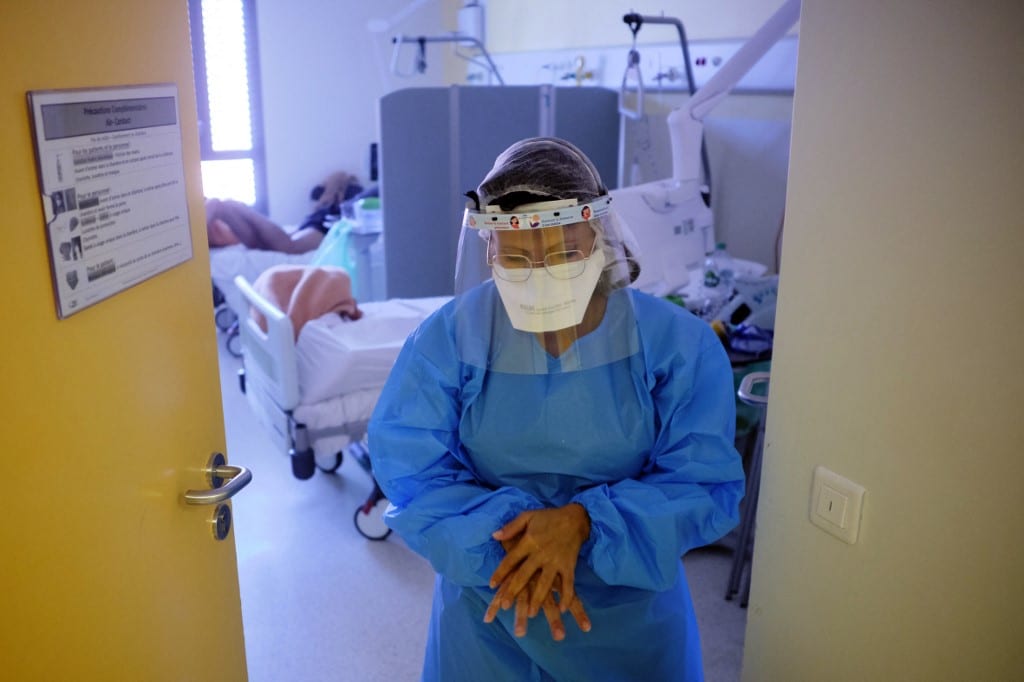
Students often enjoy the hands-on experiences they have at Canadian nursing schools. Source: AFP
The easiest nursing schools in Canada to get into
Before we proceed any further, “easy” is subjective. Someone who’s good with people will naturally rate dealing with tough patients easy; an introvert will say the opposite.
We all perceive “easy” and “difficult” differently. Hence, it’s important to have an objective assessment of what’s the “easiest” nursing schools in Canada to get into — that is, the acceptance rate.
According to Global Scholarships, Lakehead University has an acceptance rate of 82%, making it the third highest in Canada.
Naturally, it wins the title of the easiest or most accessible nursing school for international students.
The Lakehead University School of Nursing offers:
- Four-year BScN programme in collaboration with Confederation College
- Three-year compressed BScN programme
- Nurse Practitioner Programme
- Master’s in Public Health with a Specialisation in Nursing
- Indigenous Nursing Entry Programme (INEP)
Other than having faculty who publish their research frequently, this nursing school also gives students hands-on learning experiences with cutting-edge medical technology.
Students will engage in diverse clinical experiences, from community settings and hospitals to long-term care facilities.
View this post on Instagram
What comes next?
If your goal is to settle down in Canada after graduating, your next step is to get a job.
First, you must register with the National Nursing Assessment Service (NNAS) to get your nursing licence. It costs around CA$845 (US$650) for the main application, and an expedited one will cost CAD$750 (US$525) extra.
Another good reason to work in Canada is that they offer competitive salaries for graduate nurses. For a 36-40 hour working week, the average base salary is around US$90,935.
Disclaimer: This article was last updated on March 20, 2025.
Popular stories
How an architecture degree can take your work to outer space

Clearing 2025: What to do if you missed your UK university’s conditional offer, the other options available

Is an MBA worth it? 5 international students give you their answers

Seoul to São Paolo: 10 best cities to study abroad for KPOP concert-lovers

You might like