




Picture this situation at school or university.
Amidst the bright and cheery chatter, you’re the type to slip away – hopefully – unnoticed to the back of the room. After all, you find people draining to be around, unless they’re your close friends.
Time for roll call. You sink lower in your seat, practising silently to yourself nine different ways to say “present” without stuttering or fumbling your words. As the list grows closer to your name, you find your heart starting to beat a little faster.
As the day passes, it calls for a group project. You groan to yourself at the thought of having to interact with people you don’t know, much less care about.
If any of these situations resonated with you, you’re likely an introvert. You likely prefer working independently, perhaps even look up the best degrees for introverts before planning out your academic and career path.
Don’t worry, you’re not alone – 56.8% of the world’s population are introverts, according to a Myers-Briggs Type Indicator (MBTI) global sample.
MBTI is one of the world’s most used psychological instruments. Developed by Isabel Myers and her mother, Katherine Briggs (based on their work with Carl Jung’s theory of personality types), this indicator is a self-report inventory designed to identify a person’s personality type, strengths, and preferences.
The world is said to be made of 40% extroverts, 40% introverts and 20% ambiverts (people who straddle both personalities).
How do you know which group you fall into?
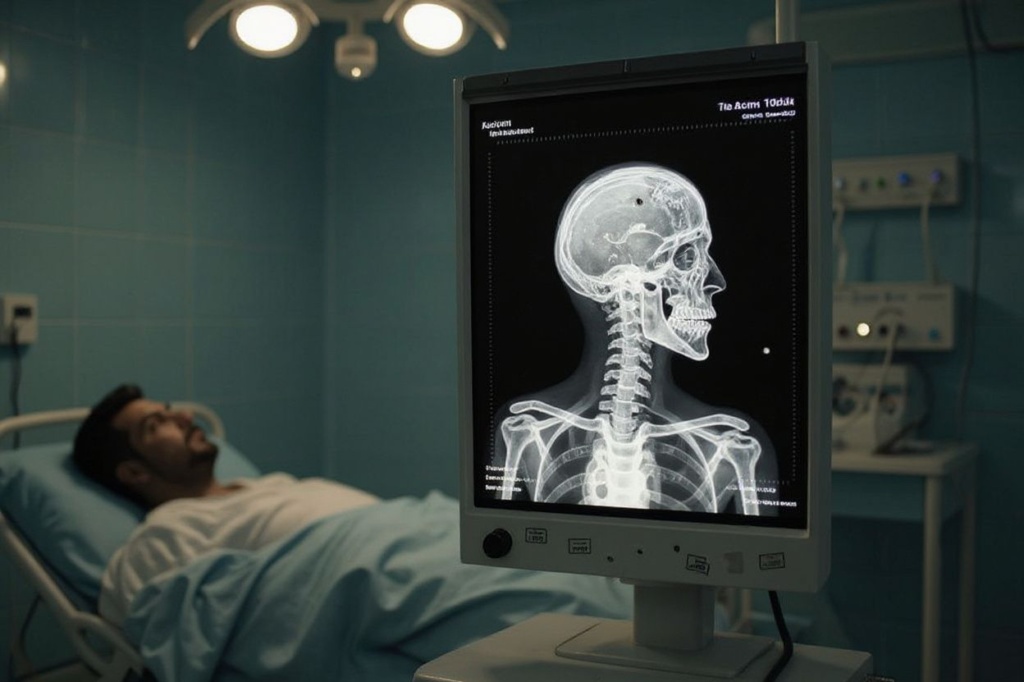 One Harvard study shows that introverts have thicker grey matter compared to extroverts.
4 traits of an introverted learner: Lessons from a neuroscientist
Introverts are more than those who appear to be quiet.
There are many myths about introverts, like how they’re bad at socialising, they’re shy and socially awkward, and they are bad at reading social cues.
But don’t count them out – they are simply skilled in other aspects. Some of the world’s biggest leaders, inventors and trailblazers are introverts – look at Mark Zuckerberg, founder of Facebook, or talk show host Oprah Winfrey.
Friederike Fabritius, MS, a neuroscientist and trailblazer in the field of neuro leadership, shared with CNBC four traits that set introverts apart:
Thinking more
Grey matter, located in the outermost layer of the brain, plays a significant role in mental functions, memory, emotions, and motor control. A Harvard study found that introverts have thicker grey matter than extroverts. They also show more activity in the frontal lobes, where analysis and rational thought occur.
Focusing longer
Teachers thought Albert Einstein — a known introvert — seemed lost in his thoughts. The most influential physicist of the 20th century reportedly said: “It’s that I stay with problems longer.” So don’t be surprised if an introvert doesn’t respond immediately – they’re just collecting their thoughts before they open their mouths.
Stronger moral compass
Introverts can stand their ground, even if it’s not popular. Less swayed by external events, they let their inner moral compass guide them. A 2013 study on social conformity supports this, showing that extroverts are more likely to follow the majority opinion, even if it’s incorrect.
Have unique traits
On average, introverts and extroverts are said to possess the same amount of intellect, but statistics show that around 70% of gifted people are introverts. To be considered “gifted,” one must show above-average intelligence or a superior talent in a particular area, such as music, art or math.
The best degrees for introverts understand these aspects and effectively capitalise on these traits. Let’s take a look at some of them:
Best degrees for introverts: Be selectively social and earn bank with these 10 courses
1. Veterinary Medicine
Average annual salary: US$124,300
Veterinary practice is one of the best degrees for introverts. After all, you’ll be working with patients who can’t exactly talk or complain incessantly.
Jokes aside, being a veterinarian is an ideal career for introverts, as it focuses on animals and one-on-one patient care. Develop deep, meaningful connections with animals – it’s a win-win situation that lets you communicate effectively without requiring extensive social interaction.
Unlike regular medical professions, there aren’t giant halls for you to make speeches in or many work meetings to present and discuss findings. Besides the odd conference once in a while, you’ll likely be working independently or at least with a small, trusted team.
Where you pursue the degree can even amplify how introverted or ‘isolating’ the degree can be.
Natalie Yeo, a Singaporean veterinarian, found herself at the University of Queensland, in rural Queensland, Australia, to pursue a degree in veterinary science. While it’s not exactly veterinary medicine, it was the best option for her, as Singapore does not offer degrees in the field.
“Gatton is rural, and I was just very used to city life,” says Yeo. “Here, once I’m done with school, I’m just done, and I stay home.”
For Hing Tong Lee, a graduate in Veterinary Medicine and Surgery from the University of Edinburgh, the field is emotionally intense, rather than introverted.
“It’s definitely an emotion that’s very difficult to describe when I have to euthanise – it’s very personal, and it’s an incredibly difficult decision and a distressing moment,” she says. “I do still tear up in front of owners, and that’s because I feel very strongly for them. Euthanasia is never easy, and it will never be for me. But slowly and surely, I’m building that resilience and hoping to be that dependable veterinarian that owners can go to.”
A degree in veterinary medicine can lead you to work in one of the following careers:
- Animal nutritionist
- Veterinary surgeon
- Environmental consultant
- Lecturer
2. Accounting
Average annual salary: US$64,440
If numbers are your thing, this math-heavy major will land you a job that requires independent, detailed, analytical work – most likely in the finance or legal field. Most students will spend their time alone learning how to prepare tax documents, financial reports and other paperwork.
Once in the field, aim to go into private client services such as payroll or quality assurance. Introverts may not enjoy client-facing roles like financial advisory, insurance, or auditing – then again, having to answer a million questions a day would tire anyone out.
Seek out careers such as:
- Accountant
- Actuary
- Budget Analyst
- Financial Analyst
 Introverts often excel in focused, independent work, which lies at the core of programming and software development.
3. Computer Science
Average annual salary: US$122,890
Most people call this a degree for nerds in the basement. We say it’s for the intellectual!
After all, it’s no easy feat to deal with complex computer programmes and codes for hours a day. Its solitary nature is a plus for those who dislike interacting with others – after all, code can’t argue with you, right?
A computer science programme is a perfect degree for introverts, especially those who are detail-oriented. You need all the quiet you can get to focus, especially when a single misplaced semicolon could make the entire code fail.
A degree in this field can lead you to work as a:
- Data scientist
- UI/UX designer
- Web developer
- Software developer
4. Liberal arts
Average annual salary: US$66,000
Love the arts but can’t stand the idea of performing in front of a crowd? Liberal arts may just be the perfect fit for you.
A liberal arts education requires countless hours of reading at home, in the library and pretty much anywhere else. It best fits anyone who can withstand days in solitary exploration of complex ideas through reading and reflection.
Liberal arts colleges often design their classes to be small, creating more comfortable and engaging learning environments for introverts, which allows for meaningful discussions and relationships with their peers. It’s truly one of the best degrees for introverts out there.
Nicole Chin, our very own writer at Study International, agrees.
“The only time I interacted with other classmates was when we had group assignments, and that only happened once for each class,” she shares. “So, it wasn’t really that much. Most of the assignments were very individualistic, too. I wasn’t exactly an introvert during my university years, but I can say I enjoyed being able to work alone for the majority of the time during my undergraduate degree.”
Graduates of this degree will often find themselves working as a:
- Writer
- Human resources specialist
- Graphic designer
- Mediator
 Behind Red Bull’s recent success of securing three constructors’ championship in a row is a team of engineers who work tirelessly behind the scenes to deliver a fast and reliable Formula One car.
5. Engineering
Average annual salary: US$103,150
There are different types of engineering, ranging from petroleum engineering to environmental engineering. None, however, is as popular as mechanical engineering due to the transferable nature of the knowledge within this field.
As engineering students progress through their academic year, their curriculum can vary widely, depending on the chosen major. However, regardless of the field of engineering, the qualities necessary for students to excel are similar.
Since this is a STEM field, it requires sharp analytical, precision and problem-solving skills — traits which are more likely found among introverts.
Most engineering graduates tend to work in the field they’ve graduated in. That said, here are some popular engineering careers:
- Mechanical engineer
- Electrical engineer
- Engineering consultant
- Civil engineer
6. Chemistry
Average annual salary: US$81,540
Most chemistry majors and chemists in various industry settings often work independently in labs — focusing and concentrating are critical when dealing with all sorts of chemicals.
Those sharing the same lab reportedly tend to leave one another alone too, especially while handling dangerous chemicals. After all, you’d want to avoid inhaling any deadly gas by mistake!
Materials aside, the nature of the field makes for a conducive environment for deep analytical thinking and complex problem-solving to take place — which are crucial for any chemist to succeed.
This degree can open up opportunities for you to work as a:
- Chemist
- Chemical engineer
- Biotechnologist
- Environmental scientist.
 Psychologists are renowned for their level of introspection.
7. Psychology
Average annual salary: US$108,655
One of the best degrees for introverts, as it involves listening, problem-solving, analytical thinking, and patience, rather than just talking. These are the essential skills needed to become effective counsellors and psychotherapists, and are often found among introverts.
What’s more, a psychology degree offers a range of career options that allow introverts to work independently, conduct research, and provide one-on-one counselling (or, at most, to a couple or a family), thereby catering to their preference for smaller, quieter environments.
However, for Noorin Anasi, interacting with others and learning about their culture or how they perceive the world is key to becoming a successful individual in the field — in other words, stepping out of your comfort zone.
Anasai comes from a community that doesn’t really have a space for individuals to talk about their mental health, often labelling those who struggle with it as ‘crazy’. When she studied abroad and started interacting with locals, that’s when she learnt about the struggles of the Japanese and Korean societies.
“I actually thought Japan had the highest suicide rate,” Ansari recalls. “I was shocked to learn it was South Korea. I kept wondering — where does that come from? Learning about the suneung, their university entrance exam, blew my mind. It’s so intense. I looked at some of the English questions and couldn’t answer them — and I’m a native speaker.”
Of course, your career options aren’t just limited to being a psychologist upon graduating. Other career options include:
- Counsellor
- Educational psychologist
- Human resource manager
- Coach
8. Public Policy
Average annual salary: US$82,240
If you think all public policy students have to become members of parliament or Congressmen and Congresswomen, think again. Public policy is about crafting and understanding the laws that govern everyday life, including their impact on individuals.
Knowing the right laws and regulations to implement can be a delicate task of balancing conflicting interests, which requires a great deal of analytical skills and attention to detail.
It also takes a big team. You don’t need to be an MP or a politician to use your public policy skills. Instead, you can be the people behind the scenes in one of the following roles:
- Community relations coordinator
- Policy researcher
- Market researcher
- Political analyst
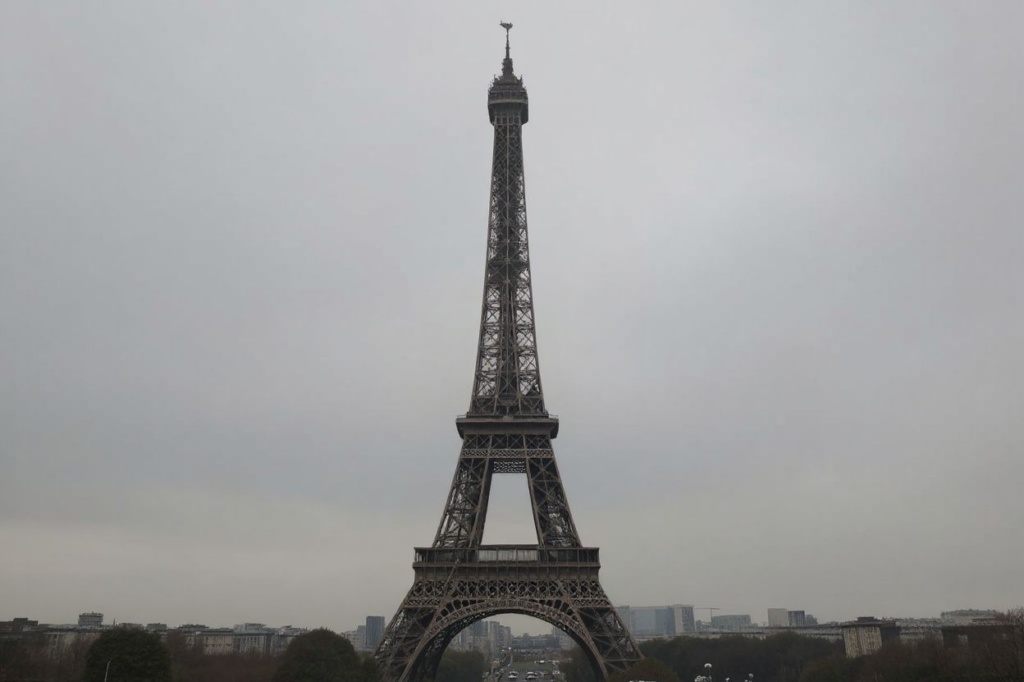 Designing buildings like the iconic Eiffel Tower requires a certain amount of grit, focus, and creativity.
9. Architecture
Average annual salary: US$106,760
Indeed, architects often have to attend meetings with clients, other architects, and the rest of the team, especially when they are involved in a large project. Most of the time, however, they work alone. Just ask the architecture student at your university how many sleepless nights they’ve spent alone in their workroom.
Whether it’s developing reports and drawings at their office desks, driving to sites, or meeting clients, architects likely spend hours and days by themselves. After all, sketching schematics for a building plan requires grit, focus, and creative thinking — there can’t be distractions when one is tasked with developing designs to tackle modern engineering problems.
Being able to listen and empathise with clients — another special strength of introverts — is also a handy skill to have as an architect since you’ll be able to discover the exact problem they’re facing.
While most architecture graduates tend to work in the field, this degree can open up careers in other areas, such as:
- Interior and spatial designer
- Town designer
- Surveyor
 If you’re a successful author, perhaps you’ll have to endure long signing sessions, but they’re once in a blue moon.
10. Creative writing
Last but not least, writing is one of the best degrees for introverts, as it allows them to focus on their favourite mode of expression. Just ask us!
Most writers hold either an associate’s degree in English or a bachelor’s degree in English with an emphasis on writing or creative writing. In contrast, others may opt for a degree in journalism.
Writing is often a solitary endeavour, allowing introverts to work independently, free from the constant need for social interaction that may drain their energy. Many forms of writing, such as journalism or non-fiction, require research and analysis, which can cater to an introvert’s natural inclination for in-depth investigation.
The career possibilities are also endless. Graduates in this field can work as:
- Journalists
- Freelance writers
- Technical writers
- Copywriters
Disclaimer: This article was last updated on December 29, 2025.
Popular stories
LDRs, visas, gender: Dating in 2026 as an international student

Winter Olympics: Where and what the 12 smartest athletes studied

This Malaysian scored British Council’s Women in STEM scholarship to further cancer research

What do you need to study to work in F&B? A culinary management grad answers