



Biomedicine helps you understand how the human body works and what happens when health is disrupted by disease. Work in biomedicine is the reason we have vaccines that protect millions, organ transplants that save lives, and gene editing tools like CRISPR that repair inherited disorders. It is behind innovations like lab-grown skin for burn treatments, and stem cell therapies that help people walk again after spinal injuries. By studying Biomedicine at Manchester Met, you will be joining this exciting field of 21st century innovation.
When you study biomedicine, you explore how biology drives health and how scientific research translates into effective treatments. It is where your curiosity about life meets your desire to make a difference.
Manchester Metropolitan University’s Department of Life Sciences prepares you to do just that. At one of the UK’s largest and most popular universities, you will gain practical research experience, real-world exposure, and practical skills that will prepare you to embark on careers in healthcare, pharmaceuticals, or biotechnology.
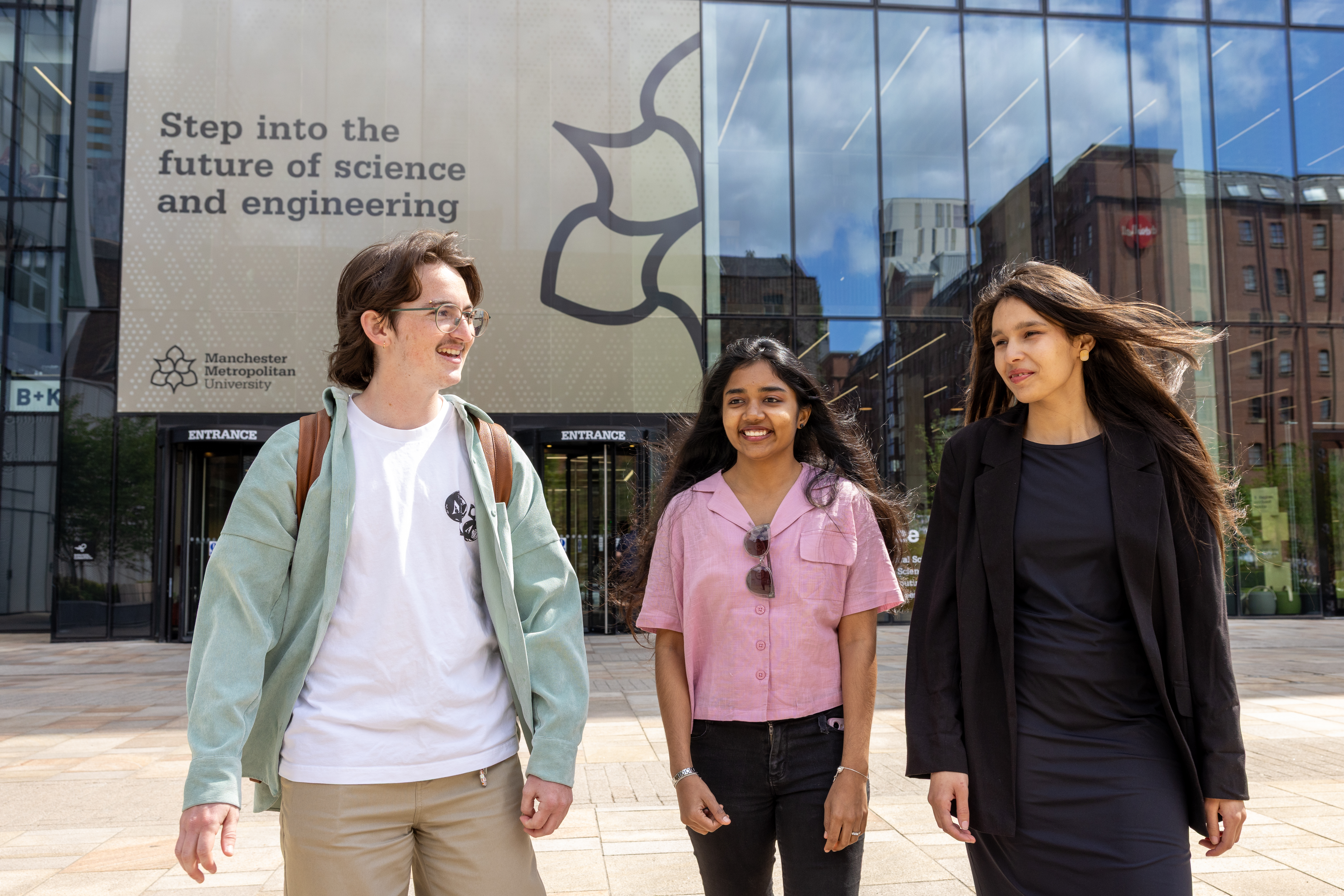
Manchester Metropolitan University drives innovation and progress through education and research that transform lives. Source: Manchester Metropolitan University
Innovative institution, gold-rated teaching
Manchester Met has a long history of innovation. Since 1824, it has contributed to Manchester’s growth and global progress through education and research. Today, it is the Modern University of the Year 2026 (Good University Guide 2026) with a gold rating in the Teaching Excellence Framework (TEF) and with a Physiology team, which runs this course, ranked second in Guardian League Table. It is ranked seventh in England for student experience in the National Student Survey 2025, 33rd in the Guardian University Guide, and shortlisted for University of the Year (Daily Mail 2026).
The Department of Life Sciences is just as well-ranked. It is 15th in the UK for health and biomedical research in the 2021 Research Excellence Framework and 62nd for Biology, contributing over 12,971 publications and 371,692 citations in the field. This is a prolific department in a prestigious university. Where better to begin your scientific journey with a BSc (Hons) Biomedicine?
This programme focuses on the science that underpins our understanding of the human body and how we can use this to diagnose, prevent and treat disease. Year 1 will build your foundation in human biology, biochemistry, and core professional skills. In Year 2, you will expand on this knowledge by studying diagnostic methods, treatments for common diseases, and the physiology of body systems.
In your final year, you will focus on integrated pathophysiology and you will study public health issues such as ageing, cardiovascular disease, and asthma. You will also complete an independent research project and choose optional modules such as Microbiology and Health, Cardiovascular Science, Immunology and Transfusion, or Medical Physiology, allowing you to specialise in what interests you most.
By the time you graduate, you will be an independent thinker with the ability to apply critical analysis to real-world health challenges. You will also have the lab and analytical skills needed for roles in the biological, pharmaceutical, or healthcare industries.

Both BSc (Hons) Biomedicine and Biomedicine with AI are offered by the Department of Life Sciences at Manchester Metropolitan University. Source: Manchester Metropolitan University
If you are interested in the intersection of science and technology, the BSc (Hons) Biomedicine with AI is a forward-looking choice. Biomedicine is entering a new digital era, where AI is transforming how we diagnose, monitor, and treat diseases. This full-time three-year programme gives you a strong foundation in life sciences while introducing you to AI technologies that are revolutionising healthcare.
From day one, you will work with real biomedical data, from genetic sequences to medical images, and learn how AI can turn data into meaningful insights. Year 1 will cover the essentials — including human physiology, anatomy, cell biology, and biochemistry — along with foundational concepts in coding and AI. In Year 2, you will study disease diagnostics, explore ethical and social questions around AI, and have the option to take a placement year to gain industry experience. In your final year, you will complete an independent project applying AI to a biomedical challenge that inspires you, showcasing your creativity and technical skills to future employers.
Graduates of Biomedicine with AI are ready for a wide range of careers where AI is driving progress in healthcare, diagnostics, and biomedical research. You could become a biomedical data scientist, healthcare specialist, or bioinformatics analyst, or pursue enhanced versions of traditional roles, such as clinical research associate.
People and places that take you far
Whichever path you choose, you will learn from expert academics and develop both subject-specific and transferable skills that prepare you for advanced study, industry roles, or interdisciplinary careers. “It’s great to see our students develop the skills they need to go out into society – having been trained by passionate researchers – and make a difference in so many settings, including healthcare, research and industry,” says Dr. Gethin Evans, Head of Department.
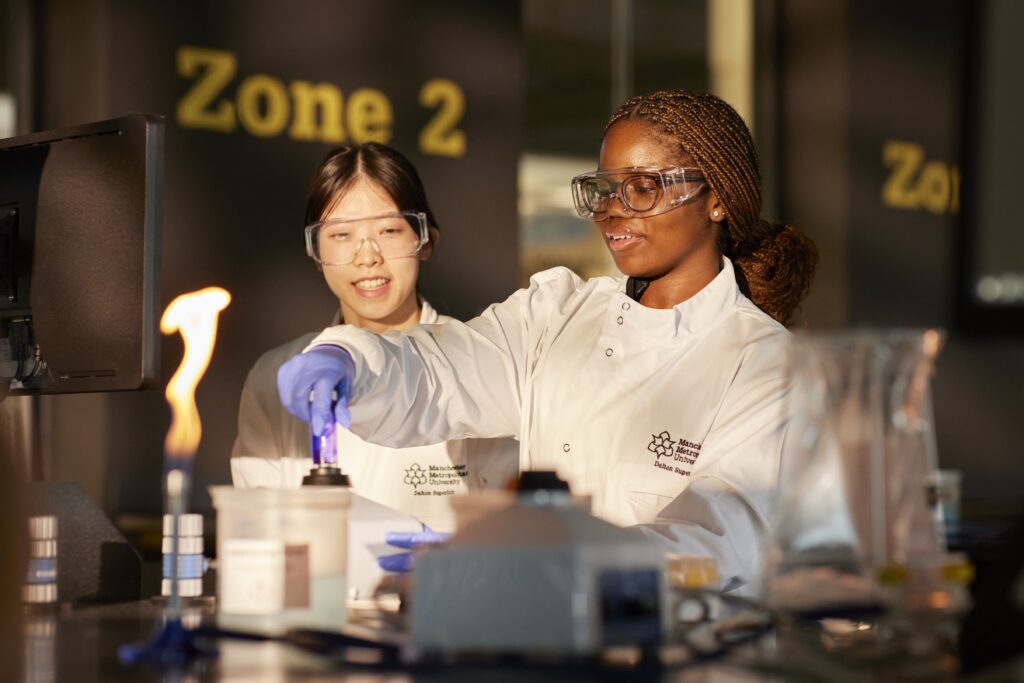
All this learning takes place in world-class facilities. The new Dalton Building, a 115 million pounds investment for the Faculty of Science and Engineering, provides purpose-built teaching and research spaces, including advanced laboratories for life sciences students. You will have access to research labs dedicated to cell and molecular biology, microbiology, and physiology, as well as tools like portable microscopes, virtual dissection tables, and patient simulators. The building houses technology for analysing biomolecules and monitoring physiological responses as well, supporting both lab work and field studies.
Learn more about Manchester Metropolitan University.
Follow Manchester Metropolitan University on Facebook, Instagram, X, YouTube, and LinkedIn