


If you want to be a lawyer in the US, you’d first need to earn your bachelor’s degree before attending law school. That’s why students must take a “pre-law” undergraduate degree or pursue majors such as history, political science, English, and economics before they can take their Law School Admission Test (LSAT).
Interestingly, in France, this concept is somewhat true for those wanting to work in journalism.
That’s why Verónica Lawson Vilches, who originally aspired to be a journalist, pursued history first.
Pre-requisites to be a journalist in France
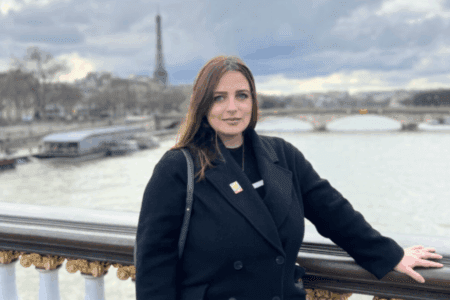
After two years in France working as an au pair and picking up the language, Vilches was accepted to the Université Paris 1 Panthéon-Sorbonne to major in history.
Vilches has always been interested in history, believing in the importance of knowing the past to navigate the present, as well as the future. More than that though, she chose it to start on her journalistic ambitions.
“I did that because I wanted to study how to be a journalist afterwards. I wanted to be a journalist,” she explains. “You can’t get into journalism school from the get-go in France. You have to study literature or history or political science before you can go to a journalism school in France.”
According to Vilches, the French university journey starts with three years of undergraduate study, then either you do a master’s for two years or get into a specialised school.
While there appears to be no legal requirements to work as a journalist in France, it’s true that the industry prefers a master’s degree from a recognised journalism programme in the country.
Apparently, there are 14 recognised schools or universities delivering journalism training in France. They are:
- Ecole Supérieure de Journalisme (ESJ Lille) de Lille
- Institut Français de Presse (IFP), Université Paris II-Panthéon Assas.
- Centre de Formation des Journalistes (CFJ) de Paris.
- Ecole des hautes études en sciences de l’information et de la communication (CELSA), Université Paris IV-Sorbonne.
- Centre Universitaire d’Enseignement du Journalisme (CUEJ), Université de Strasbourg.
- Institut de journalisme Bordeaux Aquitaine (IJBA), Université de Bordeaux Montaigne.
- Institut Pratique du Journalisme (IPJ), Université Paris Dauphine
- Ecole publique de journalisme de Tours (EPJT), Université de Tours.
- Ecole de Journalisme et de Communication d’Aix-Marseille (EJCAM), Université d’Aix-Marseille.
- Ecole de Journalisme de Grenoble (EJdG), Université Grenoble Alpes et Institut d’Etudes Politiques de Grenoble.
- Ecole de Journalisme de Toulouse (EJT).
- Ecole de journalisme de Sciences Po Paris.
- Institut Universitaire de Technologie de Lannion (IUT Lannion), Université Rennes I.
- Ecole de journalisme de Cannes (EDC), IUT Nice Côte d’Azur, Université de Nice Sophia-Antipolis.
Vilches agrees with this approach to a journalism education.
“To be a good journalist, you need to know where we’ve come from, how this story has been built upon, even in our past,” she says.
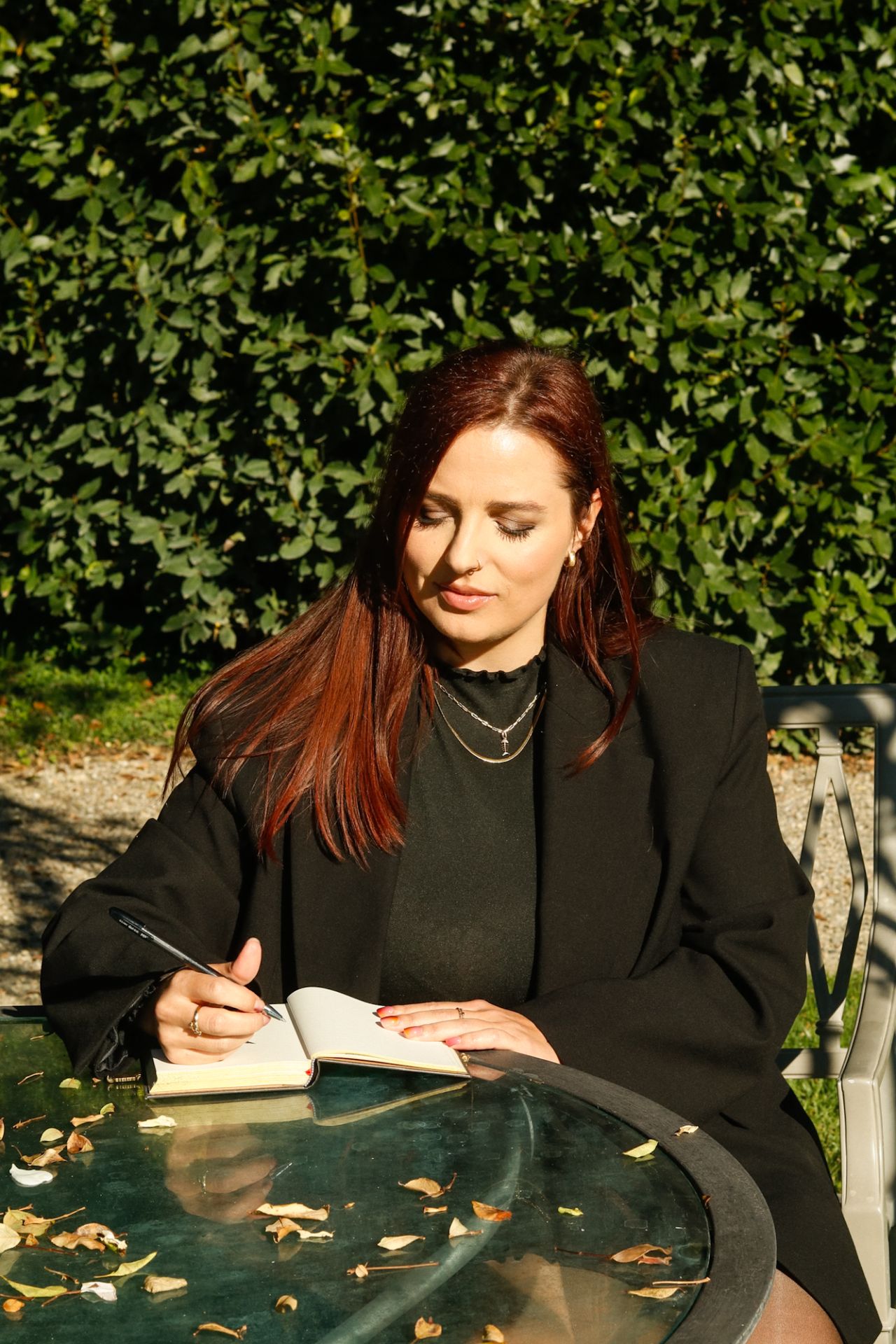
Vilches now specialises in working with travel brands and other organisations on their branding and storytelling. Source: Verónica Lawson Vilches
Into the world of PR
However, Vilches didn’t complete her master’s due to a personal event in her life that affected her academic journey.
Instead of letting life come to a halt, though, she powered forward and decided to continue pursuing her ambitions of being a storyteller.
“When I was little, and I couldn’t even write yet, I would have a little journal and I would draw little circles and my parents asked me, what are you doing? And I’d say, oh, I’m writing,” she says. “I’ve always just loved telling stories.”
Then in high school, Vilches wanted to be an actress in musical theatre. While that didn’t have so much to do with writing, it was still related to storytelling. From there, her aspirations naturally developed into journalism, but eventually, it turned into a love — and knack —for communication.
After moving to Italy, she landed an internship in communications and PR, which felt like journalism, but for a company.
“I’m still pitching stories to journalists like, hey, this is what the company is doing and all of that,” she says.
Even now, as Vilches focuses on communications and social media strategy, storytelling is still a core part of her work.
While Vilches isn’t a journalist now, she is still very much a storyteller — one who is informed by modern techniques and past history.
Popular stories
Theatre, social studies: The insightful and expressive education of the cast of ‘Wednesday: Season 3’
7 popular TV shows that have helped people learn English
The best architecture schools start at only US$4,141 per year
The top-ranked, tuition-free universities in the US to get your master’s degree
You might like