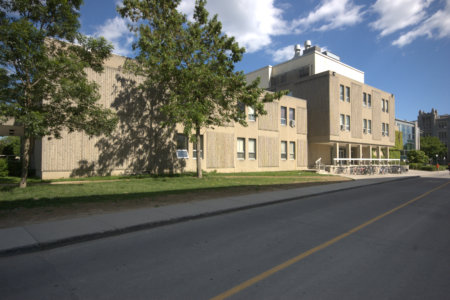



In Canada, responsible lithium and nickel extraction in Northern Ontario is helping to power the global transition to green energy. Thousands of miles away, Australian scientists are working to reduce groundwater contamination from legacy mine sites. Meanwhile, in the Arctic, researchers brave the cold to study thawing permafrost and its impact on ecosystems and economies. Across the globe, efforts to ensure responsible resource management are shaping a more sustainable future.
At Queen’s University, you can be part of that mission. The Department of Geological Sciences and Geological Engineering’s graduate programmes explore the world through experiential learning, interdisciplinary research, and a steadfast commitment to sustainability and innovation. You’ll learn in the lab and out in the field, alongside researchers who care about creating lasting change. It’s your chance to build the technical expertise, ethical grounding, and leadership skills needed to make a real difference for our planet’s energy, mineral, and water systems.
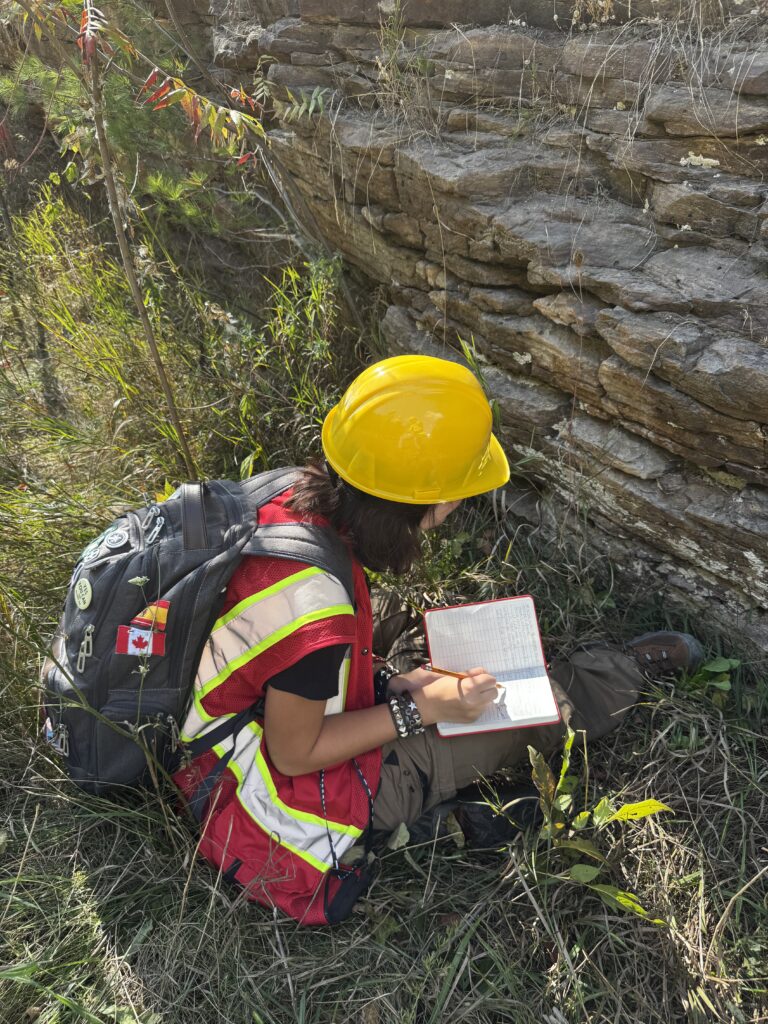
The department’s graduate programmes include extensive fieldwork opportunities across six continents. Source: Queen’s University
Research that powers real change
As a graduate student, you’ll get crucial exposure to Queen’s recognised research groups: Queen’s Geo-Environmental Engineering group, Queen’s Tectonics Research Laboratory, Queen’s Clastic Sedimentology Group, Queen’s Geomechanics and Geohazards Group, Queen’s Facility for Isotope Research (QFIR), Queen’s Geoselenic Research Project, and Carol Ellis Digital Earth Science & Engineering Lab. They tackle challenges that matter, including critical minerals, water management, energy transition, geohazards, and resilient infrastructure.
Interdisciplinary collaboration is central to the department’s mission. The GeoEngineering Centre, a partnership between Queen’s University and the Royal Military College, unites experts from three engineering departments to explore geotechnical, geohydrological, geochemical, geomechanical and geosynthetics engineering. Working closely with government and industry partners, you can tackle real-world challenges of consequence.
These opportunities at Queen’s are exciting, and you won’t face them alone. Expert faculty are there to challenge and support you every step of the way.
Dr. Jennifer (Jenn) Day, for example, is a geological engineer and is registered as a Professional Engineer (PEng) in Ontario and New Brunswick and a Professional Geoscientist (PGeo) in Ontario and New Brunswick. Her research looks at rock mechanics, as well as how climate change affects shoreline formation in geotourism areas, and what that means for public safety.
“The mentorship here has been incredible,” says Evan Dressel, a Geological Engineering PhD student. “Faculty treat you as a collaborator, not just a student. That trust pushes you to think critically, take ownership of your research, and see how your work can make a global difference.”
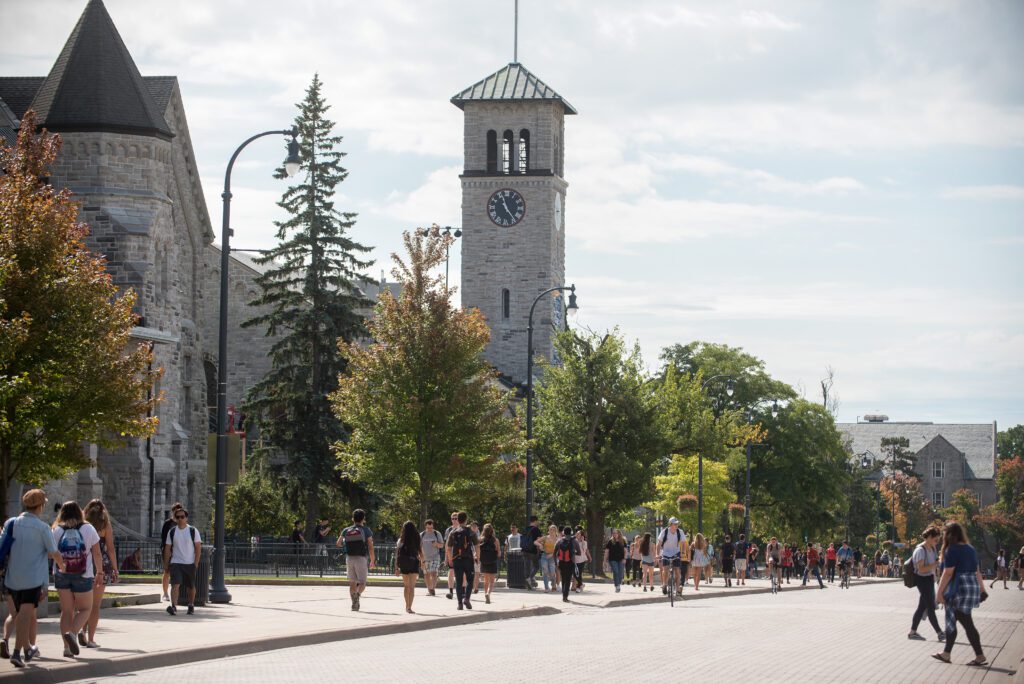
Queen’s gives you access to state-of-the-art facilities and international field programmes where you can explore real geological settings. Source: Queen’s University
Go global with hands-on learning
Research is only one part of the Queen’s experience. An education here integrates fieldwork, laboratory research, and data-driven science with engineering design too. “The Queen’s Facility for Isotope Research (QFIR) offered me a fantastic opportunity to gain hands-on experience with Scanning Electron Microscopy (SEM, microprobe (EPMA), and Laser Ablation-ICP-MS. The atmosphere is friendly and professional, with a team that shows respect and is always ready to lend a helping hand,” says graduate student Willian Valentin Sanches.
Current MSc student Emma Pluister shares this appreciation for practical learning: “QFIR offers the opportunity to get hands-on experience in my field. I’ve been able to learn how different samples react and how to analyse them, which has helped solidify course concepts,” she says.
The QFIR is a full-service analytical laboratory, complete with a Clean Lab, JEOL JXA-8230 Electron Microprobe Lab, FEI-MLA Quanta 650 FEG-ESEM, and many more advanced instruments. “Having the opportunity to work with a variety of instruments in the QFIR laboratory has been extremely valuable to my graduate experience and has built a stronger familiarity with analytical procedures that can help me as a geoscientist in my future career,” shares MSc student Sara Craig.
For former MSc student and current lab technician Gideon Asomani-Darko, QFIR was the geochemical factory that shaped his career. “The IRMSs and the silicate oxygen line weren’t mere tools, but my demanding mentors and siblings in science,” he says. “They taught me the language of isotope geochemistry, shaping my understanding so completely that the lab ceased to be a place of work and became the very centre of my professional life.”
Beyond technical expertise, the department places equal importance on safety, ethics, and Indigenous engagement, preparing you to lead responsibly in resource and environmental sectors worldwide.
“At Queen’s, we’re shaping geoscientists and engineers who combine technical expertise with ethical and environmental responsibility. Our graduates lead in responsible resource development, geohazard mitigation, and water and environmental stewardship across the globe,” says Dr. Dan Layton-Matthews, Head, Department of Geological Sciences and Geological Engineering. “Through hands-on learning, collaborative research, and strong partnerships with industry and communities, we’re ensuring that Queen’s remains at the forefront of innovation in Earth and resource sciences.”
Follow Queen’s University’s Department of Geological Sciences and Geological Engineering on Facebook and Instagram.