




Europe is home to many of the world’s most prestigious and historically significant universities, and studying there provides a unique opportunity for academic and personal transformation. You are sure to receive access to high-quality, internationally recognised education. Just ask the 1.76 million students who came from abroad the EU.
Beyond the classroom, the continent’s geography and efficient public transport networks make travel incredibly accessible. Students can easily explore diverse cultures, languages, and histories on off days.
To top it all off, many European nations offer affordable or even tuition-free options, making a world-class education surprisingly attainable. Ultimately, a semester or year in Europe is a return-on-investment that broadens a student’s worldview and competitive edge.
Here are three of the best universities at the best parts of Europe.
Fulda University of Applied Sciences
When it comes to country, city, and campus, Fulda University of Applied Sciences ticks all three boxes. It’s located in Germany, only the second most popular destination for international students today. Located in the city of Fulda, filled with pubs, festivals, and markets all year long. With its campus being known as one of the country’s most beautiful. In other words, Fulda University of Applied Sciences is the full package.
But what about what goes on within the uni? In Fulda’s case, expect high-quality teaching, affordable living costs, and a growing number of English-taught programmes – all of this without having to pay for tuition fees, even for non-EU students. Over 3,100 international students see this appeal – with the university now running 12 programmes, a mix of classic and innovative bachelor’s and master’s, often fully-taught in English. The entire cohort has as many as 33% international students (more than double the German average).
If you plan to join them, Fulda University offers a selection of more than 60 study programmes in eight departments, including options that are unique in Germany. At the bachelor’s level, you can opt for the International Business and Management, Industrial Biotechnology, Industrial Engineering Life Sciences, Global Health, Food Technology, or Social Sciences for Intercultural Relations. Working professionals who want to enhance their knowledge and skills can sign up for master’s programmes in Data Science, Global Software Development, International Food Business and Consumer Studies, Intercultural Communication and European Studies, International Management, and Human Rights Studies in Politics, Law and Society.
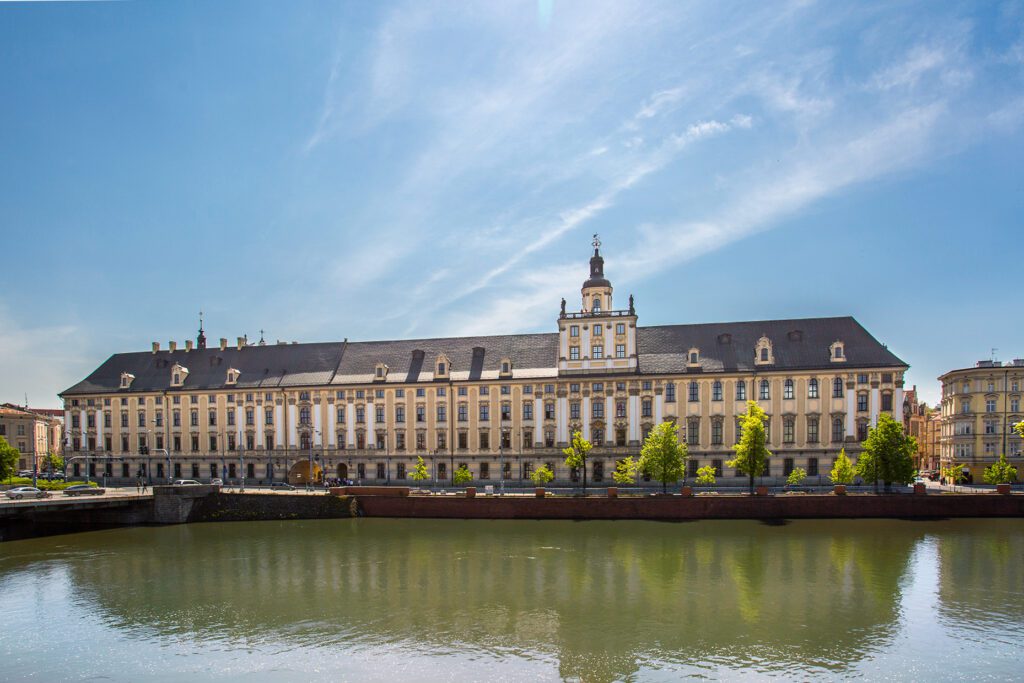
The University of Wrocław is one of the 10 research universities in Poland and is ranked fifth best. Source: Uniwersytet Wrocławski/Facebook
University of Wrocław
The number of international students in Poland continues to grow, and it is easy to see why. It offers internationally recognised, high-quality education with significantly lower tuition and living costs than Western European nations. Its central location provides easy access for exploring the Schengen Area, allowing you to travel freely between member countries without internal border checks. Currently, the University of Wrocław hosts over 2,500 international students. The fact that English-taught programmes also attract Polish students is a significant advantage, as it enables both international and Polish students to study together.
There are almost 380 Polish universities to choose from, 10 of which are research universities, including the University of Wrocław (UWr). Since its establishment in 1702, the university has operated like a small city of its own, attracting 30,000 people from a wide range of diverse fields, all on a mission to better the world. Ranked among the top five universities in Poland, UWr offers English-taught degrees at both bachelor’s and master’s levels.
There are 11 fully English-taught bachelor’s degrees, including the new Data and Society, English for Knowledge, Culture and Innovation, and LLB International and European Environmental Law. For students pursuing a master’s degree, they can choose from 17 programmes, including the Master of Economics and Finance, as well as Media Content Creation, both of which are new additions.
As UWr is a research university, you can expect it to receive more funding in the coming years which will benefit current and future students. This includes scholarship and grant programmes, enhanced tutoring, smaller class sizes and more English-taught programme offerings.
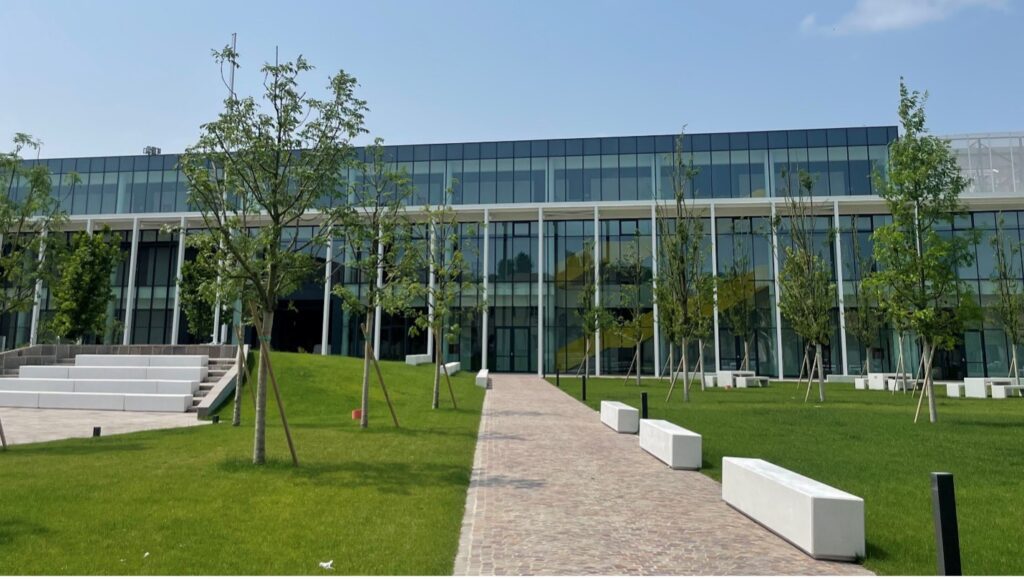
Photograph: New CREMONA campus
Politecnico di Milano
Studying in Italy means being part of ancient, prestigious universities, being surrounded by rich Renaissance art and Roman history. It means living la dolce vita while enjoying the world’s finest gastronomy. You can say the numbers say it all about the country’s appeal – there are over 109,000 international students in Italy, as reported by its Ministry of University and Research.
Of all the higher education institutions in Italy, Politecnico di Milano is the best. It is ranked #1 in the nation and top 100 in the world (QS World University Rankings 2026). In the newly published Times Higher Education Interdisciplinary rankings, it placed 15th worldwide. It is also one the most outstanding technical universities in Europe and the largest Italian university in Engineering, Architecture and Design.
When you choose Politecnico di Milano, you’re set to join a high-ranked European university and to enjoy Italy’s treasures. English-taught programmes make cohorts even more diverse – expect to be part of a multicultural, vibrant and inclusive environment out of which 8,300 are international students from more than 140 different countries. You’ll never run out of perspectives (or invites to grab pizza or an aperitivo).
There are seven bachelor’s degrees that are fully taught in English: Architectural Design, Civil Engineering, Interaction Design, Engineering Science, Industrial Engineering, and Process Engineering. At postgraduate level, there are over 45 Master of Science programmes and 21 PhD programmes taught in English. No language barrier, just quality learning.
These programmes make the most of a research-intensive university as well, with 245 well-equipped labs and six large infrastructures. Opportunities beyond campus will be well within your reach too. The university has over 500 exchange agreements that facilitate study periods abroad. And with Milan strategically located at the centre of Europe, one train ride and you could be in Venice, Paris, and Berlin within hours.
Popular stories
7 best European countries for international students to live their best lives

This Chevening scholar went from 0 English to pursuing a Master’s in TESOL in the UK

11 hardest words to pronounce in English that’ll twist your tongue

Lovely locations, lovelier locals: 7 best places for female solo travel