


At Imperial College London’s Dyson School of Design Engineering, engineering extends beyond just designing better products. It is about understanding and shaping the relationships between technology, people, behaviours, and the systems around them. By bringing together engineering, design, behavioural science, and entrepreneurship, the school equips students to tackle complex challenges and turn ambitious ideas into real-world solutions.
That makes Imperial an ideal place to pursue a master’s degree in design engineering, with the university ranking second in the world (QS World University Rankings 2027) and the school ranking seventh globally for Engineering and Technology (QS World University Rankings by Subject 2026).
At the Dyson School, you can choose from master’s programmes spanning Design Engineering, Cleantech Innovation, Design with Behaviour Science, and Design Engineering Research. Across all of them, you’ll work on real-world projects that draw on mechanical, electrical and chemical engineering alongside business, economics, behavioural science, and design thinking.
But what does the whole student journey look like in practice, and where could it take you after graduation? We spoke to four current students to find out.
Aaron Vidal is pursuing the MSc Design Engineering after work experience with Airbus Space. Over the summer, Ulah Hasan completed her placement with Imperial spinout Brilliant Dyes, which develops algae-based sustainable dyes, and now works for the company as a graduate. Meanwhile, Eleni Papatheofanous is completing the MSc Design with Behaviour Science while researching intentional consumption in fast fashion. And Saniya Patwardhan is researching human-robot collaboration through Vision–Language–Action (VLA)-based learning at the Robot Intelligence Lab.
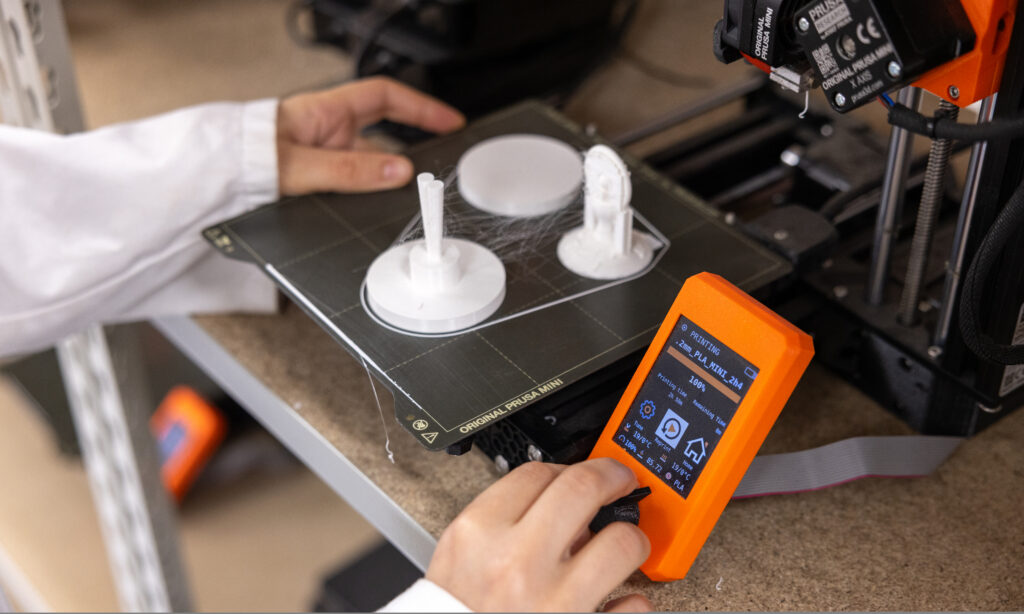
In 2025, Aaron Vidal left Airbus to pursue an MSc in Design Engineering at Imperial College London. Source: Imperial College London
Aaron Vidal, MSc Design Engineering
Can you tell us more about your specialisation, specific role(s) (such as tutor or research assistant), and past and present projects related to the programme please?
Before joining, I worked and studied in tandem as a degree apprentice, developing satellite communications hardware and working with organisations including the European Space Agency (ESA). I finished my degree in 2024 with a first-class BEng in Electronic Engineering, then completed the apprenticeship in 2025 with an additional qualification as an Embedded Electronic Systems Design and Development Engineer.
I joined the course to improve my knowledge of human-centred design so that I can combine it with my electronics background and create more user-centric technology experiences. Alongside the MSc, I work as an Outreach STEM Leader, teaching electronics, soldering, and design fundamentals to 14- to 18-year-olds through the Imperial Maker Challenge at White City.
Can I self-study design engineering by myself instead of completing a formal degree?
Yes, and I would start by joining your local hackspace. The members tend to be extremely knowledgeable, friendly, and always open to teaching newcomers. What a formal degree adds is access to equipment that might not be available elsewhere, teaching from people who research for a living, and a cohort from very different backgrounds to yours, who will introduce you to new ideas you would not have discovered alone. It also gives you a structured period to work and receive formal feedback, which I personally find very helpful.
Is an MSc in Design Engineering worth it compared to a traditional Mechanical Engineering master’s?
Yes, if you value a broader experience across multiple areas. As someone who studied Electronic Engineering for my undergraduate degree, I’ve gained substantial knowledge in conducting mixed-methods studies and a greater appreciation for the importance of user research.
You choose a selection of modules that suit your interests, and a particular favourite of mine was Nano Design Engineering, which gave me the chance to learn more about chemistry and physics while researching the nanoscale properties of materials. The course’s interdisciplinary nature is perfect if, like me, you wish to work at the intersection of engineering and design rather than at the centre of one field.
How much hands-on/practical work is there compared to theory and lectures?
The core modules provide you with the opportunity for hands-on iteration, both in groups and individually. You’ll have access to the ACEX Workshop, with the opportunity to join the IDEAS Lab and Advanced Hackspace. It’s not uncommon to find your peers adding finishing touches to projects in shared study spaces.
Being in an environment I can only describe as rich with creation is why I wanted to join the course in the first place. In addition to the core modules, multiple electives provide you with the opportunity to produce practical work as part of your coursework.
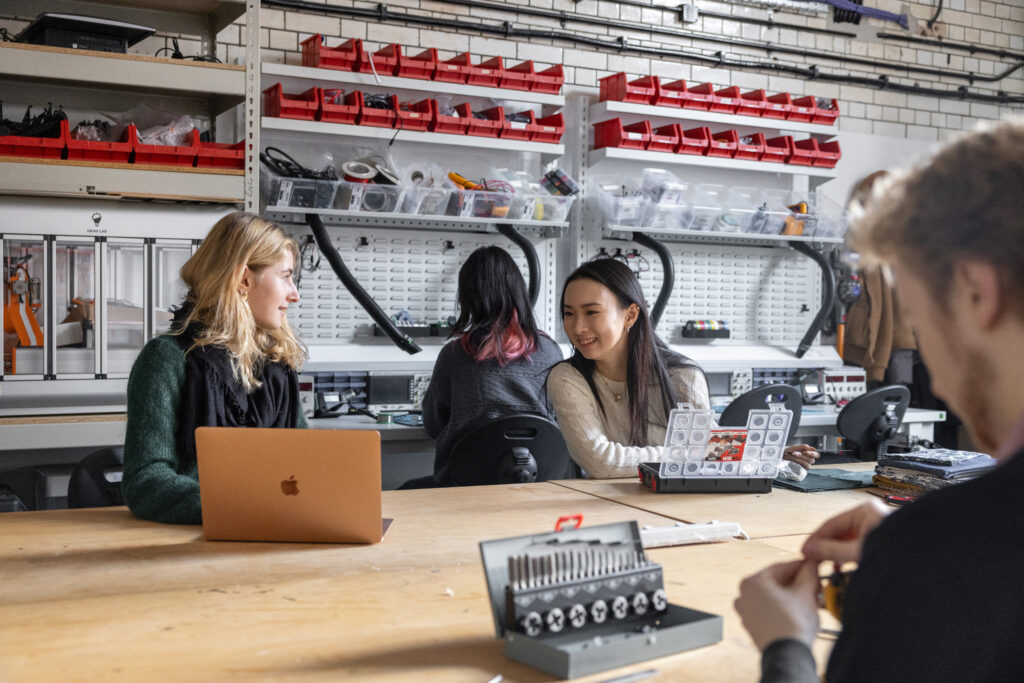
The IDEAS Lab is a student-run and student-led makerspace where students can bring their ideas to life. Source: Imperial College London
What are my options after completing the MSc, and how can Imperial help me?
The MSc prepares you for a range of pathways. Imperial is a leading research institution, and if you’ve enjoyed the research components of the course and would like to continue, you might consider a PhD. Multiple modules feature guest speakers from industry, and if one has sparked your interest, you may want to reach out to them. One or more of the projects you’ve worked on during the course may have the potential to become a startup, and you could consider applying for Imperial’s various startup accelerator funds.
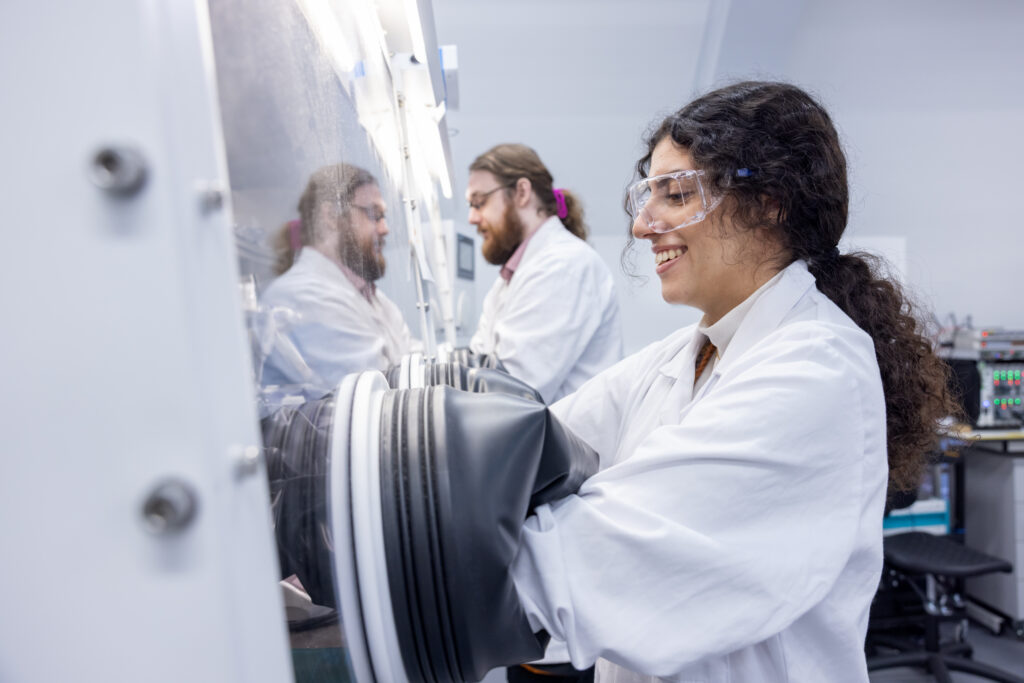
As part of the MSc Cleantech Innovation, Ulah Hasan is taking part in a project that seeks to find sustainable alternatives to toxic, non-biodegradable dyes from algae. Source: Imperial College London
Ulah Hasan, MSc Cleantech Innovation
Can you tell us more about your specialisation, specific role(s) (such as tutor or research assistant), and past and present projects related to the programme please?
I graduated with a bachelor’s degree in Fashion, where I mostly worked on fashion-related projects, designing and constructing garments. However, I also got to explore beyond the traditional aspects of the field. I took part in a wearable technology class and created a poetic piece titled “Arabian Mirage,” where the wearer and viewer experience the effects of desertification, a process of ecological degradation.
A project that helped me discover design engineering was my final-year project, called “Nature’s Armour.” Ironically, I wrote the title in British English at the time. This project focused on empowering young girls through the design of a scoliosis brace that they could be proud and comfortable wearing.
After my graduation, I got to work on various projects, including an augmented reality headset, inspired by Afrofuturism, for a filmmaker. I became a creative director for a small arts and media company founded by an astronaut and space artist.
Did you undergo any internship or placement? If yes, please describe your responsibilities and how they relate to your programme.
Yes, I just completed a placement known as the Greenhouse Residency project as part of my programme. I worked with Brilliant Dyes, an Imperial spinout that produces non-toxic, biodegradable dyes from algae. My role focused on textile fixation, finding ways to increase the longevity of the dye in fabrics. This project was a great combination of my fashion background and cleantech, as we worked to find sustainable alternatives to a major issue in the dyeing industry.
I want to pivot into cleantech and sustainability. Is the Cleantech Innovation MSc at Imperial worth it?
Yes, I think it’s a good environment to try out new fields of interest. The programme is very interdisciplinary, with people coming from different backgrounds, such as architecture, science, finance, and many others. You not only learn from the course itself but from your peers as well.
How do I know if this programme is more design/engineering-focused or more business/entrepreneurship-focused?
What’s interesting about Cleantech is that it’s not driven by just one area of study. The programme is split into two main areas of focus, allowing you to understand design and engineering in the first half and business and entrepreneurship in the second half. Later, these two areas come together when you work on your final project.
If I want to start my own cleantech company, does the university help with that, or is it on me?
Imperial is a great place to start your own cleantech company. There’s a strong entrepreneurial support system through Imperial Enterprise Lab and Undaunted. Staff members are very supportive and open to hearing students’ ideas, guiding them in the right direction. It’s also a very encouraging environment and getting to hear alumni speak about their journeys and how far they’ve come makes it feel less daunting.
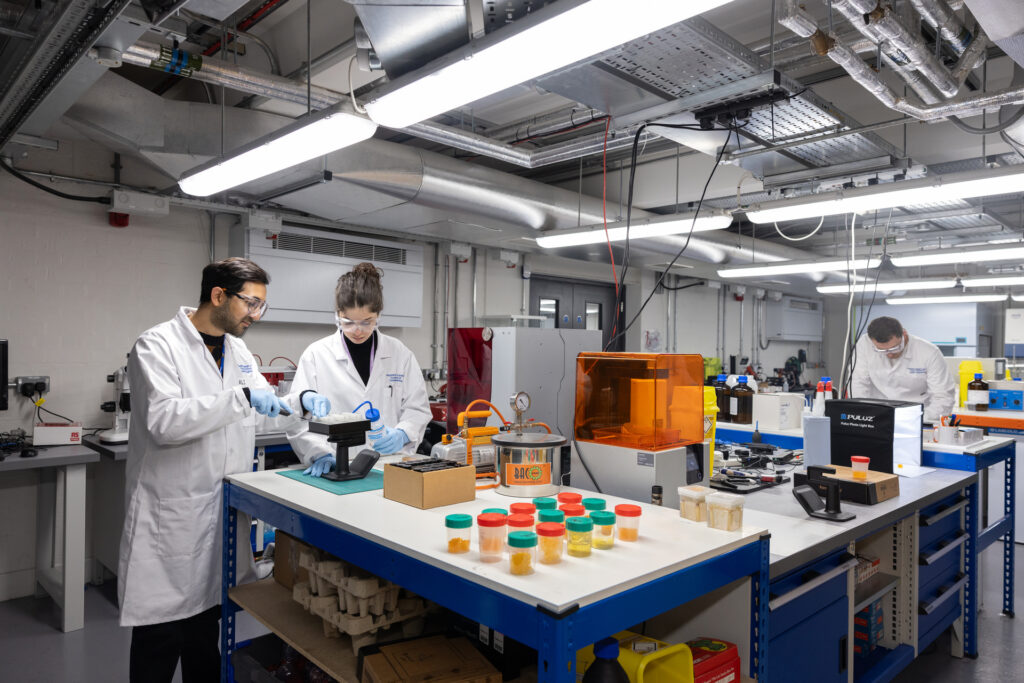
Eleni Papatheofanous credits Imperial’s reputation as one of the factors that helped her secure her job offer. Source: Imperial College London
Eleni Papatheofanous, MSc Design with Behaviour Science
Could you tell us about your academic and/or professional background before joining Imperial, and what drew you to the MSc Design with Behaviour Science?
Before joining Imperial, I studied Psychology for my undergraduate degree and completed internships in marketing. I loved learning about human cognition, and the MSc Design with Behaviour Science appealed to me as a chance to further understand how people behave and make decisions, and how we can design with that in mind.
What specific presentation, project-based learning and/or workshops/lab work have you worked on so far that best highlight what this programme is about?
The assignment in the Intro to MSc Design with Behaviour Science module consisted of applying behavioural frameworks to diagnose a behaviour and then guide the design of an intervention. My project focused on students getting distracted by their devices (e.g. laptops) during study sessions. Using COM-B (a behavioural framework stating that a behaviour (B) occurs only when a person has the capability (C), the opportunity (O), and the motivation (M) to perform it), I showed that students have strong automatic motivation to check notifications, along with plenty of capability and opportunity to switch to something distracting. This helped map the root causes of my chosen behaviour.
However, COM-B is less effective at pinpointing the mechanism needed to interrupt it, so I used the Fogg Behaviour Model, which looks at motivation and ability alongside the prompts that are missing (e.g. cues to focus) and present (e.g. notifications). My final design was a downloadable laptop app that creates a focused and motivating study environment. Each design decision was grounded in these models and wider psychological theory. For example, I added a “study buddy” feature to target social opportunity and affective motivation (Behaviour Change Wheel), which provided a sense of social accountability.
For candidates interested in applying for the MSc Design with Behaviour Science, what advice would you give them on preparing for the application? Are there key foundational concepts in design, psychology, or behavioural science you’d recommend reading up on before starting?
My top recommendation is “The Design of Everyday Things” by Don Norman, which captures the values and principles taught on the design side. For behavioural science, “Thinking, Fast and Slow” by Daniel Kahneman is a great introduction to decision-making, and “Nudge” by Thaler and Sunstein is a seminal work in the field. Together, these give you a strong foundation in human-centred design and psychology.
This MSc Design with Behaviour Science encourages applications from individuals with undergraduate degrees in technical and STEM disciplines. Your background is slightly different, with a degree in Psychology. How has your experience on the programme helped you apply your scientific training to the design of products and strategies?
My previous degree in Psychology gave me a scientific grounding in research methods, statistics, and experimental design. I was used to studying behaviour under controlled conditions, where variables could be isolated and effects measured cleanly. The programme builds on this by teaching us to take those principles out of the lab and into the design process, using prototyping, user testing, and iteration to see how people actually respond to a product in context. This shift became clear in the UI/UX module, where I worked on a wrist health app.
Interviewing users during my research revealed many contradictory and unexpected insights, including features I would never have predicted they would want, and others I assumed they would value but didn’t. This unpredictability showed me why the programme places so much emphasis on iterative design, as each round of feedback changed how I approached the next version.
What are my options after completing the MSc?
The MSc Design with Behaviour Science suits roles centred on understanding people and designing solutions for them. UI/UX is a strong example, as it relies on a deep understanding of users to create successful products grounded in their needs. Another career path, which doesn’t rely on visual design, is working in government policy. Here, you can apply what you’ve learnt about designing interventions and encouraging long-term behavioural change.
The master’s project in the final semester is also great preparation for academia, and some students choose to take their topic further into a PhD. Personally, I am going into a marketing role, which is where my interest lay from the start of the degree. To stand out to recruiters, I pitched marketing as a form of design: using data and behavioural insights to create campaigns that guide consumers towards a purchase decision.
Has the university’s career support played a role in helping you land job interviews?
The university offers so many resources that it can be hard to know where to start. Early on, I used the CV-checking service to make sure my applications were as strong as possible in a competitive market. Later, I also got guidance on writing cover letters and feedback on one I’d already written. This was incredibly useful, as even small changes can strengthen an application, so I’d recommend using these services as early as you can. Imperial also offers plenty of support for entrepreneurs, such as the WE Innovate accelerator programme for women founders and the Venture Catalyst Challenge, which helps new founders develop their ideas.
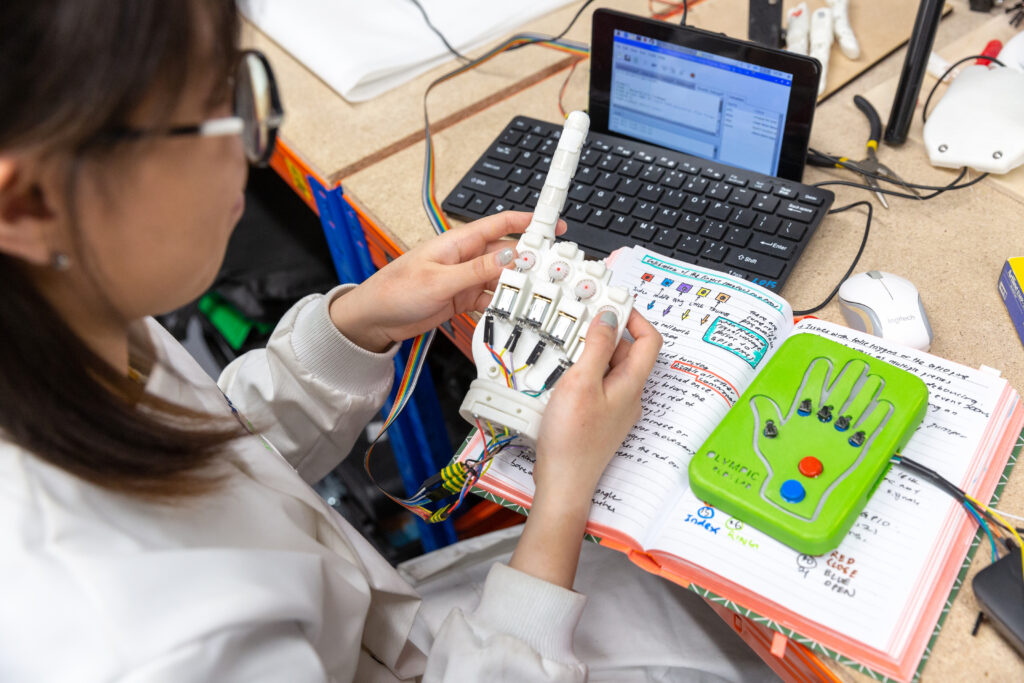
Saniya Patwardhan won the India Future Leaders Scholarship to pursue a Master of Research at Imperial College London. Source: Imperial College London
Saniya Patwardhan, MRes Design Engineering Research
Can you tell us more about your specialisation, scholarship/bursary, and past and present projects related to the programme please?
I have had the opportunity to work in robotics research labs across India, the US, and the UK, gaining experience in different areas of robotics.
I was awarded the India Future Leaders Scholarship to pursue my Master of Research at Imperial College London. During my previous research, I worked on robotic manipulation and grasping with robotic hands, as well as autonomous vehicles. These projects have given me experience across both the hardware and software aspects of robotics, from robot control and manipulation to perception and autonomy.
Currently, my research at Imperial focuses on AI for robots, specifically VLA models for human–robot collaboration. I am exploring how robots can use visual and language information to understand human intentions and learn to perform collaborative manipulation tasks more effectively.
Have you completed any internship or placement? If yes, please describe your responsibilities and how they relate to your programme.
Yes. I completed a part-time internship at Netholabs, an early-stage neurotechnology startup. I was brought on because of my experience and knowledge of foundation models for robotics. My work focused on exploring and developing neuro-foundational models for robotics, with the aim of connecting advances in AI and foundation models with robotic systems.
This role closely relates to my programme and research interests, particularly my work on AI for robotics, robot learning, and VLA models. It allowed me to apply my academic research experience in a startup environment while exploring new approaches to building more capable and adaptable robotic systems.
I am an aspiring engineer and really want to work on new technologies that will be able to make a significant positive difference in others’ lives. What does design engineering research look like, and what is its goal?
Design Engineering research focuses on combining engineering and human needs to solve real-world problems. It is not just about developing technically advanced solutions, but about making them practical, usable, and human-centred.
In robotics, this means developing robots and AI systems that can work safely and naturally alongside people while addressing real-world needs. The goal is to create robotic technologies that are not only technically capable but can genuinely improve people’s lives and have a meaningful impact.
Should I study Design Engineering research after an architecture undergraduate degree?
Yes. Design Engineering welcomes students from diverse backgrounds, including architecture. There are many challenges around sustainability and the responsible use of resources that require architects who are passionate about creating change.
Design Engineering research provides the opportunity to combine architectural skills, problem-solving, and human-centred design. It is a great platform for architects to explore innovative, sustainable solutions and turn ideas into technologies that can create meaningful real-world impact.
Should I go into research or industry if I want to design the latest technology?
Both are great options. If you want to design the latest technology, research and industry offer different but complementary opportunities. Research allows you to explore new ideas, experiment with emerging technologies, and push the boundaries of what is possible, while industry focuses on turning these innovations into practical products and deploying them at scale.
Design engineering prepares students for both pathways. The programme gives you the technical and design skills to take an idea from early research through to a real-world application.
What are my options after completing the MRes in Design Engineering, and how can Imperial help me?
The MRes in Design Engineering has given me the technical, research, and design skills to help translate research into practical applications. Imperial’s industry connections, career support, innovation ecosystem, and entrepreneurship opportunities can further help students explore pathways across research, industry, and technology development.
Although my original plan was to pursue a PhD, I will be joining A*STAR, Singapore’s lead public sector R&D agency, as a Research Engineer, which will allow me to work at the intersection of research and industry.
Follow Dyson School of Design Engineering on Instagram, LinkedIn, YouTube and X.