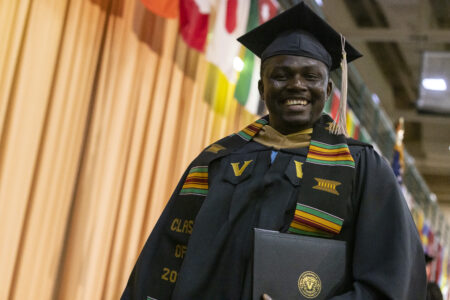



Vanderbilt University in Nashville may be ranked among the top 20 universities in the US today, but when you count Muhammad Yunus among your list of graduates, you know that illustrious showing goes back decades. Yunus, current Chief Adviser of Bangladesh who in 2006 received the Nobel Peace Prize for his pioneering work in microfinance, graduated from the Department of Economics in 1961.
Trailblazer, rock star, the Einstein of economics – these are the labels he’s gotten, every one of them deserved. His starting point was this very department and a programme conceptualised by the US government as early as the summer of 1954 to meet the training needs of officials in developing nations involved in setting development policy. In fall 1956, the Graduate Programme in Economic Development (GPED) was formally established, moulding generations of professionals and policymakers of Yunus’s calibre.
GPED graduates have gone on to distinguished careers in public service in their home countries, as finance ministers, ambassadors, heads of central banks and other important posts. Many have taken positions in international development organisations, such as the World Bank, the International Monetary Fund, the Asian Development Bank, the Inter-American Development Bank, the African Development Bank, and the United Nations. Others have pursued doctoral studies at Vanderbilt and other universities.

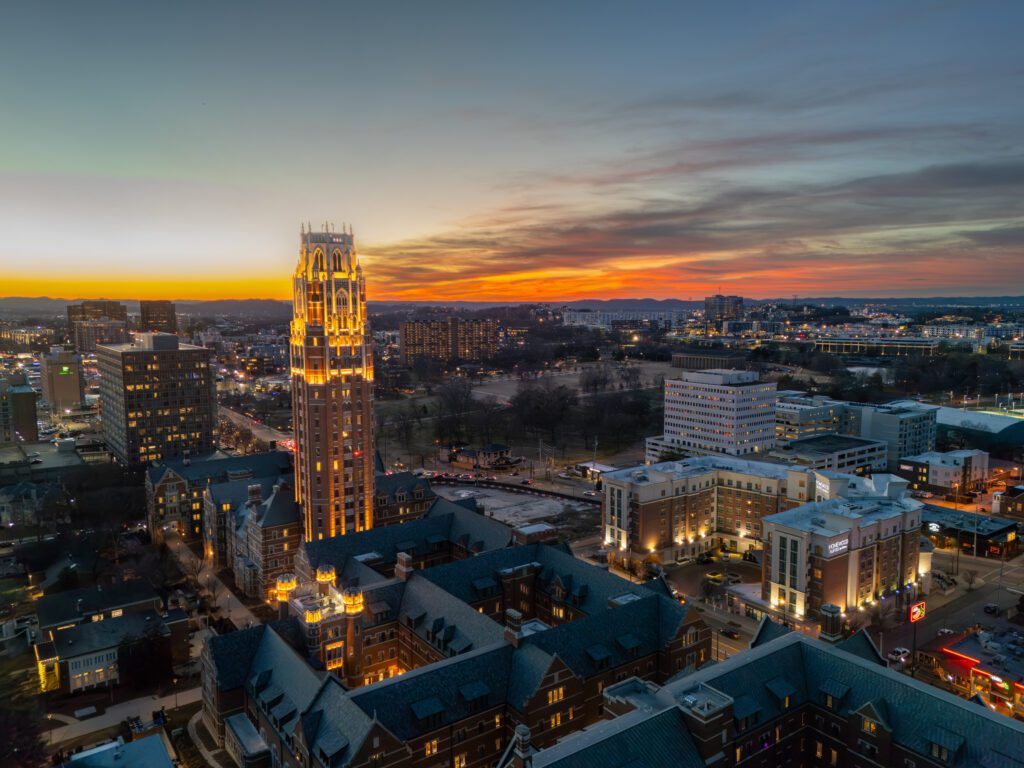
Vanderbilt University nurtures a close-knit student community that supports learning while providing full access to a world-class research environment. Source: Vanderbilt University
Today, that legacy continues. The GPED, also known as the MA in Economics, currently follows a curriculum that is demanding – by design. Over 21 months, students build a rigorous analytical and quantitative foundation through 12 hours of core courses, and nine hours of electives.
Small class sizes facilitate this. When classes have typically between 10 to 35 students, they enable discussions to be more active and encourage more meaningful interaction with faculty. Ideas can be tested, challenged, and refined in real time and with real people – even those from across Vanderbilt.
That’s because the curriculum gives you the option to take courses from beyond the Department of Economics, including computer science, data science, business, and education at Peabody College, Vanderbilt’s College of Education and Human Development.
The goal is to spur students to tailor their master’s to their interests and aspirations. Along the way, the bigger picture often emerges, revealing to them just how connected economic development is to other fields.
“Alongside the core courses, I could tailor the programme to match my career aspirations,” says Maria, a second-year GPED student. “I’m particularly interested in trade policy and I was able to choose relevant electives.”
As the demands placed on economists continue to evolve, the programme itself continues to adapt. Andrea Moro, Director of GPED, has spoken about plans to strengthen and modernise the curriculum. Working closely with faculty, alumni, and new leadership, he aims to ensure the programme remains aligned with today’s academic and professional realities. “Our goal is clear: to prepare our students for success in a rapidly changing world,” he says.
Hands-on experience
GPED students get to attend the GPED Forum, a seminar series that invites leading scholars and practitioners to campus. This engagement helps students stay engaged with current research while gaining insight into how economic ideas are applied beyond the classroom.
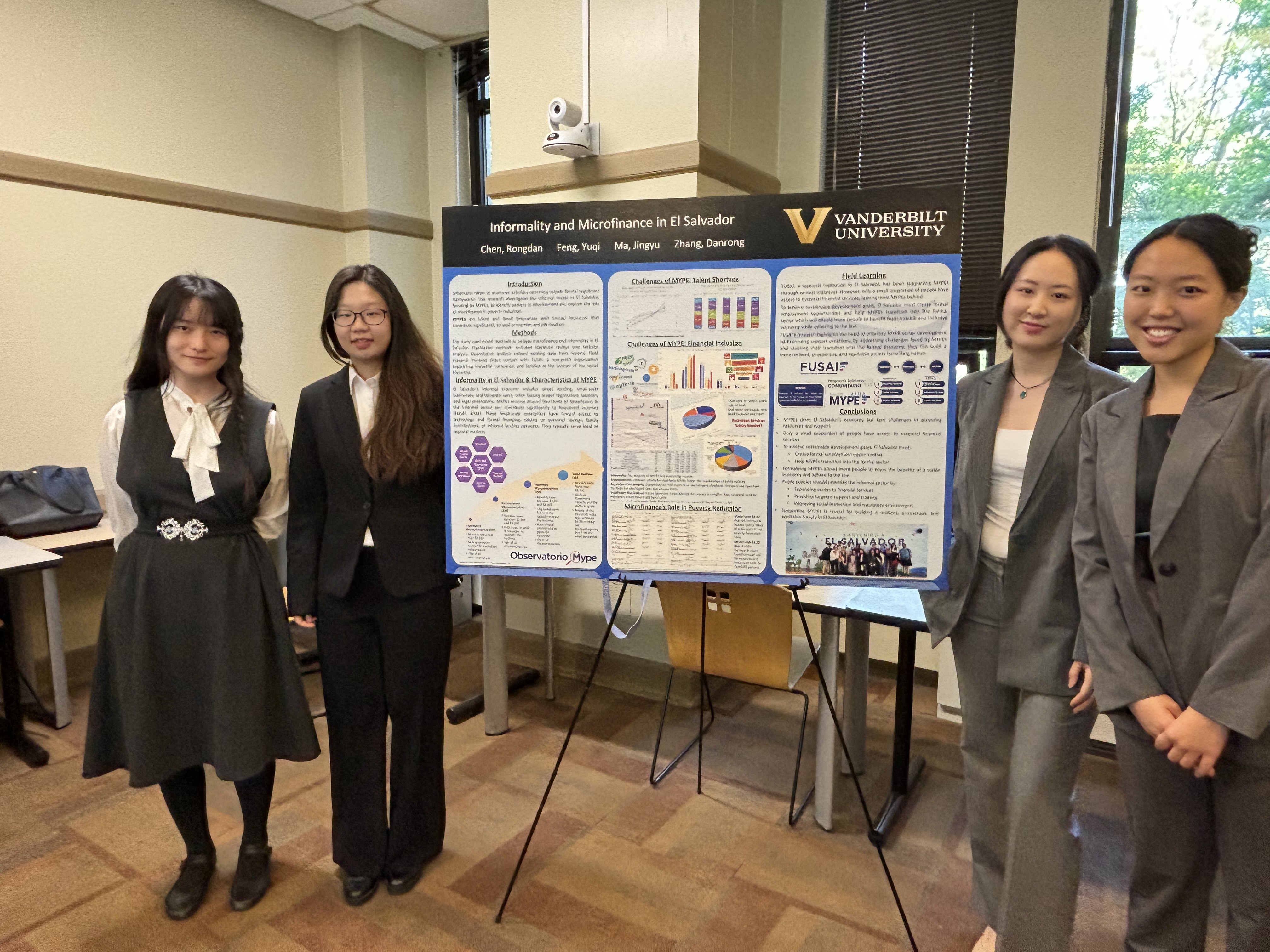
Aside from coursework, you’re encouraged to gain professional experience while studying. Many students take on roles as research or teaching assistants, applying classroom knowledge in practical settings.
For instance, Sahesha Upadhyay, Class of 2019, worked at the International Students Office for more than a year, gaining experience in student support and administration. She later became a research assistant for a professor at the School of Education, which allowed her to expand her skills beyond economics alone.
Fulbright scholar Yelidá María Blanco García, Class of 2021, followed a similar path. Before graduating from GPED, she participated in the World Bank’s noted Doing Business project as a spring intern on the Trading Across Borders team — a valuable experience that allowed her to further develop her skills.
“Studying economic development and working on one of the leading global initiatives carried out by the World Bank helped me achieve my academic goals in the GPED,” Yelidá says. “It improved my expertise in solving development issues, especially those that affect my country and the Latin American and Caribbean region.”
GPED has a strong international focus, with students from at least 10 countries, including the US, and from varied academic and professional backgrounds Source: Vanderbilt University
Extensive support from everyone
Throughout your time at Vanderbilt, you’ll be part of a community that always has your back. Both the department and the university offer extensive academic and personal support, something Upadhyay knows much about.
“I didn’t have a background in economics, so I was a little concerned at the beginning,” she says. “The core courses felt challenging, but with constant support from friends and faculty, it got better over time. The programme’s complimentary tutoring service was invaluable. Two second-year students tutored me in my first year, and I improved a lot.”
Regular events make these relationships feel seamless. There are welcome gatherings hosted by the programme director, a three-day trip to the Smoky Mountains during fall break, and many more.
For graduate Nidhi Adumsumalli, this sense of belonging defined her time in the programme. “Living so close to most of the cohort made it easy to get together often,” she says. “We were always just a few steps away from a good laugh or a deep conversation. It felt like being part of a big, supportive family — something I’ll always treasure.”
Learn more about the programme at Vanderbilt University.
Follow Vanderbilt University on Facebook, X, Instagram, LinkedIn, TikTok, and YouTube