


Sound and vibration are part of our everyday life, from personal audio or the noise of traffic to the vibrations of a moving train. But understanding the underlying mechanisms, how they affect people, and how to control them involves complex engineering. At the University of Southampton‘s Institute of Sound and Vibration Research (ISVR), you can explore these challenges at an institute that has spent many decades advancing the field.
Established in 1963, ISVR was the world’s first university institute dedicated entirely to sound and vibration. At a time when the discipline was still emerging, the Institute helped shape its foundations. Today, its expertise spans research, education, and commercial applications, providing a strong springboard for students looking to develop a career in acoustical and vibration engineering.
The MSc in Acoustical and Vibration Engineering, which has produced about 1,500 graduates since its launch in 1961, draws on this experience, fusing fundamental engineering principles with specialist knowledge and practical learning. Accredited by the Institution of Mechanical Engineers, this 12-month MSc programme attracts international students from around the world with backgrounds in mechanical engineering, electronics, physics, mathematics, and music technology. This is where they develop the technical understanding needed to apply engineering principles to real-world challenges involving sound and vibration.
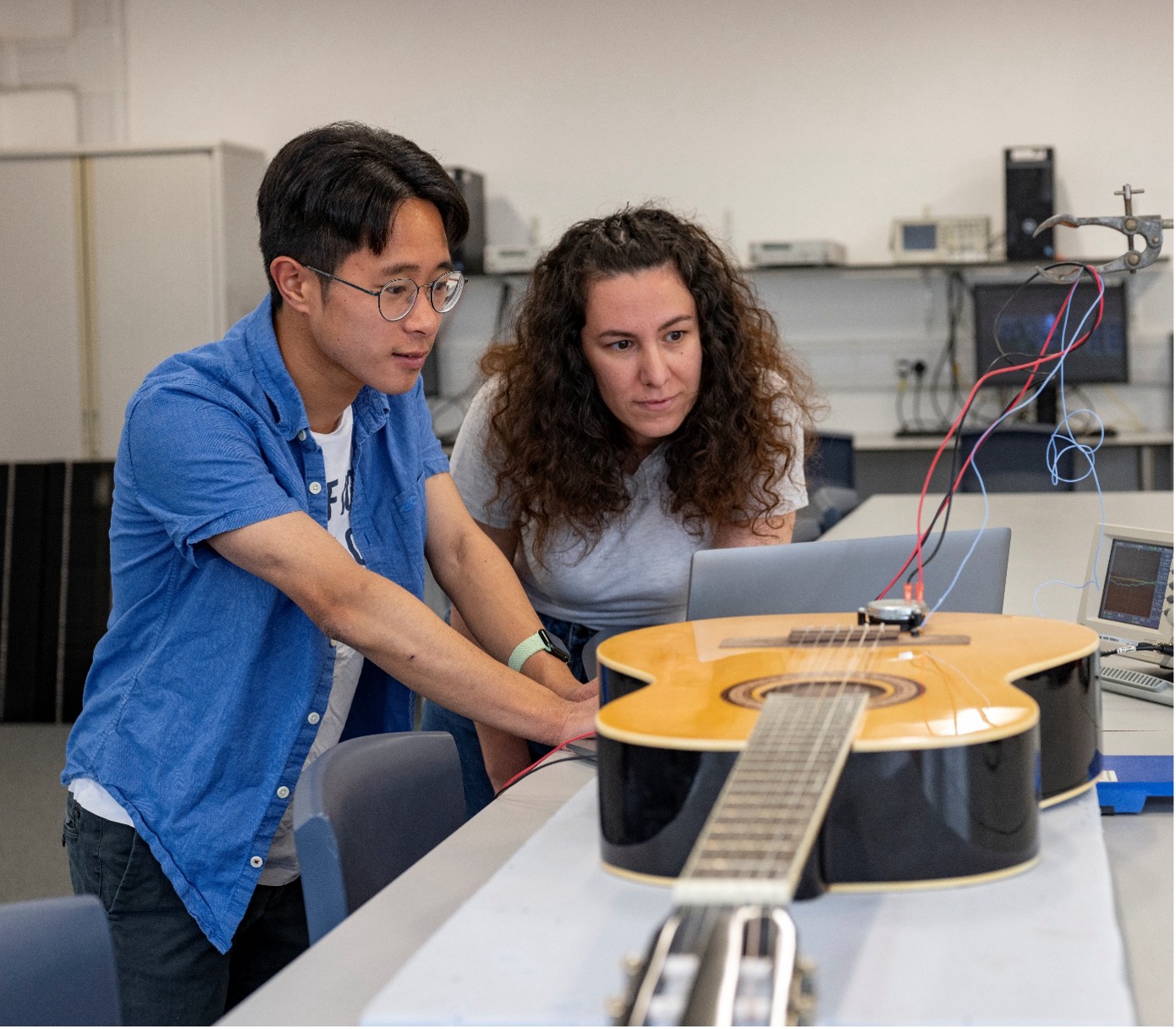
“The MSc enhanced my professional skills and introduced me to new concepts and ways of thinking,” says Milan Tharaka Siyambalapitiya, Class of 2024. “I gained valuable hands-on experience through experiments and made lasting connections with diverse, talented peers and the incredible faculty staff at the ISVR. It is an amazing opportunity to grow academically, socially, and professionally.”
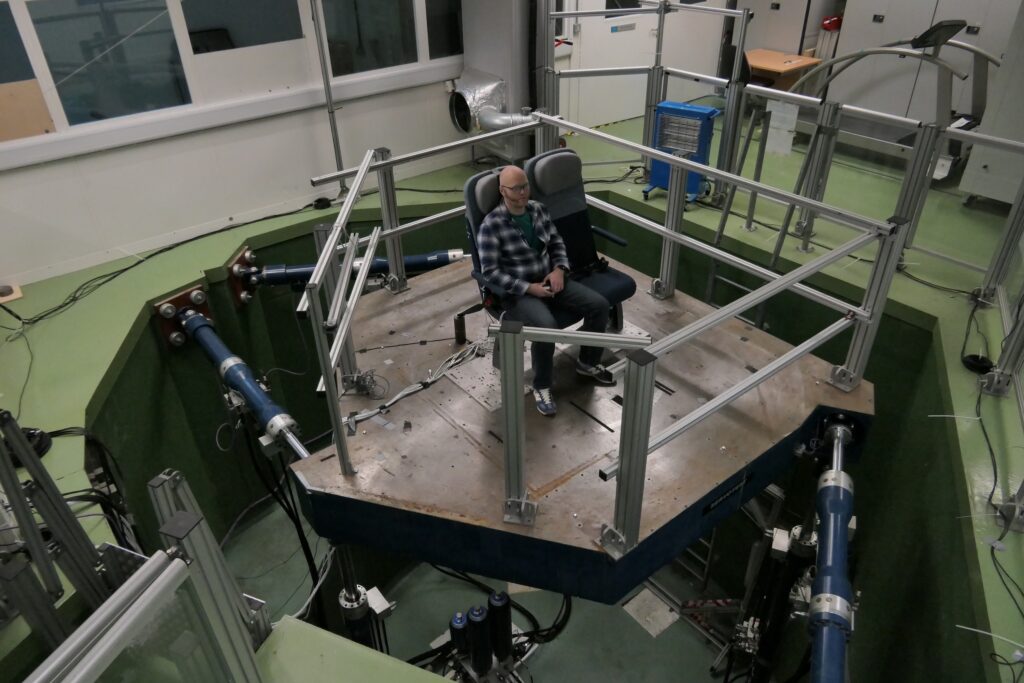
University of Southampton’s ISVR explores how sound and vibration shape the world, preparing graduates to make a difference. Source: University of Southampton
Explore the engineering behind sound and vibration
As you progress through the programme, you will discover how acoustics and vibration principles apply to different engineering challenges. At the ISVR, you can explore specialisms such as aeroacoustics and underwater acoustics, gaining insights into how sound and vibration manifest in different applications and environments. This breadth gives you the opportunity to explore areas you may not have considered before and discover where your interests could take you.
For Ben Lyons, Class of 2022, who now works at Mott MacDonald, a management, engineering, and development consultancy headquartered in the UK, the variety of subjects covered at the ISVR was one of the biggest surprises. “I never expected to do areas such as underwater acoustics and vibration,” he says.
Coming from a more traditional acoustics background, Ben discovered interests beyond his initial expectations and specialisms that come to life through projects. You might investigate how engineers reduce unwanted noise from machinery, design immersive 3D audio systems, simulate sound transmission through buildings and ships, or minimise vehicle vibrations.
And you’ll do so by understanding the physical principles behind these phenomena and how acoustic performance can be enhanced. This may involve experiments in specialist facilities such as anechoic chambers that minimise sound reflections or reverberation chambers where non-directional or intensely loud sound fields can be replicated.
“The MSc programme was highly beneficial, particularly the modules on Noise Control Engineering, Architectural and Building Acoustics, and Vibration Engineering Practice,” says Najula Odantavida, Class of 2024, who now works as an Application & Proposal Engineer – Acoustics at ADE Power, a global manufacturer of precision engineered acoustic and modular enclosures.
“The practical sessions in these modules were invaluable, helping me understand real-world scenarios in acoustics and vibration, beyond just the theoretical aspects. The hands-on experience greatly enhanced my learning and prepared me for practical challenges in the field.”
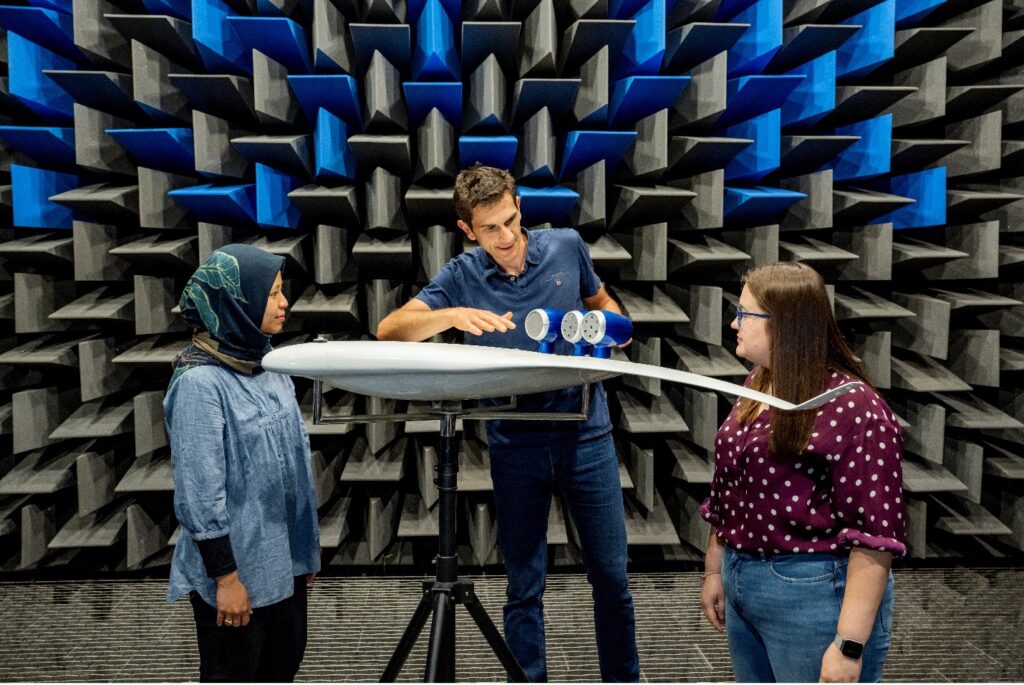
ISVR graduates are highly regarded for their career readiness and work across industrial and public sectors worldwide. Source: University of Southampton
Learn by doing and from experts
Beyond the taught modules, the research project allows you to explore a topic to greater depth and apply what you have learned. You can investigate an area that interests you while strengthening your ability to analyse results and communicate your findings.
For Kenneth Leung, Class of 2022, the programme enabled him to explore different areas of acoustics before deciding on his research direction. He was particularly attracted by ISVR’s specialist facilities and the chance to interact closely with researchers across a range of specialisms. Today, Kenneth continues at Southampton as a researcher in acoustic metamaterials.
At the ISVR, your professors are internationally recognised experts working across different areas of sound and vibration. Their research will introduce you to the latest advances in the field, while the programme’s taught modules and research project help you develop the specialist knowledge and practical skills needed to solve engineering problems. By combining theory with hands-on experimental and computational work, you’ll graduate with the skills, experience, and confidence to move directly into a career in industry or academic research.
As for your course mates, they come from different countries and academic backgrounds. Small, diverse student cohorts ensure that you make lasting friendships and enjoy a truly cultural experience.
Learn more about the MSc in Acoustical and Vibration Engineering.
Follow the University of Southampton on Facebook, Instagram, X, LinkedIn, and YouTube