



The global technology landscape is changing so quickly that businesses can’t afford to stand still. McKinsey’s Technology Trends Outlook 2025 identifies eight key forces shaping the future of work, including Agentic AI, quantum technologies, and immersive-reality technologies. In this environment, digital transformation is inevitable. For students and professionals alike, the challenge lies in developing the skills to thrive in a world that is faster and more competitive. At the same time, they must be prepared to navigate rising risks — the OECD’s AI Incident Monitor (AIM) has tracked a sharp rise in generative AI incidents since 2023.
So how can you prepare for what’s ahead? One option is the University of Salford’s Business School. With a focus on digital transformation and sustainability, its master’s degrees in business and management give you the tools to future-proof your career.
Salford combines practical learning, future-focused skills, and expert advice to help you succeed in your career. Source: University of Salford
Learning what employers need
The university is located in Greater Manchester, a five-billion-pound business and digital sector that is home to intelligence, defence, and cybersecurity organisations. The business school, based in the Peel Park campus, takes full advantage of this. Its Industry Advisory Board, with digital first leaders including Microsoft’s Greater Manchester Region Lead Marie Hamilton, regularly holds guest talks and career events to connect you with Manchester’s business community.
Networking aside, the board has a hand in shaping what you study. All programmes are industry-focused, with the option of paid placements and internships at companies like Ernst & Young, Booth Ainsworth, IBM, and more. Many programmes align with the UN’s Sustainable Development Goals too. For example, the MSc Managing AI in Business has a module on AI Governance and Sustainability. Meanwhile, through its AI in the Workplace, Business Application and AI tools, and Responsible Technologies modules, you’ll learn the skills companies want in a digital-first world.
“The most valuable part of my course was the opportunity to work on live projects,” says MSc Managing AI in Business graduate Ernest Yaw Obu-Cann. “During my job interview, I was asked a scenario-based question that was strikingly similar to one of the live projects I had completed during my studies. I felt more confident in my response, and I was able to demonstrate not only my knowledge but my ability to apply it effectively.”
For those aiming to thrive as a multi-skilled manager, the MSc Managing Innovation and Information Technology (MIIT) is a great fit. In its Managing IS and Transformation (MIST) module, you’ll learn to align digital transformation with business needs, while the Responsible Technologies module equips you to answer complex ethical questions. If you’re interested in entrepreneurship, there’s the MSc Entrepreneurship and Innovation. But if starting a business isn’t your plan, and you’re employed, that’s fine too. From simulations to projects, you’ll gain transferable skills and learn how an entrepreneurial mindset can create positive change in areas like inclusivity, social impact, and sustainability.

You can join an “Unhackathon” with students from other Manchester universities to find solutions to environmental, health, food, migration and urbanisation issues. Source: University of Salford
Inside Salford’s business playground
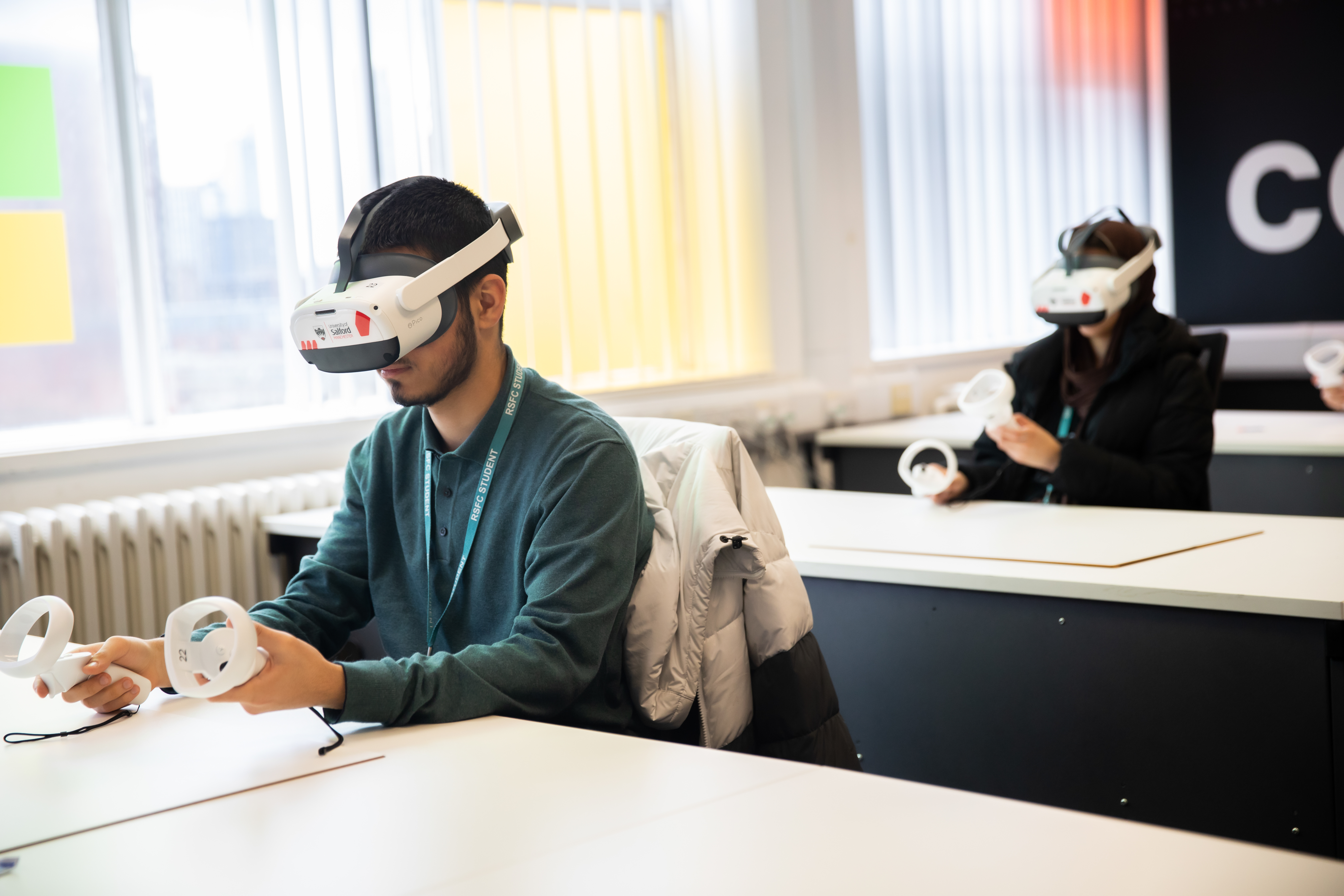
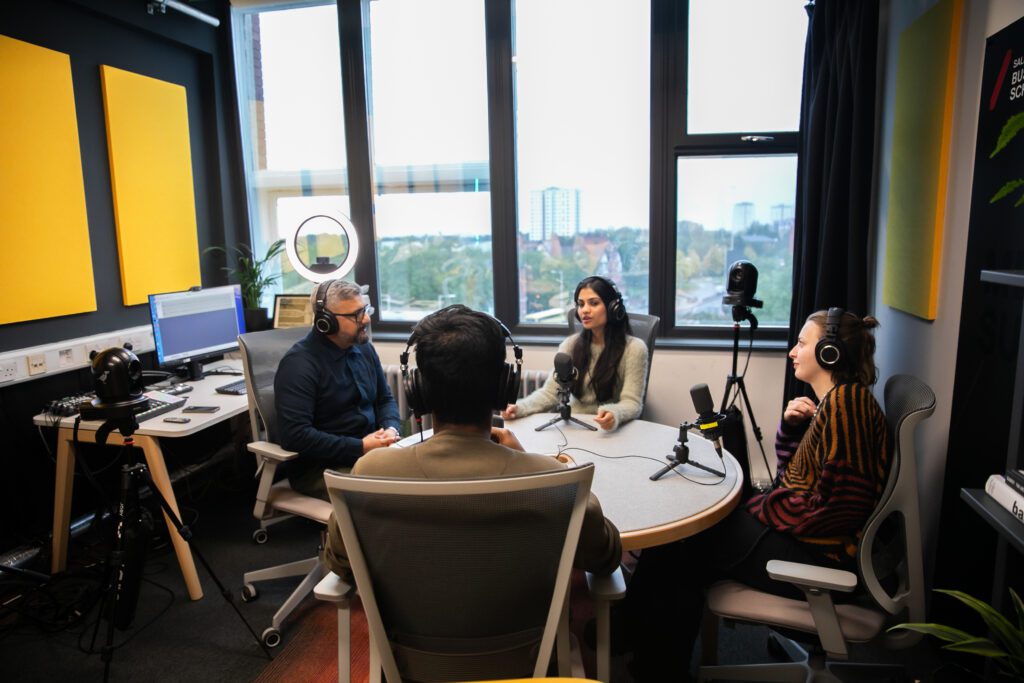
Learning about business is one thing, running one is another. At Salford, you get to do both in state-of-the-art facilities designed to mimic the real world. In the Business Simulation Suites, you’ll join a “management team” and complete challenges such as leading a multinational smartphone company or taking charge of a denim brand’s marketing strategy. Each round represents a year in business, where you’ll make key decisions and compete with other teams. There is the Microsoft Lab too, where you can earn Microsoft certifications, and the Media Suite, packed with HD remote-operated cameras and controllers, RØDE microphones and mixers, green screen, and more.
While Salford’s investment in these cutting-edge facilities is significant, it is merely one part of a wider commitment. Its most impactful resource is a community that cares about both your growth and your well-being. For career development, advisors are available to help polish your interview skills, explore placements, or start your own venture. Well-being services are always there when you need help, while automatic scholarships help lighten the load: 3,000 pounds for first-class graduates, and 2,500 pounds for those with a second-class lower degree (2:2) or above. Plus, tuition fees can be spread across seven consecutive monthly payments.
This focus on comprehensive support ensures you have all you need to emerge with the confidence to adapt to new technologies and thrive wherever your career takes you. “I developed skills in business strategy, project management, leadership, critical thinking, and market analysis. Importantly, I also learned how to innovate, adapt quickly, and manage teams effectively — all of which I use daily in my businesses,” says Ayobami Oluwatoyin.
After completing his MSc in Entrepreneurship and Innovation, he launched Witstart, a branding and marketing agency in Nigeria that generated millions in revenue in less than a year. In the UK, he started Reprint, creating custom apparel for clients, including Mike Ross, the Councillor of Hull.
Follow the University of Salford on Facebook, Instagram, LinkedIn, TikTok, and YouTube