



Professor Hussameldin Ibrahim from Sudan had always been interested in engineering. He even earned a full scholarship to study at one of Sweden’s top universities. It seemed like the obvious next step, but a conversation with his mentor opened up another possibility — one that led him to the University of Regina, where he completed his master’s and PhD degrees.
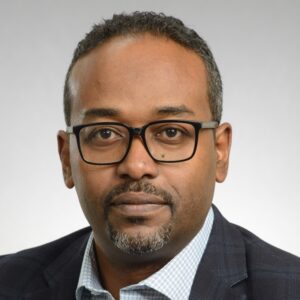
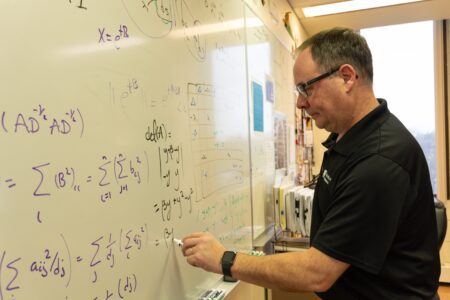
Professor Hussameldin Ibrahim
Fifteen years later, Professor Ibrahim continues to call the university home. Staying in one place for that long is a rare choice, but he saw a chance to do meaningful work through the Faculty of Engineering and Applied Science, especially at a time when the world needs real solutions.
Research that tackles real energy challenges
At the Faculty of Engineering and Applied Science, its systems engineering–based programmes challenge you to think broadly about design, taking into consideration social and environmental impacts, resource use, and long-term outcomes. Faculty approach research in the same way.
Professor Ibrahim, for example, serves as the Director of the Clean Energy Technologies Research Institute (CETRI), a globally recognised centre for clean energy research. Together with other faculty, researchers, and students, they work on critical technologies such as carbon capture and utilisation (CCU), hydrogen systems, waste-to-energy solutions, and more to shape a low-carbon future. Their work is critical, as “the energy transition is urgent because climate change is accelerating, and many industrial sectors cannot fully rely on renewables alone,” Professor Ibrahim explains.

The Microgrid Living Lab has made several recent advances. One involves working with a Canadian micro wind turbine company to solve the university’s microgrid challenges. Source: University of Regina
Research in power systems and energy security is driven by the same sense of urgency. Professor Irfan Al Anbagi is working to make smart grid systems more secure and reliable, using tools like AI and ambient intelligence to understand how failures spread and how systems can respond better.
“The energy transition is a top priority because rising electricity demand, aging infrastructure, and energy security concerns are straining today’s power systems,” he says. “Microgrids support this shift by enabling greater integration of renewable energy, reducing power transmission losses, lowering diesel dependence in remote communities, and providing local flexibility services that help stabilise the grid.”
Other research areas are available as well, such as environmental sustainability.
Graduate research that launches careers
What makes this work especially exciting is that students are part of it too. Professor Al Anbagi carries out his research in the Microgrid Living Lab, a space that mirrors real-world energy systems. Here, graduate students at all levels can get involved.
MEng students work on development, testing, and implementation with industry partners. MASc students take on research that improves microgrid designs, assesses control strategies, and develops analytical or computational tools. PhD students lead research efforts to push microgrid technology forward.

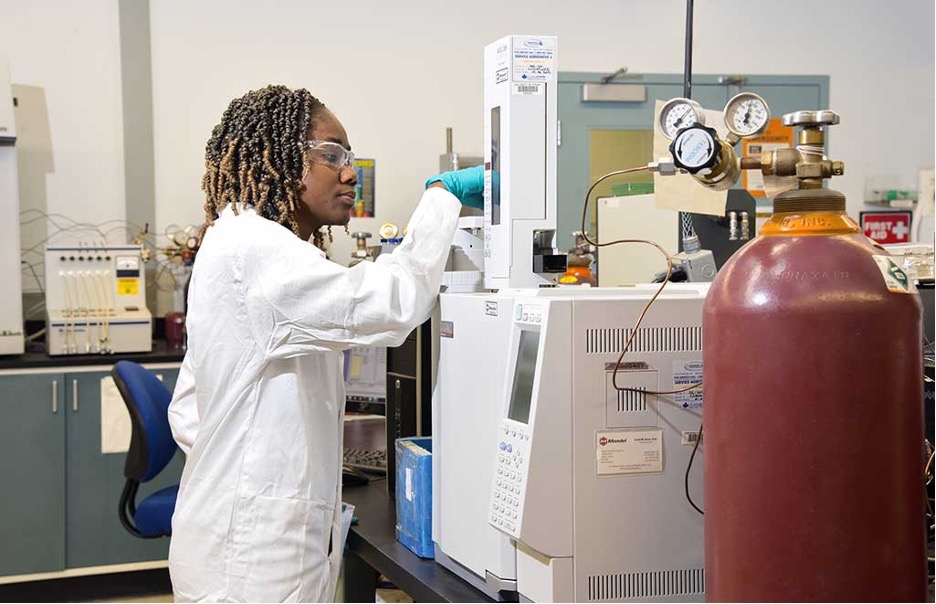
CETRI is home to a hydrogen pilot plant, one of Canada’s only facilities capable of transforming low-grade feedstocks. Source: University of Regina
And it doesn’t matter which engineering programme you come from. “Process and Industrial Systems Engineering students improve system optimisation, control architectures, and operational efficiency,” says Professor Al Anbagi. “Energy Systems Engineering students provide the technical foundation for generation and storage within microgrids, while those in Electronic Systems Engineering contribute through sensing, communication, automation, power electronics, grid stability, and cybersecurity.”
On the other hand, Software Systems Engineering students develop the software, data tools, and AI platforms behind microgrids, while Environmental Systems Engineering students ensure microgrids are efficient and environmentally responsible.
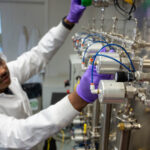
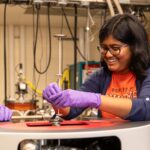
Meanwhile, graduate students at CETRI gain hands-on experience by working with carbon capture and hydrogen production pilot units. “These systems allow students to move beyond theory and operate real processes under supervised, industry-relevant conditions,” says Professor Ibrahim. “They engage in solvent preparation, catalyst synthesis, system operation, troubleshooting, and data analysis using the same analytical tools and control systems found in industrial settings.”
You will also receive training in process modelling and simulation with software like Aspen Plus and ProMax to understand how small-scale results are applied in larger systems.
It’s opportunities like these that make Professor Ibrahim confident in his decision to stay at the University of Regina. “I believed, and still firmly believe today, that Canada offers not only world-class education, but also a real opportunity to build a long-lasting and meaningful career after graduation,” he says.
Follow the University of Regina on Facebook, Instagram, LinkedIn, YouTube, and TikTok