

How can research help protect biodiversity or develop materials that make water safer? At the University of Fribourg, your degree will be informed by research tackling some of the world’s greatest challenges. In one study, researchers from the university found that invasive species cause more severe environmental damage in the Global South than previously thought, highlighting the need for more effective environmental management. In another project, researchers at the Adolphe Merkle Institute developed a method for creating ultrathin artificial membranes inspired by natural cell membranes. These membranes could have applications in processing sea water for human and industry use.
To contribute to research like this, you will need more than a strong understanding of scientific theories. You will need opportunities to ask questions and investigate problems in depth. At the Faculty of Science and Medicine at the University of Fribourg, you can develop these skills through master’s programmes in life sciences, geosciences, materials sciences, neurosciences and more, in an academic environment where research is part of your learning experience.
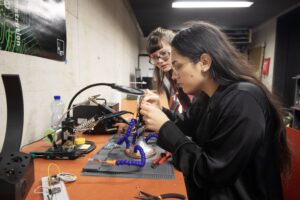
Through the master’s programmes at the Faculty of Science and Medicine at the University of Fribourg, you can deepen your knowledge, develop skills in your chosen field, and prepare for a career in research, development, or policy making. Source: University of Fribourg
Find a master’s programme that matches your interests
Whether you want to understand biological processes, investigate environmental challenges, or explore digital technologies, you can choose from a range of Master of Science (MSc) programmes that build on your undergraduate studies. Most of the faculty’s master’s programmes are taught in English, while Sport Sciences is available in French and German.
Whichever programme you choose, you will complete a master’s thesis in one of the research groups of the faculty, which will enable you to investigate a research question in depth and strengthen your analytical skills. During lectures and practical courses, you will deepen your understanding of your field with support from your professors and lecturers, too. As classes are generally smaller than at other universities, teaching staff have more time to engage with students, answer questions, and discuss ideas. With more personal interaction, you will always have support to tackle challenging topics and develop your research.
Natural and exact sciences
If you are curious about how the natural world works, explore the faculty’s natural and exact sciences programmes. Your options include Molecular Life and Health Sciences, Environmental Biology, Chemistry, Earth Sciences, Geography, Mathematics, and Physics.
You can explore environmental questions from different perspectives, too. Environmental Sciences and Humanities and Environmental Humanities and Sustainability Studies both offer routes to understanding environmental challenges and their wider implications. For a more specialised focus, Dynamics in Glaciology and Geomorphology lets you investigate the processes that shape glaciers and landscapes, while Nature, Society and Politics examines the relationship between environmental issues and society.
Digitalisation and computer science
If you are interested in computing and digital technologies, the faculty’s digitalisation and computer science programmes include the Swiss Joint Master in Computer Science (SJMCS).
The programme is jointly offered by the Universities of Fribourg, Bern and Neuchâtel, with teaching units grouped into tracks reflecting different profiles in computer science and a chance to work closely with one or more research groups of the three participating institutes.
Consider the specialised MSc in Digital Neuroscience if you want to explore the connections between neuroscience and digital technologies. This field brings together different approaches to understanding the brain, making it an excellent option if your interests span medical sciences and computing.
Medical and sport sciences
The specialised MSc in Experimental Biomedical Research explores areas of human health and disease such as neuroscience, infection, inflammation, cancer, or tissue degeneration and regeneration. It’s ideal for those seeking to build a career in research, whether in academia, in clinical research, or in the pharmaceutical industry.
Alternatively, the MSc in Sport Sciences may suit you if you are interested in physical activity, movement, and health. Depending on your interests, you can explore topics relating to performance, health promotion, sports psychology, and more.
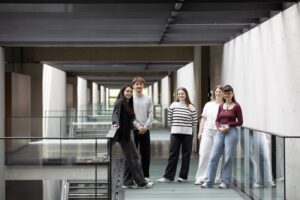
Founded in 1889, the University of Fribourg has a long international tradition, welcoming students from 110 nationalities. Source: University of Fribourg
Settle into student life in Fribourg
Finding the right programme is only one part of choosing a university. Equally important is finding a city where you will enjoy living and studying.
With around 40,000 inhabitants and 10,000 students, Fribourg is that kind of student city. Here, you will be part of close-knit student community in a Swiss town with a peaceful pace of life. As the university is part of the local community, you can meet students both on campus and around the city.
On campus, there are many ways to get involved. Through the General Student Association of Fribourg University (AGEF), you can find a wide range activities that match your interests. For example, you could join the University Film Club, take part in cultural activities, or connect with students through academic and subject-based associations.
Beyond campus, the world-famous Swiss outdoors beckons. Fribourg sits at the foothills of the Alps and is less than 20 kilometres from Lake Murten, making it easy to plan walks and outdoor activities nearby. Getting around is straightforward, too. Local buses connect different parts of the city, while rail services link Fribourg to major Swiss destinations, including Bern, Lausanne, Geneva, and Zurich.
As you plan your move to Switzerland, remember that living costs are another important consideration. Fribourg is relatively affordable compared with many other Swiss cities, and you can explore accommodation options such as student residences and shared apartments through the university’s guide to living in Fribourg. Starting your search early gives you more time to compare options and find a place that suits your budget.
Learn more about one or more of the university’s master’s programmes by attending the Masterdays in March, also available online, or by reaching out to the study advisor of the programme that interests you most.
Learn more about the University of Fribourg’s Faculty of Science and Medicine.
Follow the University of Fribourg’s Faculty of Science and Medicine on LinkedIn