


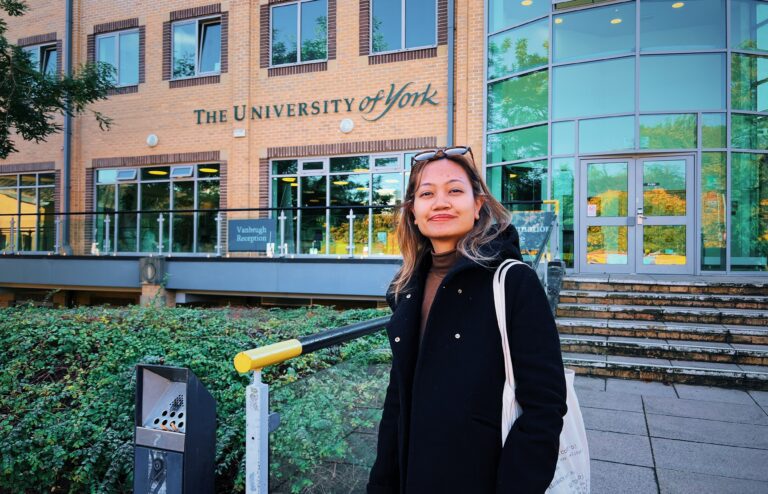


Sarah Lois Dorai has always been aware of her identity.
The film director is half-Indian and half-Kelabit, the latter being a small indigenous group from the highlands of Sarawak, Malaysia, that is only 6,000-people strong.
“Because most of us in my generation are born outside the village, a lot of us come from now mixed heritage families,” she points out. “There’s so much of our culture that gets lost in the process, not to anybody’s fault, but it just happens when there is a mix of things, with being a part of modern life.”
But because of that, Dorai finds it especially important to know where you come from and remember where your roots are – because those foundations guide and shape our lives.
For Dorai, this identity and lineage have shaped the way she tells stories as a film director and publisher who focuses on arts and literature. A Chevening Scholarship recipient, she got her Master of Arts (Film & Television Production with Directing) at the University of York.
Confronting identity
Growing up, Dorai’s mum, who comes from Kelabit heritage, would often bring Dorai and her sisters home to Bario, a remote, 1,000-meter-high plateau in Sarawak’s northeastern highlands and home to the Kelabit community.
There, she spent lots of time with grandparents, immersing in their culture, learning the dances, and eating the food.
“We weren’t so successful in picking up the language; I’m still trying very hard,” Dorai shares with a laugh.
As an adult, she began to think, “I’ve never gone back to the village without my mum. What does being Kelabit mean, what does Bario mean to me, outside of my mother?”
And in trying to answer that, she realised it was impossible to answer that, because it has everything to do with her mother.
“Because it’s all about ancestry and lineage and roots and family ties that ties you to a cultural identity,” she explains. “That’s when I started to realise that we need to realise who our parents are, and who our grandparents are.”
In doing so, Dorai believes that we can find many keys to unlock our own potential.
While Dorai has always had a penchant for the arts and storytelling, her identity helped unlock purpose.
“When you’re young you have selfish ambitions, or you have a dream that is for yourself,” she says. “But as I grew up I realised that no dream is meant to serve just you. It’s meant to be in service to others. And everything must be led by certain purpose.”
That purpose for her lied in heritage work. It had done so much for her in understanding herself, her family, and her community, so much so that she believes everyone should do a deep dive into their own heritage and culture.
This belief is what led her to become a lecturer, and also pushed her to author children’s books.
“The talents were already there, but how it manifested was led entirely by purpose,” the film director says.
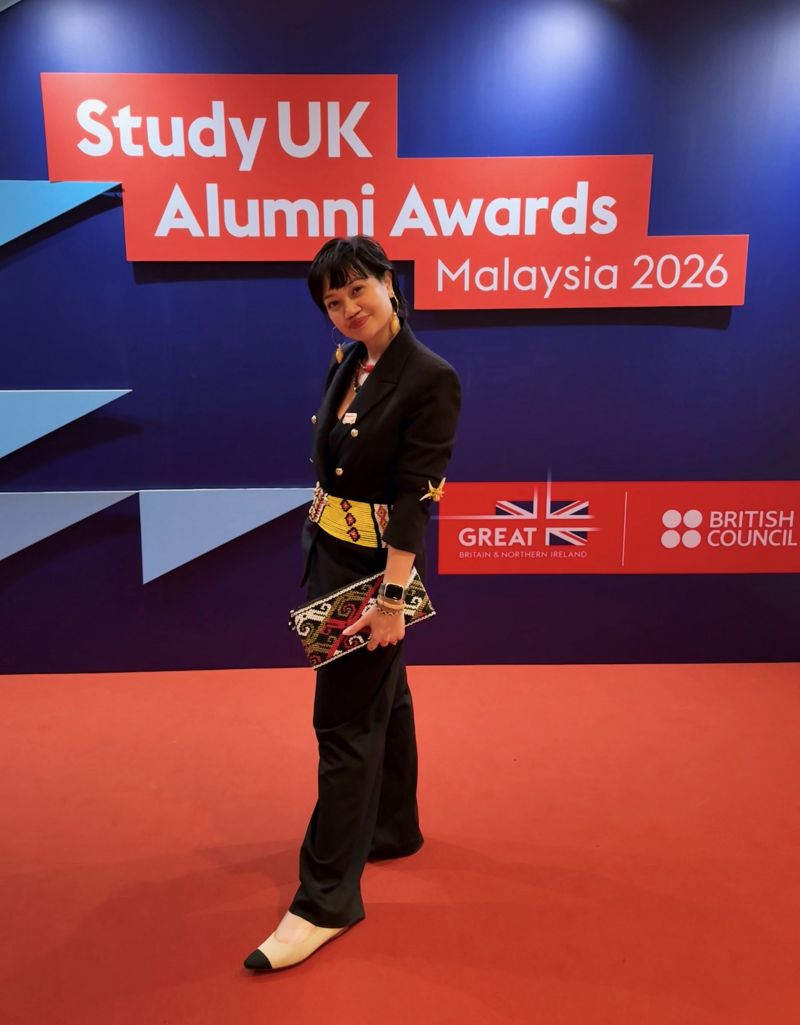
Dorai was selected as a finalist at the Study UK Alumni Awards Malaysia 2026. Source: Sarah Lois Dari
Getting people to care
The thing about stories and art, though, is that they don’t exist in a void.
Ultimately, they exist for an audience.
As such, Dorai believes that her work must say something, and that the audience should be able to understand what you say.
“Art as communication is only as effective as how much your message gets across,” she says.
She also understands that the film industry is ultimately an entertainment industry at its core. Unless people are entertained, they may not care for your message.
“That’s where being artistic comes into play, and I think it helps in that matter,” she says.
That said, she says that she doesn’t let herself get hung up about whether other people would care about her art. Because there is a conviction that people who will resonate with it will resonate with it.
“If I am thinking about how other people would accept our stories, then I am creating another obstacle for myself in my mind,” she says. “My approach is always – if I don’t do it, who I will? I must take the initiative to tell those stories in a way I feel matters, and be truthful to that, and be truthful to the community that those stories come from.”
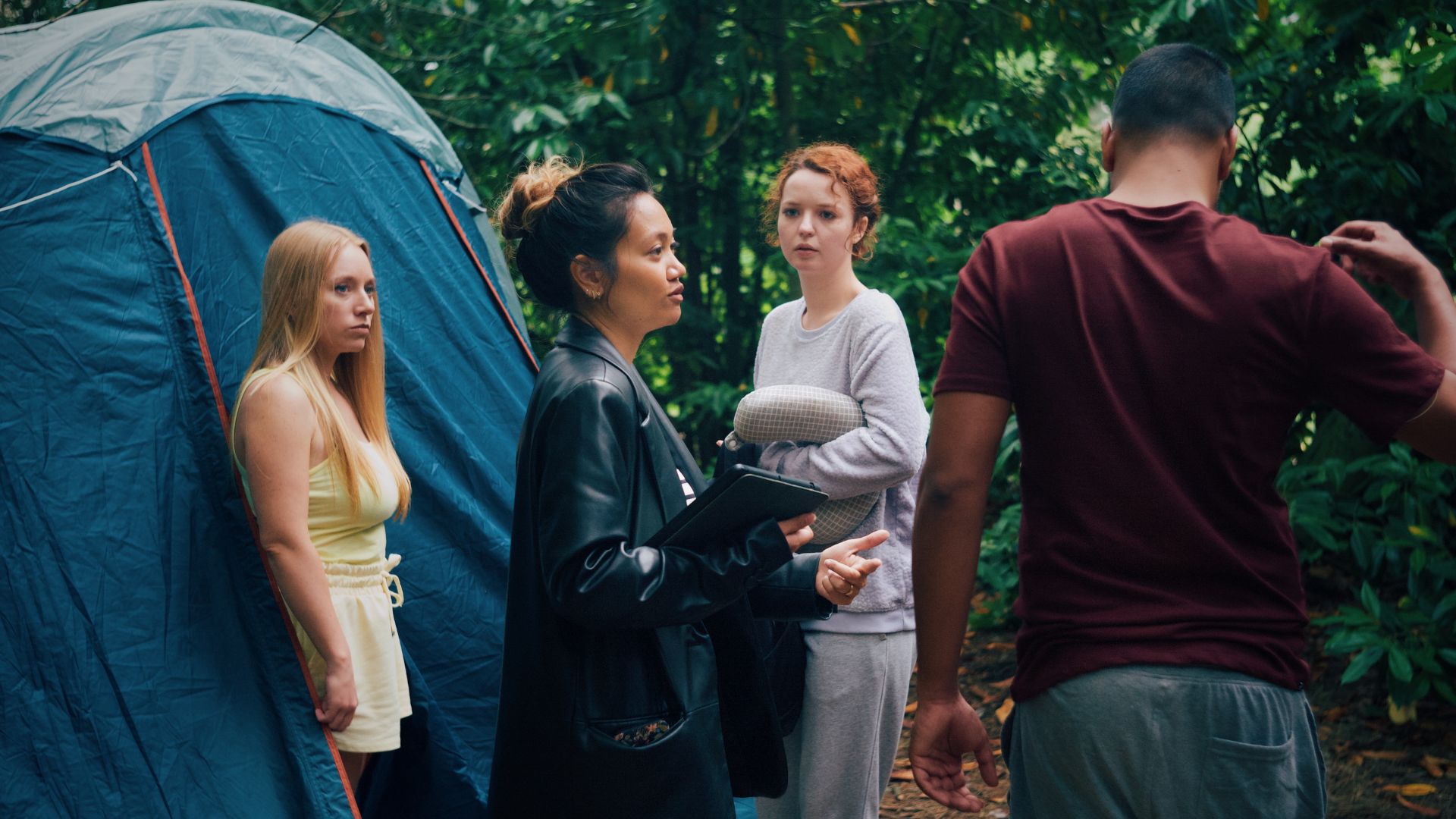
Dorai often makes sure that she places women in positions of leadership in her crew. Source: Sarah Lois Dorai
Women as cultural champions and custodians
Aside from championing Kelabit culture, Dorai is also a strong advocate for women.
In her own words, she comes from a line of strong mothers, which has rubbed off on her and her sisters.
“We have seen within our own families how women are not just the carriers of the family system but of stories and heritage,” she says.
Beyond sharing stories within the family, though, Dorai believes they have much more to share. To her, women carry very unique perspectives of the world, ones that add so much value in partnership with what men bring.
That’s why as a film director, Dorai endeavours to create as many roles of leadership where women can express themselves and be heard.
“Unfortunately, within systems we have created, men tend to naturally fall into these positions, and women then tend to draw back and think they’re not good enough even though they may be more qualified sometimes,” she says.
“I have been given so much, I must be able to include other people in that process.”
Do not wait for opportunities; create them
Art is not easy. Heritage work is not easy. Trying to get people to listen is not easy.
But as Dorai says, “I think nothing worth doing is not hard.”
In the face of these hardships, though, Dorai believes we must always ask ourselves what can we do in any given situation, within our own capacity.
“Knock down doors if we must, or create our own doors to walk through,” she says. “We can’t sit and wait for opportunities to open up for us. We must somehow create them for ourselves.”
And that’s what she did. A notable project of Dorai’s is the Warrior Spirit music video which she created with musician Alena Murang.
When working on those kind of projects, there were people who did not find it worth pursuing. For one, Kelabit singing is known to be more monotonous, which some found unintersting.
“But we just had to silence out the noise and do what we believe to be true,” the film director said.
Thanks to their perseverance, Warrior Spirit went on to win numerous awards across the globe.
“You don’t arrive there overnight,” she adds. “You try and you fail, and you try and you fail, until one day it happens.”
Popular stories
17 US universities where you can get a master’s degree for free or almost free (2026)

A 2026 recap of what schools the Beckhams went to if you want a posh education

Acceptance rates as low as 3.65%: The hardest universities to get into & their admissions criteria in 2026

The education of Barron Trump as of 2026: Oxbridge Academy to NYU’s Stern School of Business