





Some exams might be easy peasy lemon squeezy, but the toughest exams in the world are difficult, difficult, lemon difficult.
While some people can get by without ever encountering these exams, others will have to brave the challenge as it could be their much-needed — and only — ticket to gaining the qualifications they need for their careers.
TL;DR
- Sitting for some of the toughest exams in the world can open doors to new opportunities, such as prestigious degree programmes or higher job salaries.
- China’s Gaokao is often ranked as the toughest exam in the world, alongside India’s UPSC Civil Services Examination.
- Of the entire list, four of the toughest exams come from India, which can be attributed to the fact that it’s the most populous country in the world, leading to high competition.
Check out more specific opportunities in China, the US, South Korea, and Singapore through our country pages today.
To learn more about exams across the globe, check out the 10 degrees with the most exams or the 5 toughest entrance exams in the world.

Are the toughest exams in the world worth it?
Taking the toughest exams in the world can be stressful and gruelling, but the rewards often outweigh the challenges. Succeeding in these exams can open doors to prestigious degree programmes, which in turn lead to excellent career opportunities.
For example, passing the United States Medical Licensing Examination (USMLE) is an essential step for medical graduates aiming to practise medicine in the US. These qualifications prove your knowledge and skills while placing you among the top candidates in your field.
Those in finance who wish to advance their careers will usually take the Chartered Financial Analyst (CFA) exam. Though one of the toughest exams in the world, earning it can lead to new job opportunities and higher salaries. Charterholders often report a 53% increase in their salary after passing the Level III exam.
So, while these exams are stress-inducing, the potential for career advancement and financial growth makes it worthwhile — if you survive.
Check out these related links
20 toughest exams in the world

China’s gaokao, one of the toughest exams in the world, isn’t just stressful for the students — it’s nerve-racking for their parents too. Source: Ewan Yap on Unsplash
1. Gaokao
The Gaokao (translated as “Higher Exam”) in China is known to be one of the toughest exams in the world. As the national college entrance examination, it determines the academic futures of millions of students each year.
Taken in June, the exam lasts nine hours over two days, covering a number of subjects, including Chinese literature, mathematics, a foreign language, and additional subjects depending on the student’s chosen field.
With more than 12 million candidates taking the exam each year, 13.35 million in 2025, the competition is fierce. Less than 0.1% of students qualify to join some of China’s most elite universities, such as Tsinghua University and Peking University.
In 2025, students competed for an estimated 4 to 5 million undergraduate places, resulting in a nationwide undergraduate admission rate of approximately 30% to 37%. In 2022, only 3% of candidates in China’s most populous province of Guangdong scored over 600 out of 750 — the minimum score required for a place at the country’s top-tier universities.
In 2021, 17% of students nationwide retook their gaokao. In the same year, China’s top universities accepted an average of 0.67 million students out of the 10.78 million who applied, an acceptance rate of 6.7%. By comparison, the University of Oxford accepted around 14% of applicants for undergraduate study in 2022.
2. Indian Institutes of Technology (IIT) Joint Entrance Examination (JEE) Advanced
The IIT JEE Advanced exam ranks as the second toughest exam globally and the most difficult in India. This national-level exam is a student’s sole gateway for entry into the prestigious IITs across the country.
The JEE is held once a year, usually in mid-May, and has two stages: JEE Main and JEE Advanced. Only those who clear JEE Main can sit for JEE Advanced. It tests not only your knowledge but also your ability to apply concepts to complex problems efficiently under time constraints.
In 2026, 179,694 candidates sat both JEE Advanced papers, with 56,880 qualifying — a pass rate of approximately 31.7%.
3. Chartered Financial Analyst (CFA)
The Chartered Financial Analyst (CFA) exam is known to be one of the toughest exams in the world. It is designed to test finance professionals on tools and practices within the finance and investment management disciplines.
The CFA programme consists of three levels: Level 1 focuses on financial analysis using the tools of the 10 topic areas of the candidate’s body of knowledge; Level 2 focuses on the valuation of various assets and emphasises the application of investment tools and concepts in contextual situations; and Level 3 focuses on effective wealth planning and portfolio management. Level 3 also requires the candidate to synthesise all the concepts and analytical methods learned from the entire curriculum.
Since transitioning to computer-based testing, CFA exams are offered multiple times a year. In 2026, Level 1 was administered in February, May, August, and November; Level 2 in May, August, and November; and Level 3 in February and August.
The CFA exams remain highly selective. The most recent 2026 pass rates were 45% for Level 1, 42% for Level 2, and 50% for Level 3.
According to the CFA Institute, the 10-year average pass rates are 41% for Level 1, 45% for Level 2, and 52% for Level 3.
4. Graduate Record Examination (GRE)
The Graduate Record Examination (GRE), available year-round and administered by the Educational Testing Service, is designed to assess your readiness for graduate-level academic work, particularly for programmes in the US.
The GRE evaluates skills across several areas: Verbal Reasoning, Quantitative Reasoning, Critical Thinking, and Analytical Writing. These sections collectively test your ability to comprehend and analyse complex texts, solve quantitative problems, and articulate well-reasoned arguments.
Unlike many standardised exams, the GRE does not have a pass or fail score. Instead, candidates receive scaled scores that universities use alongside academic records, recommendations, and other application materials to make admissions decisions.
Because admission requirements vary by institution and programme, competitive applicants often need exceptionally high scores. For example, the Stanford Graduate School of Business reported an average GRE score of 328 for its MBA Class of 2025, while Yale School of Management reported an average GRE score of 330 for its MBA Class in the same year.
5. Graduate Aptitude Test in Engineering (GATE)
The Graduate Aptitude Test in Engineering (GATE), held annually over multiple sessions in February, is a national-level test conducted by the Indian Institute of Technology (IIT) and the Indian Institute of Science (IISc). It evaluates the knowledge and skills of graduates who want to pursue postgraduate studies.
The test consists of 65 questions, including 10 general aptitude questions and 55 technical questions, which must be answered within three hours. It covers various subjects, including mathematics, science, engineering, and general aptitude.
The exam is highly competitive — of the 747,319 candidates who took the test in 2025, only 141,802 — 18.97% — qualified. For students aiming to pursue the most respected engineering degrees across India, this is the exam that could put their future on the line.
6. Master Sommelier Diploma Exam
The Master Sommelier Diploma Exam, administered by the Court of Master Sommeliers (CMS), is designed to enhance the quality of beverage services provided by sommeliers.
The examination is offered in stages throughout the year. In 2026, the Theory examinations were held on 15 March (Seoul) and 27 April (Portland), while the Hospitality & Service and Practical Tasting examinations took place from 8 to 10 September (Houston) and 14 to 15 November (Seoul).
The exam has three main sections: Theory, Service, and Blind Tasting. The Theory section tests a candidate’s comprehensive knowledge of wine, including its history, production methods, and regional specifics. The Service section evaluates a candidate’s ability to provide high-quality beverages in a restaurant. The Blind Tasting section requires candidates to identify the year, grape variety and region of wines through taste alone. This level of precision and expertise is what makes the exam exceptionally difficult.
The pass rate for the exam is quite low, with an average success rate of only about 10%, even after multiple attempts.
7. Mensa International
Mensa is not an exam itself but an international organisation of individuals who score in the top 2% on standardised IQ tests. These tests evaluate your intellect across various domains, such as logical reasoning, problem-solving and analytical thinking.
Unlike academic or professional examinations, Mensa does not have a single global testing schedule. Most national Mensa organisations offer supervised admissions tests throughout the year, with test dates varying by country and location. Candidates may also qualify by submitting scores from previously completed, approved intelligence tests.
However, boasting your IQ won’t necessarily land you the job — in fact, according to hiring managers, it could even negatively affect you. Some Mensa members on this Reddit thread go as far as saying that they never mention their membership in any event or interview. Still, the networking opportunities and experiences offered by the organisation are something to appreciate.
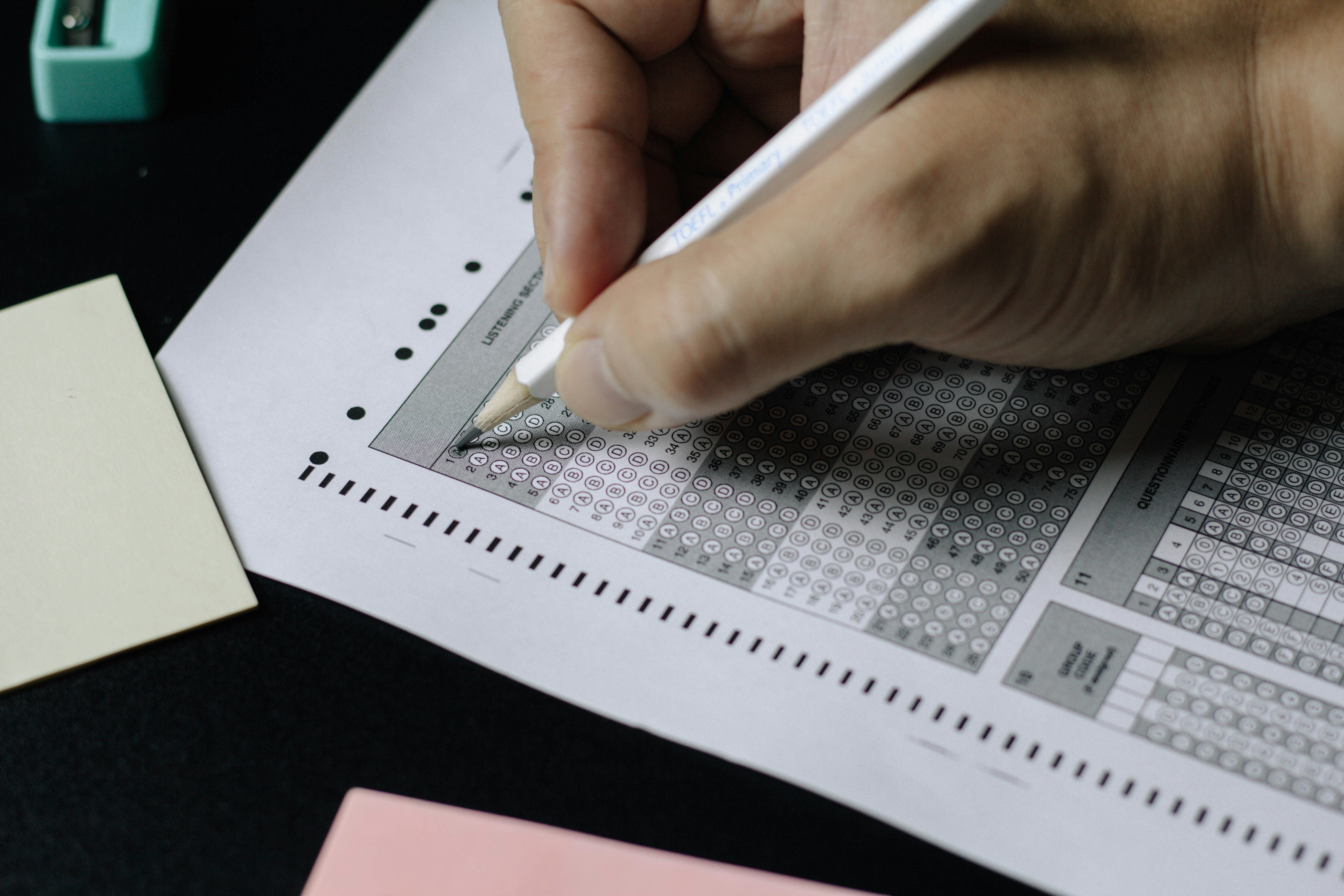
While the passing rate of these toughest exams in the world is low, many still choose to take these exams to advance their careers. Source: Nguyen Dang Hoang Nhu on Unsplash
8. Cisco Certified Internetworking Expert (CCIE)
The Cisco Certified Internetworking Expert (CCIE) exam is one of the toughest exams in the world. This exam, administered by Cisco Systems, assesses a candidate’s ability to build, maintain and troubleshoot complex network infrastructures.
It is offered year-round at Cisco-authorised lab locations worldwide. Exam results are reported on a pass/fail basis, with results typically available within 48 hours.
The exam is divided into two stages: a written exam and a practical lab exam. The written exam lasts two hours and tests candidates on different aspects of networking technologies. Upon passing this stage, you will move on to the lab exam, which lasts eight hours and involves hands-on tasks to demonstrate real-world networking skills.
Cisco does not publish official pass-rate statistics. However, industry estimates suggest that the overall pass rate is between 26 to 30%. Candidates are recommended to have five to seven years of industry experience before attempting this exam.
9. Indian Engineering Services (IES)
The Indian Engineering Services (IES) exam, conducted by the Union Public Service Commission (UPSC), is one of the toughest and most prestigious exams in the engineering field. It is designed to recruit engineers for technical and managerial roles within the government of India.
The IESE is held annually. In 2026, the Preliminary Examination took place on 8 February, followed by the Main Examination on 21 June.
The exam covers various engineering subjects and has a rigorous selection process. It includes multiple stages: a preliminary exam, a main exam, and a personality test. Each stage is designed to test not only your technical knowledge but also your problem-solving abilities, decision-making skills and overall suitability for a career in public service.
Every year, thousands of candidates compete for a very limited number of vacancies. The highest recorded success rate was approximately 0.75% in 2016, but in 2026 it has remained around 0.3% to 0.4%.

The California bar exam is widely considered to be the most difficult of all state bar exams in the US, earning its right to be one of the toughest exams in the world.
10. California Bar Exam
Those who want to become lawyers in California must first take the California Bar Exam. It is administered twice a year, in February and July.
Beyond taking the exam, examinees must undergo a background check and receive a positive moral character determination, and prove that they have complied with any court order for child or family support.
The exam itself is given over two days and comprises five one-hour essay questions, one 90-minute performance test and The Multistate Bar Examination (MBE), which is typically 200 multiple-choice questions.
In the February 2026 exam recorded an overall pass rate of 30.8%.
11. United States Medical Licensing Examination (USMLE)
As if medical school wasn’t tough enough, aspiring doctors in the US must complete one of the toughest exams in the world to obtain their medical license in the country.
It is offered year-round at authorised Prometric test centres worldwide for Step 1 and Step 2 CK, while Step 3 is administered throughout the year at test centres in the United States only. Scores are released on a rolling basis rather than after fixed examination dates.
The USMILE is a compulsory three-part exam covering over ten different medical disciplines. The first step takes eight hours, the second nine hours, and the third two days. Applicants must also ensure they meet the state-specific requirements to earn their licence.
The 2025 performance data show consistently high pass rates among US medical school graduates, with 90% passing Step 1, 98% passing Step 2 CK, and 96% passing Step 3. Among non-US medical school graduates, pass rates were 70% for Step 1, 81% for Step 2 CK, and 85% for Step 3.
12. Union Public Service Commission (UPSC)
Invented in 1922, the Union Public Service Commission (UPSC) selects the best candidates for positions in civil service organisations such as the Indian Foreign Service (IFS), Indian Administrative Service (IAS) and Indian Police Service (IPS).
The examination is held annually. In 2026, the Preliminary Examination was conducted on 24 May, while the Main Examination is scheduled to begin on 21 August 2026.
The maximum number of attempts general candidates can take the test is six, while Other Backward Class (OBC) candidates can take it nine times.
So, it’s no surprise that students spend years preparing for this highly competitive and rigorous exam. However, the UPSC pass percentage, or the chances of an applicant becoming a Civil Services officer, is only around 0.17% (2025).
View this post on Instagram
13. All Souls Prize Fellowship Exam
The All Souls Prize Fellowship Exam is a historic test held every year by Oxford University since 1878. Known as one of the toughest exams in the world, it is done to grant a seven-year fellowship to students.
The competition is held annually each autumn, with the written examination typically taking place over two days in late September or early October, followed by a viva voce (oral examination) for shortlisted candidates.
Applicants are expected to submit four essays on any topic within the humanities field. However, each essay has a three-hour time limit. The exam aims to discover students with exceptional skills in debate and analysis who can assist the college in electing new examinations or prize fellows.
Only two students are elected yearly from one hundred fifty or more candidates.
14. Scholastic Assessment Test (SAT)
The SAT (Scholastic Assessment Test) is known as one of the toughest exams in the world. In fact, less than 1% of test-takers achieve the perfect score of 1600.
Since 2024, the SAT has been delivered in a fully digital, adaptive format. During the 2026–27 testing cycle, weekend administrations are scheduled for 22 August, 13 September, 4 October, 8 November, and 6 December 2026, with additional test dates in March, May, and June 2027.
The exam is considered difficult because it covers multiple subjects, including critical reading, mathematics, and writing. Each section assesses a student’s analytical and problem-solving. The worst part is that each section has a time limit, which makes it even more stressful for students.
The SAT’s significant role in college admissions decisions, scholarships, and academic placements increases the pressure to perform well. The Ivy League colleges have actually brought back this standardised testing for fairer admissions for marginalised students.
15. Certificate in Legal Practice (CLP)
The Certificate in Legal Practice (CLP), typically conducted in either July or August, is a compulsory 9-month post-graduation and professional examination if you wish to gain admission to the Malaysian Bar as a qualified advocate and solicitor. It is known to be one of the toughest exams in the legal field.
This perception is due to the amount of knowledge required and the demanding preparation process. Candidates must be able to demonstrate proficiency in several areas of law, including civil procedure, criminal procedure, evidence and ethics.
The CLP exam is notorious for having low pass rates. In 2025, out of 921 candidates, only 326 (35.4%) passed.
16. Suneung or College Scholastic Ability Test (CSAT)
The Suneung (or College Scholastic Ability Test), typically held in November, is one of the hardest exams in the world. It is used to determine university admission, career paths, and social standing in South Korea.
About 500,000 students take it annually, aiming for top universities like Seoul National, Korea University, and Yonsei.
Preparation starts years in advance, with long hours at specialised hagwons, and 12-hour study days are common in the final year.
On exam day, the country adjusts to support students, flights are grounded, work delayed, and silence ensured during the English listening section. The eight-hour test covers Korean, Math, English, History and other electives, where even a single mistake can affect a student’s future.
The Korea Institute for Curriculum and Evaluation revealed that only 3.11% of candidates (15,154 students) achieved the highest Grade 1 in English in 2025. Korean Language was equally challenging, with the highest standard score reaching 147, while the highest score in Mathematics was 139, one point lower than the previous year.
17. GAMSAT (Graduate Medical School Admissions Test)
The GAMSAT (Graduate Medical School Admissions Test), held twice a year in March and September, is one of the most difficult exams in the world for entry into graduate medical programmes in Australia, the UK, and Ireland.
It requires a the combination of scientific knowledge, critical thinking, and humanities skills, all tested together in one, intense assessment.
Thousands of students start studying six to twelve months before, while balancing their studies or full-time work.
To succeed you need mastery of biology, chemistry, and physics, as well as literary analysis, abstract reasoning, and essay writing.
The test is around five and a half hours, challenging students with dense passages, argumentative essays, and complex scientific problem-solving under strict time constraints.
18. Primary School Leaving Examination (PSLE)
Based in Singapore, the PSLE (Primary School Leaving Examination) is essentially what it says on the tin — it’s a national, annual exam taken by candidates at the end of their final year of primary school. That would make them 12-years-old.
Conducted between late September and early October, the PSLE tests students across four core subjects: English, Mother Tongue Language, Mathematics, and Science. Mathematics is constantly rated the hardest.
About 15% of questions are classified as “challenging” each year, according to the Ministry of Education. Yet, Singapore, with its world-class education system, prevails. PSLE exam progression in the Southeast Asian island country, which ranks 11th in the Education Rankings by Country 2026, stands at 98.4% despite its difficulty level.
View this post on Instagram
19. The International Mathematical Olympiad (IMO)
Want to see the brightest in mathematics battle it out?
The IMO (International Mathematical Olympiad) gathers pre-university students from over 110 countries across five continents to compete and connect. The competition comprises six extremely difficult mathematical problems, taken from areas like algebra, combinatorics, geometry, and number theory.
The competition is open globally, with each country allowed to send a team of up to six contestants. In 2025, it was held in Sunshine Coast, Australia, where China took the team title. In 2026, it was held in Shanghai from 10 to 21 July 2026.
If you’re curious about just how difficult the Olympiad is: sometimes, out of more than 600 contestants, only one student manages to solve all six problems. Other times, none.
At IMO 2026, only 7 of the 666 contestants achieved a perfect score of 42, while just 55 contestants (8.3%) earned a gold medal.
20. Medical College Admission Test (MCAT)
Accepted by leading medical schools across the US, Canada, Australia, and the Caribbean, the MCAT (Medical College Admission Test) is a standardised, computer-based exam that seeks to assess the readiness of prospective medical school applicants. It is offered multiple times each year between January and September.
The exam is split into four main sections: biological and biochemical foundations, chemical and physical foundations, psychological, social, and biological foundations of behaviour, and critical analysis and reasoning skills.
A good MCAT score is considered to be 511 or higher, equivalent to the 82nd percentile. In 2025, however, the average score for all MCAT test-takers was only 500.5.
To put it all into perspective, to get into Harvard Medical School, you should be aiming for an MCAT score between 518 to 522. For the John Hopkins School of Medicine, your MCAT score should stay between 517 to 525 — though of course, other criteria like your overall GPA will come into play towards acceptance.
The disadvantages of studying the toughest exams in the world
There are many tough exams all over the world. From the list above, you would notice that four come from India.
That’s no surprise when you consider it’s the most populated country, with over 1.46 billion people in 2025. With so many students aiming for top universities, the competition can get intense, to say the least.
“In India, students start preparing for the JEE when they’re just 10,” says Shafeeq Ahmed Syed Ali, now doing his PhD in Chemical Engineering at Monash University. “Parents send them to college entrance coaching centres on top of school, so they’re learning stuff meant for older kids.” This means that 10-year-olds were already covering subjects meant for 12-year-olds.
Doing well in school is everything to Indian children. A lot is at stake for them because in India, getting a good education means a better life.
However, the education system, heavily focused on exams and theory, leaves little space for self-expression.
Sham Polavarapu, currently studying cybersecurity at Deakin University in Australia, left India because of this rigid system.
“Everyone’s expected to be the same, think the same, score the same. It’s all about marks,” she says. And it’s not like she was failing; Sham got academic excellence awards every year. “But I didn’t feel like I was becoming a better person. That’s why I left,” she says.
She doesn’t blame the Indian education system though. “It works for a lot of people,” she says. “Plenty of successful people came out of it. It just wasn’t the right fit for me because everyone has different learning styles.”
But not everyone gets the chance to choose a different path like Sham did. They stay within India’s high-pressure system, where the race for grades and test scores can be brutal. The toll it takes on mental health is real; many students suffer from anxiety, low self-confidence, depression, and even suicide.
The National Crime Records Bureau (NCRB) recorded a 4% rise in student suicides (this number is believed to be underreported).
The numbers from the IC3 Institute, a non-profit organisation that brings counselling services into schools, are even more alarming. While India’s 0 to 24-year-old population declined slightly from 582 million to 581 million, the number of student suicides rose from 6,654 to 13,044.
FAQ
Which specialties in medicine have the hardest board exams?
“Hardest” is somewhat subjective, but defining it by board failure rates, general surgery lands on top at 12-20%. Family medicine has an 8-12% board failure rate, while internal medicine and anaesthesiology both have 7-12% rates. On Reddit, ophthalmology is the specialty that users point out first, with a board pass rate as low as 72.5% to 87.4%.
How to effectively study and prepare for exams?
There are many ways to prepare for tough exams, but in general, you should always start with making a realistic revision schedule to space out the topics into manageable chunks. Use active recall where applicable, and take advantage of practice tests online.
How to handle burnout during exam season?
As much as “hustle culture” was a big thing all over social media a year or two ago, you need to take breaks when you’re feeling burnt out. In fact, studies have shown that taking intentional study breaks, anywhere between five to 60 minutes, improves your productivity and ability to focus. That could be a 10-minute walk or solving a Sudoku puzzle. Other tips include regulating your sleep, reaching out to someone, and eating proper meals.
Which exam has the highest pass rate?
The USMLE records pass rates above 90% for graduates of US medical schools, but it remains extremely demanding because of its rigorous medical content and licensing requirements.
What is the longest exam in the world?
The USML Step 3 is one of the longest, lasting two full days. Other lengthy exams include the CSAT, which lasts about eight hours, and the CCIE Lab Exam, an eight-hour hands-on practical examination.
Which professional exam is considered the hardest?
The Master Sommelier Diploma Examination, CFA Programme, CCIE, and California Bar Exam are frequently cited among the world’s toughest professional qualifications.
Disclaimer: This article was updated on July 31, 2026.
Popular stories
Here’s where Jennie Blackpink went to international school

How to learn Korean fast: 8 best K-pop songs for beginners

The five countries most in need of nurse practitioners — with pay up to US$110,433 a year

EXO Kai’s LACOSTE era is serving elite energy — like the study history of past, present EXO members