

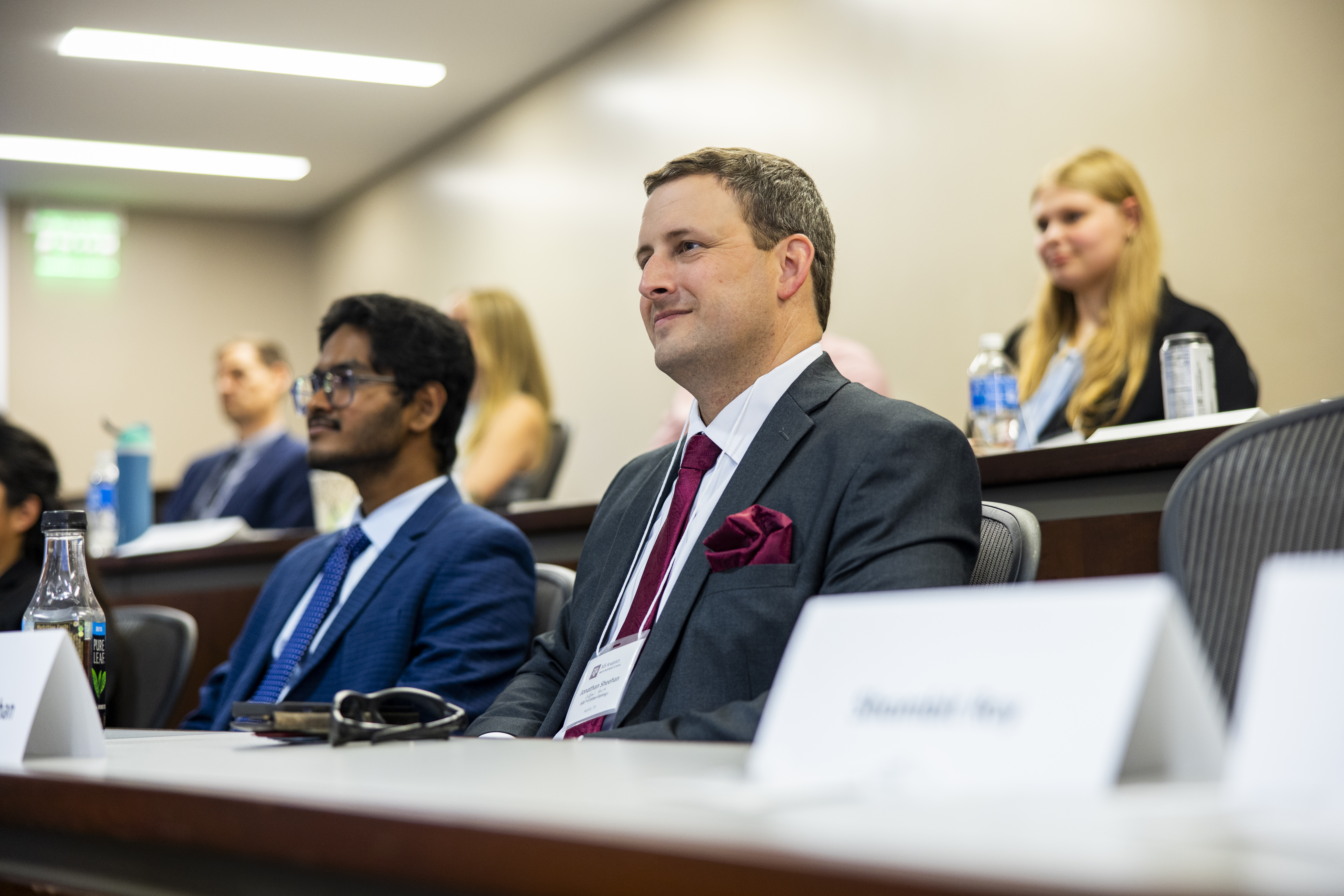


Army veteran Kevin Dorsey chose the MS Analytics programme at Texas A&M University’s Mays Business School to become a more valuable contributor at work. He wanted to move beyond building spreadsheets and generating reports, and learn to interpret data and communicate insights that support better decisions. “I initially thought the programme would mainly help me improve my coding skills, but it gave me something more valuable: the ability to understand what the data is saying, identify trends, and communicate the bigger picture by turning data into a clearer story for management,” he says.
As one of the largest public universities in the US, Texas A&M offers students access to some of the country’s most robust resources and opportunities in higher education. The Mays School is home to several of the nation’s Top 10 programmes, including master’s programmes with AACSB accreditation, the global gold standard for business education.
These resources and recognition are especially relevant as analytics and AI become more accessible across industries. Organisations increasingly need professionals who can go beyond using standard analytical tools or building models. They need people who can identify the right business problems, translate data into useful insights, apply sound business judgment, and communicate findings clearly.
Mays addresses these needs through two complementary graduate pathways: the MS Analytics and the MBA + MS Analytics dual degree. Both programmes are designed for professionals who want to strengthen their analytical capabilities while developing the business perspective needed to turn data into meaningful decisions.
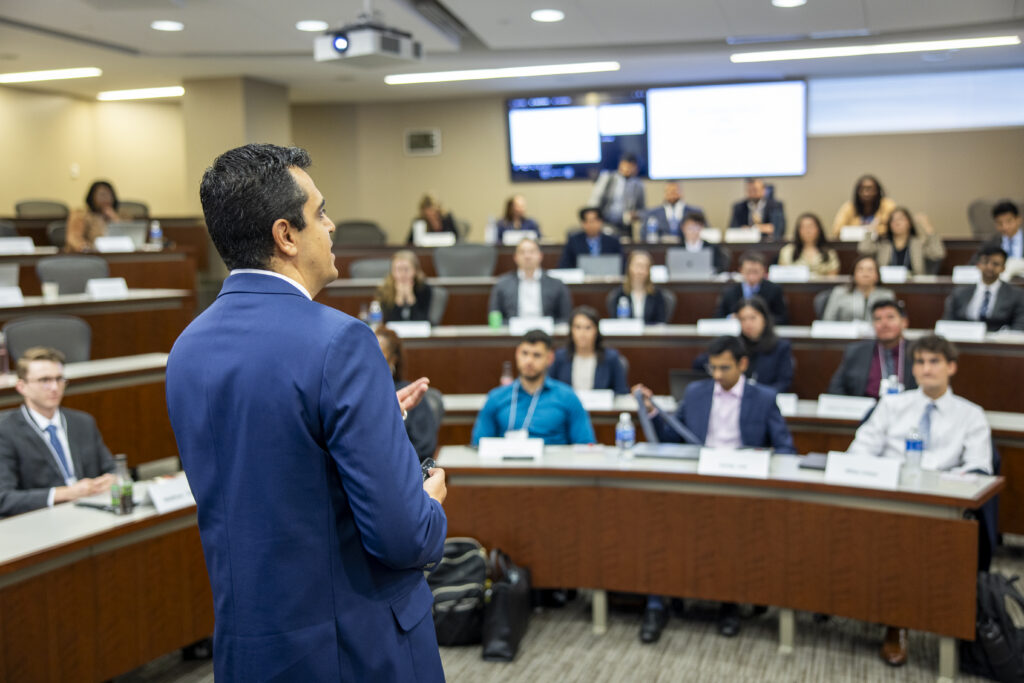
Both MS Analytics and the MBA + MS Analytics programmes reflect Mays Business School’s belief that future leaders must know not only how to understand data, but how to use it. Source: Texas A&M University
Turning analytics into better business decisions
Analysing data is only part of the equation. Professionals today must also know which questions to ask, understand what the results mean, and translate those findings into actions that can create value.
The MS Analytics programme develops this capability by fusing analytical thinking with business judgement throughout the curriculum. You’ll learn to frame business problems, work with data, apply appropriate analytical methods, communicate findings, and use those findings to support better decisions.
And that learning goes far beyond just technical skills. Real-world applications and the programme’s capstone give students crucial opportunities to work through complex business challenges. Diego Parra, Class of 2025, describes the experience as challenging but highly rewarding. “It was a true growth experience,” he says. “The curriculum pushed me to expand my technical skills and think critically, while the support from the professors and staff made all the difference.”
The MBA + MS Analytics takes a more integrated approach. It combines advanced analytics with the business disciplines needed to understand how decisions affect an organisation. It’s a powerful mix that helps you apply analytical insights to real business challenges and develop the leadership perspective needed to act on them.
“The MBA + MS Analytics programme at Mays gave me the perfect blend of business and data skills,” says Aditya Surve, Class of 2025. “I got to apply what I learned during my internship, and it was well appreciated by my mentors, which gave me a big confidence boost.”
Surve points to another facet of the programme that stood out to him: learning how to use analytical tools without losing sight of the business problem. “The programme teaches a wide range of analytical tools, but what really stands out is how the professors make sure you never get lost in the data,” he says. “They help you focus on solving real problems and making meaningful decisions.”

Mays Business School combines academic excellence, innovation, ethics, and industry connections to prepare graduates to make a meaningful impact in their careers. Source: Texas A&M University
Two pathways for developing data-driven leaders
If you want to strengthen your analytical and business capabilities while continuing your career, the MS Analytics offers a flexible pathway. Live classes are held on Tuesday and Thursday evenings, giving you the option to study online or from Texas A&M’s Houston CityCentre location. This format allows you to balance your studies with work while still engaging with faculty in real time and learning alongside a cohort. The programme’s flexible online format has also received recognition, with US News & World Report ranking it No. 1 among public online master’s in business programmes for 2026.
For Dorsey, flexibility became especially important when he was deployed to the Middle East earlier in the spring. He initially attended classes from 3am to 6am local time. Later, during the war with Iran, frequent movement, limited internet access, restrictions on personal-device use, and difficulties accessing Canvas, university email, and required software disrupted his studies.
Despite these challenges, Dorsey remained focused on completing the programme. Having finished most of his capstone before the war began, he prioritised his final presentation while navigating the access restrictions. Once internet access was restored, he caught up by watching class recordings and working through the backlog.
“The patience and flexibility of the instructors and administration were a huge help throughout that process,” he says. “Graduating under those conditions and with that level of support make the accomplishment far more meaningful and fill me with pride and gratitude.”
If you’re looking for broader business leadership preparation alongside advanced analytics, the MBA + MS Analytics offers a more immersive option. You can earn both degrees in 22 months through a STEM-designated curriculum that combines the Full-Time MBA experience with MS Analytics coursework.
Whichever option you choose, you’ll stay connected to industry throughout your studies. Mays’s Employer Impact Board and MBA Advisory Board help keep the curriculum aligned with current employer needs. You can further connect your learning to industry through initiatives and partnerships focused on areas such as supply chain management and the use of information technology in businesses and organisations.
Learn more about the programmes at Mays Business School.
Follow Texas A&M University’s Mays Business School on Facebook, X, Instagram, LinkedIn, and YouTube