


Not many owners of a school will invest RM100 million into a sports complex when they can use that money to build more classrooms to increase enrolment numbers.
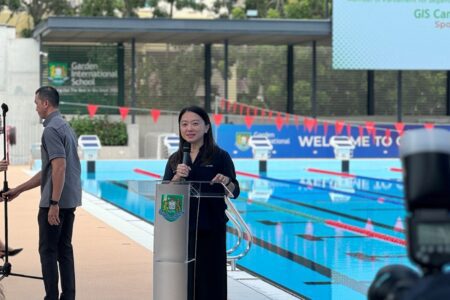
That’s what Malaysia’s Minister of Youth and Sports, Hannah Yeoh, said during the launch of the new sports complex in Taylor’s Schools’ Garden International School.
And yet, that’s exactly what Garden International School has done, reflecting the Kuala Lumpur international school’s approach to education.
Reimagining the three Rs: Relevant, Responsible, Resilient
For a long while now, schools have focused on teaching the “three Rs,” referring to reading, writing, and arithmetic. While these fundamental skills are no doubt valuable, they are arguably not enough to create a holistic, future-ready child in today’s world.
Taylor’s Schools, the platform which Garden International School belongs to, is responding to that with their own three Rs — Relevant, Responsible, Resilient. These are the values that underpin how the school approaches their education.
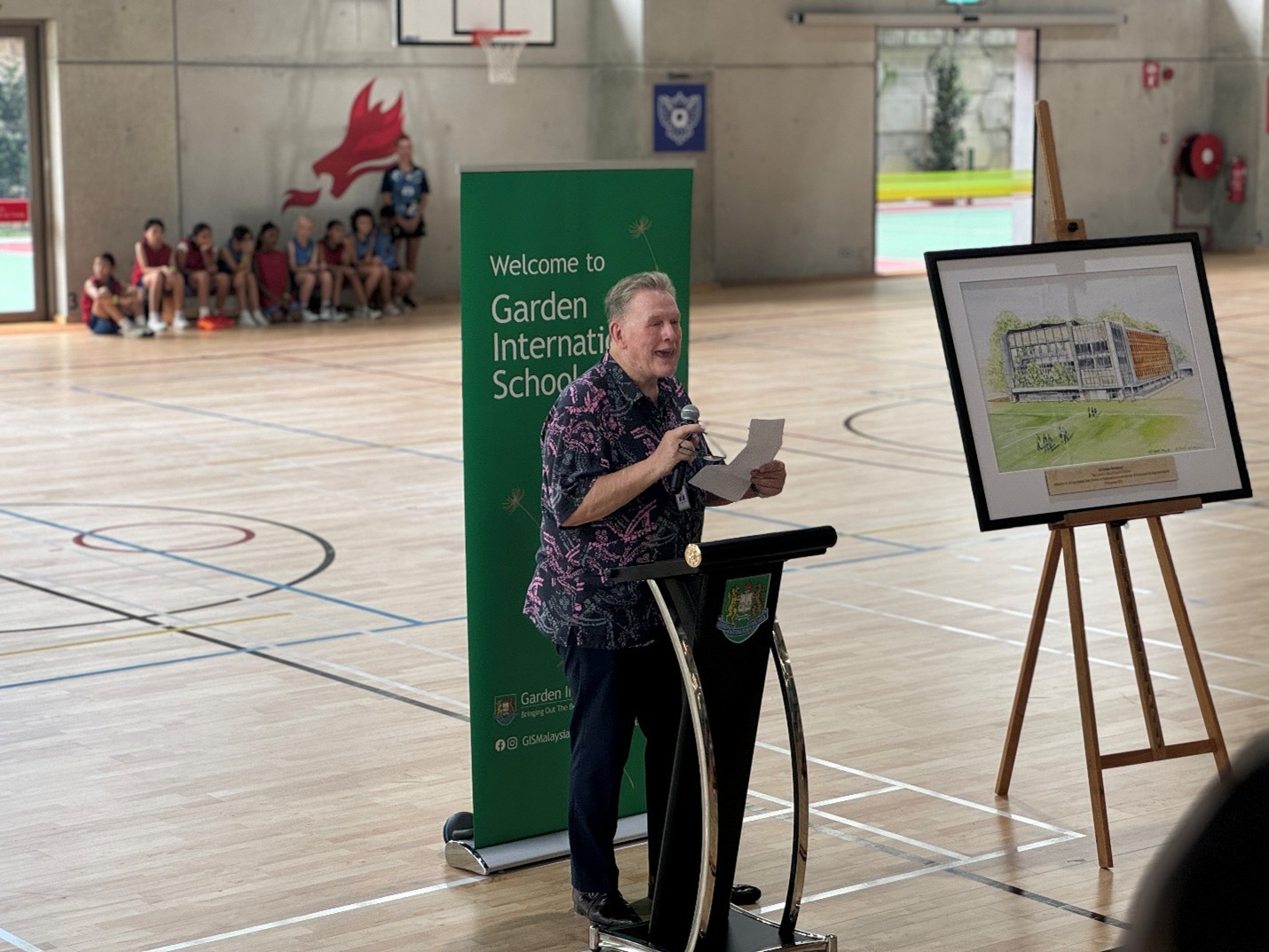
Principal Peter J. Derby-Crook giving a speech. Source: Garden International School
Relevant to the current world
“In this digital age, our roles as educators need to shift,” says BK Gan, the President and CEO of Taylor’s Schools. “If I’m asked the question, if you have the opportunity to raise a child, what do you want them to be prepared for? The first thing I thought of was relevant.”
It’s a very broad word, he admits. That’s why across Taylor’s Schools’ six schools, they approach the value differently depending on their student body and locality.
For example, Taylor’s International School’s campus in KL has started offering Spanish because of more than half of the student population comprise non-Malaysians.
“That is birthed from always being touch with the parent body, and asking ourselves from time to time on how to be relevant for our kids,” he says. “I find that word to be very powerful because it doesn’t give you the answer. In life, it’s often not about the right answer but finding the right questions to ask.”
The proliferation of emerging technology such as AI, digital agility is also important in staying relevant. Students must know to know how to be agile digitally with all the tools available on the market.
The third part of being relevant, Gan believes, is by having an entrepreneurial mindset.
As BK Gan shared in an interview, doing something entrepreneurial isn’t necessarily about making profits — it’s about identifying problems and creating solutions for it, which will naturally generate profits if it’s a good solution.
“When I talk about being entrepreneurial, the first thing they think about is becoming a millionaire. But someone who can fix problems will get millions as a byproduct,” he says. “The world is looking for problem solvers.”
He believes that competition and sports can push that entrepreneurial mindset. In a game, athletes need to think on their feet to win against opponents — to Gan, that’s a form of problem solving, too.
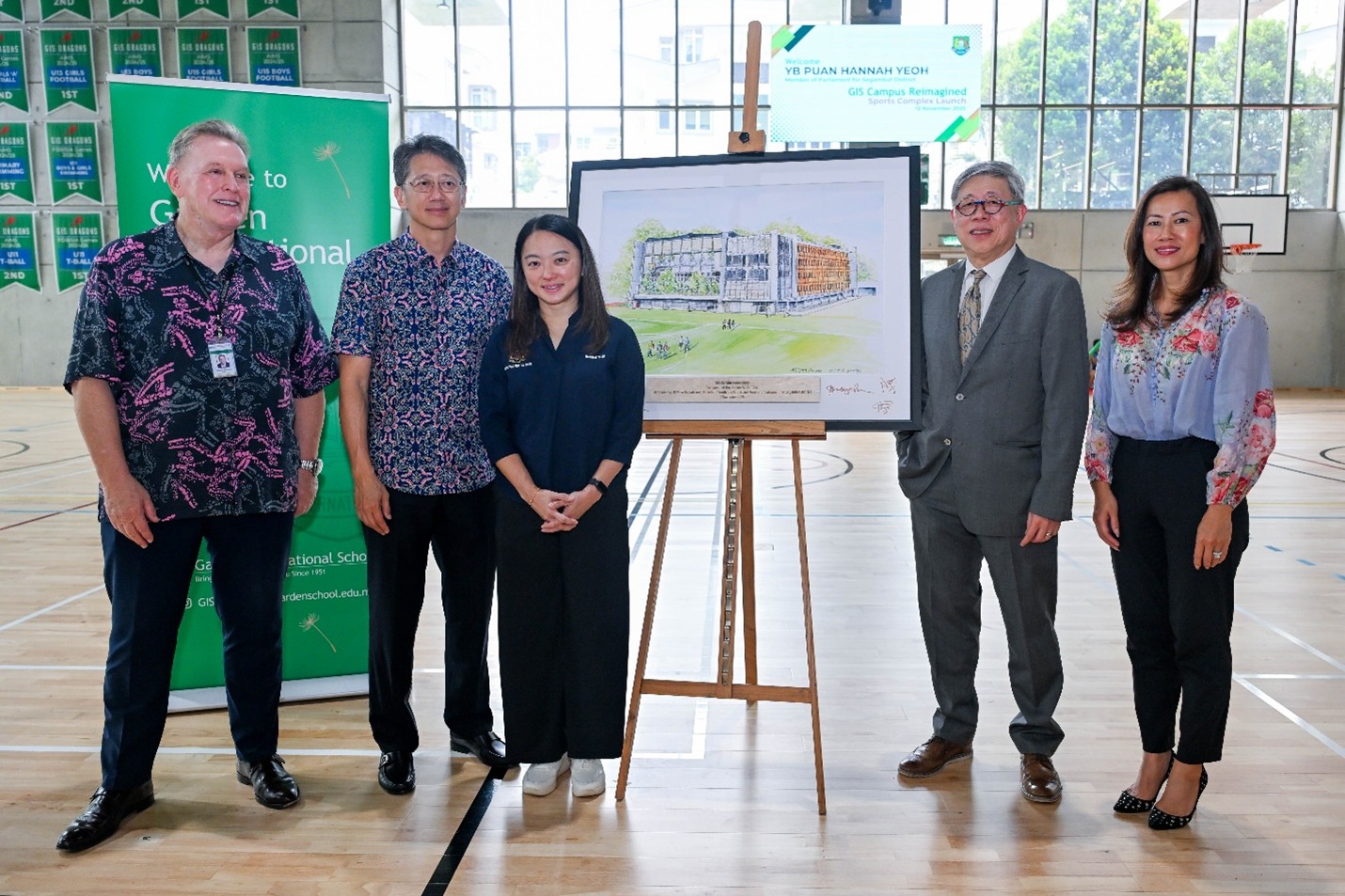
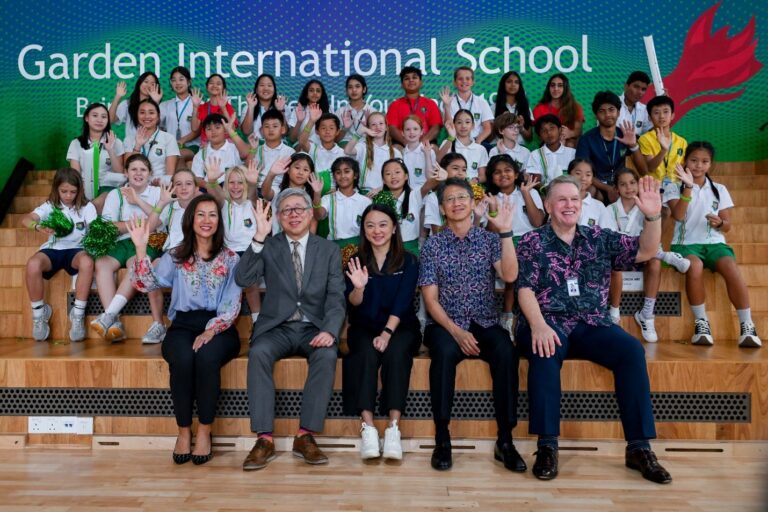
RM100 million was invested in constructing the sports complex. Source: Garden International School
With great power comes great responsibility
Tools can often become dangerous when in the wrong hands. That’s why the second R for Responsibility matters deeply.
That’s why Taylor’s Schools has something called The the Care Movement, which covers three components: Care for self, care for others, care for the world.
If you don’t start with caring for yourself, it’s hard to care for others and the world at large, Gan says.
That’s why the schools have counsellors and teachers who are equipped to teach students how to care for themselves. That includes knowing how to manage screen time and stress. With that, students can better care for their peers as well as their planet.

The new sports complex features an Olympic-sized pool on the rooftop. Source: Garden International School
Teaching students learn how to lose
Some may assume that the goal of investing RM100 million into a sports complex is to focus on creating better athletes.
While improving the sporting quality of their students — and the wider public — might be a priority of Garden International School, a big focus is not actually about producing elite athletes, but rather, using sports as a tool to educate children.
Oftentimes, children grow up being taught the value of winning and succeeding, but they aren’t taught how to fail. That’s what sports can illustrate. It teaches them how to fail as a team but get back up on their feet to try again. With sports, they can be taught how to find value in failures, and emotionally regulate afterward.
That’s what resilience is all about.
Of course, the traditional Rs that focus on the building blocks of education is still valuable. Getting into top universities is still a major priority to parents, and for now, academic excellence still determines a big part of that.
However, as Gan shared, one day, soon, standardized exams may become obsolete. So it’s vital to educate children on not just skills but also cultivate their character so that they can adapt and remain relevant, responsible, and resilient as the world changes.
Popular stories
7 best public universities in France with English-language programmes

Business, tech, and even medicine: Where and what the male cast of ‘Love is Blind Season 10’ studied

Healthcare & business experts: Where & what the women cast of ‘Love is Blind Season 10’ studied

US$100,000 vs US$500,000: Best Bachelor of Law degrees at 10 countries’ no. 1 universities