




Dr. Pia Theresa Kremer and Bianca Stella Bruschi arrived at Suffolk University Law School from very different starting points. Dr. Kremer, from Germany, followed a traditional legal path, studying in Munich before completing her clerkship in Frankfurt. Bruschi, who grew up in Rome, discovered her interest in digital regulation during an Erasmus semester at Maastricht University, focusing on Internet Law and European Data Protection.
Their paths eventually met in Suffolk’s LLM programme. For Dr. Kremer, the appeal was both professional and personal. “I was motivated by the prospect of experiencing another culture firsthand and building international friendships and professional connections that continue to enrich my career today,” she says.
For Bruschi, the motivation was more strategic. She wanted to better understand the US legal ecosystem — one that shapes many of the world’s most influential technology companies.
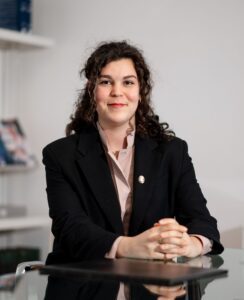
The LLM taught Bruschi to draw insights from other legal systems and advise businesses navigating Europe’s regulatory landscape. Source: Suffolk University
From courtrooms to code
Suffolk’s LLM in Global Law and Technology offered Bruschi exactly what she had been looking for: a programme grounded in transnational analysis, attentive to both legal doctrine and the broader economic and political context of technological development.
“Suffolk was the opportunity to develop practical skills that are rarely part of a traditional legal education in Italy,” she says. “I was introduced to tool building and learned the fundamentals of Python, engaging with concepts such as linear regression, Word2vec, and neural networks.”
The programme pushed her to think about the real-world impact of AI as well. Topics like algorithmic accountability and AI governance came up often, especially since many technologies, like credit scoring systems and surveillance tools, are widely used in the US.
“That meant many of the readings and case studies we discussed were based on real-world consequences, not just theoretical scenarios,” she says. “Courses such as Emerging Issues in Transnational Business, taught by Professor Rustad, and Race, Ethics, AI and Cyber Civil Rights, taught by Professor Dyson, were especially rich in that regard.”
Dr. Kremer, who enrolled in the General LLM, found her route equally rigorous. “The case-based and discussion-driven format required active participation and encouraged critical thinking,” she shares. “Moot courts and in-class discussions helped me articulate arguments more confidently and respond spontaneously to counterarguments.”
The smaller class sizes also made the experience more personal. “That individual attention not only deepened my understanding but also strengthened my confidence in presenting and defending legal arguments in an international setting,” adds Dr. Kremer.
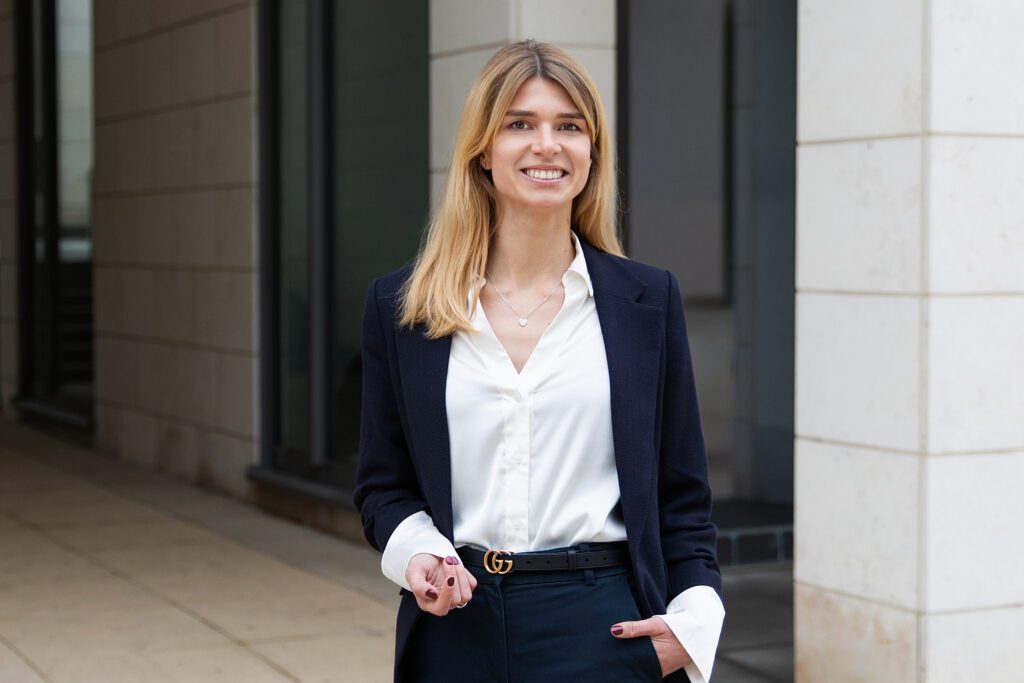
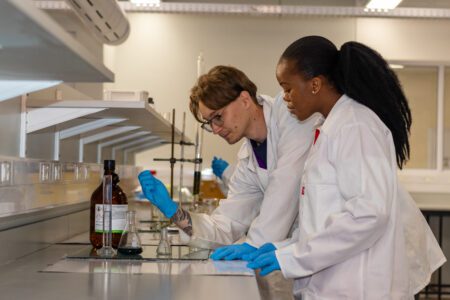
Working in an American corporate environment gave Dr. Kremer insight into in-house legal practice. The experience strengthened her practical skills and deepened her understanding of cross-border corporate operations. Source: Suffolk University
Training lawyers for cross-border challenges
Suffolk’s curriculum also prepares students to navigate legal complexity across jurisdictions — an increasingly essential skill in a globalised digital economy. For Dr. Kremer, that insight emerged during her Corporate Law course.
“The course enhanced my understanding of how corporations are managed, how boards operate, and how legal decisions affect shareholders, management, and the organisation as a whole,” she says.
For Bruschi, the turning point came in Professor Lander’s Privacy and Data Security course. “It offered a deep comparative analysis of how privacy is conceptualised on each side of the Atlantic: in Europe, as a fundamental right of data subjects, and in the US, primarily as a matter of consumer protection,” she explains. “Studying in the US allowed me to observe that tension firsthand rather than from a distance, and to engage seriously with the strengths and limitations of both models.”
During the course, she even discussed the future of the EU–US data privacy framework with former Secretary of the US Department of Commerce Cameron Kerry.
Today, both graduates apply these insights in their professional lives. Bruschi works as a legal tech consultant in Rome, advising companies navigating international data regulations.
“When I advise European companies looking at the US market, I can anticipate where their compliance assumptions will need adjusting,” she shares. “And when I work with American companies entering Europe, I can translate not just the rules but the logic behind European data protection.”
Dr. Kremer now works as a legal tech consultant in Frankfurt, where cross-border fluency is equally valuable. “My LLM enables me to identify potential friction points between German and US law more quickly,” she says.
“Studying in the US also helped me better understand the strategic priorities of American clients and counterparties. That cultural and legal fluency improves communication, expectation management, and ultimately the quality of my advice in cross-border matters.”
Follow Suffolk University Law School on Facebook, YouTube, and Instagram