


When global crises hit, economists are often the ones who make sense of the chaos. During the 2008 financial crash, it was economic research that shaped the recovery. During the pandemic, economists modelled how lockdowns, stimulus packages, and supply chain shocks would ripple through the world. And today, as AI threatens to reshape entire industries, their insights guide how societies adapt.
That’s the power of advanced economics expertise: it equips you to analyse complexity, anticipate change, and design better solutions for this consequential age. The skills you develop — data modelling, policy evaluation, strategic reasoning — translate directly into influence.
The US universities featured below are where this kind of thinking takes shape. Their economics programmes combine rigorous research with policy and industry application, producing graduates who can interpret the world’s toughest questions and help answer them.
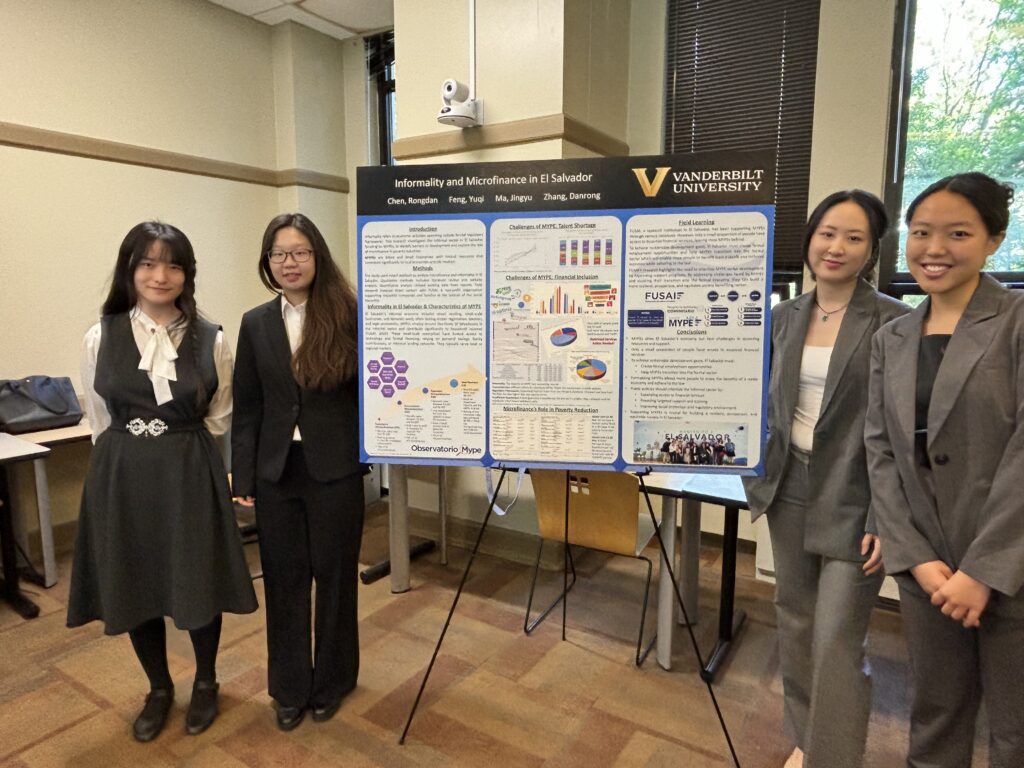
GPED graduates hold positions at leading institutions such as the World Bank, the International Monetary Fund, the Asian Development Bank, and more. Source: Vanderbilt University
Vanderbilt University
Studying economics at a world-class university in one of America’s most dynamic cities is an experience that stays with you. At Vanderbilt University’s Department of Economics in Nashville, you get the best of both worlds — academic excellence and an exciting city life. Ranked among the top 20 universities in the US, Vanderbilt sits in the heart of “Music City,” where creativity and community meet. You’ll find walkable neighbourhoods, green parks, and endless live music, all within a city that’s more affordable than many major urban centres.
Here, Vanderbilt’s MA in Economics, stands out for its global community and personal approach. With class sizes ranging from 10 to 35, the programme encourages open discussions, close connections with faculty, and access to all the opportunities that come with being part of a leading research university.
Many students specialize their path by taking elective classes across disciplines — whether in computer science, data science, business, or education at Peabody College, Vanderbilt’s College of Education and Human Development. You’ll also gain real-world exposure through international fieldwork and the GPED Forum, a seminar series that connects you with leading global scholars.
Throughout your time at Vanderbilt, you’ll receive strong academic and personal support. Many students gain professional experience by working as research or teaching assistants, applying their classroom knowledge in real settings. The programme also recognises excellence and character through two annual awards: the Worley Award for the best first-year student and the Siddiqi Citizenship Award for kindness and community spirit.
Over the years, GPED has welcomed students from nearly 140 countries, many of whom have gone on to become finance ministers, ambassadors, and senior economists. Among the programme’s most notable alumni are Nobel Peace Prize winner Muhammad Yunus and Süreyya Serdengeçti, former Governor of the Central Bank of Türkiye.
Source: Johns Hopkins University
Johns Hopkins University
At John’s Hopkins University’s Department of Economics, you’ll find yourself surrounded by people who challenge you to think differently. Based in Baltimore, Maryland, the department is known for its strength in economic theory and empirical analysis, helping you grow into a future leader in academia, government, or industry. The expert faculty members encourage you to question, research, and apply what you learn to real-world problems.
If you’re looking to start with a solid foundation, the Master of Arts in Economics might be the right fit. It’s a full-time, two-year programme with a STEM designation, designed for students who want a rigorous, math-focused education. You’ll gain the analytical skills needed for doctoral studies or to advance your career in roles that demand strong quantitative reasoning, whether in government, NGOs, or the private sector.
What sets this MA apart is how it is part of a department that draws upon Hopkins’s history as America’s first research university. As a graduate student here, you’ll engage in the exploration of five economic disciplines: applied microeconomics, economic theory, macroeconomics, econometrics, and finance. Expect to work closely with faculty with regular presentations of your research to the entire faculty in their field. You’ll get to garner valuable feedback on your work and experience on how it is likely to be perceived by the profession.
In addition to an outstanding research environment, the support you get from the faculty will prove helpful. Source: Columbia University
Columbia University
Belén Hípola began her PhD studies at Bocconi University in Milan, exploring the relationship between educational policies and economic outcomes. Wentao Hu is charting a professional path towards asset management, with aspirations of later pursuing a PhD. Michael Swistara, blending his passions with the quantitative research skills he developed during his MA, went on to earn a JD with a focus on Environmental Law. Kyle Hurysz is launching a new nonprofit in the summer of 2024, the National Coalition for Disabled Students.
These are just a few of the graduates of Columbia University’s Master of Arts Programme in Economics — and their professional and academic trajectories showcase the diverse pathways this programme has helped pave for its students. Graduates have a track record of progressing to a wide range of chosen careers and advanced study.
From the World Bank to multinational financial and tech firms to competitive doctoral programmes, there’s a growing demand for professional and research economists equipped with advanced understanding of economics and its practical applications. The quantitatively oriented MA not only prepares students for diverse positions that involve applying frontier economics methods but also lays a foundation for advanced doctoral studies in economics, with alumni matriculating to PhD programmes at esteemed institutions such as Harvard, Yale, Berkeley, Cambridge, and more.
Beyond the classroom, the Master of Economics Student Association (MESA) fosters a vibrant community within the programme through a mix of professional and social events, offering access to valuable resources like alumni networks, professional development opportunities, and mentorship. Past events include holiday gift exchanges, alumni panels, networking events, and many more.
The best part? Columbia’s campus is located in New York City’s Manhattan, placing you at the crossroads of global finance, arts, and culture. Benefit from access to industry leaders and professional opportunities that have led graduates to roles at Goldman Sachs, McKinsey, Apple, and more. You will receive support throughout your job search or doctoral application from a dedicated team of advisors. Students can leverage the resources offered by the Graduate School of Arts & Sciencesa, including GSAS Compass, for tailored career counseling and workshops.
*Some of the institutions featured in this article are commercial partners of Study International
Popular stories
EXO Kai’s LACOSTE era is serving elite energy — like the study history of past, present EXO members

History and … Public Health? The surprising education of the cast of ‘Scream 7’

Elite and exclusive: Universities with the toughest admissions criteria

Dependant visas 2026: These 14 countries let you bring your family along as you earn a degree