



On her first day at the Yong Loo Lin School of Medicine, National University of Singapore, Li Mengyuan was surrounded by classmates whose backgrounds spanned clinics, research labs, startups, and public health agencies.
Having moved to Singapore from her home country to seek “new challenges and a higher ceiling,” this was just the crowd she wanted to be part of. “What attracted me most to NUS Medicine is its inclusiveness toward students from diverse academic backgrounds, and its internationally leading position in medical research,” she says.
Li is part of NUS Medicine’s inaugural cohort of the MSc in Medical Pharmacology (MSc PHC) – one of the School’s growing portfolio of Master’s by Coursework Programmes designed to prepare professionals for the increasingly global nature of modern healthcare research and practice.
Li chose the programme because it links rigorous pharmacology training with the full drug development pathway, from science to policy and market access. With the MSc, she hopes to advance from a single-lab role into either a PhD track or an industry pathway with impact in Asia’s fast-rising biotech ecosystem.
For Li, the “Lion City” felt like a natural home for this evolution. “Its international outlook, strong institutional framework, cultural diversity and outstanding public safety made it my first choice for overseas study,” she says.
NUS Medicine is ranked 8th by QS World University Rankings 2025 for Pharmacy & Pharmacology. Source: NUS Medicine
Professor Cuilin Zhang’s journey also reflects that global pull. A former senior faculty member at the US National Institutes of Health and Adjunct Professor of Nutrition at Harvard University, she joined NUS Medicine with a clear mission.
“My decision to join NUS was guided by a desire to translate decades of scientific research into education and practice, particularly in Asia,” she says. “This region faces both an urgent rise in chronic diseases and a tremendous opportunity to shape the future of preventive healthcare.” Professor Zhang serves as Programme Director of the MSc in Nutrition and Lifestyle Medicine (MSc NLM) – one of the first programmes of its kind in Asia created to meet this moment, shifting the focus from disease management to long-term prevention, resilience, and quality of life.
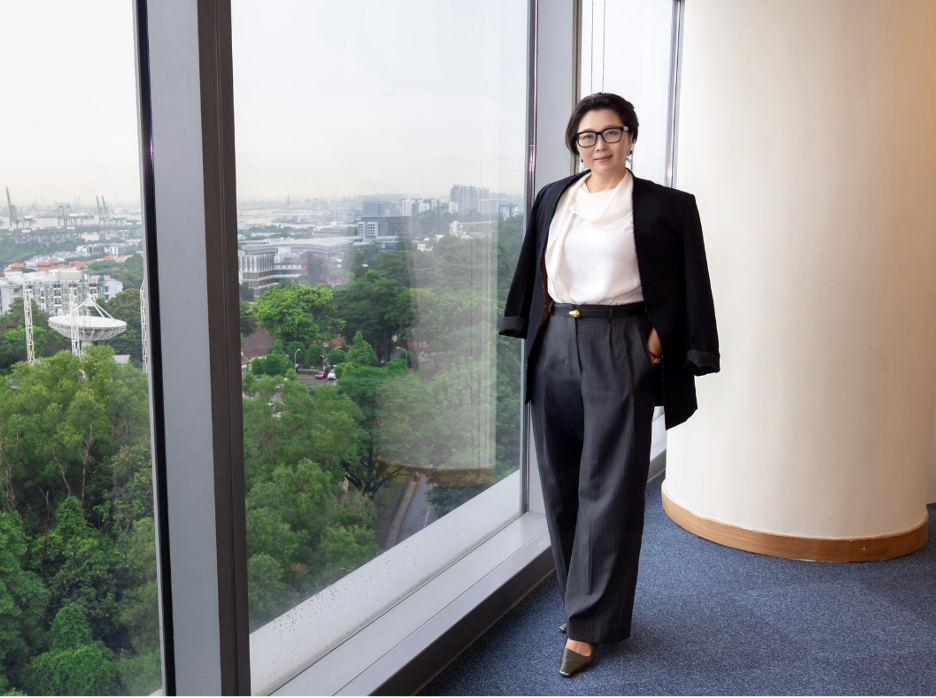
Professor Zhang’s goal for the MSc NLM programme is to help healthcare professionals deliver care that addresses both illness and the everyday behaviours that shape health across a lifetime. Source: NUS Medicine
A global learning environment powered by world-class faculty
NUS Medicine leads in all areas. It is ranked Asia’s #1 medical school, 18th in the world for Medicine in QS World University Rankings 2025, and 17th globally in Times Higher Education (THE) World University Rankings by Subject 2025: Medical and Health. Behind these positions are faculty whose work spans major public health agencies, international research institutions and global collaborations.
Both MSc PHC and MSc NLM exemplify this global orientation. Li’s lecturers include specialists from Singapore’s thriving pharmaceutical and biomedical sectors, while Professor Zhang’s students will learn through partnerships with Harvard University and the Culinary Institute of America — institutions shaping global nutrition science and culinary medicine. MSc NLM students also benefit from NUS Medicine’s extensive global network, participating in international activities, immersive workshops and capstone projects, as well as collaborative teaching weeks with leading institutions across the US, Europe and Asia.

Harvard’s Professor Walter Willett — one of the most cited nutrition scientists globally — contributes to course development and lectures for the MSc NLM. Source: NUS Medicine
“Our international partnerships ensure students learn from leading experts across diverse fields,” says Professor Zhang. “They allow students to develop both scientific depth and practical creativity, preparing them to apply their learning meaningfully in their own professional contexts.”
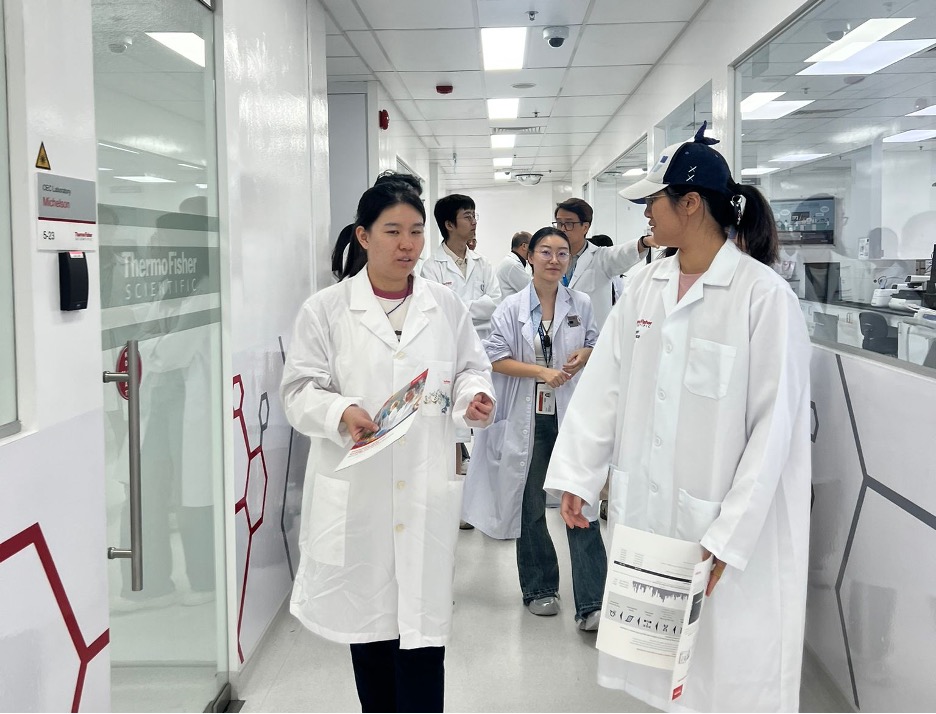
For Li, that was tangible from her very first term. Coursework in Medical Pharmacology moves fluidly between theory and application: students map the entire drug-development pipeline, study trial design, analyse regulatory pathways, and explore commercial considerations. Practical components – from site visits to discussions with industry leaders — gave Li and her peers a real sense of what modern pharmaceutical work entails.
One module in particular reframed how she saw the field entirely. “Clinical Trials Design & Management reshaped how I think about drug development,” she says. “Visiting a clinical research centre made Phase I trial operations concrete rather than abstract.”
Industry exposure has been equally essential. “The visit to ThermoFisher Scientific and the Lilly Clinical Pharmacology Research Centre were truly eye-opening,” she adds. “Hearing some of the doctor’s stories reminded me that even after rigorous PhD training, transitioning between sectors takes patience and experience.”
That’s a theory Li aims to test once she graduates. Her goal is to pursue a PhD in clinical or quantitative pharmacology, though she feels ready to move into industry if the right opportunity appears. “The programme has strengthened my scientific base, expanded my international network, and made me more competitive for roles across academia and industry,” she says.

Master’s students spend plenty of time applying knowledge off campus. Source: NUS Medicine
It’s clear that exposure to real-world complexity does wonders in producing confident healthcare leaders. This hands-on learning is equally foundational for MSc NLM, though in a different way. Students engage in culinary medicine sessions, exercise and movement workshops, behavioural counselling practice and community health initiatives. The programme culminates in a capstone addressing a real implementation challenge. These experiences, Professor Zhang explains, ensures that graduates leave with “both the knowledge and the practical ability to translate science into meaningful outcomes.”
Professor Zhang sees this as the foundation for something bigger — graduates who can guide healthcare in new directions. “They may become clinicians who integrate lifestyle medicine into patient care, public health professionals who design preventive health programmes, educators who shape future practitioners, or innovators who develop digital and community-based health solutions,” says Professor Zhang.
A cohort that widens the lens
If the NUS Medicine faculty provides expertise and exposure, its students bring the spark. Postgraduate cohorts are especially international and interdisciplinary, deliberately so to create conversations that would rarely occur in more homogenous classrooms.
Li describes her peers as “warm and genuinely collaborative.” She recalls worrying about cultural missteps during orientation, only to find classmates eager to help her settle in. “When my English falls short, peers actively help clarify meaning and context,” she says. Interacting across cultures, she adds, has been “both joyful and eye-opening.”
Being in Singapore amplifies this effect. The city-state combines a multicultural society with one of the world’s most advanced public health systems and a booming biomedical sciences sector that has grown rapidly over the past two decades.
For MSc NLM, this global and multicultural environment is critical: lifestyle, nutrition and behavioural health are deeply shaped by culture. Learning in Singapore — a crossroads of East and West — gives students a rare opportunity to understand how preventive health strategies can be adapted across populations and communities.
To learn more about NUS Medicine’s Master’s by Coursework Programmes and interact directly with its renowned faculty, register for its upcoming info sessions happening from February to March 2026.
Follow NUS Medicine Graduate Studies on Facebook, LinkedIn and YouTube