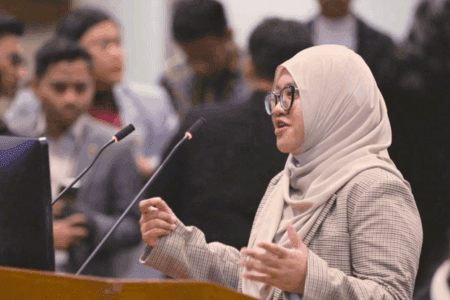




Have you ever been bombarded with random newsletters from your university?
You might feel compelled to just delete those emails, or even unsubscribe to them. But you might just be missing out.
At least, that’s what Rokeebat Hammed, who got her master’s degree at the University of York, believes.
Don’t take for granted your departmental newsletters
While most international students scroll past the lengthy departmental newsletters — dismissing them as Halloween announcements or casual coffee invitations — Hammed made them part of her weekly routine.
“I understand it’s usually very long and oftentimes you feel like there’s nothing important there for you to read,” she says. “But for me, I don’t know, maybe because I’m just very detailed and I like to tick all the boxes.”
That attention to detail paid off repeatedly. Hammed discovered her role as International Student Ambassador through the departmental newsletter. When she decided to run for president of the international student body, she learned about the position the same way. Most significantly, she found out about a civil service job opening through those weekly emails.
“I don’t take for granted any opportunity that exposes me to opportunities that I’m interested in,” she says. “There are usually hidden gems inside it, so definitely read all the newsletters.”
Beyond newsletters, Hammed emphasises seizing learning opportunities outside the classroom. Through her departmental newsletter, she joined an eight-week policy lab programme — experience she later cited in job interviews when asked about policy work.
“It doesn’t all have to happen in the classroom. Take advantage of all the learnings that happen in your surroundings as well within the school,” she says.
Her broader career advice centres on building community and staying connected. Join student societies — even if it’s something as bizarre as a dog society or cat society, you’ll find something that fits. Attend events too, even when it feels easier to stay in your room.
“Leave your comfort zone a little bit, go to that event, try to talk to people, try to mingle,” she says. “Who knows, you might connect with somebody who ends up being your friend.”
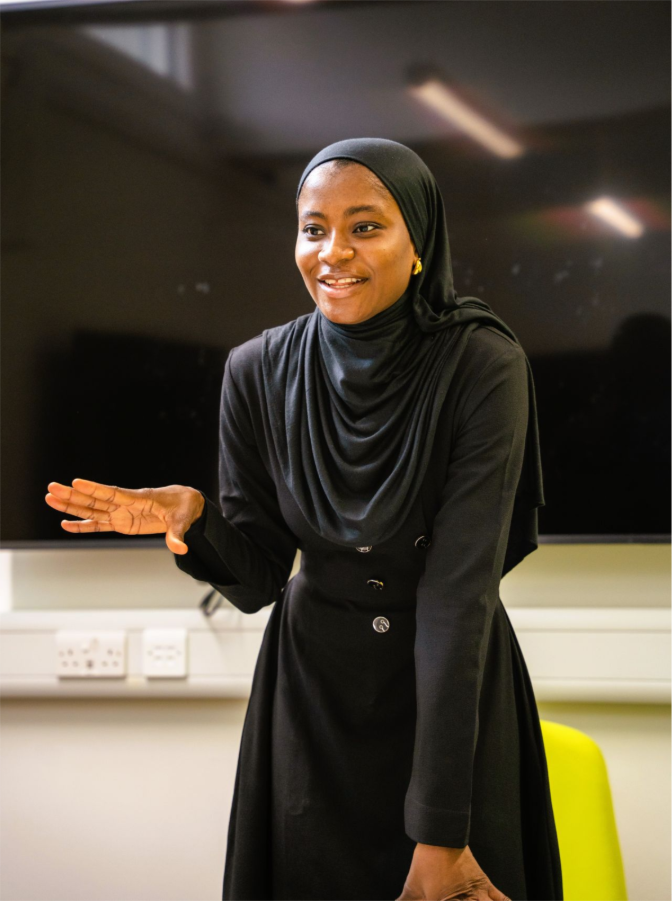
Hammed is also the CEO and co-founder of EduFurther, a mentorship and resource hub to democratise access to international education and global opportunities for African students. Source: Rokeebat Hammed
Give yourself grace and call your parents
Perhaps Hammed’s most crucial advice stems from her own struggles adapting to UK academia: give yourself grace.
“Especially if you’re from countries like Africa where we’ve been trained to play survival of the fittest from a very young age, you can have your guard up and put yourself under undue stress,” she explains. “Sometimes we overblow the consequences of things in our head.”
She encourages students to challenge their assumptions about social interactions. Worried that someone might prefer you not say hello? “I mean, if you say hello to somebody, what’s the worst that can happen? Just say hello and keep it moving. If they don’t like it, just keep it moving,” she says.
This grace extended to her academic life as well. When a two-hour lecture required six hours of her time to truly understand, she learned to accept it. “It’s fine. It’s just the way it is. So yeah, give yourself a lot of grace,” she says.
Even as life becomes overwhelming — juggling job applications, classes, and part-time work — Hammed urges students to find joy in the experience. “Find the casual magic in all the chaos,” she says. “Just find a way to enjoy the little things that come with studying abroad.”
And critically, don’t let the distance from home isolate you. Instead, try to stay connected with your network back at home. Sometimes they are the only ones that can keep you sane when you’re in a foreign land.
“Keep in contact with parents. Don’t say, oh, I’m working, I don’t want to pick this call right now. Seriously, you need that call,” she reminds.
Popular stories
One thing that international students overlook: newsletters

How this Nigerian grad started working for the UK gov after studying in England

Ex-security guard shares 4 tips on how he won the Chevening Scholarship to study in the UK

Same major, same career: How these American twin brothers ended up working and living in Spain together