



At 19, Masayoshi Son designed a multilingual translator gadget while studying at UC Berkeley.
It was sold to electronics firm Sharp for about US$1 million.
Four years later, the economics graduate founded Softbank, which started as a mix of publishing and PC software distribution.
Today, Softbank seems to have an investment in just about every major startup with an interest in things like robotics, satellites, AI, computerised enhancement for human bodies, and many more.
Under Son’s leadership, SoftBank established the Vision Fund — a US$100 billion private equity investment fund — in 2017.
Some investments made using this fund include Uber, DoorDash, Slack, Mapbox and WeWork, according to the Economic Times.
The Japanese entrepreneur has come a long way since his days as an international student in the US.
What’s the secret behind his meteoric journey from student to one of Japan’s richest CEOs?
Here are nine things you probably didn’t know about Son:
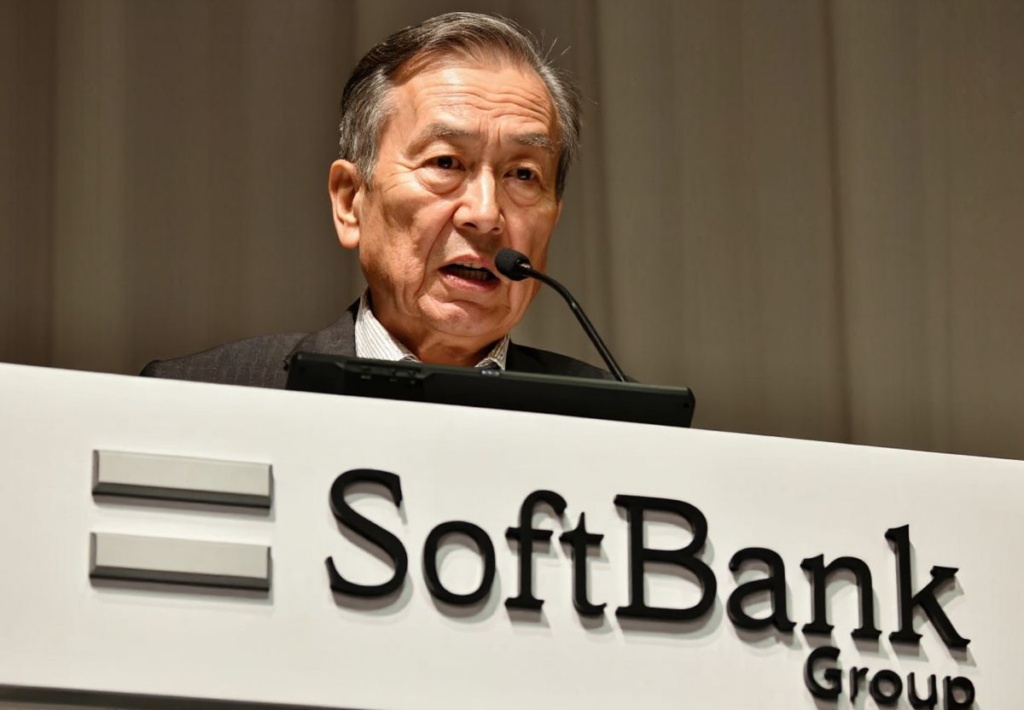 Masayoshi Son did consider starting his entrepreneurial career in the US, but later found more reasons for starting his company in Japan.
9 surprising facts about Masayoshi Son, CEO of SoftBank and one of Japan’s richest CEOs
1. He is a third-generation Korean with Japanese citizenship.
Son was born in Tosu, on the Japanese island of Kyushu, to a Korean immigrant family in 1957.
The 65-year-old CEO was the second of four brothers. Their father worked at fisheries, farms, restaurants and “pachinko” (a Japanese gambling device) game parlours.
Due to the rampant discrimination against Korean immigrants, Son’s family adopted the Japanese surname Yasumoto.
Still, he felt different. Son recalled being pelted with stones in grade school by Japanese classmates, according to an autobiography.
 Without Den Fujita, we might not have the Masayoshi Son we know today.
2. He meet McDonald’s Japan founder, Den Fujita, who advised him to study in the US.
Since he was young, Son demonstrated tremendous resilience in getting what he wanted.
As a teenager, he dreamed of meeting one of the country’s most famous entrepreneurs at the time: the founder of McDonald’s Japan and author of a book that Son admired, “Den Fujita.”
Young Son repeatedly called Fujita’s assistants — only to rack up a long list of rejections and an expensive phone bill.
What did Son do next? He flew to Tokyo and showed up at the founder’s office.
“Tell him exactly the way I say,” Son recalls asking Fujita’s assistants in an interview on “The David Rubenstein Show: Peer-to-Peer Conversations.”
“You don’t have to look at me. You don’t have to talk to me. You can keep on working, whatever you’re doing. I just want to see his face. For three minutes.”
Fujita relented and spoke with Son for 15 minutes.
When asked which industry he should pursue, Son recalls the founder’s advice: “Don’t look at the past industries. Look at the future industry. That’s the one: computer industry.”
3. Son moved to San Francisco for high school at 16 and later majored in economics at UC Berkeley.
When he told his family about his intentions to study abroad, everyone cried — especially his mother.
“How come you’re leaving our family and going all the way to the US? She said it’s a bunch of barbarians who live in that country,” Son shares in an interview with Harvard Business Review.
“My mother was really sad, but my father had no comment for a couple of weeks because he knows me. He realised that nobody could stop me, that if he tried, I would just run away from the family and go anyway.”
Son flew to Oakland and studied at Holy Names College, which had a programme for international students to learn English.
“For my first several months there, I took English lessons because I had to wait until September for a high school to accept me,” he says.
In September, Son went to Serramonte High School. Here, he insisted that he already knew everything in the textbooks, arguing that he would be able to take the college preparatory exam right away.
He did. He finished high school in two weeks.
Later, he joined the University of California at Berkeley, where he studied computer science and economics.
 As an international student at UC Berkeley, Son wrote down 250 inventions in his “Invention Idea Notes.”
4. He designed a multilingual translator gadget while studying at UC Berkeley and sold it for about US$1 million.
At 19, the microchip-obsessed student designed a multilingual translator gadget with the help of some of his professors from UC Berkeley.
Then, he applied for a patent and made close to US$1 million from selling this patent to Sharp.
In fact, Son had 250 inventions written down in his “Invention Idea Notes.”
That’s not all. “I also had computer game projects when I was at Berkeley,” he shares.
“I remodelled the software on game machines that I had brought from Japan and installed them in restaurants, cocktail lounges, dormitories, and cafeterias. I made another US$1 million from that.”
 Even entrepreneurs like Masayoshi Son agree that the US is a good country to kickstart a career in business.
5. Son did consider starting his entrepreneurial career in the US
Son liked the US’s entrepreneurial climate. He argues that the US has a less negative perception of entrepreneurs compared to Japan.
What’s more, Son felt that Japanese banks would not loan him money because they are more conservative.
Due to the country’s culture, it was also harder to attract the best employees.
“They like to work for the big companies or for the government because Japan is a lifetime employment country,” he explains.
The economic and computer science graduate, however, had a “very long-term vision.”
“I didn’t have any evidence, but I believed in myself. I believed that someday I would have a very big company, a global business, and a very successful company,” he says.
“If I were able to do that, my headquarters should be in Japan.”
Once that happens, it would be easier to maintain employee loyalty if the headquarters were in Japan.
Son believes that the stronger the loyalty, the longer they will stay. They might lack creativity, but they work hard to improve continuously.
6. Masayoshi Son returned to Japan after graduating from UC Berkeley and launched SoftBank.
Son wanted his business to be unique.
He came up with 40 new business ideas — everything from creating software to setting up hospital chains since his wife’s father was a doctor and had a hospital.
For a year and a half, Son researched and made business plans — all while having no income.
“I spent all my time just thinking and thinking, studying what to do. I went to the library and bookstores. I bought books, I read all kinds of materials to prepare for what I would do for the next 50 years,” he recalls.
He also had about 25 success measures to decide which idea to pursue. One factor he considered is that he should fall in love with a particular business for at least the next 50 years.
SoftBank started as a software distributor and computer magazine publisher.
In the late 1980s, Son disrupted Japan’s longstanding telephone service monopoly by “enabling fixed-line phone users to choose operators with the cheapest rates”, Bloomberg reports.
 The notorious “dot-com” bubble — also known as the tech boom or internet bubble — was a period from about 1995 to about 2001 where internet-related tech companies attracted a massive amount of attention from venture capitalists and traditional investors alike.
7. Son lost US$70 billion during the dot-com bust in the early 2000s.
Initially, things were looking good.
The CEO took SoftBank public in 1994, valuing the firm at US$3 billion. Five years later, Son made global headlines as the dot-com bubble placed him among the world’s wealthiest people.
Before the crash, his net worth was going up to US$10 billion and he was the richest person on the planet for three days.
When the dot-com bubble crashed, Son lost US$70 billion, the highest ever recorded financial loss for a person in history.
By 2004, SoftBank’s stock price was down 98% from its peak, according to Insider.
8. The SoftBank CEO is far from the highest-paid person in his company.
Six of SoftBanks’ top executives made US$83 million combined in compensation in 2018, while the CEO’s salary rose to only about US$2.1 million, according to Bloomberg.
“The range of executive salaries in Japan has gone up, but compensation in the billions of yen is still unheard of beyond a handful of global companies,” Noriko Watanabe, a partner at Heidrick & Struggles, an executive search company, told Bloomberg.
9. Son reportedly has personal relationships with billionaire CEOs and entrepreneurs such as Bill Gates, Larry Ellison, Rupert Murdoch, and Tadashi Yanai.
Gates would make Son’s 26th-storey office in Shiodome his first stop when he visits Tokyo, while Ellison has invited the CEO to his Silicon Valley home where he met Steve Jobs, Nikkei reported.
Yanai sat on SoftBank’s board of directors until he stepped down in December 2019.
Asked on how important luck was to his success, Son responded: “Having meet with Jack [Ma] was one of [the] luckiest thing in my life.”
Popular stories
This VC’s best advice for entrepreneurs that students should hear too
5 things I wish I knew before signing my rental contract abroad

Entrepreneurs, should you get an MBA? A venture capitalist answers

He studied graphic design in Australia, now runs a venture capital & angel investor network in M’sia