



From pandemics to climate change, life sciences address today’s most urgent challenges by combining biology, technology, and data to understand living systems. Innovations in genome editing, bioinformatics, and regenerative medicine are transforming lives. With the UK life sciences sector rapidly expanding — 20% more companies and doubling venture funding — there’s a greater need for more experts.
Manchester Metropolitan University’s Department of Life Sciences prepares students to meet this demand, equipping them with research, real-world experience, and relevant skills for their future careers.
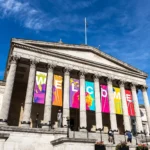
The university has a long-standing tradition of innovation. Since 1824, Manchester Met has played a vital role in education and research, contributing significantly to Manchester’s development and far beyond. The Department of Life Sciences continues that legacy by offering a range of undergraduate and postgraduate programmes that blend theory with practical application. The department’s impact is recognised nationally, ranking 15th in the UK for health and biomedical research in the 2021 Research Excellence Framework, and 62nd for Biology, with over 12,971 publications and 371,692 citations in the field of biological sciences.
One standout offering is the MSc Biomedical Science. Accredited by the Institute of Biomedical Science, this one-year postgraduate programme equips students with the technical and analytical skills to explore and tackle disease.
It is designed to prepare graduates for roles in healthcare, research, biotechnology, and beyond. Graduates have gone on to contribute to cardiac care, drug development, and public health. Some hold positions such as NHS Blood and Transplant Scientist, Lead Specialist in Scientific Development, and Molecular Business Manager.
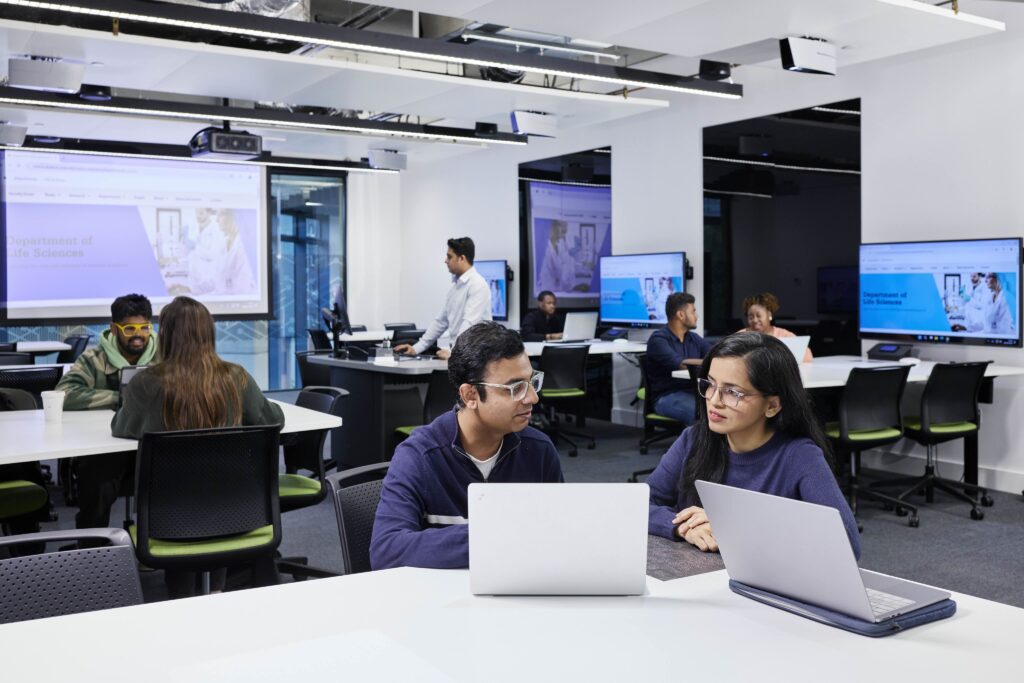
The MSc Biomedical Science programme is accredited by the Institute of Biomedical Science. Source: Manchester Metropolitan University
Curriculum is both rigorous and flexible, combining foundational knowledge with opportunities to specialise in areas of personal interest. Core modules explore the diagnosis and treatment of diseases. Advanced laboratory techniques — such as electrophoresis, mass spectrometry, and recombinant DNA technology, which are essential in both biomedical and clinical settings – are explored as well.
But what makes this programme stand out is its focus on the frontiers of biomedical research. Students engage with subjects such as immunology, cancer biology, infectious diseases, and medical genetics. More importantly, they explore how different pathologies interact, a critical aspect of developing effective treatments in complex cases.
To support this learning, the Research Methods and Ethics in Biomedical Science module equips students with the skills to design and conduct independent research. It covers ethical considerations and scientific methods, forming the foundation for each student’s research project where students pick a topic of personal interest to applying the knowledge they’ve gained. Optional modules, such as histopathology, infectious disease, or transfusion medicine, further personalise the learning experience.
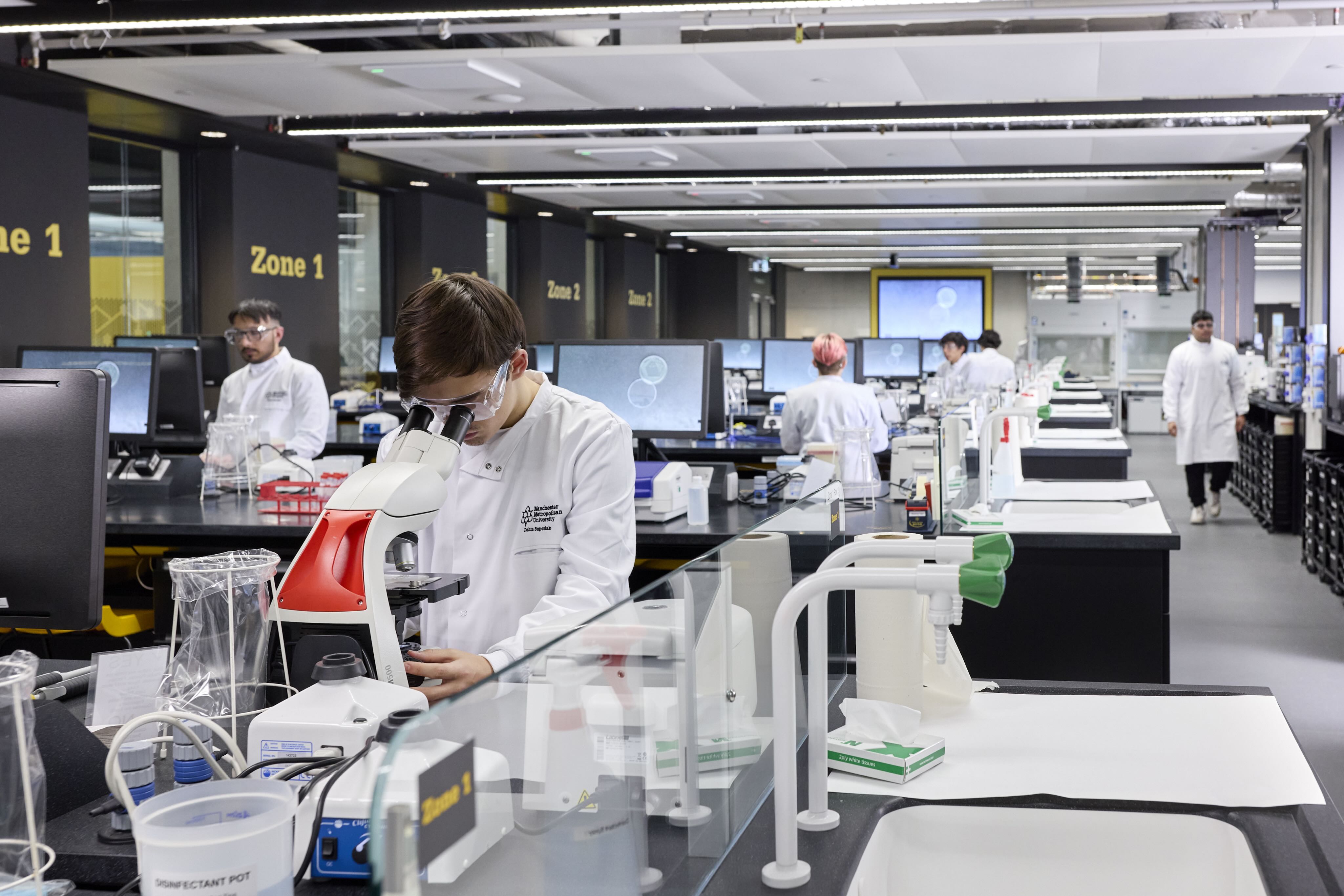
The programme is backed by state-of-the-art facilities that allow students to work with the same tools used in professional settings. Manchester Met is home to the Superlab, as well as advanced laboratories for microbiology, molecular biology, and histology. Depending on the focus of their research, students might work in the university’s histology suite, which features advanced tissue processors, wax embedding stations, and microtomes for preparing tissue samples.
Those interested in haematology and transfusion medicine have access to equipment such as full blood count analysers and platelet aggregometers. The department also has specialised suites for cell culture, flow cytometry, and microscopy — each fitted with imaging systems that support projects across various subfields of life science. These resources allow students to ask complex questions and generate meaningful data.
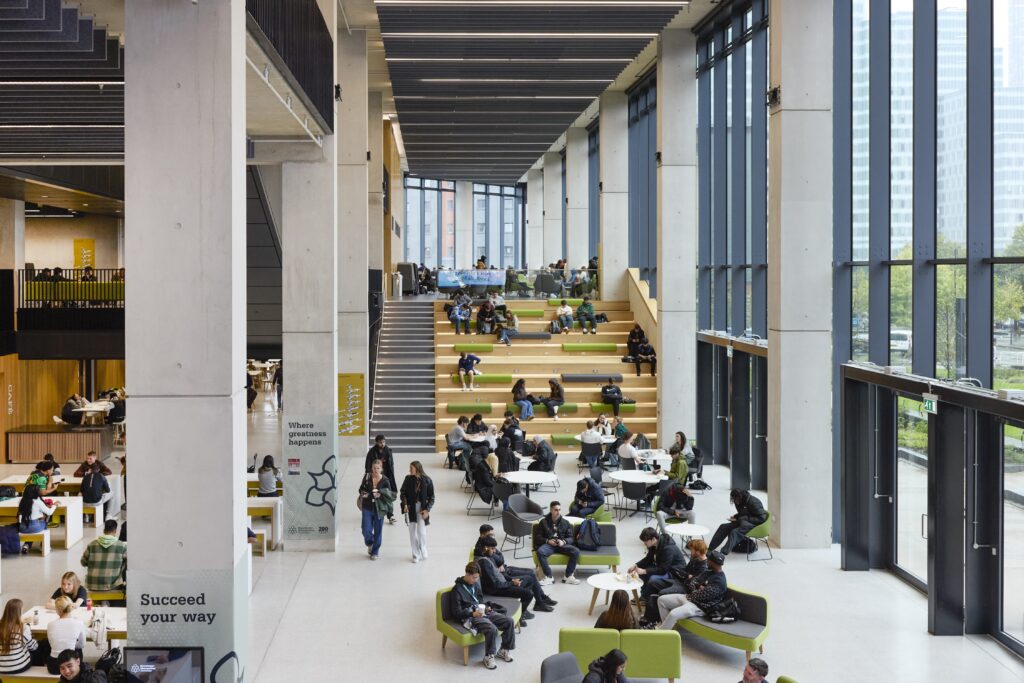
At the Department of Life Sciences, students gain theoretical knowledge, hands-on experience, and exposure to cutting-edge research across programmes. Source: Manchester Metropolitan University
But the strength of the programme lies not just in its curriculum and facilities. Peers and professors are passionate and bring a wide range of views and expertise. They encourages collaboration, critical thinking, and curiosity — qualities that employers look for in the life sciences sector.
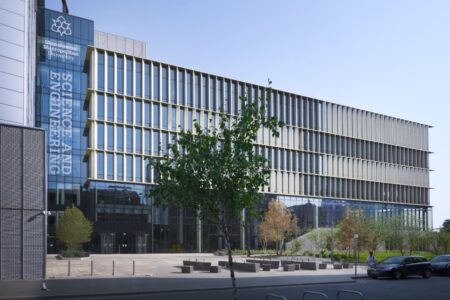
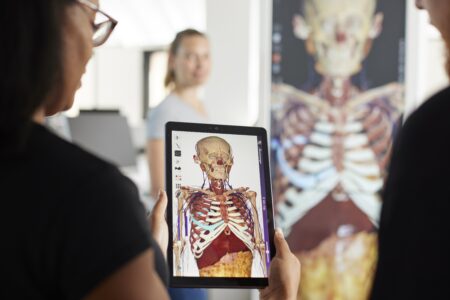
Supporting all of this is the university’s new Dalton Building — a US$145 million facility located at the heart of the Manchester campus. Designed for the Faculty of Science and Engineering, it houses purpose-built teaching and research spaces, including new labs for life sciences students. There are new research labs dedicated to cell and molecular biology, microbiology, and physiology and spaces that include high-quality portable microscopes, virtual dissection tables, and patient simulators to support interactive and immersive learning. There’s also research-grade technology to analyse biomolecules and monitor physiological responses both in the lab and in fieldwork settings.
Support for international students is as extensive as its facilities. Before arrival, Manchester Met provides guidance on visas, CAS letters, and pre-departure resources. When they’re here, the university runs pre-sessional English courses, study skills workshops, and one-to-one tutoring, among others. Scholarships, including International Awards and Vice-Chancellor’s Awards, as well as funding for research or sports excellence, are provided too.
Manchester Met further supports students with guaranteed accommodation, help with finding private housing, banking, healthcare, and mobile setup. Its vibrant international community, wellbeing services, and career support, including internships, CV workshops, and guidance on UK work visas, ensure that students have every opportunity to thrive.
Learn more about Manchester Metropolitan University.
Follow Manchester Metropolitan University on Facebook, Instagram, X, YouTube, and LinkedIn.