




What do you use to look for the best place to eat on campus, find the best hidden gems in your neighbourhood, or check the weather?
More likely than not, you’ll use Google. After all, it’s the world’s most popular search engine.
What you might not know, however, is this search engine was created by Larry Page and his classmate, Sergey Brin — thanks to inspiration from two dissertation papers they both wrote at Stanford University, where Page pursued his graduate studies in computer science.
For a time, they ran a prototype of their search engine called “BackRub” on an assortment of personal computers stored in Page’s dorm room.
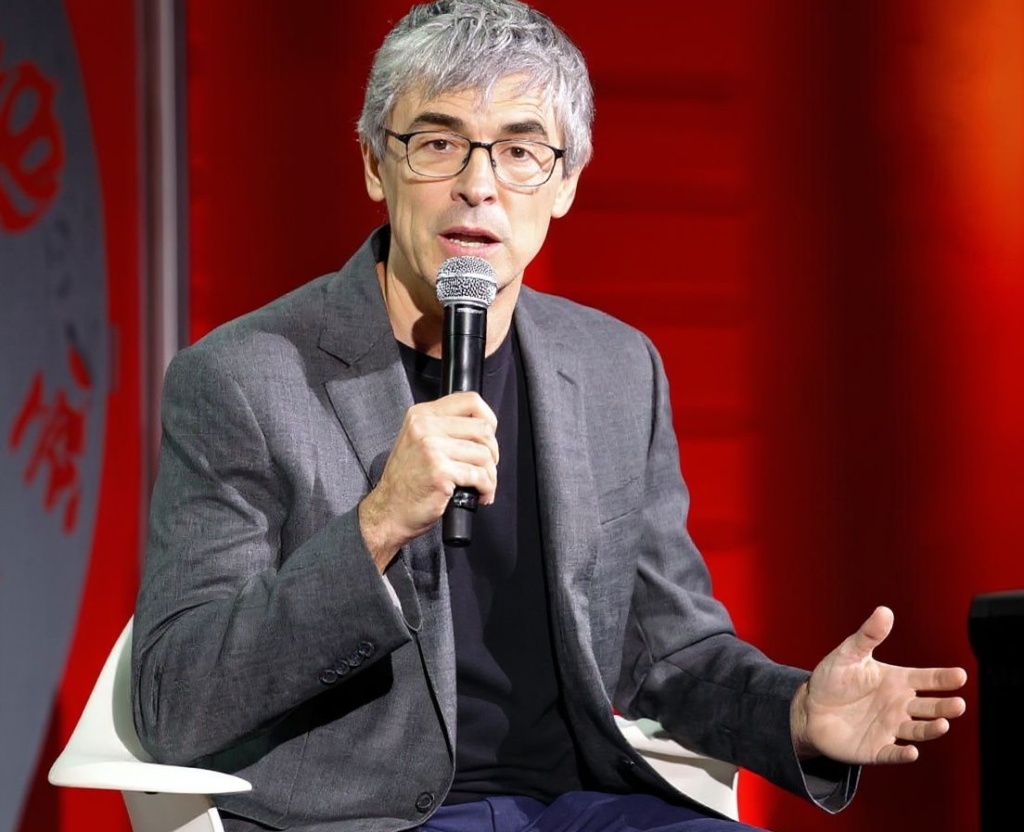 Larry Page speaks during the Fortune Global Forum at the Legion Of Honor on November 2, 2015 in San Francisco, California.
Where it all started for Larry Page
Page’s passion for computers started when he was six years old.
“I just enjoyed using the stuff. It was sort of lying around, and I got to play with it,” Page shared in an interview.
Do remember that the year was 1978 — a time when not many people had computers lying around in the house.
What’s more, he was also the first kid in his elementary school to turn in an assignment that was a word-processed document.
“Then his older brother taught him to take things apart, and it wasn’t long before he was taking apart everything in the house to see how it worked,” Virginia Scott wrote in her book, “Google (Corporations That Changed the World).”
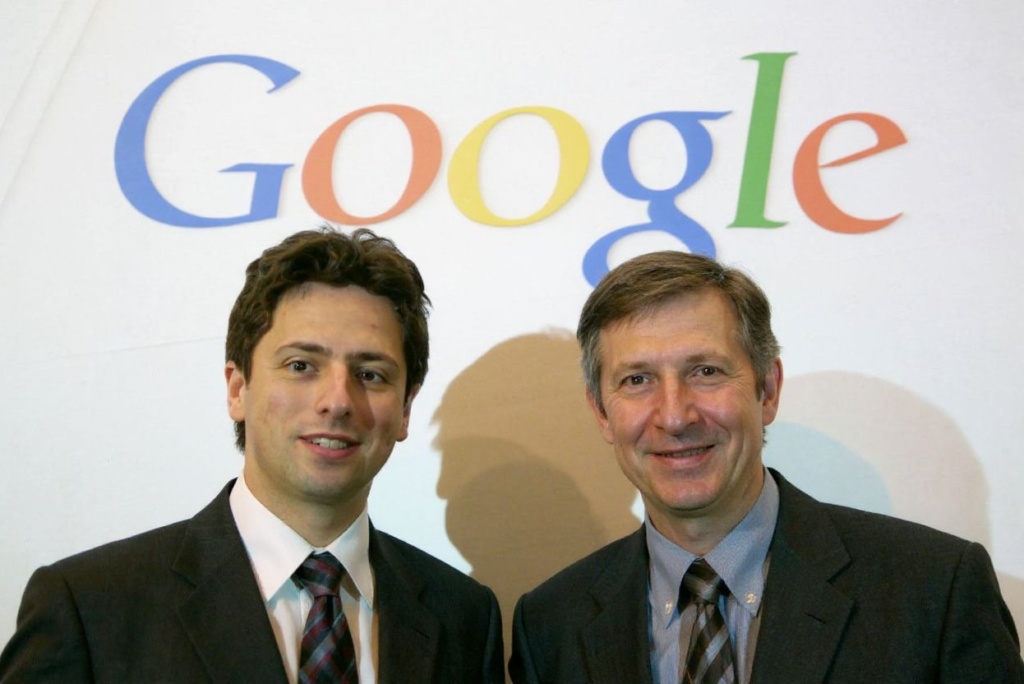 Google founders Sergey Brin (L) and Larry Page pose for photographers prior to presenting their new Google Print product at the Frankfurt Book Fair Oct. 7, 2004.
How Larry Page invented Google, the world’s most popular search engine
Fueled by his interest in computers, Page pursued a degree in computer engineering at the University of Michigan.
Later, he started his graduate studies in computer science at Stanford University, where he took on a project to analyse patterns of linkage among different sites of the World Wide Web.
Stanford University is also where Page met fellow computer science graduate student Sergey Brin who joined him on this research project.
In a period when the Internet and World Wide Web began taking shape, Page was eager to determine how many web pages linked to any one given page.
Existing facilities were limited — they could only rank search results by how frequently words showed on a web page.
Searches often produce an endless list of websites irrelevant to the user’s query.
Page was eager to change that.
Together with Brin, they wrote two papers: “Dynamic Data Mining: A New Architecture for Data with High Dimensionality” and “The Anatomy of a Large-Scale Hypertextual Web Search Engine.”
The second paper soon became one of the most downloaded scientific documents on the Internet, according to the Academy of Achievement.
Like most students, they didn’t have much money. For a time, Page and Brin ran the prototype of their search engine named “BackRub” on an assortment of inexpensive personal computers stored in Page’s dorm room.
“We didn’t start out to build a search engine at all,” Page told the Academy of Achievement.
They registered the domain name google.com in 1997 — and the rest is history.
 Aside from developing popular applications and acquiring startups, Google also has a philanthropic arm — Google.org — which focuses on climate change, poverty, and public health.
Larry Page: From loving computers to becoming Google’s CEO
Initially, Page served as Google’s CEO and Brin as its president.
Their mission was simple. To organise the world’s information and make it universally accessible and useful, according to Google.
As the company grew, its value skyrocketed. Academy of Achievements states that Google’s initial public offering in 2004 raised US$1.67 billion, giving the company a market capitalisation of US$23 billion.
Page, however, reduced his annual salary to a dollar a year and refused bonuses.
Besides developing popular applications and acquiring startups, Google also has a philanthropic arm — Google.org — which focuses on climate change, poverty, and public health.
One of the organisation’s principal projects is the development of a hybrid automobile. Google also has the largest solar power capacity of any corporate campus in the US and even the grounds of its green campus are grazed by a flock of goats, according to the Academy of Achievement.
Looking back, Larry Page likely could not have foreseen the change he would bring through his love for computers — but he never stopped pursuing his passion.
“You never lose a dream; it just incubates as a hobby,” Page shares in his commencement address to the University of Michigan graduates.
Popular stories
Explore flexible futures with a University College London Science and Technology Studies (STS) degree
Hidden costs of studying abroad in 2026: The fees no one warns you about
What the Iran-Israel war could mean for students who depend on ChatGPT, Gemini, and Claude

Europe’s best virtual university campus tours