


He left behind a CEO title to sell juice. And somehow, it’s working.
Sayantan Das had every reason to stay comfortable. A prestigious MBA from Imperial Business School. Six and a half years at Foodpanda Malaysia, culminating in the CEO role. A cushy corporate career that most people would kill for.
He walked away from all of it — to start Being Juice, his juice business.
And if you think that sounds crazy, consider this: Being Juice has bagged US$1 million in venture capital funding.
Starting his career in finance
Born in India, Das moved to Singapore before he even turned one. Growing up in a “typical Indian family,” he would later gravitate towards a finance degree at UNSW.
Australia was an ideal destination for many reasons. It provided a taste of the Western style of education, while remaining relatively close to family. Das was also a big sports fan, with a particular passion for cricket, so that aligned too.
His next role was as analyst on the Singapore Exchange. Pretty prestigious for a first job but quite quickly, that role lost its shine. It felt too straightlaced for Das.
Turning to entrepreneurship and a couple other stints – and failing — Das found himself moving to Malaysia to work for foodpanda, an online food and grocery delivery service like UberEats, operating in 11 countries including Malaysia, Singapore, and Thailand.
In 2017 foodpanda was new and “messy,” as Das put it. “Whoever could join literally that day, they would just hire,” he explains.
Having been a founder himself, he had the experience of setting up an office, literally – including cleaning it.
CEO goes back to business school
It was during his time at foodpanda that Das earned his MBA from Imperial Business School. “I wanted to upgrade my skills but at the same time, I didn’t want to be too far detached from the practical side of running a business,” he says.
As it was during the pandemic, the MBA moved online – which worked out better for Das. There was a more intentional approach to networking as you can’t just run into a classmate in class. Everyone in the Southeast Asia region would thus band together.
Thanks to that, Das got to connect with senior leaders around the region without sacrificing time with family.
“KL is home now I’m married to a Malaysian, my daughter is here,” he says.
The ROI of an MBA
With a UK MBA costing around 57,000 pound sterling (around US$76,186), the question on everyone’s mind is: Was the MBA worth it?
For Das, the answer to this depends on three questions:
- How much are you spending?
- Where are you doing it?
- What it’s for?
“The value of the MBA has been discounted a lot today; there’s not that much premium placed on it,” Das admits.
And with many leaders of today’s top companies coming from non-business backgrounds – they may even be dropouts – having an MBA could even be disadvantageous to some.
It trains you a certain way, when companies want you to think outside of the box.
“But if they’ve gotten into top business schools, it’s a testament to how hard they can work, and how much of an achiever they are, rather than anything else,” Das adds.

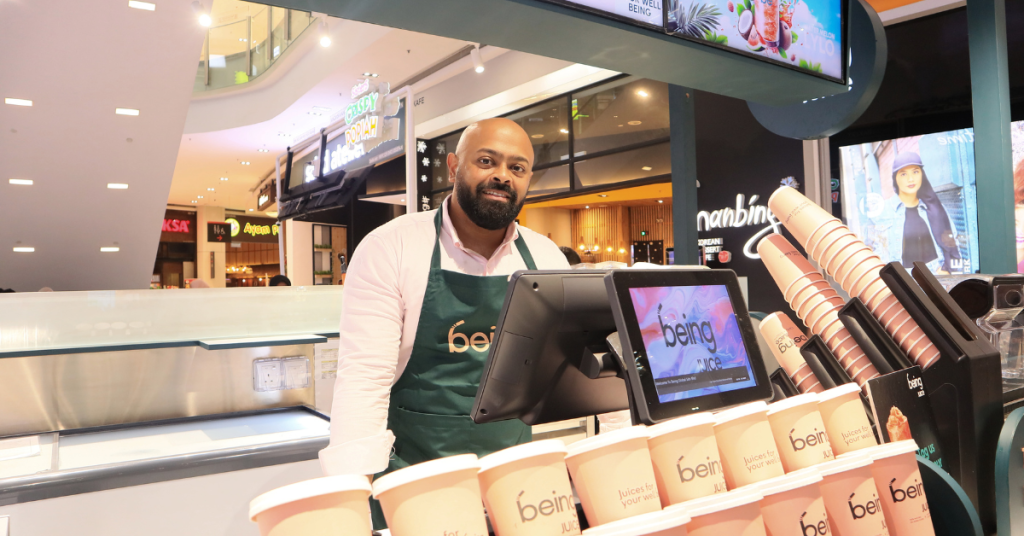
Being Juice focuses on providing healthy fruit drinks. Source: Being Juice
Becoming juice
In two years since earning his MBA, Das launched Being Juice in 2024. Then, a year or two later, he would secure US$1 million in funding for it.
For all the debate on the ROI of an MBA today, many would see this as proof that the MBA does pay back.
Not everyone could have foreseen the boom in beverages. Das did, having tracked how Chinese beverage brands have mushroomed across the country and region, such as Mixue, Luckin, and Chagee.
The way Das sees it is that snacking has been displaced by drinks.
And while there are already local homegrown champions for coffee and tea, there hasn’t been one big brand for juice.
Being Juice intends to be that go-to name, with Das aiming to open thousands of branches across the globe.
Popular stories
Many fit, finance bros: Where & what the male cast of ‘Age of Attraction: Season 1’ studied at university

Marketing pros masked at ‘cougars’ and ‘flakes’: Where and what the women cast of ‘Age of Attraction: Season 1’ studied at university

Lewis University: Why three very different Kenyan students chose the same US university

5 schools for ballet and opera if you’re not Timothée Chalamet