




As artificial intelligence (AI) transforms the workforce, students in the humanities and social sciences, such as literature, history, philosophy, sociology, and anthropology, are starting to wonder if there will still be a place for them after graduation. These fears are not without reason, given that nearly 40% of jobs are being reshaped by AI. But here’s the twist: far from becoming obsolete, these humanities are actually becoming more essential than ever.
Why so? While AI can make decisions faster, it can’t explain why those decisions matter. That’s where the humanities come in. Philosophy, for example, encourages you to question what is right or wrong and to explore ethical frameworks that guide real-world decision-making in areas like medicine, law, and technology. Sociology helps you understand how people behave in groups and how social systems shape our lives. This kind of insight matters when you’re building tech that’s meant to work for all kinds of people. If that sounds like your thing, here are three universities in Europe offering humanities degrees.

The Faculty of Humanities features a diverse portfolio of over a dozen programmes offered in English, German, and French. Source: Charles University
Charles University, Faculty of Humanities
Ask students what makes a great place to study, and the answers are usually the same: somewhere safe, affordable and full of opportunities. Prague delivers on all three. The Czech capital ranked among the world’s safest destinations, placing #6 on the HelloSafe Travel Safety Index 2026 and #13 on the Global Peace Index 2026. In a study by relocation firm BOXIE24, Prague earned a 99.35 out of 100, ranking first for affordable student accommodation and public transport, while recording the second-lowest crime rate among the cities surveyed. It’s little surprise then that around 240 faculty members and 2,500 students are drawn to the Faculty of Humanities at Charles University. Based in a new, campus-like facility (which won several architectural awards in 2021 and 2022) in Prague’s Libeň district, the faculty brings together three research centres, three institutes, and nine departments, creating an expansive, international and multidisciplinary learning environment.
The Bachelor’s Programme in Liberal Arts and Humanities is taught in English and takes an interdisciplinary approach to learning. Explore culture, society and history from multiple perspectives while enjoying the flexibility to tailor your studies around your interests. You’ll graduate with critical thinking, analytical and interpretive skills that are valued across careers in academia, NGOs, the public sector and media. And if you want to keep studying, it’s also a great stepping stone into postgraduate and research paths. The faculty offers nine PhD programmes taught in either Czech or English, plus one programme in German and one in French.
Meanwhile, if you’re curious about how gender influences society, there’s the English-taught Master’s Programme in Gender Studies. You’ll explore how gender roles, constructions, and stereotypes of women and men, both in the past and today, shape society. The programme aims to familiarise you with gender analysis for careers in state administration, social policy, healthcare, and legal or social services. Graduates of the programme have joined theoretical and pedagogical teams in academia as well, contributing to interdisciplinary research and teaching in gender studies.

Helsinki might not be the cheapest place to live, but student life here comes with plenty of perks. You’ll have access to affordable housing, basic healthcare, and meals at student prices. Source: University of Helsinki
University of Helsinki
There are so many reasons to study in Finland — think high quality of life, low crime rates, and beautiful natural scenery all around you. The Faculty of Humanities at the University of Helsinki is a big draw for these reasons and more. It is part of one of the leading Nordic and European universities and close to the top 50 in the world. And its list of programmes is long — seven bachelor’s, 17 master’s, and six doctoral programmes. There’s a lot to explore, including Cultures, Digital Humanities, Finnish, Finno-Ugrian and Scandinavian Studies, Languages, Philosophy, History, and Art Studies, and Russian, Eurasian and Eastern European Studies.
More importantly, you don’t need to speak Finnish to study here. The faculty offers several programmes taught in English, including the Bachelor’s Programme in Liberal Arts and Sciences, as well as master’s programmes such as Urban Studies and Planning, Russian, Eurasian, and Eastern European Studies, Linguistic Diversity and Digital Humanities, Intercultural Encounters, European and Nordic Studies, and English Studies.
During your studies, you’ll gain a deeper understanding of your subject while building key skills, such as analytical and critical thinking skills, as well as argumentation and written communication skills. You’ll get to work with different materials, put together presentations, and team up with others on projects. By the end, you’ll graduate with both the knowledge and practical skills you need for your future career.
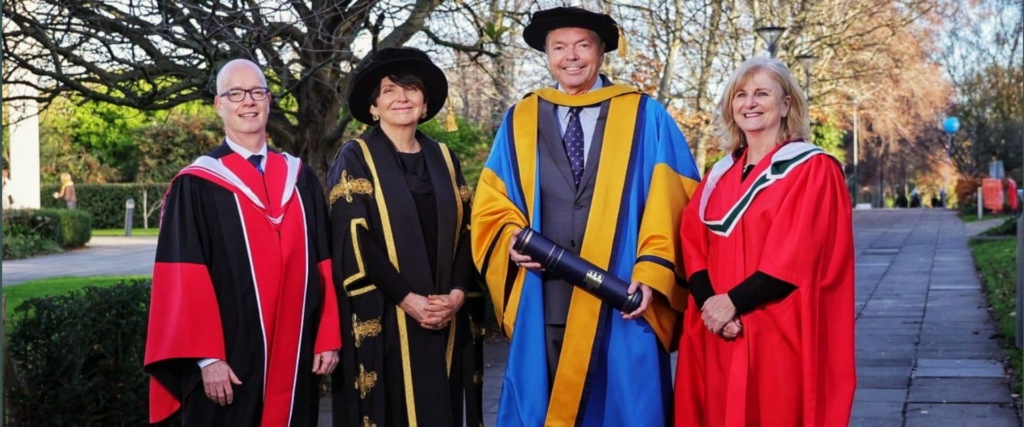
Students graduate with strong, transferable skills, from research and writing to teamwork and adaptability, developed through practical learning and industry exposure. Source: University College Dublin
University College Dublin
Leading arts and humanities education in Ireland is University College Dublin’s College of Arts and Humanities. It is ranked #41 in the world for English Literature and Language, and in the top 100 for History, Performing Arts, and Arts and Humanities. Even better, the college is situated in Ireland’s vibrant capital city, which means you get the best of both worlds: the chance to study within a beautiful and sustainable campus while engaging with a city full of culture, creativity, and Irish character.
Starting out, you can pick between BA Humanities, BA Modern Languages, or BA Joint Honours, depending on what you’re into. If you want to keep studying, there’s a wide range of master’s and research programmes across seven schools, many of which are flexible with full-time or part-time study. Over at the UCD Clinton Institute for American Studies, there are specialised programmes in areas like journalism, politics, and international affairs.
No matter what you study, the focus is on helping you think independently, stay curious, and adapt to new ideas. The teaching here connects closely to what’s happening in the world today, so you graduate with skills that open doors to careers in the arts, media, education, business, and more.
*Some of the institutions featured in this article are commercial partners of Study International
Popular stories
Pathways to the Ivy League universities: 9 best private high schools in the US (2026 edition)

Acceptance rates as low as 3.65%: The hardest universities to get into & their admissions criteria in 2026

Research. Community. Opportunity. Discover Rhodes University.

These Pharmacy master’s degrees are transforming global healthcare