


Gwendoline Charles always knew she wanted to pursue a master’s in the field of multilingual communication. After participating in an Erasmus+ exchange programme in Austria, she realised she should take her master’s dreams abroad too.
Some research later, and Charles would come across the ideal destination to take her ambitions global: Hochschule Fulda University of Applied Sciences.
“I discovered Fulda’s master’s, and its bilingual approach and focus on intercultural studies immediately stood out as the best fit for my goals,” says Charles.
That programme is the Master’s in Intercultural Communication and European Studies (ICEUS). There, she found classes taught in both English and German, which allowed her to strengthen her language skills for an international career. The curriculum combined intercultural communication with European law, politics, and globalisation, which aligned closely with her interest in global issues.
In today’s job market, fluency in more than one language is a big advantage. According to Forbes, 40% of multilingual employees said language skills helped them land a job, earning them 19% more than single-language speakers. “Bilingual programmes promote collaboration among students from diverse backgrounds,” says Charles. “It fosters an intercultural understanding and equips graduates to work effectively in international environments.”
Germany is a great destination for those seeking that edge. Now the world’s third most popular study destination, after the US and UK, universities here offer world-class programmes in engineering, computer science, business, and natural sciences.
The country is highly accessible, with low or no tuition fees and about 10% of academic programmes are taught fully in English. Better yet, living costs are moderate; lower compared to countries like Denmark, Luxembourg, or Switzerland. Yet living quality here is very much just as high. Ther is no doubting Germany’s charm and beauty, from age-old castles and romantic villages to hip indie shops and the best beer you’ll ever taste.
There is, however, one challenge when it comes to living in Germany.
 Charles has always been interested in languages, interculturality, and international cooperation, which was what led her to Hochschule Fulda. Source: Hochschule Fulda University of Applied Sciences
Learning to speak German is key. Especially if you’re looking to stay and work in Germany long-term, having a strong grasp of the language will increase your prospects. It’s not just work too. Access to housing, scholarships, and tuition-free education — the better your German, the better your chances. Hochschule Fulda understands this better than anyone. “Hochschule Fulda offers various opportunities to develop both German and English language skills,” says Charles.
The Department of Social and Cultural Sciences provides a German C1 course for international ICEUS students looking to build their academic and professional proficiency. There are also a variety of English courses available, alongside extra-curricular German courses. Students who’d like to begin the language learning process before they even arrive on campus can enrol in German courses in the “Pre-Study Fulda” or “Pre-College Fulda” programmes.
That was the case for Gargi Sharma, who came to Hochschule Fulda to study computer science. She sought a programme that was practice-oriented and real-world focused, and that’s exactly what the dual study in Applied Computer Science offered. It’s designed to combine practice and theory. Classes are small, allowing for close interactions with professors.
Sharma chose to pursue the programme completely in German. She wanted to fully immerse herself in the culture, not just as an international student, but as someone who could communicate and work in Germany too. Of course, learning the language was no easy feat, but Hochschule Fulda ensures students don’t have to bear the process alone.
“I actually started by learning B1 on my own, and later joined the preparatory course Pre-College Fulda, which really helped me improve my German skills,” she says. “In the beginning [of my studies], I had to put in a lot of extra effort, but it got better semester by semester — and now, I can even dream in German.”
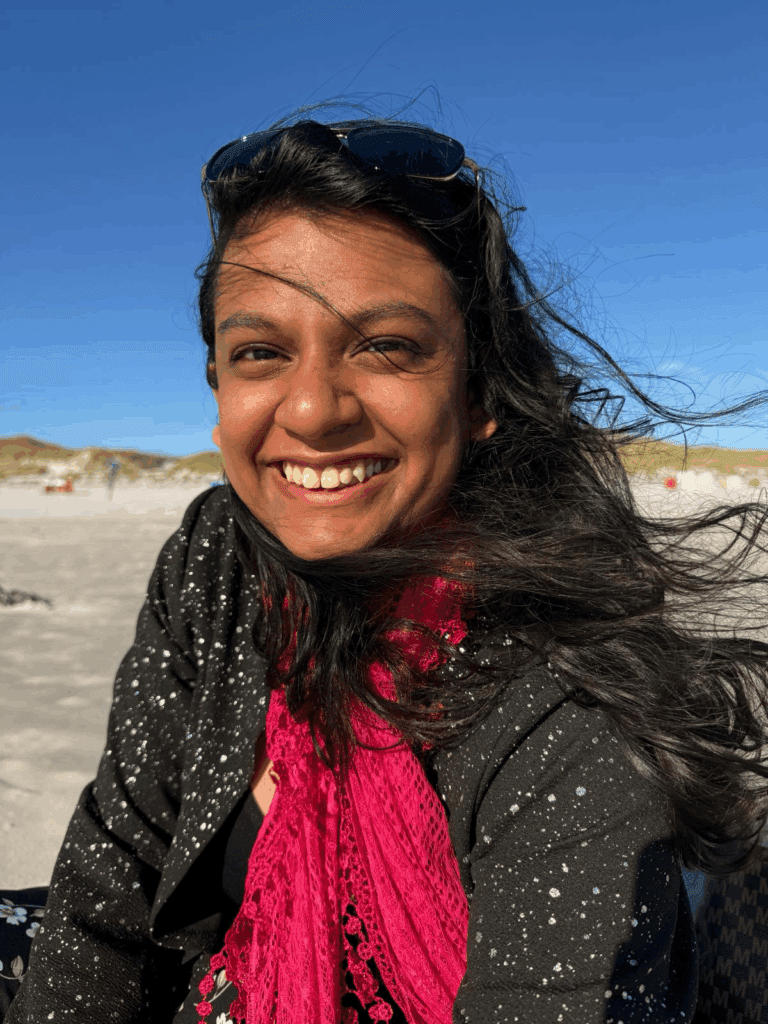 Germany is known to offer world-class education in computer science, though the low tuition fees was definitely a plus for Sharma too. Source: Hochschule Fulda University of Applied Sciences
Dive into real-world learning, and your German language skills will only grow. Hochschule Fulda opens doors to internships, cutting-edge research, apprenticeships; you name it. The dual study model of Sharma’s programme meant that she could master the technical and scientific fundamentals of computer science and apply theory to practical courses which take place in a co-operating company.
Sharma worked with the IT service provider for the Hessian state government. “Honestly, working is quite different from studying; you quickly realise that real projects don’t always go by the book,” she says. “Having that academic foundation helped me understand the ‘why’ behind what I was doing. I also got the chance to work on projects related to databases and IT security, which gave me a better idea of how theory translates into real systems.”
For Charles, the ICEUS programme led her to pursue an internship at the department of university communications. It served as an opportunity to practise her German skills in a professional setting. Every day, she would collaborate with native speakers, which greatly improved not just her language proficiency, but her confidence too. It allowed her to experience the German work culture first-hand, including how teams communicated and approached tasks.
Beyond class and work, Hochschule Fulda’s diverse campus deepened Charles’s understanding of intercultural communication. The university is home to over 3,100 international students from over 90 countries – people she never would have met had she not chosen to study abroad. Charles would also attend intercultural events at the “Welcome In! Wohnzimmer” cultural and community centre.
“After graduation, I would like to work in an international environment, ideally in Brussels, within an organisation that focuses on intercultural exchange and global citizenship,” she says. “I see myself contributing to initiatives that promote openness and cultural sensitivity.”
Check out the Hochschule Fulda University of Applied Sciences here.
Follow Hochschule Fulda on LinkedIn, Instagram, YouTube, and Facebook.