


How does a discovery in a lab become a treatment that saves lives At Aalborg University (AAU)’s Department of Health Science and Technology, the two-year Master’s in Medicine with Industrial Specialisation (MedIS) helps you understand how medical research can lead to real-world solutions.
There are three MedIs profiles. In Biomedicine, you’ll study how diseases develop and affect the body. Translational Medicine focuses on turning research findings into potential treatments. Medical Market Access looks at how medicines and medical devices are evaluated for their value and accessibility to patients. Each profile gives you a different perspective on healthcare and helps you prepare for your chosen career path.
Whichever profile you choose, you’ll learn via AAU’s Problem-Based Learning (PBL) approach. In your final year, you’ll complete a project that lets you explore a topic in depth. This research can take place at the university or at an international university hospital. Alternatively, you may choose to work with a company.
By the end of their MedIS degree, graduates are confident to take the next step in their journey. Some progress into roles in the pharmacy and medical research industries, while others proceed to a PhD.
But what does this journey really look like in practice?
We spoke to one current student and a graduate who have taken different paths through the programme. Ida Lindgreen Bach is in the second year of her MedIS degree (Biomedicine) having completed her MedIS bachelor’s degree at AAU too. Frederik Hegner Odgaard studied Medicine with Industrial Specialisation (MedIS) at AAU, he followed the Biomedicine specialisation route, and now holds master’s degree within this profile. He is now pursuing a PhD at AAU University Hospital, where he specialises in gastroenterology and intestinal failure. Below, they share their experiences and explain how the programme has shaped their next steps.
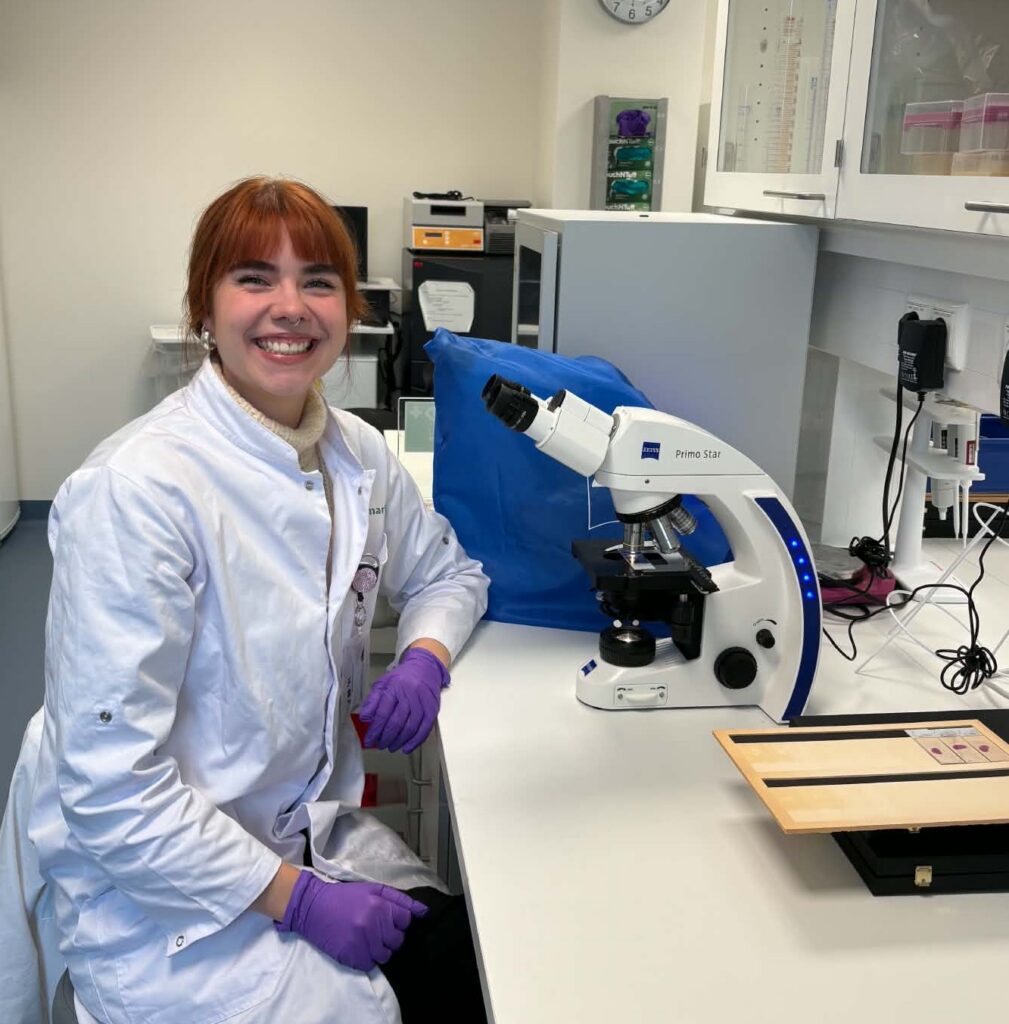
Ida Lindgreen Bach is a ninth-semester MedIS master’s student. Source: Aalborg University
Ida Lindgreen Bach, Master’s in Medicine with Industrial Specialisation
Can you tell us more about your specialisation, specific role(s) (such as tutor, research assistant, etc.) held, and past and present projects related to the programme?
I am specialising in the Biomedicine profile within the Master’s in Medicine with Industrial Specialisation, and I also completed the MedIS bachelor’s programme beforehand.
One of the things I enjoy about studying at AAU is the problem-based learning approach, where project work is integrated throughout the education and allows us students to explore topics that genuinely interest us. Over the years, I have worked on projects within liver pathology, pain research, neurobiology, and, more recently, neurodegenerative diseases and in vitro cell modelling. Rather than focusing on one specific disease area, I have often prioritised learning new laboratory methods and experimental techniques, which has given me a broad and versatile skill set.
A strength of MedIS is the opportunity to collaborate with different research groups. This means you can gradually shape your profile towards the field you are most interested in. During my master’s, I have had the opportunity to work closely with my supervisor, Professor Maj Schneider Thomsen, and will now spend my final year investigating neurodegenerative disease mechanisms and advanced cell models as part of my master’s thesis.
My thesis focuses on developing and improving a lab-based model of the blood-brain barrier to study cerebral amyloid angiopathy (CAA), a disease in which amyloid proteins build up in the brain’s blood vessels. The aim is to create a model that can be used to better understand the underlying disease mechanisms and potentially support future research into diagnostics and therapeutic strategies. Through this work, I have gained experience with advanced cell culture techniques, experimental design, and the challenges that may come with building a research model from scratch. I’ve learned through this work that research is rarely straightforward and that it involves a lot of trial and error. But I really enjoy being in a position where I can contribute knowledge that will eventually allow us to better understand a disease that holds so many unanswered questions.
Are you undergoing any internships or placements? If yes, please describe your responsibilities and how they relate to your programme.
No. I am not currently doing an internship or placement. However, MedIS includes extensive project work that often resembles the responsibilities of a research assistant, including literature reviews, data analysis, and, depending on the chosen profile, laboratory work. In many ways, these projects allow us to experience what research or development work actually looks like. Therefore, I think that even without a formal internship, I have gained experience that will be highly relevant to my future career, whether it be in academia or industry.
Why did you choose the Master’s in Medicine with Industrial Specialisation at Aalborg University?
I chose MedIS because I wanted an education that would allow me to explore several areas of the life sciences, rather than forcing me to specialise too early.
Before applying, I heavily considered pharmacology, biochemistry, or molecular biology because all three fields interested me. The problem was that I didn’t really want to choose just one. MedIS stood out to me because it combines elements from each of these fields, while also allowing me to develop competencies in communication, innovation, and project management, aspects that are highly valued when applying for jobs.
Although I was never particularly interested in pursuing a clinical career involving direct patient contact, I wanted a strong understanding of medicine and healthcare. Looking back, I am very glad I made that choice, as I now feel comfortable discussing scientific and medical topics with professionals from all backgrounds.
Another important factor was AAU itself. I knew I wanted to study in Aalborg, which narrowed down my options somewhat, but I also quite liked the idea of the university’s problem-based learning approach. Much of the programme revolves around group work on projects and assignments and is centred around real problems rather than memorising facts for an exam. As a fairly social person, I liked the idea of working closely with other students and learning things together instead of alone, and it has turned out to be one of the aspects of the programme I have enjoyed the most.
Should I pursue a Master’s in Medicine with Industrial Specialisation?
Yes. The programme is an excellent choice if you are interested in both medicine and how medical knowledge can be applied in research, healthcare, and industry. The medical part provides a strong foundation in human biology, physiology, and disease mechanisms, while the industrial specialisation focuses on interdisciplinary collaboration, innovation, management, and communication. This latter part means we gain a very broad skill set that extends beyond the life sciences, making our career options almost endless.
I believe the programme is particularly suited to three types of students, whether they choose the Biomedicine, Translational Medicine, or Medical Market Access profile. First, students who enjoy teamwork and problem-solving. Much of the programme revolves around group work, so you should not be afraid to approach people to ask questions and work together with fellow students or professors to find solutions.
Second, students who are curious about perspectives outside their own field. A unique aspect of MedIS is that you quickly learn that healthcare challenges are rarely solved by biology alone. Depending on the project, you might discuss disease mechanisms with experienced researchers, implementation challenges with healthcare professionals, regulatory requirements, or economic considerations. If you enjoy bringing together knowledge from different disciplines and helping different experts “speak the same language,” you will probably thrive in MedIS, and even more so in the job positions that may follow after graduating.
Finally, students with an interest in biology, disease understanding, and healthcare. Many courses build on a foundation in physiology, pathology, immunology, and molecular biology, and as you progress through the programme, the topics become increasingly specialised. Personally, I think that is one of the most exciting parts, as we eventually start becoming experts in very advanced areas of science.
Is it worth pursuing a Master’s in Medicine with Industrial Specialisation?
Yes, definitely. The programme has given me far more than I expected when I first started, and I’ve never regretted choosing MedIS. Through project work, courses, and collaborations with research groups, I have developed a strong scientific foundation and valuable professional skills.
I enjoy the amount of responsibility we are given. We are trusted to shape our own projects and make our own decisions, while still having experienced supervisors available when we inevitably get stuck. That balance has helped me grow tremendously and given me confidence in my own abilities. I also appreciate that the programme keeps many doors open. I still have not completely decided whether I see myself in academia or industry, and that is okay. MedIS prepares graduates for both, and I feel confident that whichever path I choose, I have the skills and experience needed to do a good job, no matter what.
Should I choose the biomedicine track?
Yes, if you are interested in understanding disease mechanisms and enjoy scientific problem-solving.
It surprised me just how practical and technical the Biomedicine profile is. Beyond learning theory, I quickly found myself designing experiments based on nothing but existing literature, optimising protocols, analysing data, creating scientific posters, presenting results, and discussing findings with people from very different scientific backgrounds. It often feels a bit like detective work – when an experiment does not work as expected, you have to figure out why, troubleshoot the problem, and find a better solution next time. This certainly requires some dedication and determination, as experiments rarely go perfectly and may even fail. But even failed experiments teach you something valuable and help you improve as a researcher.
What is exciting and makes it worth it in the end is how we can work with very novel areas of research. I find myself thinking, “Wait… I might actually be the first person to see this,” which is very cool. Furthermore, a very rewarding part is remembering the bigger picture. We may spend hours looking at cells and proteins we can’t even see with the naked eye and forget how it applies to real life. But ultimately, the goal is to generate knowledge that may improve diagnostics, treatments, and our understanding of diseases. This is work that may one day contribute, even in a small way, to helping patients have a better quality of life.
How practical is the programme?
The programme can be more or less practical, depending on the profile and projects you choose.
As a Biomedicine student, laboratory work has been a major part of my education, which suits me perfectly because I genuinely enjoy being in the lab. Throughout my studies, I have worked with both hepatocyte 3D spheroid models for liver disease and blood-brain barrier models related to cerebral amyloid angiopathy.
Through courses such as “Molecular and Cellular Methods,” I learned the theory behind laboratory techniques and applied them in practice, including growing cells in the lab (cell culturing), measuring gene activity (RT-qPCR), analysing individual cells (flow cytometry), identifying specific proteins or molecules (affinity staining), and much more.
This is how I’ve prioritised my studies, but the magical thing about MedIS is that “practical work” can mean very different things depending on your interests. For all the MedIS profiles, the focus is to apply knowledge to solve real-world challenges that reflect academic research or tasks you’d meet in the industry. This may involve clinical studies, interviews, health technology assessments, and cost-benefit analyses. Whether you are staining mouse brains in a laboratory, talking to patients and clinicians, or evaluating the value of a new drug, you are constantly challenged to connect theory with practice.
How demanding is the workload for this programme?
The workload is demanding, but it is also very rewarding.
During the first year of the master’s programme, you will typically balance several courses alongside a large semester project, which means planning and time management quickly become essential skills. Since students are given significant responsibility for shaping and scheduling their own projects, the experience often feels closer to having a real job rather than attending traditional classes.
There is honestly no such thing as a “typical week” for me. Some weeks are spent almost entirely in the laboratory, while others revolve around literature reviews, data analysis, project meetings, writing, or lectures. Occasionally, everything seems to happen at the same time, and suddenly an assignment deadline is approaching while your experiment decides it needs attention as well. Unfortunately, cells do not care if your calendar is already full or if it’s the weekend.
Even though some weeks are busier than others, I have still been able to balance my studies with a student job, hobbies, and time with friends and family.
One week I may spend most of my time in the laboratory, while another week is dedicated to data analysis, literature reviews, lectures, or group meetings. Sometimes the workload can be intense, especially when deadlines or experiments overlap, but it teaches valuable organisational and prioritisation skills. Learning to manage your time, collaborate with others, and adapt when things don’t go according to plan has been just as valuable as the scientific knowledge itself.
How accessible and supportive are the professors and faculty when students need help?
The professors are highly accessible and genuinely supportive. If I have a question, I will usually send an email or arrange a meeting, but it is often just as easy to knock on their office door and ask for a quick chat. In my experience, professors and supervisors are always enthusiastic about discussing ideas, helping solve problems, or simply talking through a challenge that seemed impossible 20 minutes earlier.
During my studies, I have experienced that supervisors just want students to succeed and develop independently. I really appreciate the amount of trust we are given. We are encouraged to think independently, make decisions, and take ownership of our projects, while still having experienced researchers to lean on when things inevitably go wrong (which they sometimes do, especially in a lab). Professors often treat us as future colleagues rather than simply students, which I think reflects the academic culture of a Danish university quite well.
What kinds of careers do you think this master’s programme prepares you for?
The programme prepares students for a surprisingly large range of careers. Most people immediately think of pharmaceutical research and development, biotechnology, medical technology, clinical trials, health economics, medical market access, regulatory affairs, and the list goes on. And those are definitely common career paths for MedIS graduates. Personally, I see myself ending up somewhere within pre-clinical research, simply because of my Biomedicine background and love for the lab.
What I like most about MedIS is that it never felt like being trained for just one specific job title. In fact, there is no “MedIS” title; it’s a set of skills we can use to apply for jobs that might fit our profile, which basically means we can apply for everything within the life sciences field and beyond. Collaboration and problem-solving are competencies that transfer well across many sectors. If there is one thing MedIS teaches you, it is how to learn new things quickly and solve problems you have never seen before. The degree does not lead you into a fixed career path. Instead, it gives you a broad scientific foundation, professional skills, and the confidence to look at a job description and think, “I could probably do that,” and then nail it.
What is student life like in Aalborg?
Aalborg is a phenomenal student city with a strong sense of community. The city is large enough that there is always something happening, but small enough that you can bike almost anywhere within 20 minutes. Whether it’s a Friday bar, semester start event, or student organisation, there are plenty of excuses to be social as a university student in Aalborg.
Another huge advantage is that Aalborg is affordable – you can actually afford both rent and meeting a friend for a coffee without immediately regretting your financial decisions afterwards.
As a MedIS student, you’ll spend a lot of time in the SUND building, located right next to the new university hospital. Here, we have great facilities and easy access to research environments, such as the anatomy hall and, most importantly, your supervisor’s office, so you can quickly swing by when you have questions about your project.
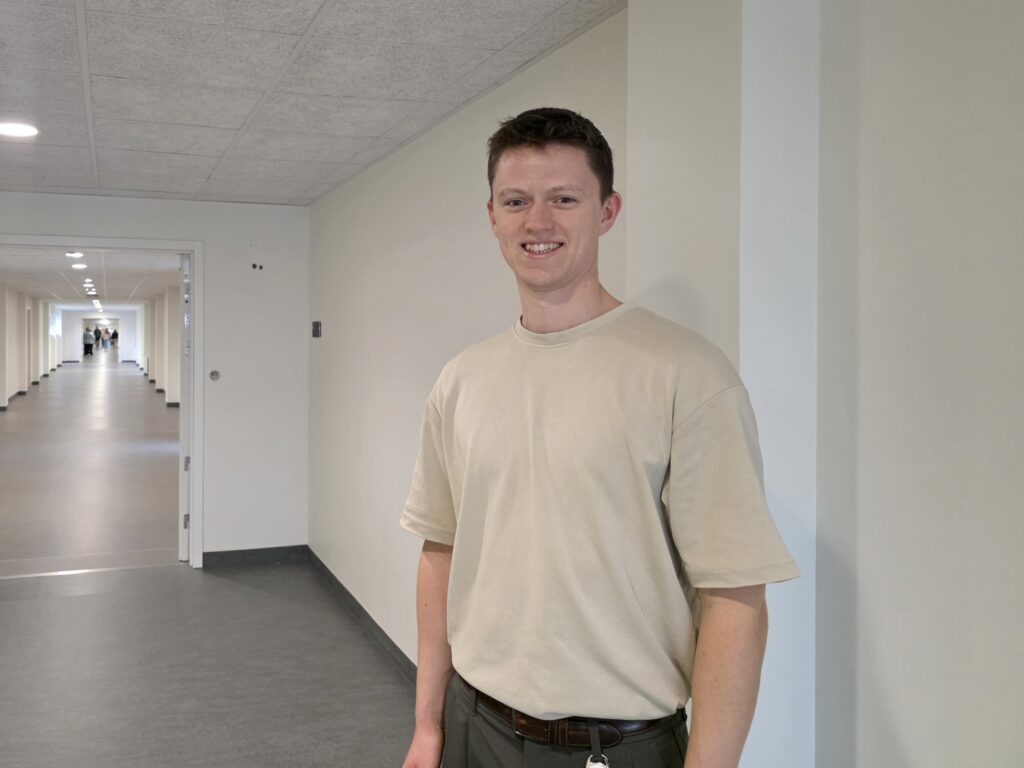
Frederik Hegner Odgaard is a MedIS master’s graduate and PhD student at Aalborg University Hospital, specialising in gastroenterology and intestinal failure. Source: Aalborg University
Frederik Hegner Odgaard, Class of 2024, Master’s in Medicine with Industrial Specialisation
Can you tell us more about your specialisation, specific role(s) (such as tutor, research assistant, etc.) held, and past and present projects related to the programme?
I studied Medicine with Industrial Specialisation (MedIS) at Aalborg University (AAU), specialising in Biomedicine, and graduated with a Master’s degree in Biomedicine. After graduating, I got a position as a research assistant at the Centre for Nutrition and Intestinal Failure at AAU Hospital, and I am now a PhD student there, specialising in gastroenterology and intestinal failure.
Alongside my research, I am involved in teaching and supervising MedIS students. I have been a case facilitator, where I guide small groups of students as they work through a patient case, helping them identify what they need to learn and discuss the case together. I have also supervised bachelor’s projects and helped students in the process of writing and publishing scientific articles. It is rewarding to now see the programme from the teacher’s side.
Why did you choose the Master’s in Medicine with Industrial Specialisation at Aalborg University?
I have always wanted to work in healthcare in a way that helps others. I have always been interested in science and the human body, and I am a naturally curious person who loves solving problems. I did consider becoming a doctor, but I chose not to because I was more drawn to research than to direct patient contact. MedIS gave me exactly that combination: a solid foundation in medicine, with a focus on research.
I chose AAU mainly because I am from Aalborg, but also because of its problem-based learning model, where much of the teaching is built around group projects that work on real problems, and because of its close link to AAU Hospital.
Should I pursue a Master’s in Medicine with Industrial Specialisation?
Yes, I would definitely recommend considering it. The “Medicine” part means that the bachelor’s degree is closely aligned with general medicine: you’ll learn the physiology and pathophysiology of the whole body, and you’ll take part in both laboratory work and clinical work with patients. The “Industrial Specialisation” part is about learning to think like a researcher, which will prepare you to work either in industry or in research.
In my experience, three types of people benefit most from the programme:
- People who are a little nerdy and enjoy going into detail and solving complex problems.
- People who want a broad medical foundation but would like to keep their career options open, whether in hospitals, research, or industry.
- People who are interested in medicine but more drawn to research than to patient contact, like I was.
Is it a good idea to go back to university to study Biomedicine at the master’s level?
Yes, definitely. For me, continuing to the master’s degree was the natural next step, and I chose Biomedicine because I enjoyed the laboratory methods. With my master’s degree, I got a position as a research assistant, which then led to my PhD, so it has been essential for my career so far. In my experience, career options are quite limited with only a bachelor’s degree.
The master’s in Biomedicine trains you in laboratory work and scientific thinking and teaches you to write academic papers and publish research. If you want a career in any part of drug development, from the first idea to clinical trials, it is a relevant choice. You can also choose a master’s degree in Translational Medicine or Medical Market Access.
Before enroling, you should know that the Biomedicine degree has a focus on laboratory methods, so it suits those who enjoy lab work best. That said, it does not limit you to the lab. Combined with the clinical experience from the bachelor’s degree, you are also well prepared to work in a hospital setting, and you can even work with patients in clinical studies, as I do now.
Is the Master’s in Medicine with Industrial Specialisation a difficult degree?
Yes. It is certainly not a degree that you will get through without effort. Each semester consists of three to five modules, including a project, each with its own exam. Personally, I found it hard to have so many exams, especially when several came close together.
At AAU, group work is central to learning. It is part of most modules and required for most projects. In my experience, this can be difficult at first if you struggle with socialising, but it is worth it. Being able to work with other people is essential in almost any job, and learning to manage group work and to discuss and solve problems together during your studies is great preparation for that.
I found certain areas, like neurology and microbiology, very difficult to understand and prepare for exams in. To cope with this, I created my own study group with a few friends. We used it to talk the subjects through, memorise the material, and practise for our many exams together, which made the exam periods much more manageable for me.
How practical was the programme?
Throughout the programme and the different modules and lectures, we dissected organs and did laboratory work where it made sense for the teaching, which really helped my understanding. We also gained some clinical experience, where we learned to take patient histories and write medical records for hospitalised patients. The most practical part, though, was the semester projects, where I got to work on real scientific and clinical problems.
Two projects in particular stand out for me. In one project, we investigated whether a dried blood spot sample, a small drop of blood collected on filter paper, could give results comparable to a normal blood sample. We analysed and compared the two types of samples using mass spectrometry, a method that identifies and measures substances in a sample very precisely. The project had real clinical relevance: dried blood spots require only a finger prick, are easy to store and send, and can even be collected by patients at home. That makes the method interesting both for hospitals and for the pharmaceutical industry, for example, in clinical trials where frequent blood samples are needed.
In my master’s thesis, I investigated whether magnetic nanoparticles could be used to deliver drugs to glioblastoma, an aggressive type of brain cancer. Getting drugs into the brain is difficult because it is protected by the blood–brain barrier. Normally, that is a good thing, but it becomes an obstacle when you want to treat a disease in the brain. The idea was to use magnetic nanoparticles to carry the drug and guide it to the tumour. To test this, we built a simplified version of the barrier in the laboratory by growing a tight layer of blood vessel cells from pigs on a filter. I then used a special microscope, where the nanoparticles light up, to see which ones had passed through. I also grew cancer cells in the laboratory. This is a highly relevant challenge for the pharmaceutical industry, as many promising drugs for brain diseases fail because they cannot reach the brain.
How accessible and supportive were the professors and faculty when students needed help?
In my experience, both the professors and the faculty were very helpful. You could always approach the lecturer after a lecture with further questions or easily contact them by email. It was only during my master’s, though, that I felt I had a real relationship with the professors and teachers, since the classes were smaller and the contact more direct.
In the group projects, each group is assigned at least one main supervisor and sometimes a co-supervisor. The framework of the project is usually set in advance, but we often had a say in its direction, and there was room to try out our own ideas. How the collaboration works depends on the supervisor, but in my experience, most supervisors meet with the group about once a week to make sure everything is on track. Along the way, you’ll get help and feedback, including on your written report. During the master’s thesis, this relationship became even closer. I became part of a research group, where my supervisor and the other members felt more like colleagues than teachers, which was a great introduction to working as a researcher.
What can I do with a Master’s in Medicine with Industrial Specialisation?
After graduating, I started as a research assistant at my local hospital in the field of nutrition, which I found interesting. That led me to my PhD, and after my PhD, I plan to continue with a postdoc.
From my experience, there are two main career paths: academia and industry. Academia involves research and teaching at universities or university hospitals, usually after completing a PhD and postdoc, while industry offers jobs in pharmaceutical, biotech, or medical device companies in areas such as research and development, clinical trials, regulatory affairs, and quality assurance. These are the most common paths, but there are also other options.
Several skills from my studies have been especially valuable in my work now:
- Problem-based group work. It prepared me to work with many different types of people and gave me essential collaboration skills, such as making collaboration agreements.
- Broad knowledge of the human body. Much of my work is clinical now, and I don’t think I could do it or understand the clinical relevance of what I do without the clinical experience and the general medicine and physiology I learned during my studies.
- Understanding research. I learned how a study is designed, the different types of studies, and how to read and critically assess them, including how strong the evidence behind their conclusions is.
- Laboratory experience. It helps me understand the practical reasoning behind different study designs.
What was student life like in Aalborg?
Honestly, I found student life a bit difficult at first because we were around 200 students when we started, but it got easier as time went on. I think there are good opportunities for social activities. At the start of the programme, there are social events for new bachelor’s students to get to know each other, which I found really valuable, and activities are often arranged privately within study groups.
For me, though, it was during my master’s that I really thrived socially because we were fewer and I got to know most of my classmates well. We started doing things together and arranging activities, and we even hosted an event where we invited the professors and laboratory technicians.
Finding a relevant student job can be difficult, but it is possible. I worked as a vaccinator during COVID and as a phlebotomist at the hospital for a couple of years, which also gave me useful clinical experience.
Overall, I think Aalborg has a great student community, with places in the city made specifically for students to meet and hang out, and a variety of free activities offered throughout your studies.
Follow Aalborg University on Facebook, Instagram, YouTube, and LinkedIn