



We may be living through the next industrial revolution — except this time, it’s driven by artificial intelligence, data, and emerging technologies. This leaves ambitious professionals with a critical question: What does it take to lead innovation today?
From finance and logistics to healthcare and the public sector, organisations of all sizes need people who can work with emerging technologies while understanding how their decisions affect societies. Doing this well requires a unique skillset: technical expertise, human-centred design, strategic thinking, and responsible innovation. However, many conventional postgraduate programmes silo students into either business or engineering, reflecting the traditional split between academic disciplines.
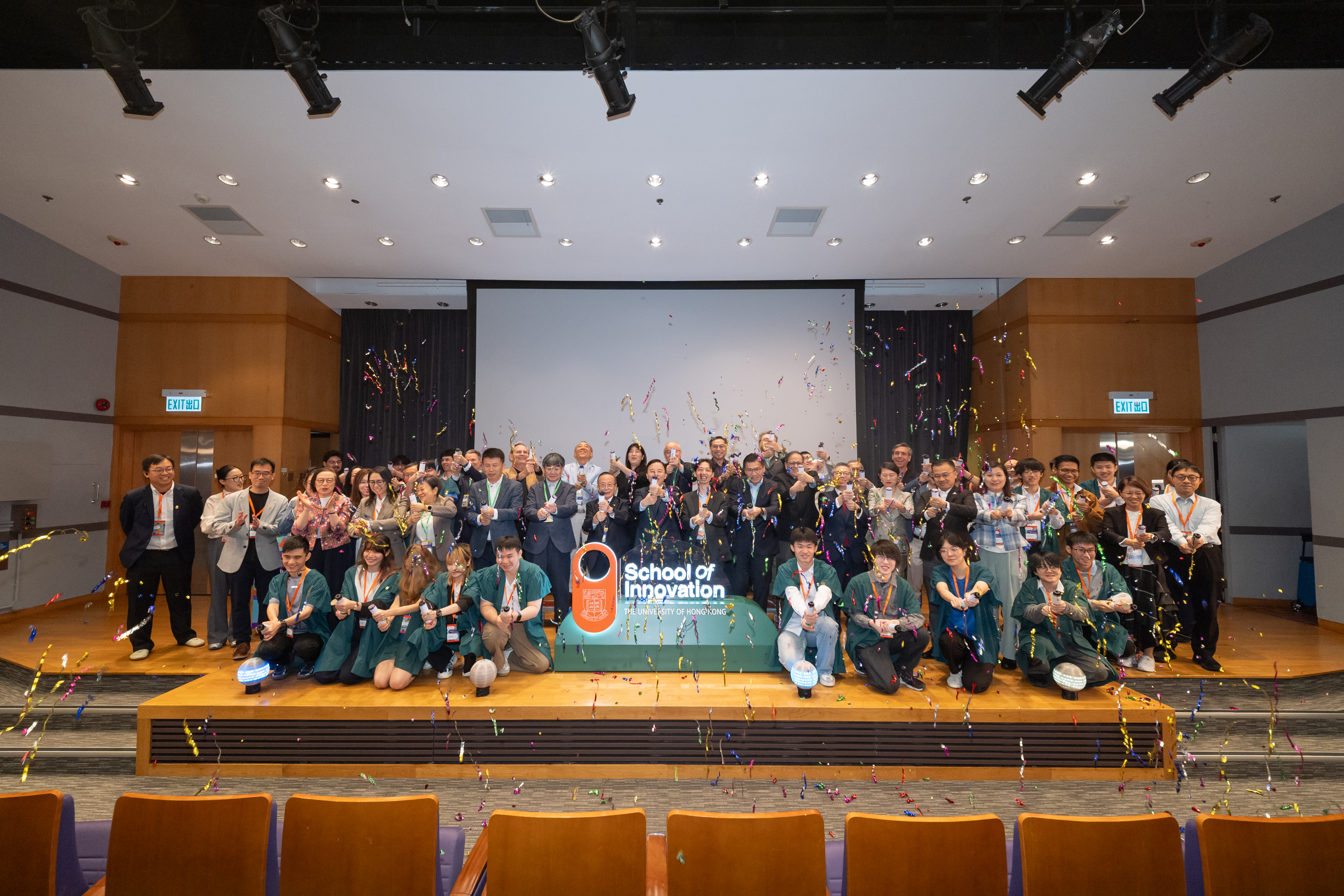
The School of Innovation (I-School) at The University of Hong Kong is launching a new Master of Science in Innovation and Technology (MSc(I&T)) to bridge that gap. Grounded in the school’s mission to cultivate human-centred, interdisciplinary innovators, the programme is designed for technically trained professionals who want to advance their careers, STEM graduates interested in product or strategy roles, and aspiring technology entrepreneurs.
“Launching our programme in 2027 gives us the opportunity to build an AI-native curriculum instead of trying to adapt existing courses,” shares Professor C. Jason Woodard, programme director of the MSc(I&T) and co-director of the I-School. “The MSc(I&T) is designed from the ground up to help professionals use their existing skills as a springboard to explore new roles, build strategic judgement, and accelerate their path to leadership and impact.”
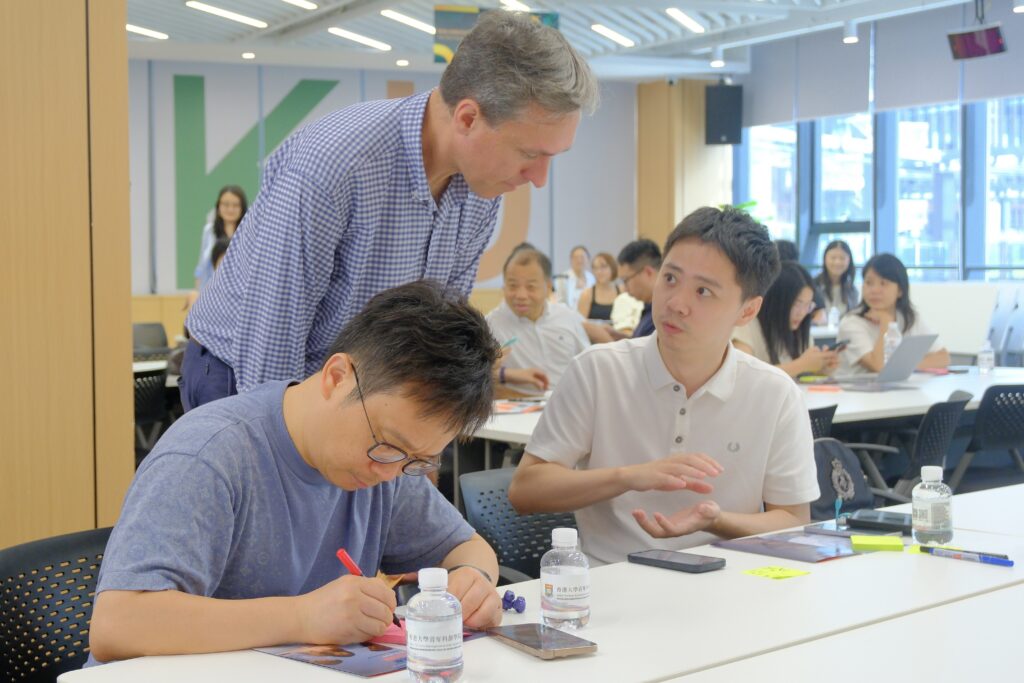
HKU’s MSc(I&T) programme is designed for technically trained professionals, STEM graduates, and aspiring technology entrepreneurs. Source: HKU School of Innovation
Not your traditional MSc degree
There are many ways to fit the MSc(I&T) into your life. You can complete this 60-credit programme full-time in 10 months or choose the 18-month part-time route where you can continue working or build a new venture at the same time. Either way, you’ll gain an interdisciplinary education with courses such as AI-enabled customer discovery and prototyping, data-driven innovation, technology management, and technology policy and social change. “We’re not just training students to go into a particular field; we’re teaching them innovation as a way of problem-solving they can use anywhere,” says Professor Woodard, whose own background includes an interdisciplinary undergraduate degree from Princeton, a joint PhD between business and engineering at Harvard, and work experience at IBM.
What does that look like in the classroom? Human–AI collaboration runs through the courses themselves, not as a separate module but as the medium students work in — including critical attention to the practical and ethical questions posed by the rapid advance of AI technologies. From there you can take your own direction through electives on a wide range of topics, including product innovation and service design, mechatronic system engineering, AI policy design, and smart cities.
Teaching those courses is a faculty team that has done the work itself: building ventures, advising founders, and moving research into products across Hong Kong and the wider Greater Bay Area.
Dr. Chris Zhou, Adjunct Assistant Professor in the I-School and CTO of an AI-driven health care startup, says, “Innovation isn’t just about having a great idea. It’s about translating that idea into something that works in the real world. In the MSc(I&T), students take on a challenge that matters, both to the world and to themselves. It’s something with unmet demand, something they’re deeply passionate about and eager to keep pushing on. That passion drives them to learn what it takes to turn coursework into real-world impact. That’s the kind of translational thinking we’re building into the curriculum.”
That translation is literal in the AI-enabled prototyping course. As Associate Professor of Practice Connie K.W. Lee, an industrial designer and serial founder now building a university spin-off in AI-powered 3D food printing, puts it, “A prototype is an argument you can hold in your hands. AI has made it much faster to build, but it hasn’t made judgement optional — you still have to decide what’s worth making, and for whom. Our students have access to the same tools and resources I use in my own company, and with Shenzhen an hour away, an idea sketched in class can become a physical object practically overnight.”
Build, fail, learn, repeat
Bringing the curriculum together is a year-long capstone experience, where you’ll work individually or in teams on industry-sponsored projects, research-to-impact initiatives, or venture-oriented work. Assistant Professor Zhuoxuan (Fanny) Li, who has taught entrepreneurship at MIT, Stanford, and Yale, says, “This is where it stops being coursework. Students are working on a real problem with real constraints, and they will encounter setbacks repeatedly. What matters is learning from them and deciding what to do next — which successful founders tend to do better than others.”
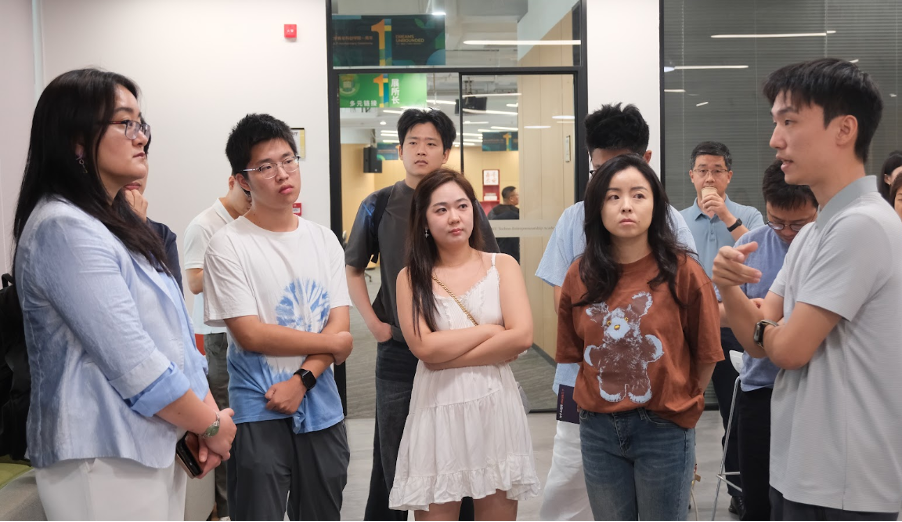
In the year-long capstone, students tackle real industry and venture projects and learn to overcome real-world setbacks. Source: HKU School of Innovation
The timing couldn’t be better. Hong Kong’s first five-year plan, published in September, sets out an ambitious innovation and technology agenda for 2026-2030, with innovation spending targeted to nearly double to 3% of GDP, new investments in advanced manufacturing, and deeper collaboration between industry, academia, and research across the Greater Bay Area. For students, that means being ideally positioned to take advantage of the opportunities in one of the world’s most dynamic innovation ecosystems.
Applications for the January and September 2027 intakes are now open, with expected graduation in June 2028.
Follow the HKU School of Innovation on Instagram, Facebook, and LinkedIn.