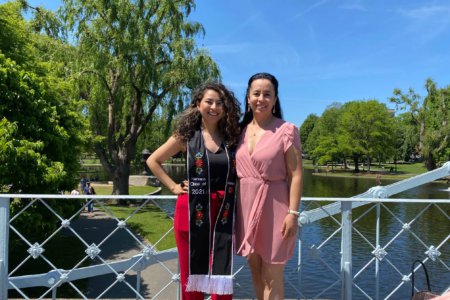





There are 8.2 million first-generation undergraduate students in the US. That’s more than half the percentage of students pursuing a bachelor’s degree over there.
And that’s too many people having to deal with the misconceptions about their background on the daily.
Things like: “They’re probably behind in progress at school,” “Their parents must be uneducated,” or “They’re only in college because of financial aid.”
Tyler Butler — a first-generation college graduate from the suburbs of Chicago, and the oldest child in his family — would stand first in line to debunk these assumptions.
“I am very proud of both of my parents for the things they have done in their lives,” says Butler, whose parents pursued trading and real estate.
“They’re very hardworking people, and just because I’m a first-generation student doesn’t mean they do not have things [similar] to a college experience, or didn’t try at it.”
What does ring true when you’re the first person in your family to go to college is that the starting point is often jammed with 10 times the uncertainty compared to those who aren’t.
While Butler’s parents were always supportive of his higher education, it’s not like he grew up with the word in constant use since neither of them pursued it.
So, come senior year of high school, Butler had no idea what he wanted to do next.
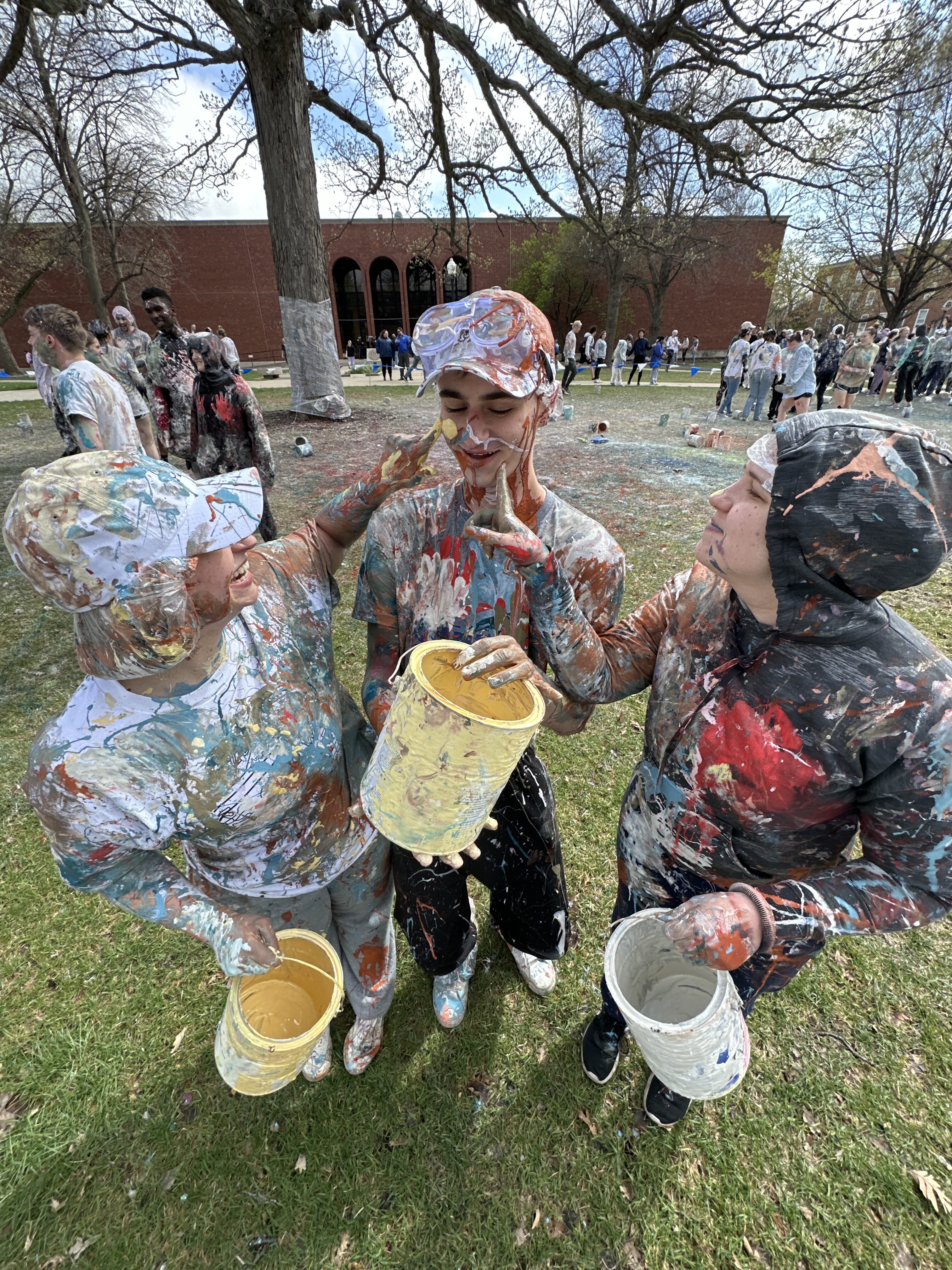
When Butler arrived at Drake University as a freshman, he realised he wasn’t “behind” his peers at all. Source: Tyler Butler
Applying to university as a first-generation student
Butler was “super unmotivated” because no one in his family knew how to apply to university.
“I went to a very small high school outside of Chicago, so we didn’t have much college education [there] either,” he adds.
If there’s one thing he did know, it’s that he was passionate about the environment. He loved the outdoors, and as a kid, he’d get upset if his parents recycled incorrectly.
But he never saw how these interests could be linked to university subject like sustainability.
That is, until the Blue Planet Club in high school.
“There were like five of us in it,” says Butler. “The leader of the organisation — she changed my life. For these three years, after school, once a week, she gave us an education on the environment, which in the rural area of Chicago, was non-existent.”
Being part of a family unfamiliar with higher education isn’t the only hurdle first-gen students face. Some high schools may not provide a “strong college readiness programme” because they don’t have the counsellors, funds, and resources.
Butler’s high school didn’t offer college preparatory courses, limiting his access to learning materials.
Not wanting to sit back and do nothing, he plucked up his courage and took his first step: signing up for many college tours.

Butler became a student ambassador at Drake, where he could show other first-generation college students what they’re capable of. Source: Tyler Butler
How a first-generation students found his stride at university
In 2024, Butler’s mum would be crying on a university campus. These would be tears of pride, for her son would wear his graduation robe and mortar board to collect his double degree in Environmental Sustainability and Resilience, and Management and Organisational Leadership from Drake University.
That moment would mark the four years that had flown by since Butler first toured the campus and discovered the two majors he’d fall in love with — and he was no longer the boy in high school who was a little lost.
“I always felt like I was behind in the standard measure of intelligence, especially in a more rural area,” Butler reflects. “When I got to Drake my freshman year, I really was able to discover that college wasn’t this thing that I was for sure going to fail at.”
Butler’s freshman year alone proved everything he’d ever thought about college wrong. It wasn’t what the movies and TV shows portrayed — the books strewn all over your desk, jam-packed schedules, crazy college parties, and even crazier spring breaks.
Well, his schedule was jam-packed, but it wasn’t just with books and booze.
He found this community in Des Moines, Iowa that never viewed him as “behind” simply because he was a first-generation student, and with the right support, Butler pushed himself to thrive.
Of course, there were days he fell under pressure to perform, to prove himself that he could do this. But the excitement of being able to achieve more far outweighed his woes.
“I was always someone with a lot of possibilities and promises and things that they could bring to the table, and I’m very thankful for that,” says Butler.
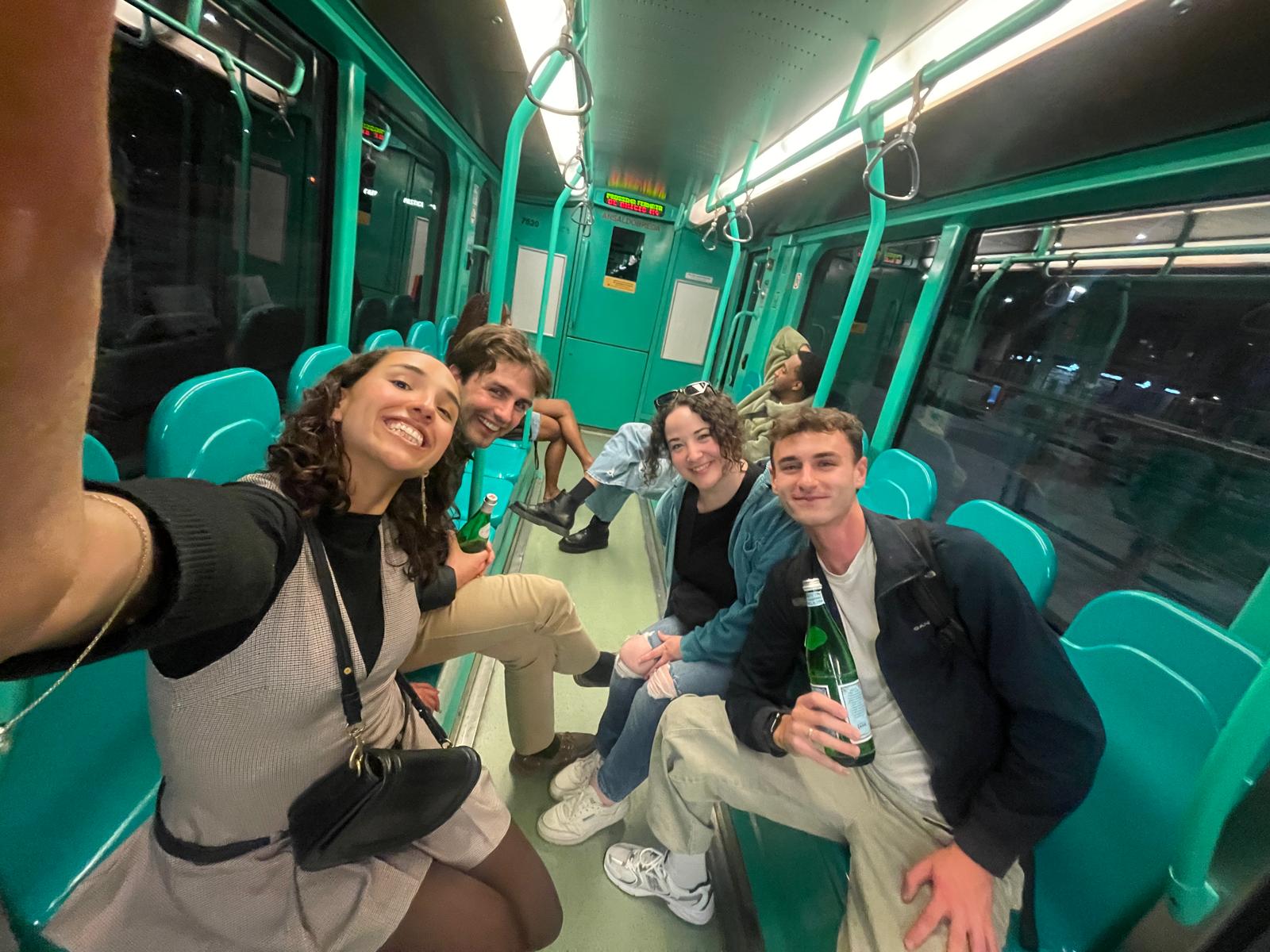
By senior year, Butler had transformed into a confident student who took on every opportunity that came his way. Source: Tyler Butler
By senior year, he served as a residence hall coordinator, managing different staff teams. He’d won multiple awards for his leadership skills, something his old self would never dream of.
He’d also take on a role that would bring his journey full circle: captain of the Student Ambassador Team, which provided tours and panels for incoming students and families.
While that first tour at Drake was a key moment for Butler, he sought to fix one thing about the experience: connecting with first-generation students like him.
“When a first-generation student was here on tour, I could say, ‘That’s my student,’” says Butler. “Because on my tour, there was never any mention of a first-gen student. There was never any relationship or opportunity to connect. So I really think it was something that I would’ve loved — to really reassure people and say, ‘I promise you can do it.’”
‘Cause if there’s anything Butler’s story reminds us, it’s that first-generation students are amass with potential, just as much as those with degree-holding parents. It’s a matter of giving them the support and opportunity to shine in their own shoes.
When Butler crossed the stage at graduation, it was overwhelming not just for him, but also for his parents — his mother teared up watching her son conquer uncertainty with a degree.
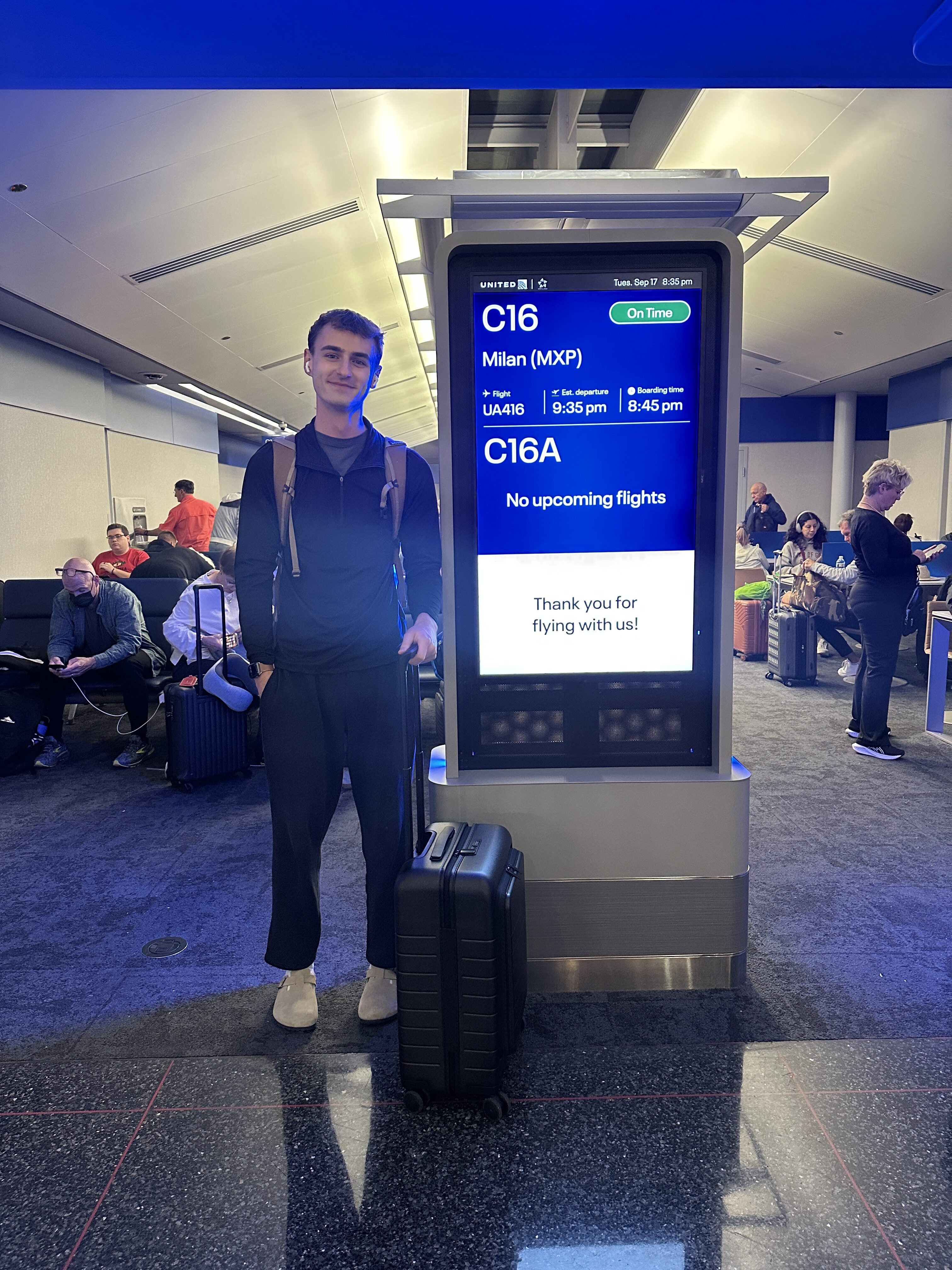
Nerves started to kick in just as Butler was about to move to Italy for his MBA, but just like his high school self, he’d conquer the feeling too. Source: Tyler Butler
Step out of Des Moines, into Milan
If Butler hadn’t felt quite ready to enter college itself in high school, then he definitely wouldn’t have been ready for the leap he took after graduating from college: moving to Milan, Italy, to pursue an MBA at the Sustainability Management School (SUMAS).
“Just before graduation, I decided that I wanted something different, something crazy,” says Butler — and Milan certainly was.
For the first time ever, he had to face the anxiety of getting a visa appointment only 10 days before he was set to fly. He didn’t realise he’d be walking into such a cosmopolitan city, far more diverse than Des Moines. He wasn’t expecting to be surrounded by a tight-knit community of international students, many of whom were much older and experienced in the industry, either.
At the airport, just before his flight to Italy, the weight of his decision hit.

As an MBA student at SUMAS, Butler dove into practical opportunities on a much larger scale than in his undergrad. Source: Tyler Butler
“I’m like, ‘oh my god, what am I doing?’ I have three suitcases and no flight back. I have prepaid tuition for a year,” he says. “I FaceTimed one of my closest friends, and I remember her telling me, ‘the worst thing that can happen is you book a flight home.’”
But Butler isn’t a stranger to the unknown.
He would never end up booking that flight back home. A year since the day he stepped foot in his loft apartment in Milan, Butler is about to graduate with an MBA in sustainability management. He was immersed in consulting projects with the university sponsors, and even created a 100-page report for one of the biggest hospitality groups in the world.
“I think for every big jump in my life, I’ve always thought that I wasn’t ready — I was never ready to go to Drake, I was never ready to move across the ocean, and I’m never going to be ready for what comes next,” says Butler. “You have to make yourself be uncomfortable, and be crazy. You need to push boundaries and the barriers in your way, and really just go for it.”
Popular stories
Beyond the boundary: These are India’s most educated cricket players

EXO Kai’s LACOSTE era is serving elite energy — like the study history of past, present EXO members

History and … Public Health? The surprising education of the cast of ‘Scream 7’

Elite and exclusive: Universities with the toughest admissions criteria