



When it came time for Sanjeeva Suresh to choose what to study, he had a good, long conversation with his number one supporter: his mum.
It went like this: First, they looked at his high school results. Then, they cross-referenced that with his interests.
Suresh had always done well for his art and language subjects, but not so much in the sciences. At the same time, he was interested in journalism and adored fashion.
So, his mum put two and two together and said: “Why not just do fashion journalism?”
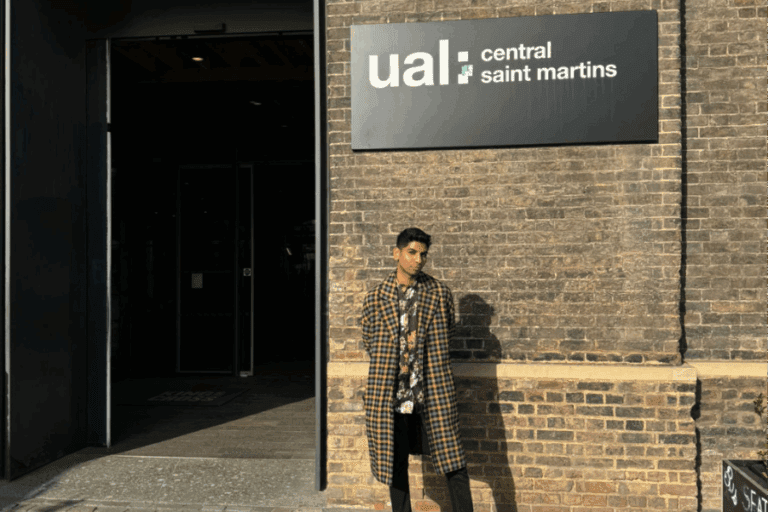
That one question led him to pursue just that at the dream UK school for any fashion lover: Central Saint Martins at University of the Arts London.
Choosing whether to be a specialist or a generalist
It was an interesting proposal, especially from a parent. Fashion journalism isn’t exactly the most conventional degree — it’s rather niche, after all, and not in the way that rocket science is niche.
“My mum was able to say, look, you clearly like fashion because you look at all these fashion shows on TV,” he says. “My mum also had the wherewithal to be like, you don’t really want to go into literature. You don’t want to go into something so technical. You don’t want to go do a degree in English. So why not do something that’s a bit more creative?”
But why not do something a bit broader, like broadcast or print journalism? Isn’t fashion a bit too specific? Those were questions that Suresh wondered about with his mum, too. His mum was a journalist herself, working for The Straits Times, so she had a level of knowledge about the field. Given that, they decided that with journalism being such an open-ended field, it might be a better idea to specialise.
“The whole idea was, you don’t have to do a journalism degree to enter journalism anyway, but if you want to enter journalism, you should do it from a niche perspective because you can take those same rules that you learn and you can apply them across different platforms,” he says.
Of course, things have changed now. More than ever, Suresh believes that journalism in 2025 truly is an industry that anyone can enter.
“What I will say is that a degree gives you a super strong leg up. It really, really helps you with the level of knowledge, with the level of expertise, and you kind of hit the ground running a lot sooner than you would have, if you came from a different community,” he says.
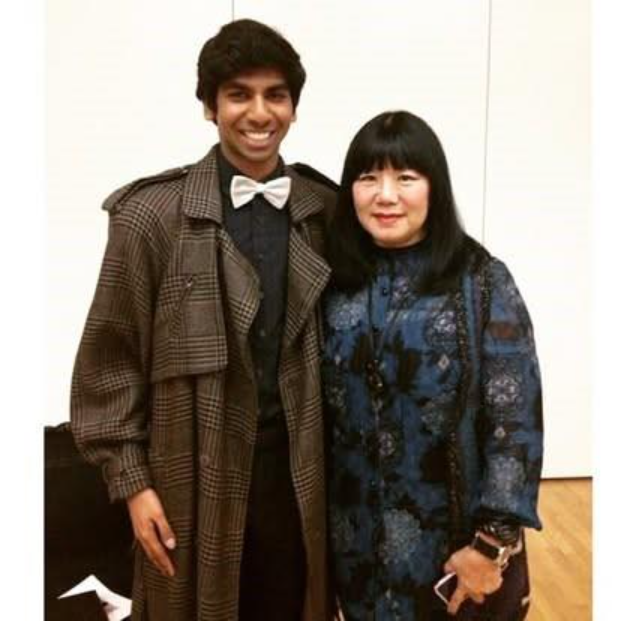
Suresh posing with American fashion designer Anna Sui. Source: Sanjeeva Suresh
It’s about studying at the best place
Choosing to study in London wasn’t just about studying abroad for studying abroad’s sake — it was about picking the best spot to study fashion journalism.
As Suresh’s mother said, “If you’re doing such a niche course, you might as well look for the best universities to do it.”
If we’re talking fashion journalism, then a city would probably be the best spot.
“In my opinion, it doesn’t make sense if you do it in a non-fashion capital,” Suresh says.
So ultimately, after some Googling, Suresh landed on the Central Saint Martins College of Art, a world-renowned arts and design college.
“Being in such a reputable university like that really helped because you get really good contacts and you get to have opportunities to really explore different levels of creative freedom,” Suresh says.
What does a fashion journalism degree teach?
Studying in London, Suresh would get the opportunity to hear straight from industry bigwigs, like designers from Dolce and Gabbana and even Vivian Westwood herself — though those were typically just short talks. There would also be these tutorials hosted with people from the industry as well, such as reputable London journalists.
Then, there was London Fashion Week itself. It swept Suresh away.
“I got very caught up in the celebrity-ness, like being in the front row and all these things as opposed to fully sitting down, appreciating the clothes, and writing the articles,” he admits. “Fashion Week in London was incredibly chaotic for a Johorian Malaysian boy that’s never been exposed to anything like that.”
Aside from the glitz and the glam, he also gained a lot of knowledge from his classes. There were lectures that covered cultural studies, and ones that taught him research and even sociology.
Fashion history was a big part of the courses too, and with Saint Martins being a notable school, they had archives of old Alexander McQueen pieces from when he was in the university itself.
“We got to touch the clothes with gloves and feel Alexander McQueen’s college-level dresses that he made,” he recollects.
To write about things like these is to really interpret and describe fashion. Cut, colour, and silhouette are surface-level information. Fashion journalism is about finding a story, weaving a narrative, and understanding what it really is that you want your piece to say.
“It’s like pushing the conversation further from what the press release has said,” he says.

Suresh posing with his classmates. Source: Sanjeeva Suresh
Is it a good idea to study a niche subject?
Going niche with a fashion journalism degree back in 2014 might’ve been a pretty good idea. But now, with anyone being able to “report” on fashion with just a phone, pursuing such a subject seems more and more like a question mark.
With that in mind, Sanjeeva believes that deciding whether or not to pursue fashion journalism requires nuanced consideration.
“You really need to do such a deep level of research into understanding what you’re actually going to get from the course,” he says.
Nowadays, fashion journalism as an industry is focused on all things social media and digital. Is the degree focusing on those aspects of the work? Are those things you can pick up on your own? Do you really need a degree to develop that know-how?
“So I would say, if you want to do fashion journalism, really [do your] research, go find out what the prospectus is like, what are your potential core subjects, what are you actually gonna take away from it,” he says.
In other words, you need to make sure that the skills that you learn from any given university are things you can only learn from a university. Because you can be a good writer and break into the industry that way. You could have a good eye for social media and get a job through that, too.
The articles that perform now are very “snapshot” things, as Suresh puts it. It’s not about the history of fashion from Egypt to Greece or something of that sort.
“If you want to do it, you can just apply to be an intern, apply to be a writer and then you can kind of just learn as you go,” he admits. “But that being said, in any industry, getting a degree in it or a master’s or diploma, it just gives you that leg up.”