




Having interviewed numerous entrepreneurs, there’s been one question that always seems to get varying answers: should you get an MBA? Does it even matter?
And, well, the answer is always going to vary because it’s a subjective question.
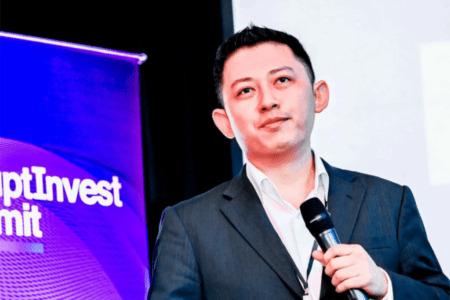
But for entrepreneurs who are considering going down this path, here’s what Ben Lim, the founder of NEXEA, a venture capital and startup accelerator firm, believes.
Oh, and mind you, Lim himself does have an MBA.

Ben Lim co‐founded NEXEA in 2015 with the mission to build a hybrid venture fund and accelerator that prioritises founders’ success. Source: Ben Lim
What’s an MBA really about?
An MBA, or Master’s of Business Administration, is a relatively popular course offered by most major institutions. Most MBAs cover a comprehensive set of business fundamentals, leadership, and strategic thinking skills. They typically touch on core areas like accounting, finance, marketing, operations, and strategy, alongside vital soft skills such as communication, critical thinking, teamwork, and decision-making, preparing graduates for senior management and diverse leadership roles.
Lim admits, though, that pretty much everything an MBA teaches has is now on the internet.
But to him, an MBA is like an accelerator programme. It helps you learn core business lessons in just a year or two.
Sure, you can figure it out by yourself, but pursuing an MBA is almost like insurance for entrepreneurship. An MBA still has a place and value in today’s world.
“It does cost quite a bit but it will pay for itself,” Lim says.
Does getting an MBA matter to investors?
For many, an MBA still represents credibility. It’s almost like a stamp of approval that this person has done the work to understand business.
According to Lim, if an investor or employer had to pick a candidate from a lineup of people with relatively equal ability, they might pick the one with the MBA.
“An MBA sort of says that this person has a compass of how to solve business problems. That’s what an MBA really gives you,” Lim says.
This may be particularly helpful for those working in major corporations, or in upper management for smaller businesses. But for entrepreneurs, it can honestly be something honed by doing, Still, it’s a plus to undergo a tried-and-tested curriculum, taught by vetted professionals, and accredited by legitimate institutions.
That’s why to Lim, the MBA certiicatecertificate still kind of matters — but it’s not the biggest factor. But as an investor, the three things that truly matters is are the entrepreneur’s grit, drive, and problem-solving skills.
A lot of times, these are innate traits of a person that can sometimes be honed. And getting an MBA helps do just that.
“It can’t help with everything, but where the MBA really helps with an entrepreneur is in the longer term,” he says. “For entrepreneurs, an MBA helps in the sense that entrepreneurs have to solve so many problems. And to have the right idea of which direction to go. The MBA gives you that map and compass. It’ll tell you roughly that this area is where you should look, and what you should do next effectively.”
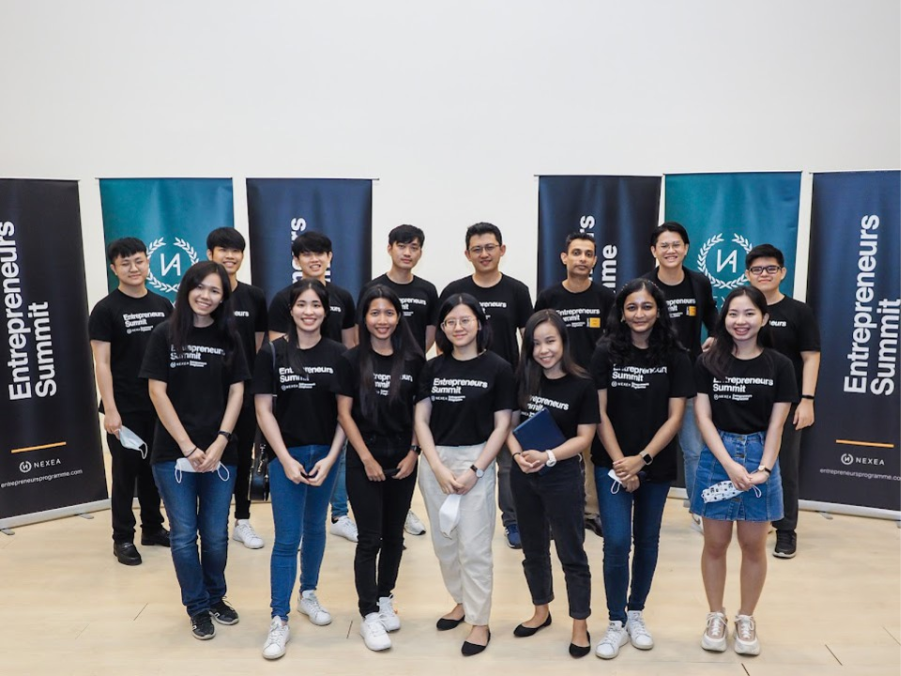
A venture capital firm is an investment management company that raises pooled funds from investors (limited partners) to provide equity financing to startups. Source: NEXEA
Is an MBA worth it for the network it fosters?
Many entrepreneurs also believe that an MBA is worthwhile as it puts you in direct contact with peers, who may even be potential partners, investors, or clients. Some do use MBAs as an opportune time to fundraise and further the business
While Lim didn’t treat his MBA like a levelled-up LinkedIn, he does see why people do. He believes that those serious about doing an MBA to grow their network, though, should focus on growing their networking skills first before they jump straight in. It’s also critical to be clear about the exact network you need, and what you will use that network for.
Should you do your MBA abroad?
When scheduling an interview with Lim, he shared that he had some thoughts about the entrepreneurs who studied abroad versus those who studied locally. Meeting up in person, I asked him what those thoughts involved.
To that, he said: “It does not matter.”
On the surface, it’s true that studying abroad is not going to overhaul a person’s identity or affect one’s innate abilities. Entrepreneurial people will still be able to build a business regardless of where they study — or if they even did at all.
That said, if the work has anything to do with international relations, studying abroad will also help you understand different cultures better, and perhaps save you the experience of culture shock in the workplace. Lim admits, though, that intense “culture shock” is going away thanks to the highly globalised social media anyway.

Lim himself is an entrepreneur who bootstrapped through six tough years. Source: Ben Lim
Where should you get an MBA, then?
Lim also doesn’t think that going into fancy universities matters at all.
“In my ten years doing this, I see that [studying at prestigious universities] has absolutely no bearing over the success of an entrepreneur,” he says.
Cross-referencing Ivy League graduates with great entrepreneurs, Lim says there’s not actually much overlap. The best entrepreneurs truly come from anywhere. Those who went to famous institutions might end up taking on C-suite roles and develop high-paying careers in corporations, but entrepreneurship is a different ball game.
According to him, there are entrepreneurs in his portfolio making half a billion ringgit a year, or perhaps even more, that all came from various universities — universities you’ve probably never heard of.
“But a number of them may have MBAs,” he says. “Again, that helps in the longer term. Entrepreneurs that are serious and want to have an edge in the longer term as well, I think an MBA really helps. But it doesn’t really matter where you get the MBA from. The formula of an MBA is pretty much the same.”
Lim says that it’s more valuable to look for a university with a cohort of students who are “hungry,” rather than looking for a prestigious name.




You might like