



In a world with auto-correct, Google, and apps like Grammarly, spelling matters less than it used to. But difficult English words still trip people up — and a misspelt word on a resume, proposal, or school assignment can make you look less professional.
Part of the problem is that English spelling is inconsistent. Words often sound nothing like what they look like. Take “colonel,” pronounced “kernel,” or “aisle,” where the “a” is silent. Other words include “kindergarten,” where the “t” is suddenly replaced by a “d,” “subtle,” where it’s pronounced “suh-tuhl.”
It goes the other way too; when a word isn’t spelt how it’s pronounced.
Many Reddit users have voiced how they misspell “maintenance” as “maintainence,” simply because of how it’s pronounced. “Recommend” is another — this Reddit user humorously says, “Reccomend, reccommend, recomend…. ugh. It’s a regular ocurrence, and I’m rarely sucesful. Double letters are dificcult.”
English is also often described as a “borrowed” language because it has borrowed words from a wide variety of other languages over its history. In fact, it comprises 80% borrowed words from about 350 languages worldwide. As a result, a significant portion of English vocabulary comes from other languages.
Here are some borrowed words in English:
- Latin: audio, alma mater, bona fide
- French: adieu, fiancé, bon voyage
- Spanish: siesta, jalapeño, tango
- Italian: soprano, mozzarella, villa
- Arabic: sofa, saffron, tariff
Top 10 most misspelled words
- Entrepreneur
- Mischievous
- Miscellaneous
- Bureaucracy
- Conscientious
- Connoisseur
- Onomatopoeia
- Nauseous
- Massachusetts
- Playwright
TL;DR? Here’s the summary:
- This article explores difficult English spellings, why they are confusing, and examples across other languages.
- English spelling is irregular, with silent letters and mismatched pronunciation.
- Many tricky words come from borrowed languages like French and Latin.
Difficult words to spell in other languages
Difficult words to spell are not limited to just the English language — every language has its own. Here are some examples:
- French: “hippopotomonstrosesquippedaliophobie,” which means the fear of long words.
- German: “rindfleischetikettierungsüberwachungsaufgabenübertragungsgesetz,” which is a law related to the labelling of beef.
- Spanish: “esternocleidomastoideo,” which refers to a muscle in the neck.
- Italian: “precipitevolissimevolmente,” which means “very rapidly.”
- Welsh: “llanfairpwllgwyngyllgogerychwyrndrobwllllantysiliogogogoch,” which is a village in North Wales, famous for having the longest place name in Europe.
Many of the most difficult words to spell in English can be so confusing that even professors struggle with them due to their irregularities, complex origins, or infrequent usage.
21 most difficult words to spell in English

An otorhinolaryngologist is a doctor who deals with disorders related to the ears, nose and throat.
1. Otorhinolaryngologist
Medical terms are among the most difficult words to pronounce and spell.
One word that is commonly misspelt is “otorhinolaryngologist.” The only way to pronounce this word correctly is by breaking it down.
An otorhinolaryngologist is a medical specialist who diagnoses and treats disorders of the ears, nose, and throat (ENT).
Otorhinolaryngologists are crucial in managing common ear infections to complex throat disorders.
Just as these professionals navigate intricate anatomical systems, accurately spelling the term showcases an individual’s attention to detail and linguistic skills.
What adds to its complexity? Apart from the silent “h” and the unconventional use of the consonant “y,” the word has 21 letters and nine syllables.
2. Hors d’oeuvre
You might think we’re cheating by putting the word “hors d’oeuvre” on this list, but it really is an English word, even if it was borrowed from French. In its original form, the French “hors d’œuvre” literally means “outside the work,” and is taken to mean “not part of the ordinary set of courses in a meal.”
A hors d’oeuvre is an appetiser or starter served before a meal in European cuisine. Think of your classic deviled eggs, spring rolls, or skewers — those are hors d’oeuvres.
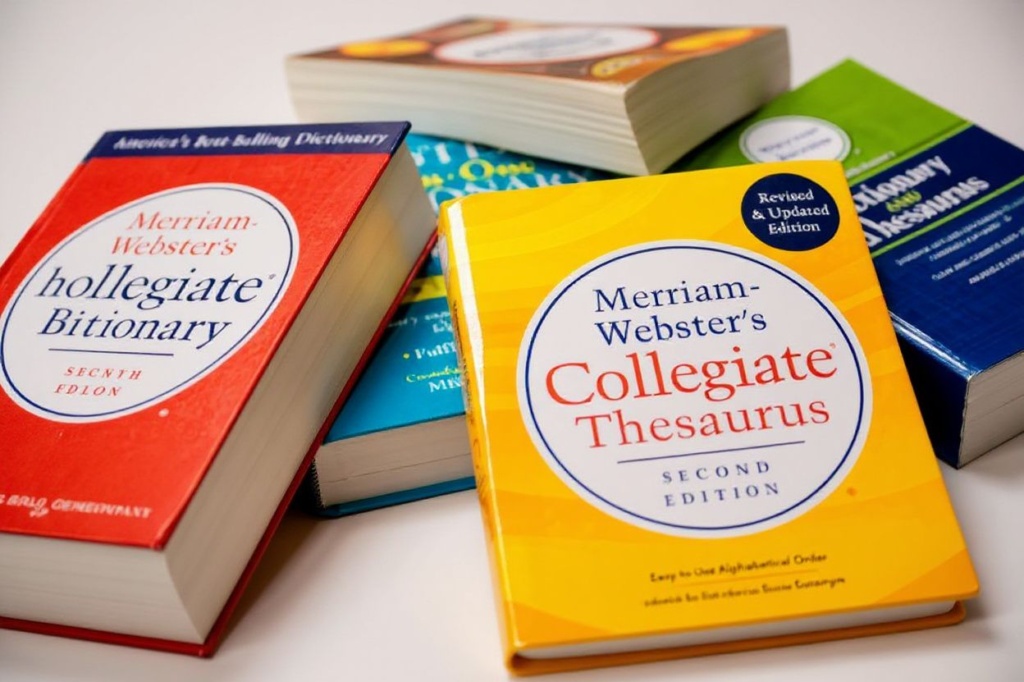
Physical dictionaries and thesauruses might be a thing of the past.
3. Conscientious
Conscientious has two meanings. Its first meaning refers to someone who works thoroughly, and the second relates to someone’s conscience.
The difficulty in spelling this word comes from the arrangement of vowels in the middle and at the end of the word.
“Conscientious” is difficult to spell due to its combination of letters and sounds. It has an uncommon sequence of syllables and a variety of consonant combinations rarely seen in English.
The silent “i” in the middle, sandwiched between two syllables with distinct vowel sounds, adds complexity.
The length and infrequent use of the word also contribute to the challenge of spelling it.
4. Manoeuvre
Manoeuvre refers to a movement that needs skill and care. An example of using the word is: Reversing around a corner is a manoeuvre required to pass a driving test.
The spelling varies by region: “manoeuvre” is used in the UK and Canada, while “maneuver” is the US spelling.
“Manoeuvre” is often considered one of the most difficult words to spell in English. The presence of silent letters, like the ‘e’ after ‘u’ and the ‘v’ in the middle, can confuse spellers.
The word sounds different from ‘spelt’, making it harder to remember the correct letter arrangement.
Its French roots also contribute to its irregular spelling patterns compared to standard English.
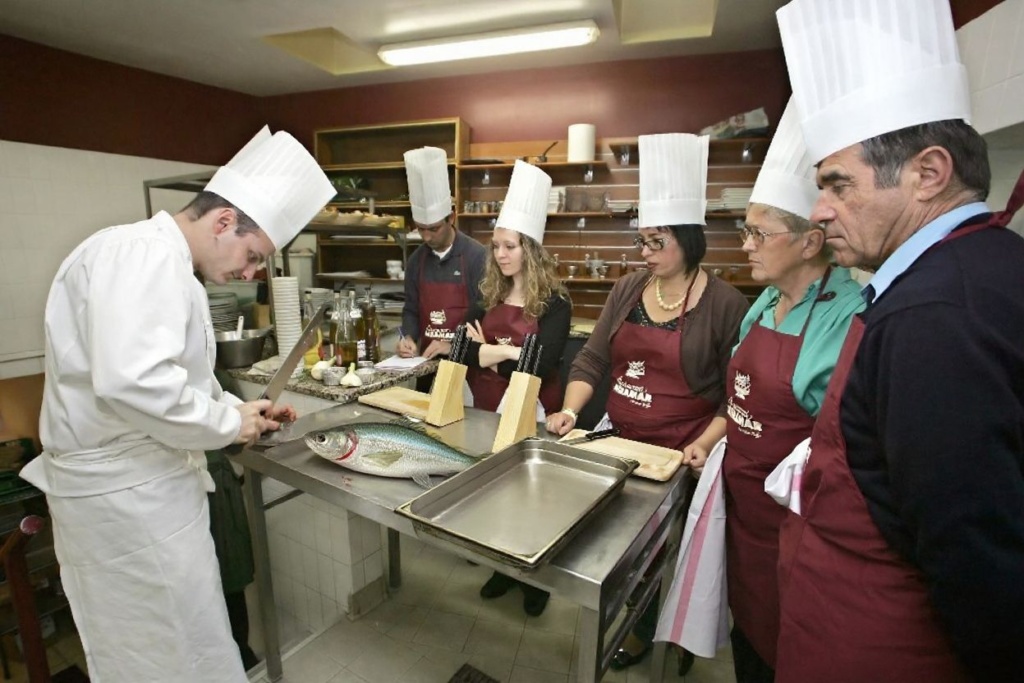
Bouillabaisse is a fish stew that originates from France.
5. Bouillabaisse
“Bouillabaisse” is a traditional fish stew from the port city of Marseille in France. It combines fish, shellfish, and aromatic herbs with a tomato-based broth, resulting in a rich, aromatic dish.
Many, however, avoid ordering it as pronouncing “bouillabaisse” is challenging.
Much of this has to do with its unique combination of letters and its French origin. Since the pronunciation does not align with its spelling, it makes things complicated.
6. Playwright
It is no surprise that “playwright” is one of the most difficult words to spell, especially since its pronunciation does not follow its spelling.
A playwright is an artist who creates written works for the theatre, including plays and scripts.
Playwrights can uniquely capture human emotions and societal themes, making them essential contributors to dramatic arts.
When pronounced, the word sounds like “playwrite,” and many tend to spell it as “write” instead of “wright.”
“Wright” is defined as a maker or builder.
However, the word is more commonly used as a second element, for example, in playwright, shipwright or wheelwright.
7. Bureaucracy
The term “bureaucracy” refers to an administrative system characterised by hierarchical structures, rules, and regulations that govern the functioning of organisations or government entities.
The pronunciation of “bureaucracy” doesn’t align with its spelling, leading to confusion. It is difficult to spell, and many turn to Google to search for the spelling.
This word contains letter combinations not commonly found in other English words. While the “eau” sound is unusual, it’s also found in the word “beauty.”
8. Connoisseur
A connoisseur is someone knowledgeable and with expert taste in many areas, including fine arts, food, or other cultural pursuits.
Connoisseurs have honed their skills through years of study and experience, allowing them to distinguish and evaluate the highest quality within their chosen domain.
However, before you can call yourself a connoisseur, ensure you spell the word correctly.
It comes from the French word “connaitre,” meaning “to know,” emphasising the knowledgeable aspect of the word.
The word contains silent letters, which can be confusing for English speakers. In “connoisseur,” the “n” and “s” are silent, which can make it challenging to spell.

Bill Gates is one of the most well known entreprenuers in the world.
9. Entrepreneur
While “entrepreneur” is such a common word, many still struggle to spell it.
Data collected based on Google searches found that 1,600 Americans search the spelling of “entrepreneur” each month, making this one of the most difficult words to spell.
An entrepreneur operates and manages a business, often taking on financial risks in the process.
Originally a French word, the spelling can challenge even the most experienced English speakers.
Since it starts with an ah sound, you may think it includes an “a” and confuse the spelling. While this word does have many vowels, “a” is not one of them.
10. Gobbledygook
“Gobbledygook” is a term used to describe meaningless or nonsensical language that often consists of long, complex, or confusing words and phrases that are difficult to understand.
Usually, it’s used to criticise writing or speech that is convoluted, unclear, or intentionally written to sound impressive without conveying any real meaning.
That said, the word “gobbledygook” is long and difficult to spell.
Breaking down the word into smaller chunks like “go-bble-dee-gook” to learn the right spellings might make it easier to spell.
@gordonramsayofficial How do you probounce Worcestershire Sauce ?? I think @salt hank figured out the best way on @Idiot Sandwich ♬ original sound – Gordon Ramsay
11. Worcester
Worcester is commonly known through Worcestershire sauce, a well-known condiment used in cooking.
Pronounced “wuss-terr,” it is widely misread due to its spelling.
The sauce is made from ingredients such as vinegar, molasses, onions, garlic, and anchovies, and is often used to enhance savoury dishes like stews.
If you’re an international student in the UK, there’s a county near Birmingham named Worcestershire (pronounced as “wuss-terr-shuh” and not “wor-cester-shire” unfortunately). For those in the US, Massachusetts has a city called Worcester for you to check out.
12. Laissez-faire
Originating from French, laissez-faire has two meanings — both of which imply “allow to do.”
First, it can be defined as an economic theory or plan in which a government has few laws or rules governing the buying and selling of goods and services. Second, it can mean an unwillingness to get involved in or influence other people’s activities.
As with the other French words in this list, laissez-faire is one of the more difficult words to spell, especially if you consider its pronunciation “LAY-zay fair.”
13. Mischievous
The word mischievous means playful in a way that causes minor trouble, harm, or annoyance, often without serious intent.
It comes from the Old French meschever, meaning “to come to grief” or “to mis-carry out.”
While it seems easy to spell, many people misspell it as “mischievious” because they tend to add an extra syllable (“-ee-vee-”) when pronouncing it.
This confusion is what makes it one of the most difficult words to spell in English.
14. Onomatopoeia
Onomatopoeia refers to words that imitate natural sounds, such as buzz, bang, or sizzle.
It comes from the Greek words onoma (name) and poiein (to make), literally meaning “the making of a name or word.”
It is known to be one of the most difficult words to spell in English because of how long it is, its unusual sequence of vowels, and the fact that it doesn’t sound like it looks. It is commonly misspelt as “onomatopia.”
15. Massachusetts
Massachusetts is the name of a US state. It comes from the Algonquin language, meaning “at or about the great hill” or “large hill place,” specifically referring to the Great Blue Hill.
Its unusual sequence of double letters (ss, tt) and the mix of -chu- and -setts, which don’t follow typical English phonetic rules, makes it one of the most difficult words to spell — even people from Massachusetts struggle to spell it.
16. Miscellaneous
The word miscellaneous is one of the most difficult words to spell. Especially because it contains several syllables and an unusual letter sequence.
Many assume it is spelt similarly to mischievous and mistakenly write it as “miscellanious,” “miscellanous,” or “miscellanious.”
Because the word is not used frequently in everyday conversation, people rely on how it sounds rather than how it is written.
17. Bourgeoisie
Bourgeoisie is one of the most difficult English words to spell because it originates from French and keeps its original spelling.
You’ll see many spelling it as “bourgoisie,” “bourgoisie,” or “bourgeosie”. The combination of vowels and the placement of “s,” “o,” and “i” can be confusing.

Nauseous is a tricky word to spell because the “sh” sound in the middle isn’t spelt with the letters -sh-. Source: Pexels
18. Nauseous
The word nauseous is often misspelt because of its vowel combination and pronunciation.
Common misspellings include “naucious,” “nauseus,” and “naseous.”
19. Diarrhoea
Diarrhoea is considered one of the hardest common medical words to spell in English.
You’ll see it commonly spelt as “diarhea,” “diarreah,” or “diarrhoea.” The confusion also comes because it is spelt as diarrhea in American English, while in British English, an “o” is added.
20. Rendezvous
The word rendezvous is difficult to spell because it is another word borrowed from French that does not follow typical English spelling patterns.
The silent letters and unusual ending make it tricky. Although it is pronounced like “ron-day-voo,” the spelling has several letters that are not pronounced.

People misspell gnocchi because its Italian spelling has a silent “G” and double consonants, which conflict with English phonics. Source: Pexels
21. Gnocchi
Gnocchi is on the list of difficult words to spell because its Italian spelling looks unfamiliar to many English speakers.
The challenge is in the silent-sounding “g” at the beginning and the unusual “cch” combination in the middle.
People often spell it based on pronunciation, which sounds closer to “nyo-kee”.
At a glance: 15 most difficult words to spell
| Word | Why it is difficult to spell |
| Otorhinolaryngologist | Extremely long, many syllables |
| Hors d’oeuvre | Spelling doesn’t match pronunciation |
| Conscientious | Irregular vowel/consonant pattern |
| Manoeuvre | Silent letters, French origin |
| Bouillabaisse | Unphonetic spelling |
| Bureaucracy | Unusual vowel combinations |
| Playwright | Confusing “wright” vs “write” |
| Connoisseur | Silent letters, French origin |
| Entrepreneur | Irregular vowels, French origin |
| Gobbledygook | Long, repetitive structure |
| Worcester | Pronounced very differently from spelling |
| Laissez-faire | French spelling vs English pronunciation |
| Mischievous | Common pronunciation/spelling error |
| Onomatopoeia | Complex vowel sequence |
| Massachusetts | Irregular double letters and phonetic mismatch |
| Miscellaneous | Inconsistent pronunciation, confusing vowel order |
| Bourgeoisie | Silent letters, “eoi” unnatural in English |
| Nauseous | Common pronunciation/spelling error |
| Diarrhoea | Phonetic mismatch, double “r”, silent “h” |
| Rendezvous | Doesn’t follow English phonetic rules, silent “z” and “s” |
| Gnocchi | Starts with a silent “g,” “-cchi” creates a hard “k” sound |
Disclaimer: This article was last updated on June 24, 2026