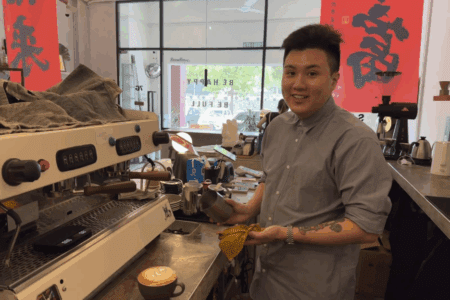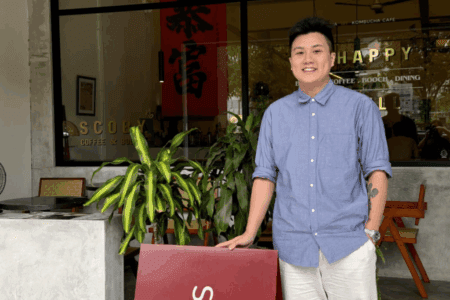




“I have never wanted to be a chef.”
Lee Zi Yan, one of the co-founders behind Malaysian cafe Provisions, knew that she didn’t have the chops to work in the kitchen.
Yet, she was interested in working in the F&B world, which is why she opted for culinary management instead.
When she told her parents that she wanted to pursue such a career, they were quick to say no. Being typical Asian parents, they wanted her to go down a more stable, white-collar path. But Lee persisted, believing in her abilities.
And thank goodness she did, as it was in William Angliss Institute in Melbourne that she met her fellow co-founders. The three culinary management graduates now run Provisions as well as a 16-seater restaurant nearby called Locus.
Their chosen path certainly seems to have worked out for the trio, but what does culinary management even teach? Some might wonder: do you really need to study culinary management to work in F&B?
View this post on Instagram
From McDonalds to Park Hyatt: Gaining experience is key
Unlike culinary arts, culinary management is a specialist degree that combines the technical aspects of working in a commercial kitchen with business and management skills. It does touch on the fundamentals of “cookery,” but it also covers human resource management, leadership, innovation, strategy and more.
The curriculum involves hands-on placements, too, leaving students with practical experiences to kickstart their working life.
Lee recalls that in one of her earlier classes, a professor had addressed the lecture hall, asking for a show of hands from everyone who has work experience. Everyone raised their hands – except for Lee.
That moment made her realise: She needed to find a job.
Her first job is one that perhaps not everyone would want to do — a gig at Maccas, or McDonald’s as most of us say it. But Lee heard that it was a good first job that would teach you everything you might need.
“There are different managers, you have three or four different managers. From there, I learnt very different leadership styles, and I got to know what leadership I’m more comfortable with. I can’t work under an autocrat, and some managers are bureaucratic,” she says. “From there, I told myself, Ziyan, next time when you’re a leader, please don’t be that.”
She went on to work for other F&B companies before then joining the hospitality world through a role at Park Hyatt – the global hotel brand that is considered a top-tier, luxury five-star property.
Now that was eye-opening, and for a while, she believed she would continue working in hotels.
But as Lee’s visa was coming to an end, she would be required to pursue a master’s to continue staying in Australia. Lee decided to head home instead – a move she has zero regrets about today.
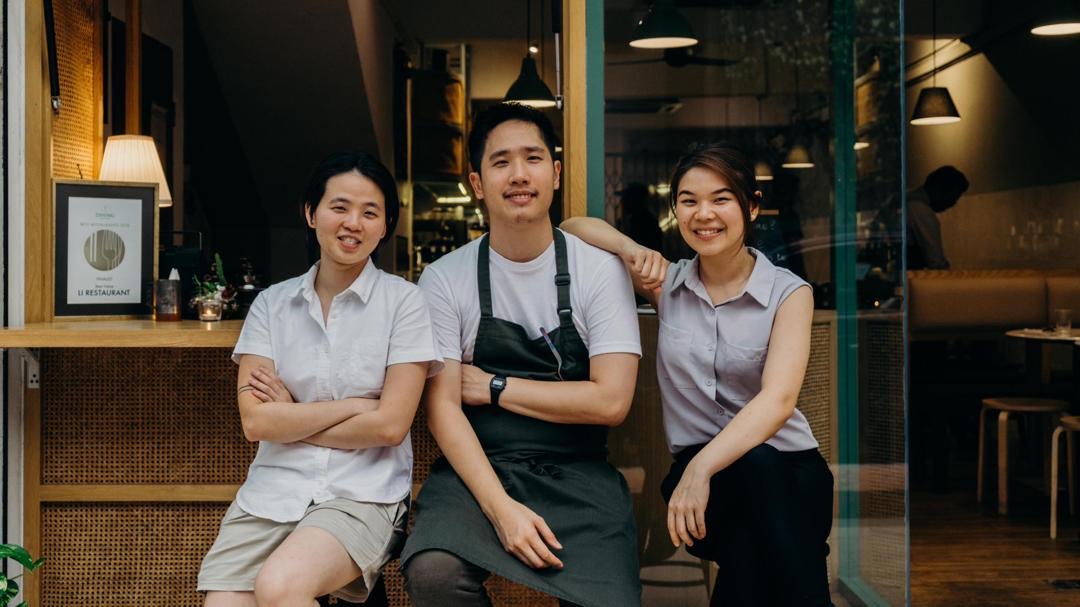
(From left) Lim Yee Rui, Lim Heng Kit, and Lee Ziyan, the co-founders behind Provisions. Source: Provisions
Do you need to study culinary management to work in F&B?
Today, all sorts of people start F&B brands. Sure, there are those such as Yew Shih Sheng, who also studied in William Angliss, that went on to sell doughnuts. But there are also those who have all sorts of backgrounds – such as Desmond Ng from Big Boss HSP who studied accounting and finance or cafe owner Chester Yong who studied finance and management — who went on to pivot into the industry.
That begs the question: Is it even worth studying culinary management (or related fields)?
“I always thought, what if I studied marketing? It would be super beneficial for my current business right now,” Lee mused. “And I do ponder, what does hospitality provide? Because it doesn’t provide instant results, but marketing does.”
Of course, practical skills do matter in an F&B brand – it matters quite a lot. That’s where co-founder Lim Heng Kit’s culinary know-how shines. His products and consistency really bring in loyal, returning customers.
“One thing I loved about studying in Melbourne is that there was a lot of things that was practical that prepared you towards adulthood,” Lee added. For instance, it truly developed her palate, as she got to try many ingredients, dishes, wines, and the like.
“For those who do not have any experience, you can still run [an F&B brand], but in a different manner,” she says.
By different, she means leaning in on your strengths. If you have a fine dining background, you might want to attract gourmands. If you’re an interior designer, you might have a beautiful cafe that attracts those who love aesthetics.
With a culinary management background, though, the hope is that you have the ability to see and reach a bigger crowd.
Pursuing culinary management might not be the secret recipe to finding success in the F&B world, but it signals your dedication to the craft and your commitment to the industry. F&B, ultimately, is not a field for those who want to make big bucks. The profit margin compared to other industries, Lee believes, is leaner.
“Being in this industry for 15 years, I wouldn’t say it’s easy,” Lee says. “But if you have a passion in F&B or in hospitality, just do it. It will be a journey, but money cannot buy this journey.”
Popular stories
7 best public universities in France with English-language programmes

Business, tech, and even medicine: Where and what the male cast of ‘Love is Blind Season 10’ studied

Healthcare & business experts: Where & what the women cast of ‘Love is Blind Season 10’ studied

US$100,000 vs US$500,000: Best Bachelor of Law degrees at 10 countries’ no. 1 universities