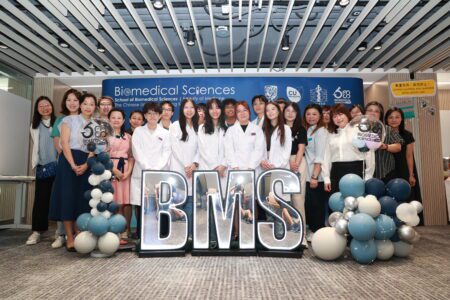


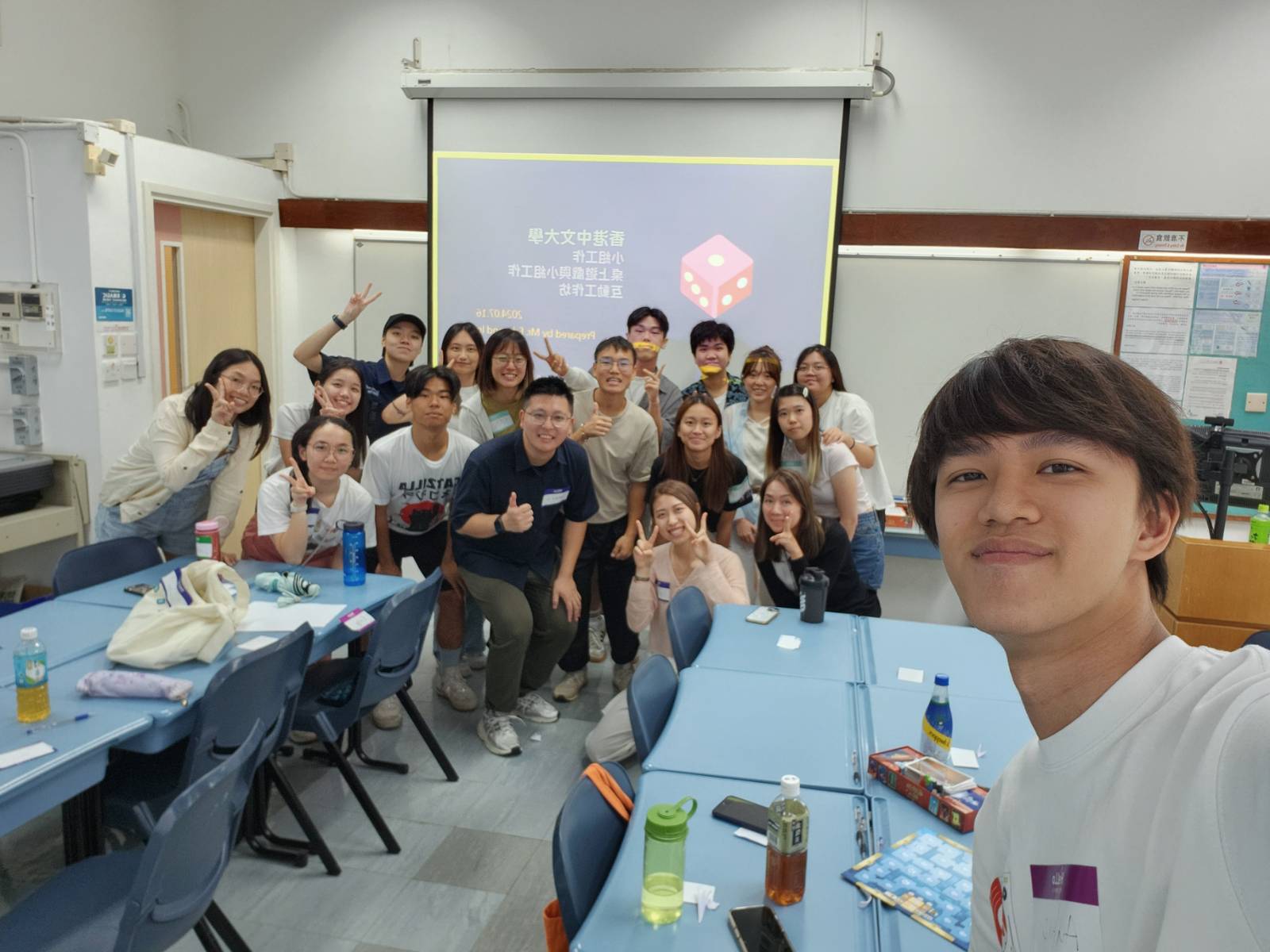


Pursuing social work often begins with a simple desire: to support people who can’t always show up for themselves. For some, that calling comes from personal experience. Cheung Yuet Sum is one such person. Like many students, she was under a lot of pressure during her public examinations. It was only with the support from a family member (who happened to be a social worker) that she persevered.
That period became a turning point for Cheung. Inspired by the support and companionship received, she signed up for the Bachelor of Social Science Programme in Social Work (BSSc in Social Work) at The Chinese University of Hong Kong’s Department of Social Work. “I hope to study social work to acquire the skills and provide support and companionship to others who are also struggling through hard times,” she says.
With a history dating back to 1964, the department has long been committed to providing quality professional and academic training, advancing knowledge in social welfare, and contributing to Hong Kong’s social development as well as the well-being of people.
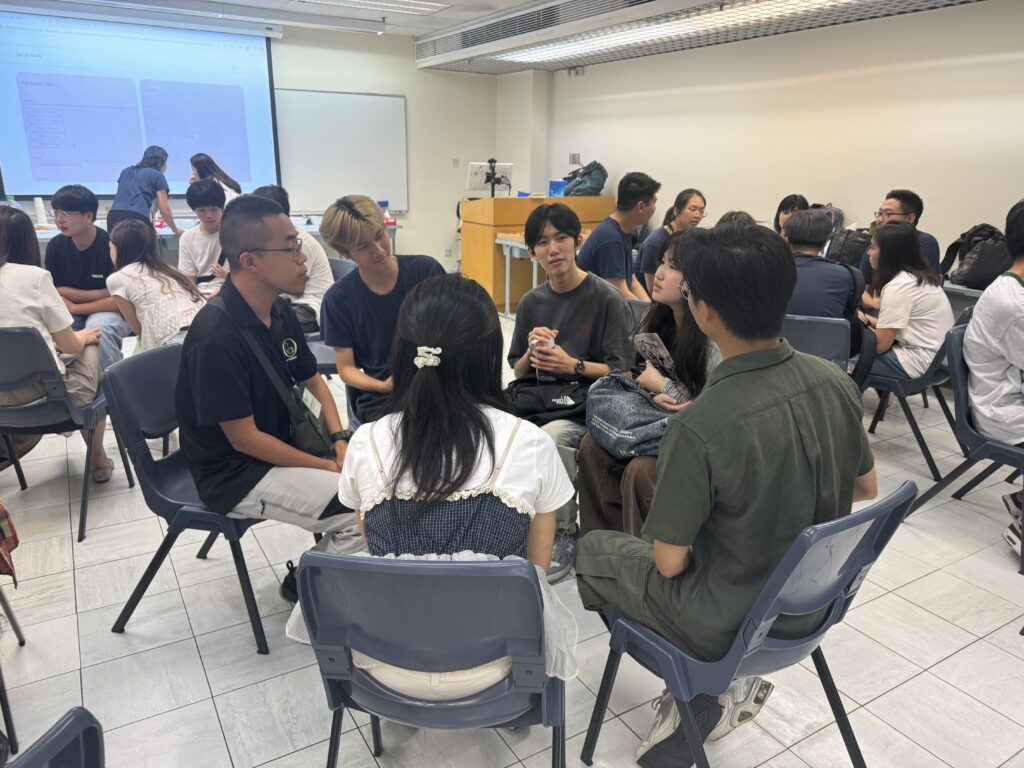
Classes emphasise independent and critical thinking, professional ethics, and awareness of contemporary social issues. Source: The Chinese University of Hong Kong
Where compassion meets action
The BSSc in Social Work combines theoretical and practical courses that fuse sociology, psychology, and social policy. It’s a programme that “encompasses social work values, integrates theory and practice, and emphasises student-oriented learning, small group teaching, and international exposure,” shares Dr. Law Yee-man, Moon. The goal is to nurture social workers with the knowledge and practice skills to drive social inclusion, empowerment, and positive social change.
Placement experience, including agency visits and workshops, is another key part of the programme. All students are required to complete 900 hours of placement in two social service agencies, of which one must be in Hong Kong while the other can be overseas. During her placement, Cheung worked with a mother experiencing carer stress. “This experience made me understand that sometimes the worker’s simple, consistent presence is enough to create meaningful change for clients,” she says.
And with her teachers backing her every step of the way, Cheung grew more confident with every new frontline situation. The programme’s placement opportunities are not limited to Hong Kong though. “Last year we had placements in the UK, Australia, Canada, Taiwan, and Singapore,” says Undergraduate Admission Coordinator Dr. So Yuk Yan.
On top of that, there are study tours to Japan, Vietnam and Mainland China. “Seeing how social work operates in different social and policy settings helps students broaden their horizons and think about how ideas from other places can be adapted back in Hong Kong,” Dr. So adds.
By the end of this four-year programme, you’ll be eligible to register as a social worker with the Hong Kong Social Workers Registration Board. After that, a wide range of career paths open up, such as working in hospitals, outreach teams, youth services, elderly care, and even student counselling at schools of all levels.

Fieldwork is how students learn, in real settings, whether they have what it takes to support people in need. Source: The Chinese University of Hong Kong
Supported to succeed
The department supports students who want to continue in academia too. “Our faculty members are leading scholars in children, youth, family, social policy, ageing and gerontology, health and mental health disabilities, and more,” says Graduate Division Head Professor Kim Minseop. “No matter the field, we provide high-quality supervision to our students.”
Each PhD student is paired with a supervisor whose research interests closely align with theirs. “At the same time, under the supervisor’s guidance, the department forms a thesis panel where faculty members join and collaboratively provide regular feedback on the student’s research and thesis,” Professor Kim adds. “We also give guidance about life as a researcher and future career paths.”
A PhD is a big commitment, so having financial support really matters. At CUHK, all PhD students have access to competitive stipends and several funding options to support and finance their studies. There’s the Hong Kong PhD Fellowship Scheme (HKPFS), set up by the Hong Kong Research Grants Council to attract outstanding students from around the world. And if you’re nominated by CUHK but don’t get the HKPFS, you’re still covered through the Vice-Chancellor’s PhD Scholarship Scheme, which offers a scholarship and a full research postgraduate studentship over the normative study period. All other PhD students receive a research postgraduate studentship — so no matter where you land, your studies will be financially supported.
For Cheng Yuhang, who’s an HKPFS awardee completing his PhD in Social Welfare, the financial support has been a huge help. “The scholarship has given me stability to focus fully on my research by covering living costs in Hong Kong,” he shares. “In addition, departmental funds for academic activities have allowed me to attend top international conferences, present my findings, receive expert feedback, and build collaborations with scholars from around the world.”
Extra research funding lets him run his own projects, from designing studies and handling ethics approval to managing budgets, teams, and fieldwork with community partners. There’s also a travel grant, the “Research Postgraduate Student Grant for Overseas Academic Activities,” for all PhD students, which he uses to join international conferences and advanced workshops. With this support, Cheng feels prepared for a career as an independent researcher and hopes to pursue postdoctoral opportunities abroad.
See what it takes to apply for the Hong Kong PhD Fellowship Scheme at CUHK.
Follow the Department of Social Work on Facebook and Instagram.