


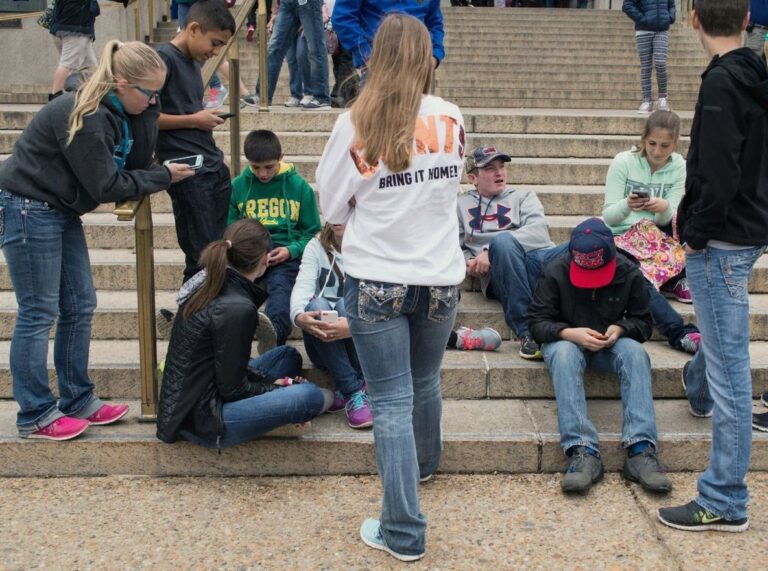


Australia may have been the first country to pass a social media ban bill to stop children under 16 from accessing the platforms, but it’s not the first to try something like this, and it’s likely not the last. In case you’ve missed it: in November 2024, the Australian government, led by Prime Minister Anthony Albanese, proposed legislation that bans those under 16 from having access to social media platforms.
If they fail to comply, the social media companies will be fined up to 50 million Australian dollars (US$3.28 million). It’s predicted to be a hard rule to follow, and an even harder rule to implement, but some countries have tried and succeeded (or failed) to a certain extent.
TL;DR? Here’s the summary:
- Australia became the first country to pass a nationwide social media ban for children under 16, with platforms facing hefty fines if they fail to comply.
- France, Spain, Norway, Portugal, Italy, Austria, and Denmark have introduced or proposed restrictions ranging from parental consent and higher minimum ages to outright bans for younger users.
- Rather than banning social media altogether, South Korea is restricting smartphones and other digital devices in classrooms.
Not interested in Australia? Check out our France, South Korea, and other country pages.
To know more about social media and its impact on students, head to “Get over your social media addiction: it’s time to lock in and focus on your exams” and “Is TikTok safe for students below the age of 18?”.
 Everyone’s on their phone nonstop nowadays, so perhaps the idea of a social media ban can sound novel.
What other country has a nationwide social media ban for children?
On June 29, 2023, a new French law requiring social media platforms to verify user age and obtain parental consent for those under 15 was enacted. This was part of the French government’s plan to reduce children’s screen time and protect them from cyberbullying and other crimes.
Like Australia, France will financially penalise the social media companies if the law is breached. The penalty is a fine of up to 1% of the company’s global revenues.
Most recently, following the school stabbing by a 14-year-old student of a 31-year-old school aide on June 10, 2025, Macron has announced that he plans to implement a social media ban for under-15s in France.
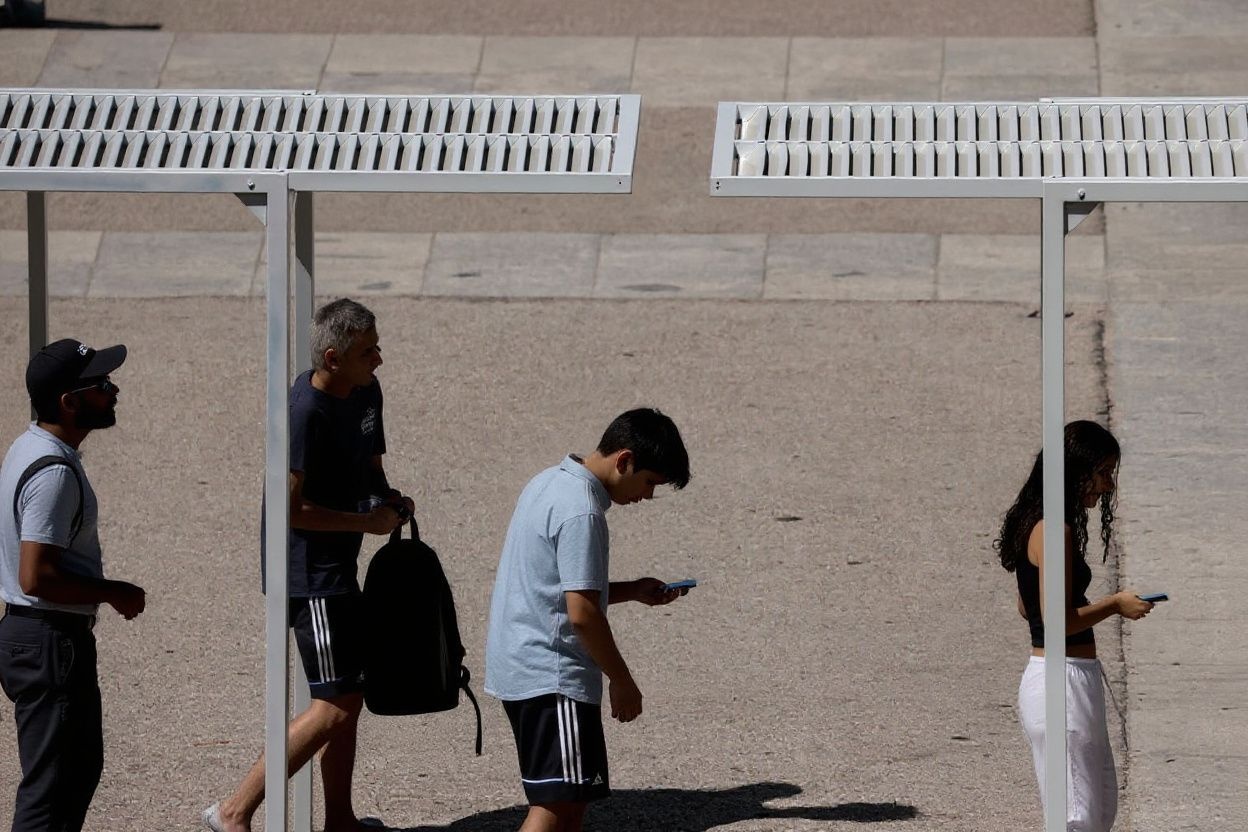 Some governments are warming up to the idea of a social media ban or upping the parental consent required for kids to create an account.
7 more countries that have existing social media bans or limitations in place
Spain
On June 4, 2024, Spain’s government approved the draft law that the age of data protection consent for children to own social media accounts was raised from 14 to 16.
Other things included in the draft include implementing a prison sentence for those who engage in deepfakes (images, videos, or audio that have been edited or generated using artificial intelligence) and banning under-18s from accessing games with “loot boxes,” in-game purchases that open a surprise prize that more often than not, leads to disappointment and more purchases.
Norway
Norway is looking at new ways to protect children online. The government has launched a public consultation on a proposed law that would prevent social media platforms from offering their services to children under 15.
Part of the plan is to clearly define what qualifies as a social media platform. This definition will help determine which online services would be covered by the age restriction.
At the same time, the government says the proposal will respect children’s rights. It won’t stop them from taking part in leisure activities or social communities, and it will be designed in line with fundamental rights such as freedom of expression, access to information, and the right to association.
The move comes as new research from the Norwegian Media Authority shows that 38% of children say they spend too much time on social media, while 30% wish they could log off more often.
Portugal
In 2026, Portugal became the latest European country to approve legislation aimed at limiting social media access for users under the age of 16.
To support the new measure, the government will use a public digital identification system known as the Digital Mobile Key (DMK).
Through this system, parents can provide consent for their children’s online access. The DMK will also help enforce the existing ban that prevents children under 13 from accessing social media, video- and image-sharing platforms, and online betting websites.
Italy
Italy is raising concerns about digital addiction among teenagers, as new data suggests the problem could be more widespread than previously thought.
According to the National Institute of Health, around 100,000 teenagers aged 15 to 18 are at risk of developing an addiction to social media.
As a result, in May 2024, the Italian parliament introduced a bill proposing restrictions on social media use, including rules for child influencers under 15.
However, as of March 2026, any legislation for a social media ban has not yet come into effect.
Austria
Austria is currently considering a social media ban for children under 14. To work out the details, experts from different political parties will meet to develop a clearer plan for how the system would work.
As part of these discussions, Austria is also looking at international examples, particularly Australia, as a possible model for age verification.
In Australia, users are required to provide identification when signing up for social media platforms. Companies may also use additional tools like facial recognition, voice recognition, and behavioural analysis to help confirm a user’s age.
South Korea
South Korea is not implementing a total social media ban, but it is enacting a nationwide ban on the use of mobile phones and other digital devices in classrooms.
This law will take effect starting from the next school year in March 2026. The new law aims to combat concerns over smartphone addiction and its negative impact on students’ academic performance and social development.
However, exceptions are made for students with disabilities who need the devices as assistive tools for learning.
Denmark
Denmark is looking to introduce a strict ban on social media use for children under 15, as concerns grow over young people’s mental health and increasing screen time. If the plan goes ahead, it would make Denmark one of Europe’s toughest countries in regulating social media access for minors.
To support the effort, the government is also setting aside 160 million Danish kroner (US$24.7 million) for 14 initiatives focused on strengthening online protections and creating a better digital environment for young people.
However, the proposal still allows some flexibility. Parents may be able to let their children access social media earlier — possibly from the age of 13 — if they believe it is appropriate.
 There’s no telling what the outcome of a blanket social media ban will be.
A European Union-level effort…or not
Currently, the EU’s General Data Protection Regulation — the strongest privacy and security law in the world — states that member countries can set the minimum user age of consent for platforms to process their data as long as it is over 13. However, the data can still be processed if parents give their consent.
Several countries have chosen to set this limit at the minimum age of 13. So, 13-year-olds in Belgium, Denmark, Estonia, Finland, Latvia, Malta, Portugal, and Sweden can consent to having their data processed by platforms without parental consent.
It’s not something Macron is too happy about.
In May 2025, France and Spain teamed up to lead an initiative to ban minors under the age of 15 from accessing social media throughout the European Union (EU). The goal was simple: have social media platforms implement stricter age verification systems under threat of penalties.
This is easier said than done, though.
“Let’s be clear … [a] wide social media ban is not what the European Commission is doing. It’s not where we are heading to. Why? Because this is the prerogative of our member states,” said European Commission spokesperson Thomas Regnier.
While the European Commission can’t force the hands of all of its member countries, it can tighten the leash on social media platforms through the Digital Services Act (DSA), a regulation that centralises supervisory powers for major platforms and allows the EU’s executive arm to better protect minors.
Beyond working on EU-wide guidelines for how platforms can comply with the DSA on minors’ protection, the European Commission is also working on an age verification mobile app that allows users to verify whether they are over 18, without disclosing their exact age. This is set to be trialled by five countries: Spain, France, Greece, Denmark, and Italy.
Disclaimer: This article was last updated on August 24, 2026.
Popular stories
Here’s where Jennie Blackpink went to international school

How to learn Korean fast: 8 best K-pop songs for beginners

The five countries most in need of nurse practitioners — with pay up to US$110,433 a year

EXO Kai’s LACOSTE era is serving elite energy — like the study history of past, present EXO members