

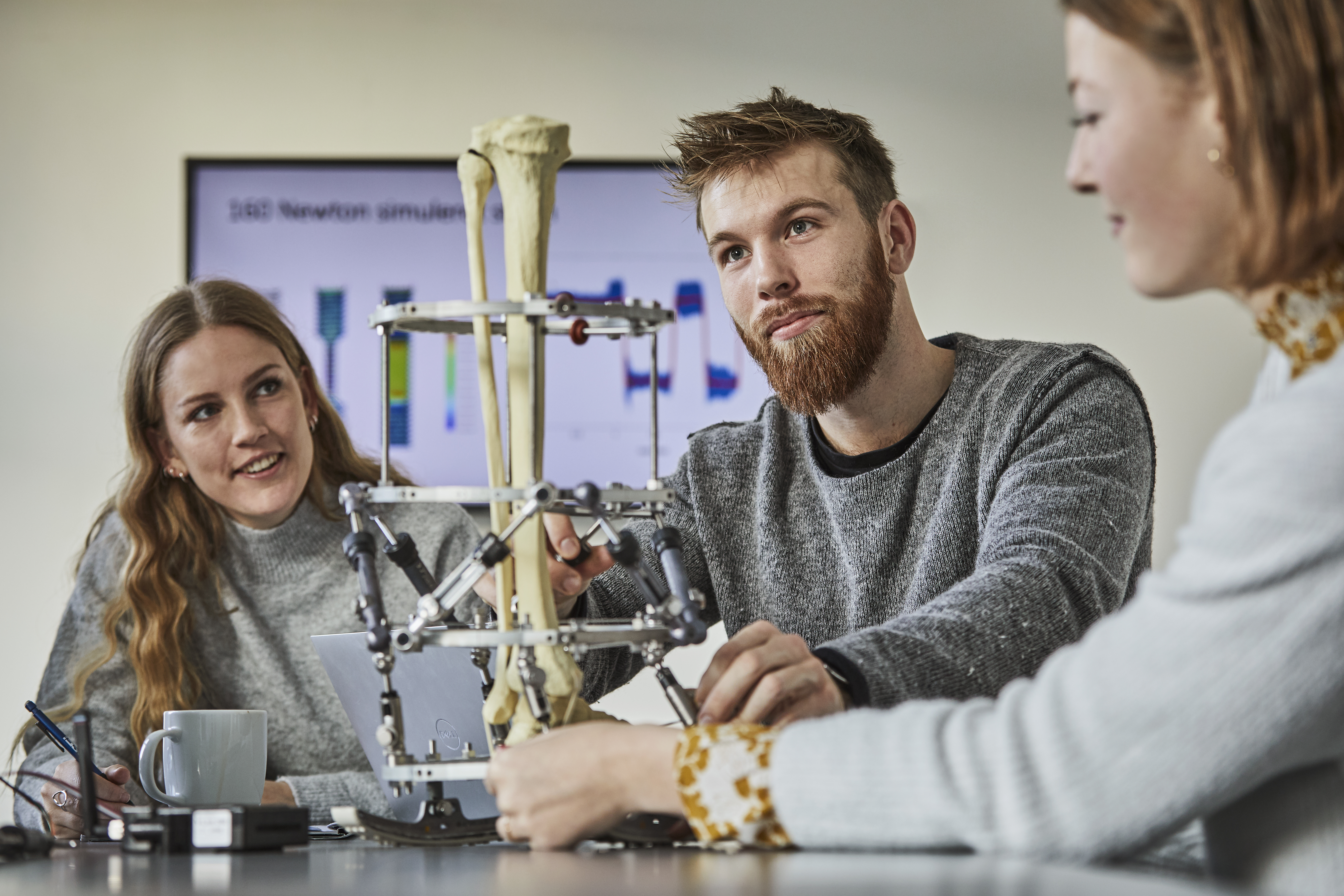


If you want to learn how engineering and data can help doctors interpret signals from the human body and improve medical diagnosis, the Master’s programme in Biomedical Engineering and Informatics at Aalborg University (AAU) could be a good next step. This two-year, English-taught programme explores how technology can support medical diagnosis and improve healthcare.
The programme combines hands-on coursework, group project work, and potential research or industry placements, including a final master’s thesis. Graduates have progressed into advanced roles in medical device companies, hospitals, and the research sector.
But what is it really like to study this programme? To answer this question, we spoke with Jorge Henrique Moura Gouveia, a current student from Portugal. After earning his bachelor’s degree in Biomedical Engineering, Gouveia spent three years working as a healthcare consultant before joining AAU to deepen his knowledge and challenge himself by studying abroad. We also spoke with Samuel Emil Schmidt, Professor of Cardio Technology at AAU. A Biomedical Engineering graduate himself, Professor Schmidt now researches how heart sounds and mechanical signals can improve cardiovascular diagnosis.
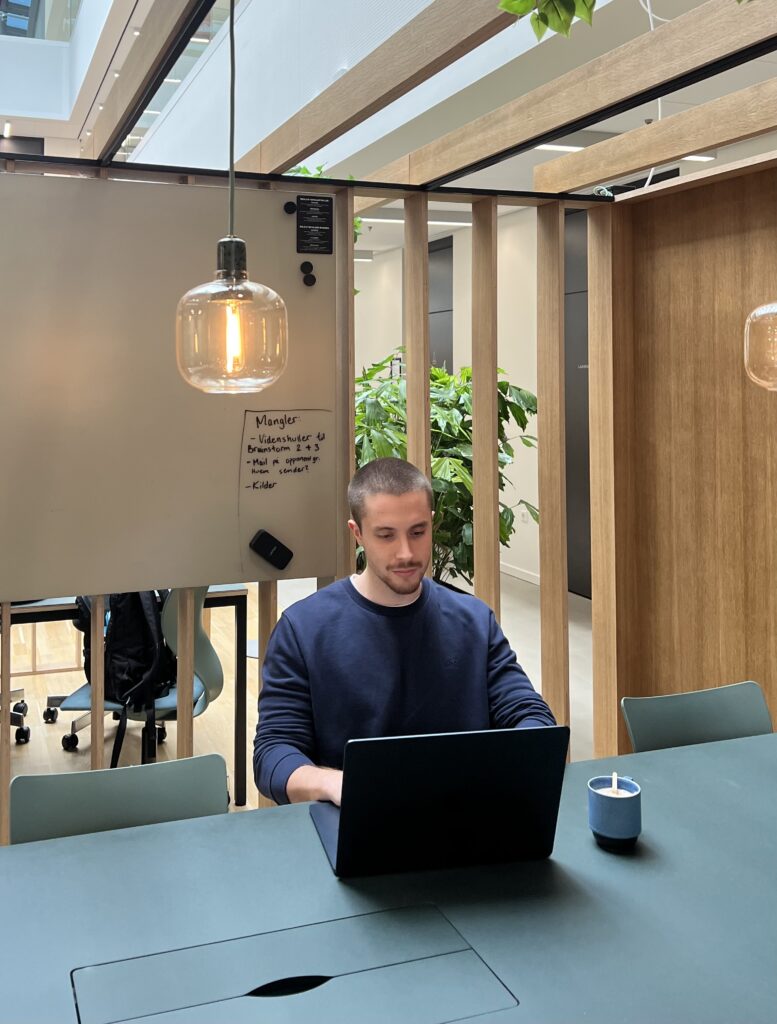
After completing his bachelor’s degree in Biomedical Engineering, Gouveia spent three years as a healthcare consultant, supporting hospitals across Portugal in using an infection control and antimicrobial stewardship application. Source: Aalborg University
Jorge Henrique Moura Gouveia, from Portugal, MSc in Biomedical Engineering and Informatics
Can you tell us more about your specialisation, the specific roles you have held, and your past and present projects related to the programme?
I have a bachelor’s degree in biomedical engineering from the Instituto Superior de Engenharia do Porto (ISEP), which I completed in late 2022. Between 2023 and 2026, I worked as a healthcare consultant at a company based in Matosinhos called First Solutions, where my main role was to provide on-site technical support to healthcare institutions across Portugal. In this role, I worked closely with hospital infection control teams, mainly medical staff, helping them use the application and supporting the management and monitoring of hospital infection rates, antimicrobial use, and the prevention of potential outbreaks. Currently, as part of my master’s degree, I am working on a project comparing different motion capture technologies and their potential role in the assessment and rehabilitation of post-stroke patients.
Why did you choose the Master’s programme in Biomedical Engineering and Informatics at Aalborg University?
After working as a biomedical engineer for over three years, I knew that I wanted to return to my studies and pursue a master’s degree to deepen my knowledge and explore new opportunities. I also wanted to experience studying in a different country, which I had been unable to do during my bachelor’s degree because of the pandemic. I considered different universities in several countries and was fortunate enough to receive offers from all the universities I applied to. Ultimately, I chose AAU because its unique problem-based learning (PBL) approach stood out to me, and I identified with the learning objectives and study tracks of the Biomedical Engineering programme.
Is a Master’s programme in Biomedical Engineering and Informatics actually worth it?
Yes, I strongly believe that pursuing a master’s degree and expanding your knowledge in an area you’re passionate about is always worthwhile. In the short time I have been in the Biomedical Engineering and Informatics programme, I have already been able to better understand some of the theoretical concepts related to the work I did in my previous job. Although I worked with these concepts, I did not always fully understand their underlying meaning and purpose.
What is a typical week like for you since joining the Master’s programme in Biomedical Engineering and Informatics?
My typical week consists of a combination of classes, group project work, and assignments. I have also started Danish classes, which take place on Tuesdays and Thursdays. I believe these classes are a great opportunity for international students coming to study in Denmark. I have also been actively participating in different activities organised by Aalborg Tryouts, which are a great way to try new sports and meet people from all over the world. It is an initiative that I wish existed in my home country.
Is the Master’s programme in Biomedical Engineering and Informatics very heavy on maths and technical subjects?
As with any engineering master’s degree, a strong foundation in mathematics and technical subjects is expected. In my first-semester course track, I chose Interoperability and Clinical Decision Support Systems, which is less maths-heavy than the Signal Processing track. However, mathematics is still an important component, particularly in the Clinical Decision Support Systems course, which applies mathematical probability and decision-making algorithms to support clinical decision-making.
How accessible and supportive are the professors and faculty when students need help?
So far, my experience with professors and other faculty members has always been positive. The flat hierarchy within the Danish education system, which differs greatly from what I was used to in Portugal, helps reduce the gap between students and professors, making communication feel more natural and informal. I have also had a great experience with my Danish classmates, who are always willing to offer guidance whenever I ask for help. This has made adapting to a new academic environment much easier.
What is it like studying the programme in English and working with students from different backgrounds?
Studying in English has been a positive experience so far. In this short period, I have noticeably improved my spoken and written English. Working with students from different backgrounds has also broadened my perspective on different approaches to problem-solving. In particular, I have found Danish working methods quite different from the typical Portuguese approach, which has been an interesting and challenging learning experience.
Do you have the freedom to choose your project and decide what you want to work on?
Yes, at the beginning of the semester, we rank their preferred projects from a list and form their own groups with other students on the same study track. We have considerable control over these decisions, although when several groups prefer the same project, the study coordinator assigns projects randomly. In my case, my group was able to work on our preferred project. We are comparing markerless and marker-based motion capture systems and their potential roles in the rehabilitation of post-stroke patients.
What kind of real-world healthcare or biomedical problems do students work on?
We work on real-world problems that apply engineering and informatics to healthcare. For example, my current project compares two motion capture systems used to measure human movement. The aim is to determine whether markerless technology can provide reliable measurements for gait analysis, focusing on realistic scenarios in stroke rehabilitation. The findings of this project could help make movement assessments more accessible in clinical and rehabilitation settings.
Is it challenging to study the Master’s programme in Biomedical Engineering and Informatics abroad?
Yes, I would be lying if I said it was an easy process. Studying abroad is challenging both academically and personally, as moving to a country like Denmark means adapting to a different culture, education system, and everyday life. I particularly miss the great food and weather I was so used to back in Portugal, as well as my family and friends back home. However, I was aware of these challenges when I decided to move abroad, and I chose to study abroad because I wanted to challenge myself and become more independent.
Have you started to see what kinds of jobs or careers this degree could lead to?
Having already experienced the transition from university to the working world, I have a relatively clear idea of the career opportunities available to biomedical engineers and what I personally want. Although there are several different specialisations and career paths to choose from, I know that I want to continue developing and applying technical solutions in clinical and hospital settings. I hope this master’s degree will help me expand my knowledge and technical skills in this area. In the future, I would like to apply this knowledge within either the Portuguese or Danish healthcare system.
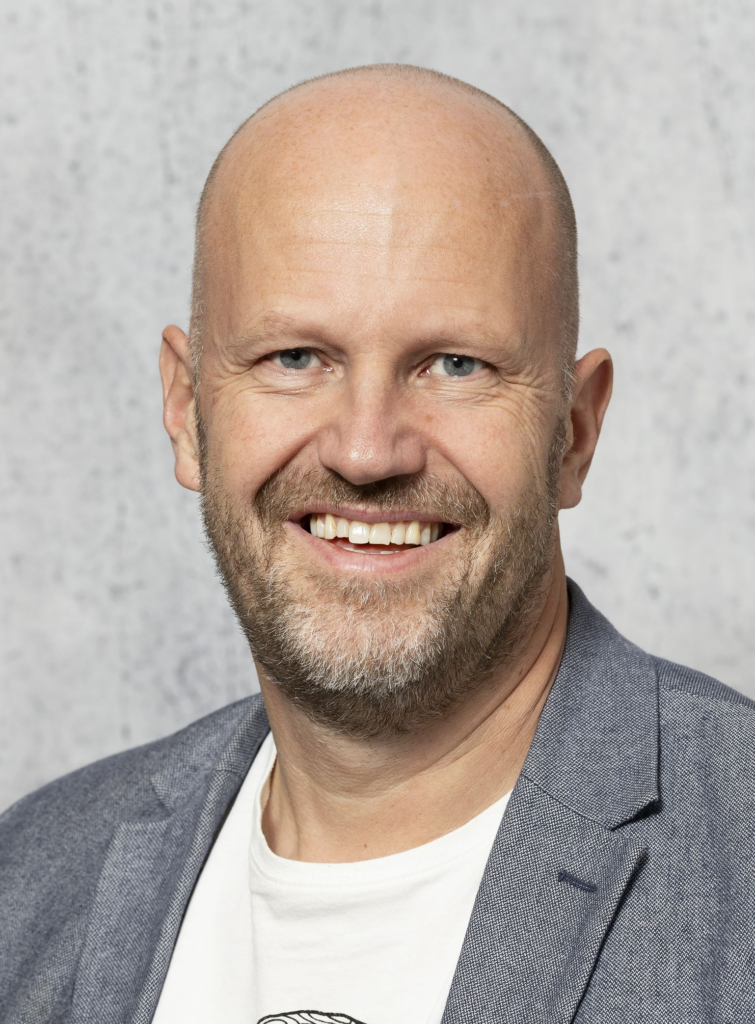
Professor Samuel Emil Schmidt researches how heart sounds and movements can help doctors diagnose patients outside specialised hospital departments. Source: Aalborg University
Samuel Emil Schmidt, Professor of Cardio Technology
Can you tell us more about your current role at Aalborg University (AAU)? Please share your professional background, research focus, and experience.
I am a professor of cardio technology at AAU, where my research focuses on developing technologies for diagnosing and monitoring cardiovascular diseases. I graduated in biomedical engineering from AAU in 2005 and completed my PhD in biomedical signal processing in 2011. My research combines medical sensors, AI, and medical imaging to make cardiovascular diagnostics more accessible.
Currently, I lead research activities involving AI-based analysis of cardiac CT scans from more than 100,000 patients, alongside the development of wearable sensors for monitoring heart failure patients at home. I have also co-founded several medical technology companies, including Acarix and VentriJect, helping translate university research into clinical applications and commercial products.
Is the workload manageable, especially with the amount of project work?
Yes, the workload is manageable, although the programme is demanding and requires students to take responsibility for planning their time. One of AAU’s strengths is that students work on semester projects alongside their courses, allowing them to apply theoretical knowledge directly to practical problems. Students balance lectures, independent study, project meetings, experiments, and deadlines, but project groups have considerable flexibility in organising their work. In my experience, students often find project work especially motivating because they can see how their knowledge is used to solve real healthcare challenges.
What is it like working in groups at AAU? Do students generally enjoy the problem-based learning approach?
Group work is one of the greatest strengths of studying at AAU, and it prepares students well for their professional careers. Students work together on semester projects, where they define problems, develop solutions, conduct experiments, and present their results. Each group has an academic supervisor, but the students themselves organise their collaboration and make important decisions. Most enjoy exploring a technical subject in depth with their fellow students, although differences in expectations and working styles can sometimes be challenging. Learning to handle these differences is valuable because complex problems in industry and research are rarely solved by individuals working alone.
How much freedom do students have to choose what they want to work on in their projects?
Students have considerable freedom to shape their projects within the academic theme and learning objectives of each semester. Project ideas may come from students themselves, university researchers, hospitals, or companies. In my research environment, for example, students may choose projects involving AI, wearable cardiovascular sensors, or medical imaging. They can then help formulate the research question, choose methods, and decide how to evaluate their solutions. This ownership and independence are excellent preparation for careers in both industry and research.
How much contact do students get with hospitals, doctors, and other healthcare professionals during the programme?
Students have good opportunities to interact with hospitals, doctors, and other healthcare professionals, particularly through semester projects and master’s theses. Biomedical Engineering at AAU is closely linked to clinical research environments, and many projects are carried out in collaboration with hospitals. My research group works with cardiologists and other healthcare professionals on technologies for diagnosing cardiovascular diseases. Depending on the project, students may analyse clinical data, discuss technical requirements with clinicians, and explore how a solution could be used in healthcare. Direct clinical contact varies between projects, but understanding the clinical problem is always important.
What types of real-world problems can students actually work on, for example in medical imaging, AI, or biomedical signal processing?
Students can contribute to genuine healthcare challenges through projects in AI, medical imaging, and biomedical signal processing. One example is our CCT-AI project, which aims to develop large AI models using cardiac CT scans from more than 100,000 patients. Students can help develop algorithms to analyse scans and identify signs of disease.
Another example is seismocardiography, where we measure tiny chest vibrations caused by the beating heart. Students can develop signal processing and machine learning methods to estimate cardiovascular function or help monitor patients with heart failure at home. These are not just theoretical exercises; they address real clinical needs and can contribute to the development of future medical technologies.
What kinds of jobs do graduates actually get after completing the MSc?
Graduates of Biomedical Engineering and Informatics have broad career opportunities because they combine engineering expertise with an understanding of medicine and healthcare. Many join medical device companies, pharmaceutical and healthcare technology companies, hospitals, and research institutions. Typical roles include R&D engineer, software developer, data scientist, AI specialist, medical imaging engineer, and clinical technology specialist.
Others work in regulatory affairs, medical device development, project management, or healthcare technology implementation. I have seen graduates move into industry and PhD positions, and their technical knowledge and problem-based project experience are valuable even beyond healthcare.
Is a Master’s programme in Biomedical Engineering and Informatics enough to build a career in industry, or do you usually need a PhD?
Yes, a master’s degree in Biomedical Engineering and Informatics is enough to build a successful career in industry, including in research and development. Most engineering positions in medical technology companies do not require a PhD, and MSc graduates can work directly on algorithms, sensors, medical devices, and software. A PhD is particularly relevant for an academic research career or for those who want to develop deep expertise in a specialised field. It may also be an advantage for some advanced industrial research positions, but it is not a general requirement. I would recommend pursuing a PhD out of genuine interest in scientific research rather than assuming it is necessary for a successful career in industry.
Looking back as both a graduate of the programme and a professor, do you think the programme prepared you well for the career you have today?
Yes, absolutely. Studying Biomedical Engineering at AAU gave me an excellent foundation for both my academic career and my entrepreneurial activities. The technical skills I gained in signal processing, mathematics, programming, and physiology have been essential throughout my work. Even more valuable was learning how to approach an unfamiliar problem, understand it, and systematically develop a solution.
Problem-based learning taught me to work independently, collaborate across disciplines, and manage complex projects involving engineers, clinicians, and industry partners. I have co-founded several medical technology companies, including Acarix and VentriJect, based on research originating at AAU. Bringing such technologies from idea to product requires exactly this combination of technical expertise and collaboration. If I were to choose my education again, I would definitely choose Biomedical Engineering at AAU.
Follow Aalborg University on Facebook, Instagram, LinkedIn, and YouTube