



During her year‑long hospital rotation in Shanghai, medical imaging student Dian Qi saw both the accuracy of diagnostics and their limits. Many chronic problems weren’t missed by doctors, but shaped by years of exposure, behaviour, and structural conditions that went untreated. That insight pushed her to look past clinical endpoints and ask how risk builds silently over time.
To dig deeper, Qi joined the Master of Public Health (MPH) programme at City University of Hong Kong (CityUHK). There, she began seeing health as a system shaped by data, environment, economics, and everyday routines. “The training in epidemiology, biostatistics, environmental risk assessment, and health economics helped me think in terms of pathways rather than isolated events and to connect evidence with real-world decision-making,” she says.
That mindset reflects a larger shift in the field. Today’s public health leaders are expected to think across disciplines even more. Datasets are larger and collaborations now cross borders. The pandemic made this clear. Rapid response across systems often mattered as much as understanding the disease itself, mainly when decisions affected entire populations.
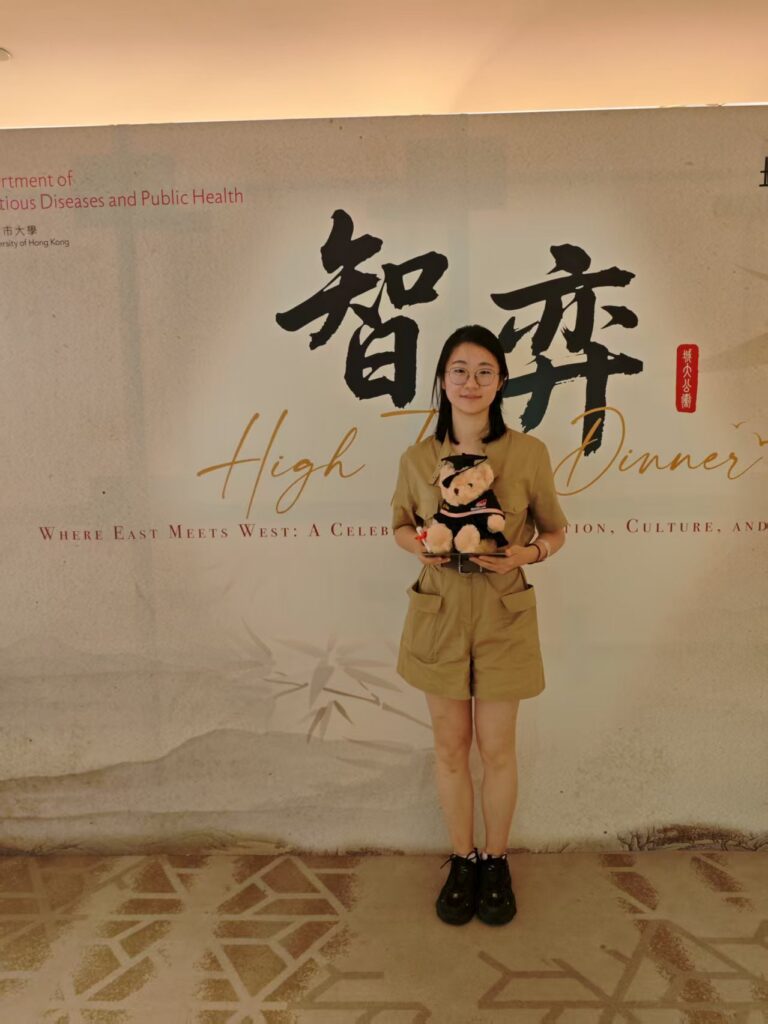
For Qi, the MPH curriculum reframed digital health as a health system intervention rather than a technological upgrade. Source: City University of Hong Kong
Innovative curriculum, strategic structure
CityUHK’s MPH is structured around this reality. A core feature of the programme is its emphasis on the One Health paradigm, which recognises that human, animal, and environmental health are deeply connected. By learning within this framework, students are encouraged to look beyond narrow definitions of health and to consider how ecosystems, urban design, food systems, and social behaviour intersect.
“We’ve designed our MPH to be application-oriented,” says Professor Ming Wai Kit, a clinical doctor and medical educator with over 15 years of teaching and mentoring experience. “From real-world practicum placements to AI-enhanced courses, our students learn public health science and how to communicate findings, influence policy, and manage change. The integration of One Health, AI, and global perspectives makes our programme uniquely responsive to 21st-century challenges.”
Opportunities within and beyond borders
To support different career paths, the 30-credit unit curriculum has three distinct streams. Each is designed to match distinct professional goals while building a shared foundation in public health principles.
The Research Training Stream is suitable for students interested in pursuing academic or doctoral pathways. It emphasises study design, data analysis, and the critical appraisal of scientific literature.
The Practicum Stream offers opportunities to apply theory in professional settings, often contributing to public health initiatives or policy-related work. This approach appeals to MPH students like Dr. Parth Singh, who values direct engagement with real problems.
“I’m currently completing my practicum under a supervisor at Roche Pharmaceuticals,” he says. “Here, I’m directly involved in analysing collaborative initiatives between Roche and the Hong Kong Government focused on early disease detection and containment strategies. This front-line work, aimed at preventing outbreaks from becoming epidemics, is what I consider the bedrock of proactive public health.”
Through the programme, Dr. Singh has gained confidence across multiple areas of public health work. He is comfortable designing studies from the ground up, appraising and formulating policy, and evaluating initiatives using economic frameworks. He can now move between research, policy, and implementation without losing sight of population-level impact.
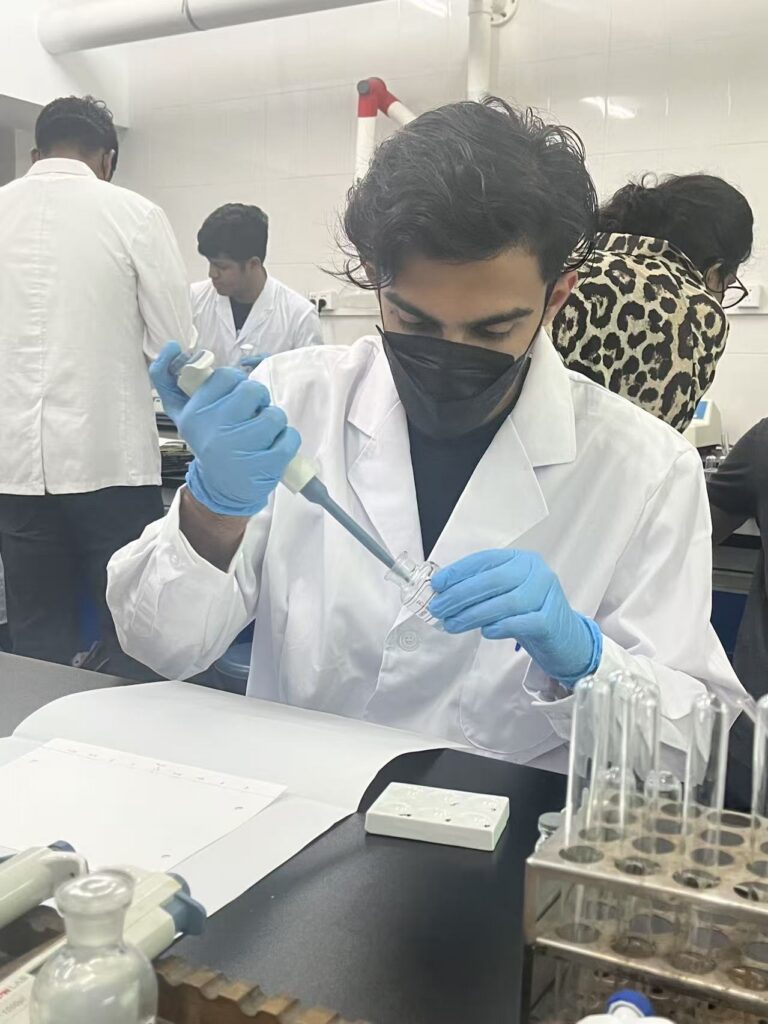
Dr Singh chose CityUHK’s MPH programme for its strong international reputation and the pioneering public health work of Professor Ming Wai-Kit. Source: City University of Hong Kong
The last option is the Global Stream, available to a select number of students. Through collaborations with overseas institutions and global organisations, including Institut Pasteur, students can connect what they learn with global practices. There are joint workshops and immersive fieldwork, great ways to get exposed to current research and emerging best practices, particularly in areas like outbreak response and health innovation.
“Such experiences empower students to develop a comprehensive perspective, preparing them to address complex health issues across diverse contexts,” says Richard Shah, Deputy Programme leader of the MPH.
At Institut Pasteur, Qi did just that. She ran a qualitative study on how Mandarin-speaking residents interpret zoonotic risks in urban environments. “The MPH helped me translate between perspectives — linking lived experiences and risk perception with public health concepts like exposure, vulnerability, and prevention,” she says. “It also gave me the confidence to collaborate with researchers from different backgrounds while maintaining methodological rigour.”
Across all three streams, students sharpen core skills in data analysis, disease surveillance, and research design. They emerge as future leaders ready to shape the future of public health. “By uniting practical experience, innovative research, and global collaboration, we empower the next generation of public health leaders to transform challenges into opportunities, fostering a healthier tomorrow through visionary solutions that transcend boundaries,” Shah says.
Learn more about the MPH at City University of Hong Kong.
Follow City University of Hong Kong on Facebook, X, Instagram, YouTube, and LinkedIn