



You’ve spent years memorising anatomy charts and chemical formulas, but can you draw blood without making a patient wince? Medical schools know textbooks aren’t enough. That’s why doctors complete clinical rotations, dental students train on mannequins, and pharmacy students compound drugs under supervision.
This is what it’s like when you join the University of Medicine and Pharmacy Carol Davila. Here, you learn by doing, an approach for which there is a long documented list of benefits. In the context of UMPCD, its practice-focused six-year programmes in medicine and dentistry build in each student a better understanding of the complexities and nature of practice.
“Within the university, the practical classes in the faculty’s laboratories really give the impression of beginning a career in the pharmaceutical industry,” says Baha Eddine Oudjhani, a second-year Algerian student in pharmacy. “Outside the university, pharmacy placements also provide a great deal of real-world experience.”
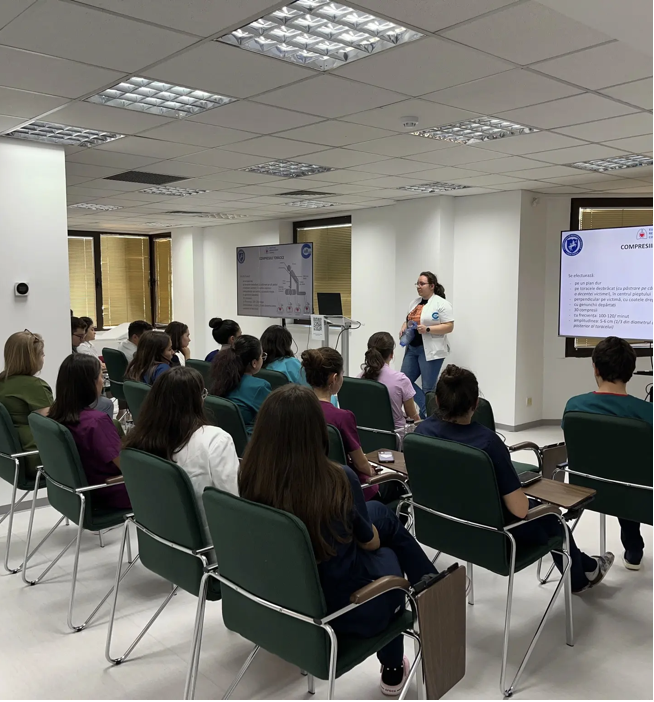
Founded in 1857, Carol Davila University of Medicine and Pharmacy features modern facilities, cutting-edge labs, and international prestige in medical education. Source: Carol Davila University of Medicine and Pharmacy
A university built on practice and excellence
UMPCD’s faculties of Medicine, Dentistry, and Pharmacy have partnerships with 37 teaching hospitals. These enable exposure and engagement with experienced practitioners and live up to Carol Davila’s motto of “Initiation, Excellence, Evolution.” It’s this combination that produces nationally and internationally recognised research while creating patient-centred medical education.
Professor Ines Dima‘s Toxicology module shows this philosophy in action. Because she teaches final‑year students, she works with learners who have already built strong critical thinking skills, allowing her to take their learning even further. “This allows me to have a lively and engaging teaching experience where I rely as often as possible on events, situations, natural phenomena and practical, visible and observable aspects of daily life,” says Prof. Dima, a Carol Davila graduate herself. “I believe it is a dynamic and constructive means of learning theoretical scientific information and social skills such as communication and teamwork.”
Classes like Prof. Dima’s nurture one of the most important qualities in healthcare: people skills. UMPCD’s multilingual programmes further enhance this. Here, you can study medicine and dentistry in English or Romanian, while pharmacy is taught in Romanian or French. In such settings, there are daily opportunities to learn alongside peers from a wide range of cultural and linguistic backgrounds — an experience that is invaluable when you later join multicultural teams and care for varied patient populations.
For Belgian dentistry student Chimène Mansour, this blend of academic rigour and cultural immersion has been deeply meaningful. Classes are often filled with questions and discussions between teachers and students. They have been nothing but engaging.
And Chimène has always felt heard too, even when she doesn’t speak the same language as her instructor. “Romanian language classes are a valuable supplement, enriching my overall cultural knowledge and helping me to warmly adapt to the country that has welcomed me,” she says.
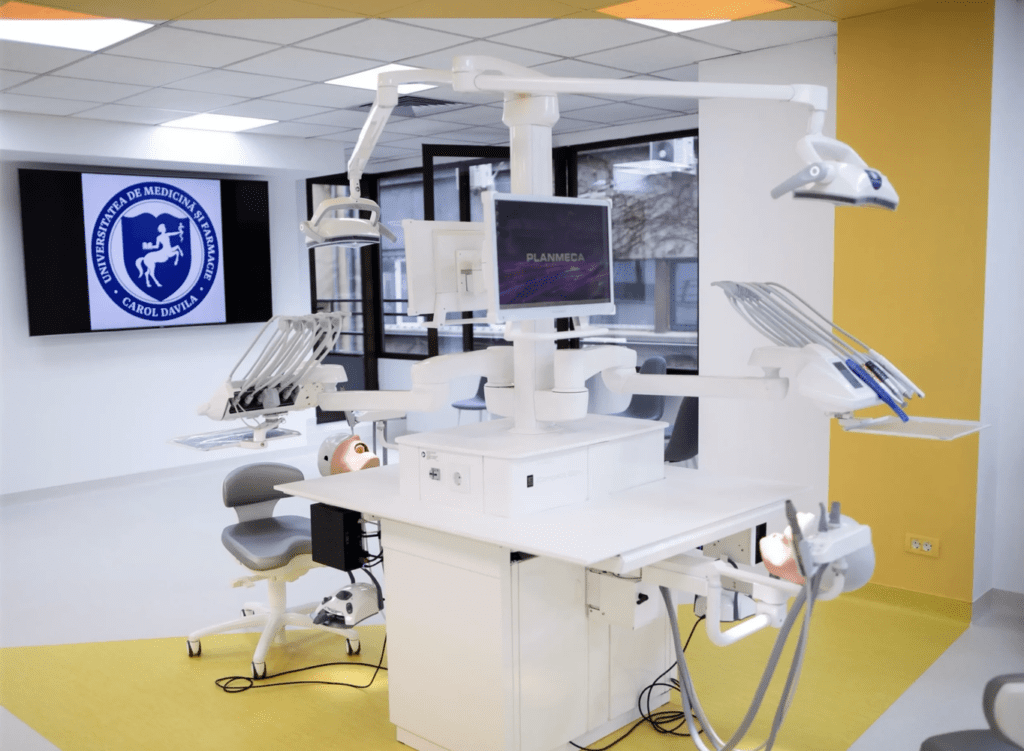
The Carol Davila University of Medicine and Pharmacy ranks among the top 50% across 81 research topics in 2025 (EduRank). Source: Carol Davila University of Medicine and Pharmacy
Facilities that prepare you for real practice
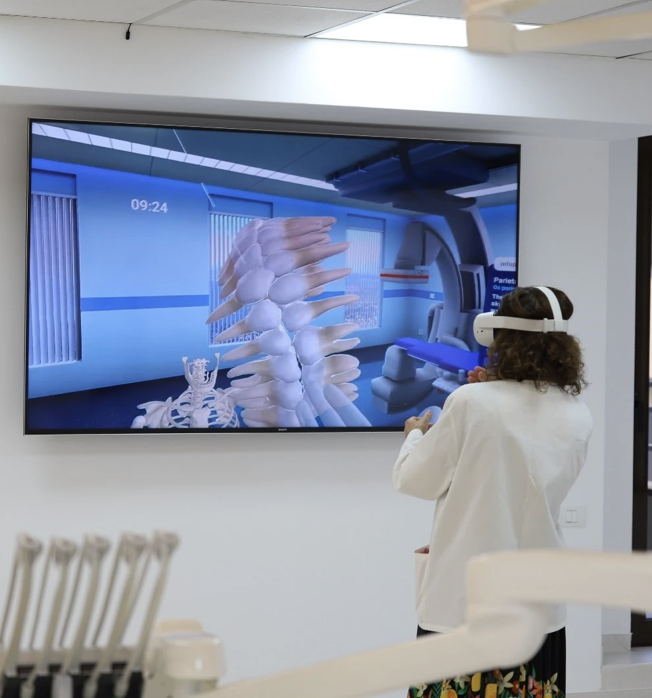
The university’s infrastructure tells the same story of practical, future‑focused training. Carol Davila has been investing heavily in its infrastructure over recent years to equip its medical students to thrive in 21st-century healthcare. At the recently established Department of Medical Simulation, for example, you can practise medical manoeuvres in a safe, controlled environment without risking patient harm.
One standout example is the 3D Printing Laboratory, which supports advanced medical equipment. By combining advanced medical imaging with computer-aided design, the laboratory produces anatomical models, surgical guides, and customised devices. These simulators replicate real pathologies, including complex tumours and congenital anomalies, letting you test procedures safely. The result is invaluable: you’ll have the capability and confidence to deal with real cases and complications from the get-go.
Programmes like Erasmus, that let you complete semesters abroad in any European country, provide even more crucial experiences. You’ll get to see how different countries and healthcare settings make a difference in patient lives, preparation that sets you up to work in Romania and beyond in the future.
The complete student experience
Whether it’s multilingual programmes or cutting-edge facilities, this focus on student growth continues across all aspects of campus life at Carol Davila. All spaces were designed for students to recharge and connect. You can choose from multiple dorms to live in, while the sports hall, tennis courts, and swimming pool present plenty of opportunities to connect and stay active with friends. On campus, student organisations such as the Medical Students’ Society of Bucharest and the Dental Medicine Students’ League often host events.
For Elizabeth Verna Burhala, volunteering alongside her studies has helped her grow as a person and medical professional. “My problem-solving, public speaking, and organisation skills have developed in ways that I could have never imagined before,” says the medicine student from Australia. “I’ve spoken with medical professionals worldwide while learning about their various areas of expertise.”
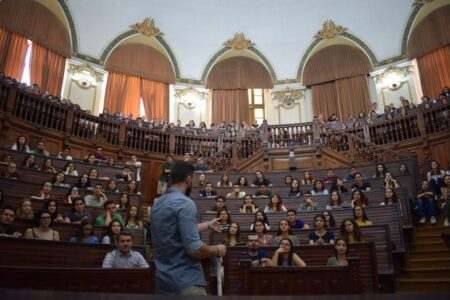
Such experiences carry on a legacy of excellence that stretches back generations. Aside from having the father of Romanian medicine, Dr. Carol Davila, as a founder, the university has also nurtured figures like Nobel laureate George Emil Palade, celebrated as the most influential cell biologist, with the main amphitheatre proudly bearing his name.
Learn more about the University of Medicine and Pharmacy Carol Davila.
Follow the Carol Davila University of Medicine and Pharmacy on Facebook, YouTube, and LinkedIn