



With technological advancements accelerating across industries, few professions remain untouched — not even law. As artificial intelligence, digital platforms, and global data systems reshape how businesses operate, many aspiring lawyers are asking an increasingly urgent question: Will my degree future-proof my career?
For Vallari Joshi from India, that question emerged while working in privacy during her JD and later while handing AI-related issues.

Vallari Joshi is currently pursuing Suffolk University’s LLM in Legal Innovation and Technology (LIT)
“I didn’t always fully understand how the technology worked, how data moved through systems, or how product teams made decisions,” she says. “That made me see that just knowing the law isn’t enough anymore.”
And in rapidly digitising economies such as India, where AI adoption, digital payments, and data governance are expanding quickly, that gap between legal knowledge and technological understanding is becoming harder to ignore.
Anh Khong from Vietnam had witnessed a similar shift. “Vietnam has been one of the fastest evolving markets in recent years, marked by government restructuring, legal reforms, and ongoing improvements in stock market quality and transparency,” she shares.
To prepare for this new reality, both Joshi and Khong chose to pursue a Master of Laws (LLM) at Suffolk University Law School, where programmes are designed to reflect the complex relationship between law, technology and global business.
Law meets the real world
Located in downtown Boston, Suffolk Law places full- and part-time students at the heart of one of the US’s most active legal and financial ecosystems. Surrounded by major law firms, multinational corporations, and regulatory institutions, the city offers constant exposure to how law operates in real-world business environments.

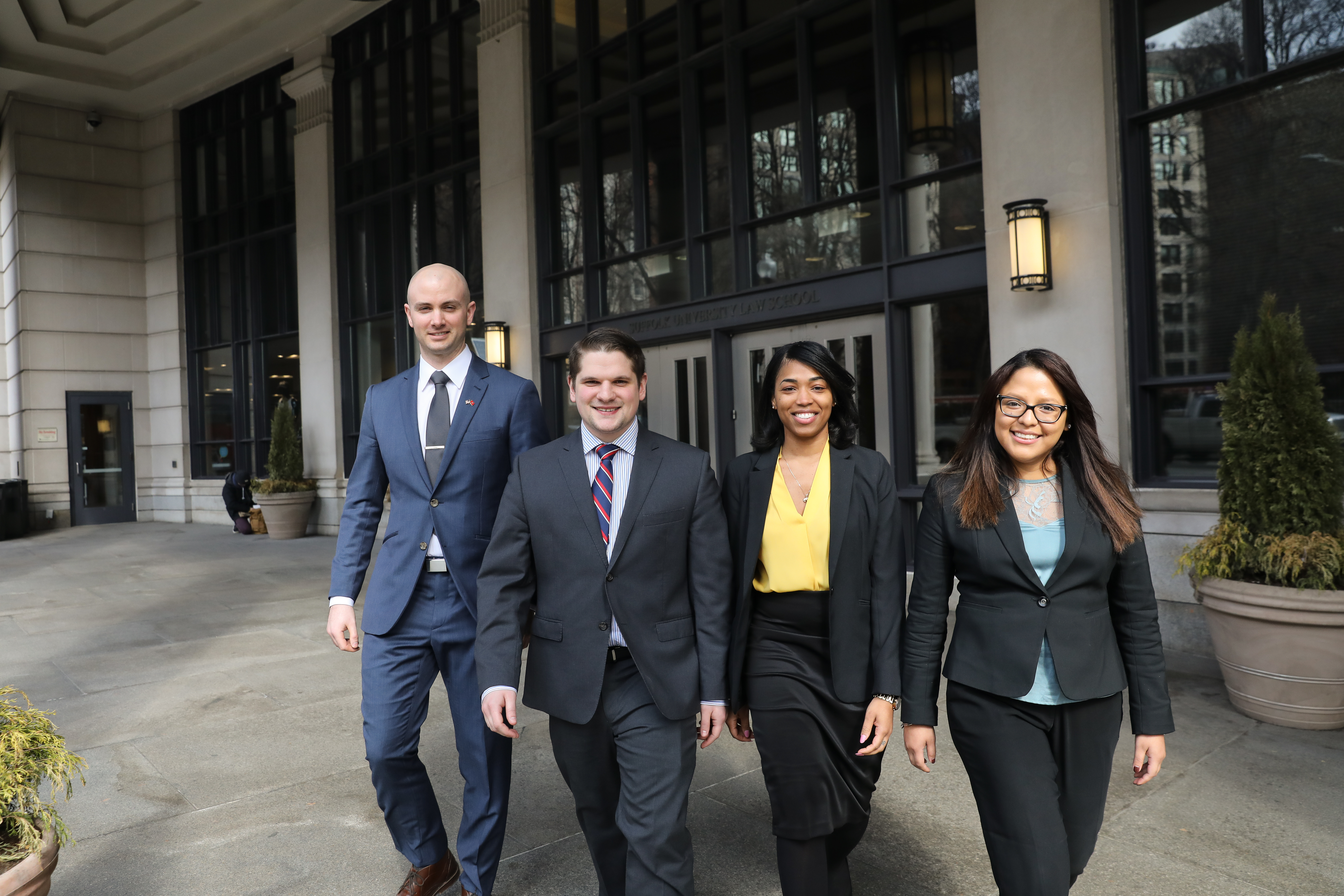
Real-world learning is at the heart of Suffolk Law’s programmes. Small class sizes make it easier for professors to offer personalised mentorship. Source: Suffolk University
“The city’s concentration of law firms, multinational companies, investment funds, and regulatory institutions created an environment where cross-border work is not theoretical but part of daily practice,” says Khong.
Recognizing the importance of networking for long-term career success, Suffolk Law provides all students with free memberships to the Boston Bar Association and the Massachusetts Bar Association. Students also regularly engage with practitioners through guest lectures and professional events across the city. Joshi has experienced these opportunities firsthand. “Suffolk is a five-minute walk to the Boston Bar Association, which makes it easier to engage with practising attorneys,” she says.
The school regularly invites guest lecturers from domestic and international jurisdictions too, and one of those speakers even helped Joshi secure an internship. “That experience showed me how connected my programme is to the real legal market, both locally and globally,” she adds.
Understanding technology behind law
Joshi is enrolled in Suffolk’s LLM in Legal Innovation and Technology (LIT) – a first of its kind, STEM-approved program that allows graduates to remain in the United States and work for up to 36 months after completing the degree, instead of the standard 12 month training period. This programme is designed to help lawyers understand how emerging technologies are transforming legal practice. Rather than studying these developments purely in theory, students engage directly with the tools shaping the profession. In the Legal Tech class, for example, they learn to write basic code.
“Once you understand how logic works in code, you can spot where things can be automated or structured more clearly,” she explains.
The Generative AI class follows a similar practical approach. Students test tools such as Meta AI, ChatGPT, and Claude on legal tasks, comparing outputs and evaluating potential risks. Through exercises like these, the programme explores how legal reasoning intersects with product design, automated decision systems, and digital governance frameworks.
Joshi and her team built guided interviews and decision tools using Docassemble. “Building something that walks users through legal questions step by step makes you think about clarity, risk, and user experience,” she explains. “It’s similar to what companies deal with when designing internal systems or products.”

Khong’s case-based training helped her build a practical mindset that focuses on solving problems, not just interpreting the law. Source: Suffolk University
While Joshi’s programme focuses on the technological future of legal work, Khong pursued Suffolk’s General LLM, drawn by the flexibility it offered.
She describes the classroom environment as open and intellectually engaging, where professors frequently incorporated real-world cases and regulatory insights into discussions.
Two courses stood out to her. Business Foundations relied heavily on case studies to explain concepts she expects to use in practice, while the Compliance Practice Seminar focused on group discussions and hands-on risk analysis exercises.
“They strengthened my ability to assess issues critically, apply compliance frameworks, and approach corporate risk from a structured and practical perspective,” Khong says.
And although she studied in the US, the knowledge she gained has already proven valuable in her work back home. During her studies, she developed a strong understanding of regulatory frameworks such as the US Securities and Exchange Commission (SEC) and the Financial Industry Regulatory Authority (FINRA).
“That knowledge proved useful when handling a cross-border investment matter involving US-linked elements,” she says. “It allowed me to approach the issues more carefully and with greater regulatory awareness.”
Khong graduated in 2021 and now works as a Legal & Compliance Manager at Mekong Capital, where regulatory developments frequently shape investment strategies and governance decisions. She believes Suffolk Law prepared her well for this role. “I approach regulatory developments with legal rigour and business acumen, evaluating not only technical compliance requirements but also their commercial impact,” she says.
Joshi, who is graduating in 2026, says Suffolk’s training is already shaping the direction she hopes to take in her career. “I’m more equipped to advise on AI adoption, assess digital risk, and help design governance frameworks around emerging tools,” she says. “I’m also comfortable using AI in legal settings in a thoughtful and strategic way.”
To interpret the law and apply it inside the systems that are reshaping the global economy, learn more about Suffolk Law’s LLM programs.
Follow Suffolk University Law School on Facebook, YouTube, and Instagram