



Why box yourself into one field before discovering your passions? Choose a liberal arts and sciences education and you’ll have room to find out what you actually care about. You’ll get to explore diverse fields, see old issues from new perspectives, and connect ideas across different subjects.
This is also what top employers actually want. Instead of seeking recruits with specific degrees, studies show over 90% of hiring managers care far more about critical thinking and problem-solving.
If you’re still finding your direction, these three colleges show how following your curiosity is the smarter choice:
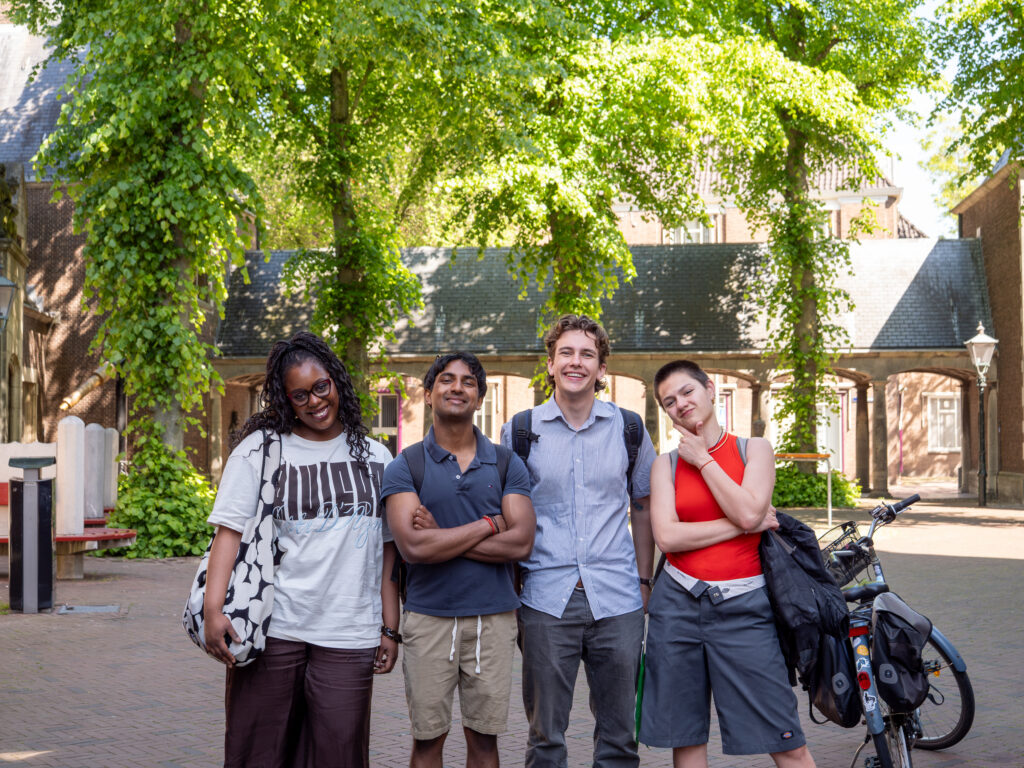
Founded in 2004, University College Roosevelt brings a student-centred, international approach to liberal arts and sciences education in the Netherlands. Source: University College Roosevelt
University College Roosevelt
Studying in a medieval Dutch city by the sea, alongside classmates from over 60 countries, with courses shaped around your interests, and graduating with a degree from the top-ranked Utrecht University. That’s University College Roosevelt (UCR), in beautiful Middelburg, in the southwest of the Netherlands. Here, you’ll do more than gain academic knowledge: you’ll discover new perspectives, develop your own judgement, and grow academically and personally as you find your place in the world.
What could that look like? Say you want to tackle climate change. Understanding it involves studying the environment alongside politics, business, data, and communication. Complex challenges rarely fit within a single discipline, and neither do their solutions. UCR’s Liberal Arts & Sciences programme encourages you to make connections and ask your own questions rather than follow a single academic path.
You can choose courses from six academic clusters: Business & Entrepreneurship; Data Science & Intelligent Systems; Environment & Sustainability; Government & Society; Health, Cognition & Behaviour; and Media, Culture & Communication. Specialise in one area or combine subjects to explore questions from several angles. Along the way, you’ll learn to explore unfamiliar ideas, and develop the flexibility to respond to a changing world.
But with so many choices, how do you know where to start? At UCR, your journey begins with Personal & Professional Development. You’ll build critical thinking, academic writing, and communication skills while reflecting on who you are, what matters to you, and how you want to contribute to society. As you design your own curriculum, a personal academic tutor will help you explore your interests and make thoughtful choices about your future.
Learning also happens beyond the classroom. Small classes encourage discussion, questioning, and learning from others, while shared living spaces help build friendships across cultures and backgrounds. UCR guarantees affordable accommodation for the full duration of your degree, making it easier to become part of the international community and feel at home.
Studying alongside people with different experiences and perspectives will challenge how you see the world and teach you how to engage constructively with others. Through UCR’s community-engaged learning (CEL), many courses connect academic study with real scientific and social questions, often in collaboration with citizens and local partners. You’ll discover not only how to understand complex challenges, but also how to contribute to addressing them. These experiences also help you make meaning of what you learn: connecting academic ideas to people’s lives and reflecting on what matters to you.
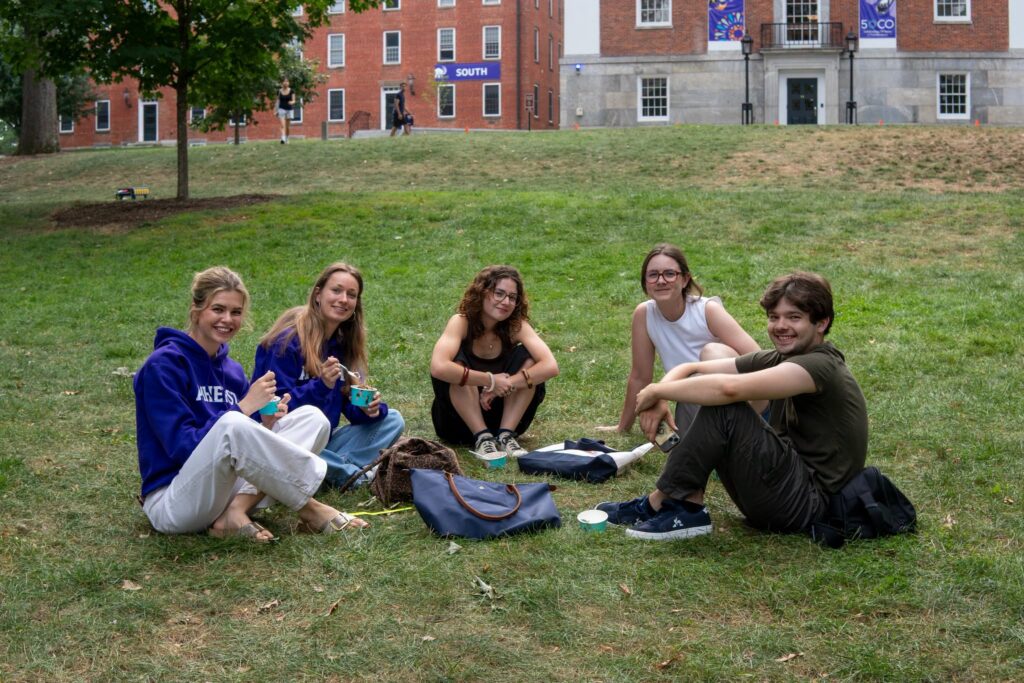
Founded in 1821, Amherst College has championed liberal arts education and critical thinking, values that remain important today. Source: Amherst College
Amherst College
Why do some communities have more opportunities than others? What can be done to make society fairer? At Amherst College, questions like these can lead you to explore new subjects, challenge your assumptions and discover how you can make a difference.
That journey begins with Amherst’s liberal arts open curriculum, which gives you the freedom to choose courses based on your interests. Apart from a first-year seminar and the courses required for your major, there are no general education requirements. You could study economics to understand how wealth is distributed, explore sociology to learn how communities work, then turn to history to see how past decisions continue to shape society. By connecting ideas across subjects, you can develop a deeper understanding of the world around you.
As your questions grow, you can work with professors who help you explore new ideas and test your thinking. With a 7:1 student-to-faculty ratio, Amherst offers opportunities to build close relationships with your teachers and take part in research. Across 43 majors in the arts, humanities, natural sciences, and social sciences, you can find different ways to understand the issues that matter to you.
Your learning does not have to stay on campus, either. Through the Five College Consortium, you can explore courses at four other nearby colleges, including the University of Massachusetts Amherst. Studying alongside people from different backgrounds also exposes you to new perspectives, while studying abroad gives you the chance to understand how other communities approach their challenges.
Gradually, these experiences help you see how what you learn can be applied to real-world problems. Whether you hope to shape public policy or develop new technology, the ability to question and consider different viewpoints can help you make better decisions.
Learn more about Amherst College here.
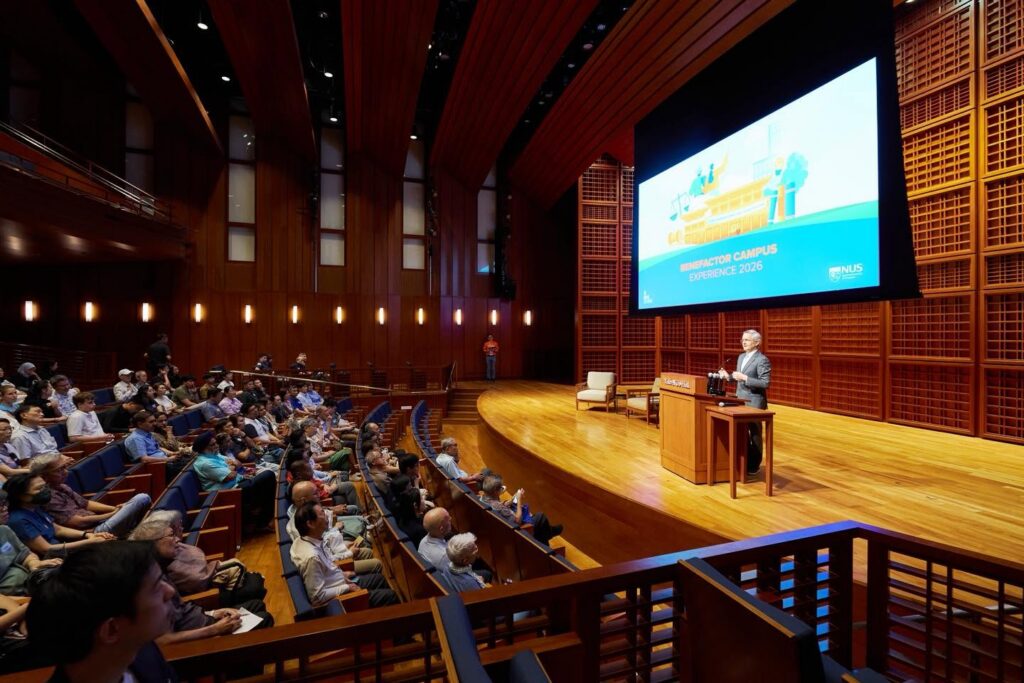
NUS College works with National University of Singapore faculties to help students think beyond their majors while exploring subjects they’re passionate about. Source: NUS College
NUS College
NUS College (NUSC), the honours college of the National University of Singapore (NUS), is Singapore’s first honours college. It draws on the interdisciplinary foundations of the University Scholars Programme and Yale-NUS College, while its parent university is ranked 10th in the QS World University Rankings 2027. For you, that means joining a globally recognised university and a college built around one idea: complex problems need more than one way of thinking.
Your learning will begin with seminar-style classes that encourage discussion, critical thinking and the exchange of ideas. Courses such as Thinking with Writing, Global Narratives, Reasoning with Data, and Understanding the Social World: Singapore & Beyond will develop your ability to evaluate evidence, communicate clearly, and understand issues through different academic lenses. Rather than studying subjects in isolation, you’ll learn to connect ideas and question assumptions.
The curriculum is designed to fit within your existing degree requirements. You’ll take 13 NUSC courses out of the 40 courses required to graduate with an NUS degree. These cover most common curriculum requirements in your degree-bearing faculty and NUS’s general education requirements. You can also replace some unrestricted electives with specially curated interdisciplinary electives at NUSC. This allows you to explore different fields without taking more courses than other NUS students, while retaining the flexibility to pursue options such as a double degree or double major.
What’s more, you’ll get to apply your learning through Impact Experience, a compulsory two-year capstone project. Working in an interdisciplinary team with community partners, you’ll develop solutions to real-world challenges. The process involves understanding community needs and refining ideas collaboratively. At the end, you’ll present your project and reflections at the Impact Festival.
Learn more about NUS College here.
*Some of the institutions featured in this article are commercial partners of Study International